Artwork
Bust of an Old Woman Wearing a Head Scarf
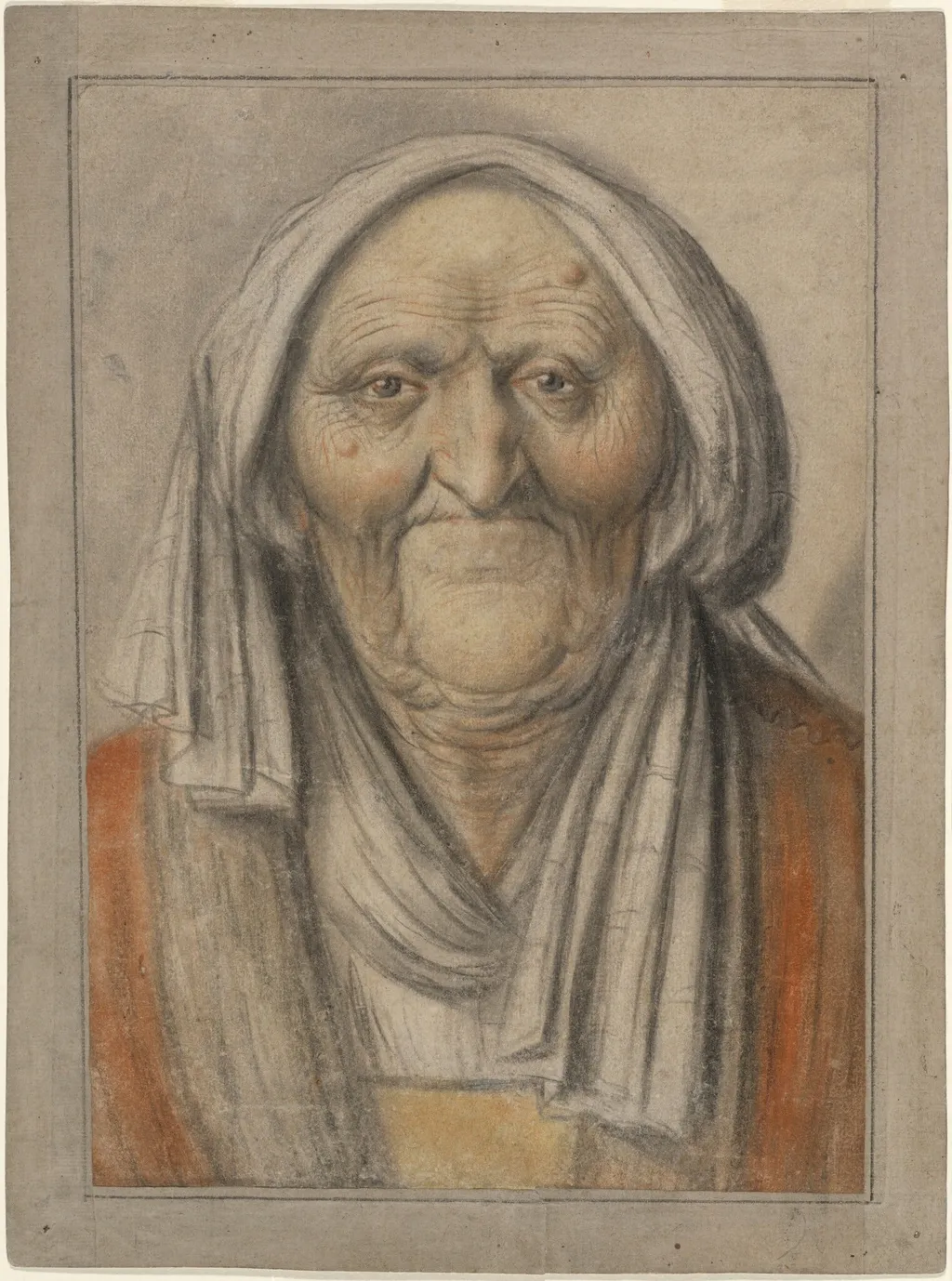
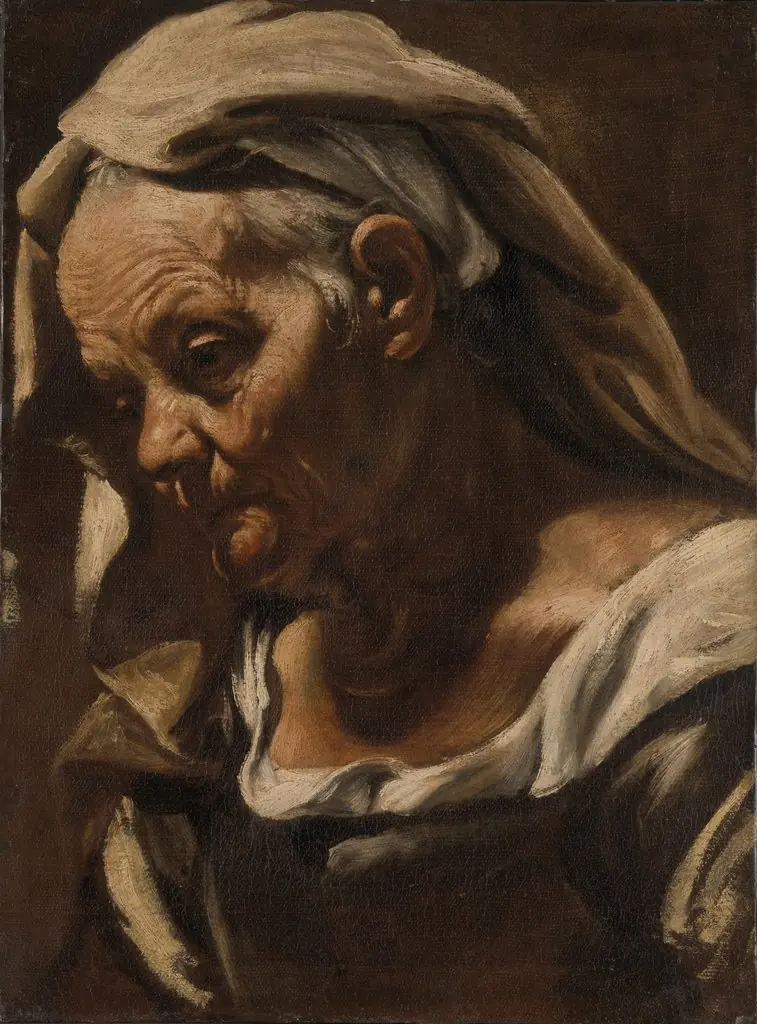
Bust of an Old Woman Wearing a Head Scarf is a chalk drawing by the Baroque artist Lagneau. It dates from 1625 and is held in the collection of the National Gallery of Art.
About this work
The paper has a textured, off-white background, and the artist used soft black and brown chalk for shadows, with hints of red and yellow on her collar.
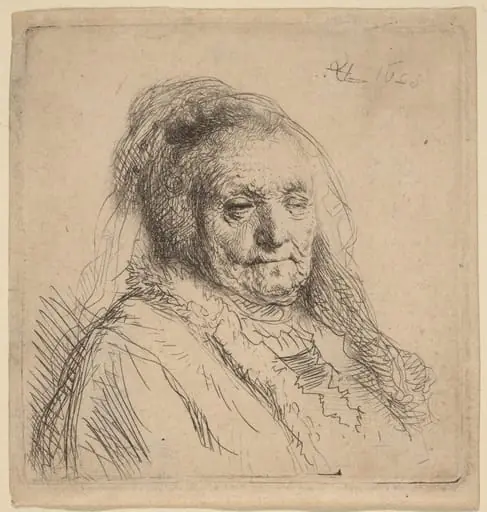
This drawing shows an older woman with a lined face and a hooded scarf draped over her head. The paper has a textured, off-white background, and the artist used soft black and brown chalk for shadows, with hints of red and yellow on her collar. Her expression is calm but serious, with deep wrinkles around her eyes and mouth.
The sketch looks rough in places, like the artist was working fast. The chalk leaves streaks and smudges, giving it a lived-in feel. This style fits the time it was made—around 1625.
Next, check out Baroque to see how this sketch fits into that bold, dramatic style.
Overview
This drawing, attributed to the French artist known as Lagneau and dated around 1625, depicts the bust of an elderly woman in profile. Executed in black and colored chalks on textured laid paper, the work captures the subject with a directness that emphasizes both physical detail and emotional presence. The medium’s inherent softness allows for subtle tonal gradations, lending the image a sense of immediacy.
Subject & Meaning
The drawing portrays an older woman, her features marked by deep wrinkles and a composed, reflective expression. Her head is covered by a draped scarf, a common garment of the period, which frames her face while drawing attention to its aged contours. Rather than idealizing youth, the work focuses on the lived experience suggested by her lined skin, presenting a study of human endurance and quiet dignity.
Technique & Style
Lagneau employed black chalk for the primary contours and shadows, with selective use of red and yellow chalks to define the collar and enhance certain passages. The strokes appear rapid and exploratory, with smudges and streaks left visible, reflecting a working method that prioritizes direct observation over polished finish. This approach aligns with the broader Baroque interest in capturing fleeting moments and raw human presence.
History & Provenance
Created circa 1625, the drawing is part of a body of work attributed to Lagneau, an artist active in early 17th-century France. Little is documented about its early ownership, though its survival suggests it was preserved among studio materials or private collections. The paper’s texture and the medium’s condition indicate it has remained largely unaltered since its creation, offering insight into the artist’s working process.
Context
During the early 1600s, European artists increasingly turned to studies of ordinary individuals, moving away from exclusively religious or mythological themes. This drawing reflects that shift, focusing on an anonymous elderly woman rendered with the same attentiveness typically reserved for more elevated subjects. Its sketch-like quality also aligns with the period’s growing appreciation for preparatory works as independent artistic expressions.
Legacy
Though not widely reproduced, this drawing exemplifies the Baroque era’s embrace of naturalism and emotional authenticity. Its unidealized portrayal of age and the visible traces of the artist’s hand influenced later generations of draftsmen who valued immediacy over refinement. Today, it serves as a document of early 17th-century figural drawing, offering a glimpse into the period’s evolving attitudes toward representation.
Artist & collection