Artwork
Harlequin in 'Le Carnaval', a Ballet by Mikhail Fokine
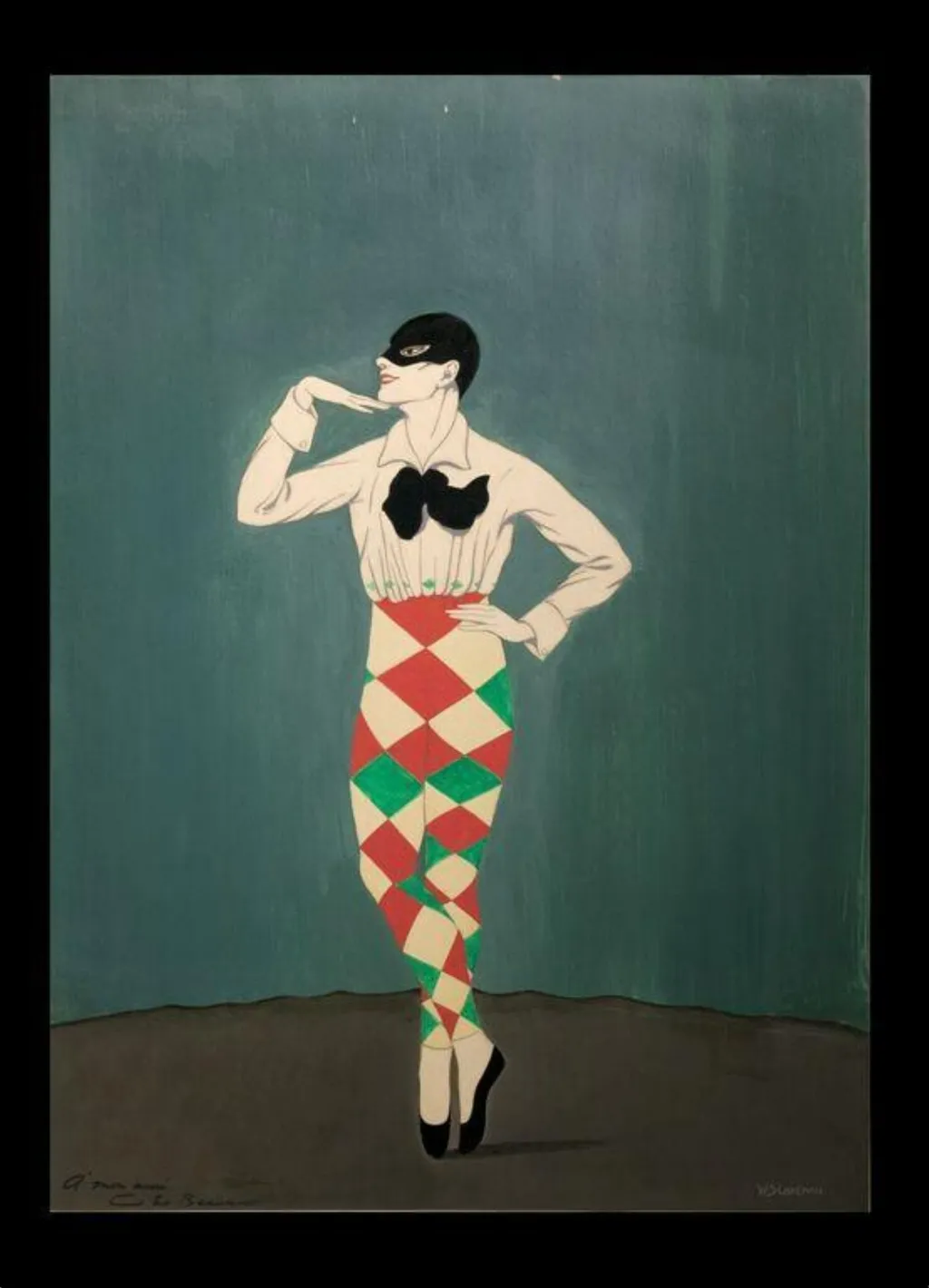
Harlequin in 'Le Carnaval', a Ballet by Mikhail Fokine is a paint painting by W. S. Lakeman. It dates from 1950 and is held in the collection of the Victoria and Albert Museum. This oil and gouache painting by W.
About this work
Overview
This oil and gouache painting by W. S. Lakeman portrays a male dancer in the role of Harlequin from Mikhail Fokine’s 1910 ballet *Le Carnaval*. The figure is rendered in full length, poised with one hand beneath the chin and the other resting on the hip. The composition emphasizes theatrical stillness, isolating the dancer against a subdued background to focus attention on costume and gesture.
Subject & Meaning
Lakeman’s depiction captures the character’s duality—playful yet introspective—through subtle facial expression and refined posture.
The Harlequin, a figure from Italian commedia dell’arte, was reimagined in Fokine’s ballet as a poetic, melancholic trickster. Lakeman’s depiction captures the character’s duality—playful yet introspective—through subtle facial expression and refined posture. The costume’s diamond patterns and contrasting colors reflect the character’s traditional symbolism, while the ballet context elevates him beyond folkloric caricature into a figure of artistic nuance.
Technique & Style
Lakeman employed oil paint and gouache to achieve both luminous detail and flat, decorative effects. The tights’ geometric patterns are rendered with precision, while the fabric of the cravat and shirt suggests softness through layered glazes. The muted background enhances the vibrancy of the costume, and the tight framing concentrates the viewer’s gaze on the dancer’s poised form, aligning with early 20th-century stage design aesthetics.
History & Provenance
The painting is signed and inscribed by Lakeman to C. W. Beaumont, likely a theater figure connected to the Ballets Russes. Its creation may stem from a 1914 poster design for Vaslav Nijinsky’s portrayal of Harlequin, or be a later studio reproduction. The inscription suggests a personal or professional connection, possibly documenting a moment of artistic collaboration or tribute within the ballet’s circle.
Context
Created during the height of the Ballets Russes’ influence, the painting reflects the era’s fascination with theatrical transformation and visual stylization. Fokine’s choreography and design innovations, including Nijinsky’s iconic performance, inspired artists beyond the stage. Lakeman’s work aligns with contemporaneous illustrations and set designs that sought to translate dance’s ephemeral grace into enduring visual form.
Legacy
Though not widely exhibited, the painting stands as a rare visual record of early 20th-century ballet costume design and its reception by artists outside the immediate company. It contributes to the archive of material culture surrounding the Ballets Russes, offering insight into how stage characters were interpreted and memorialized by illustrators connected to the performing arts world.
Artist & collection
Artist
W. S. Lakeman made early 20th-century paintings and prints inspired by ballet and exotic stories. Look at their “Harlequin in 'Le Carnaval', a Ballet by Mikhail Fokine” to see a dancer caught mid-jump in bright costume,…