Artwork
Floare de lotus
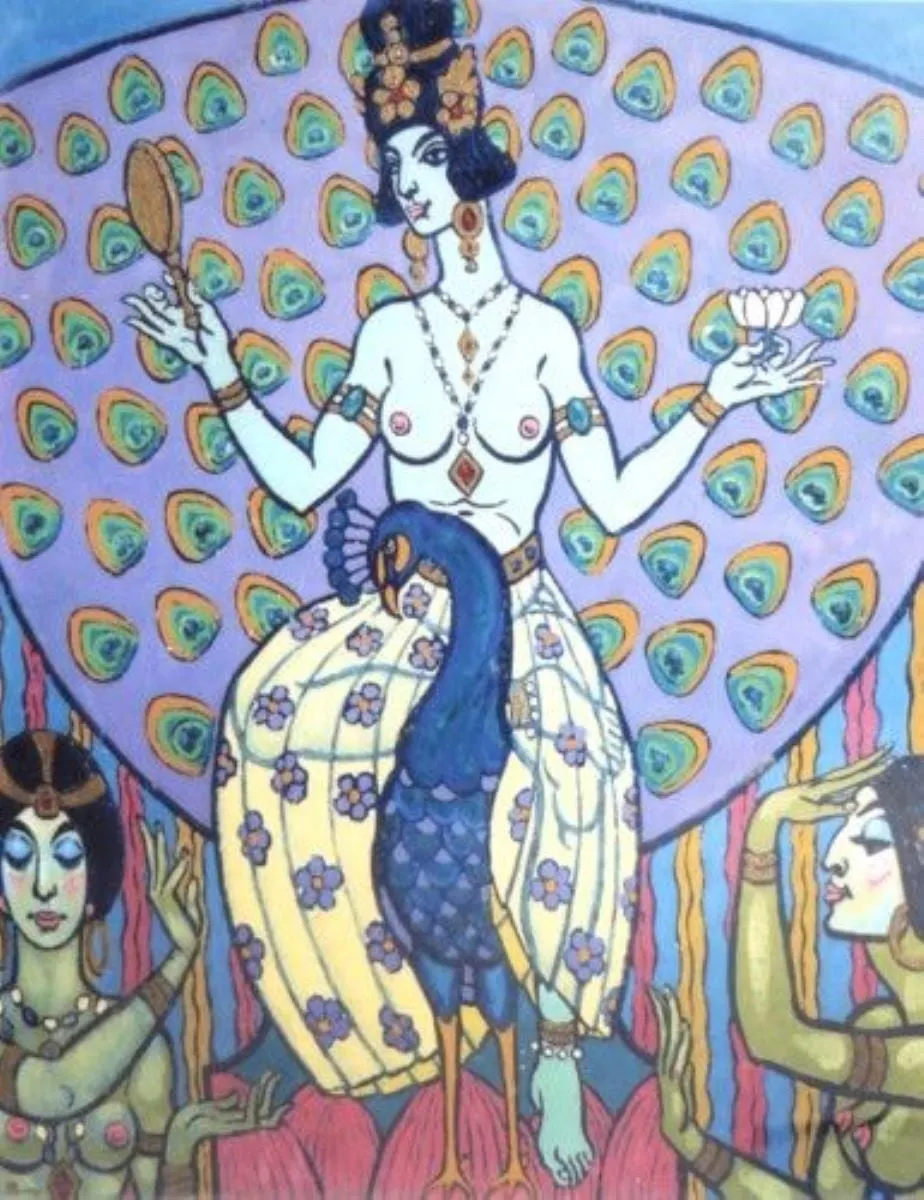
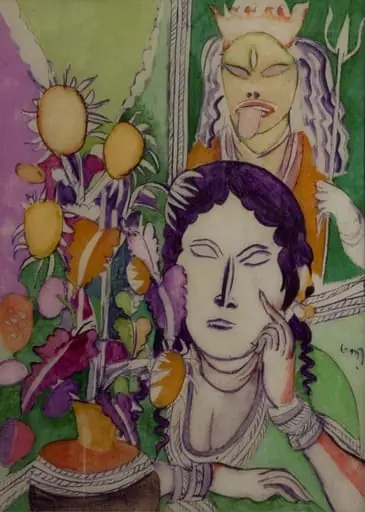
Floare de lotus is an unspecified painting by Corneliu Michăilescu. It dates from 1921 and is held in the collection of the Art museum of Craiova.
About this work
Overview
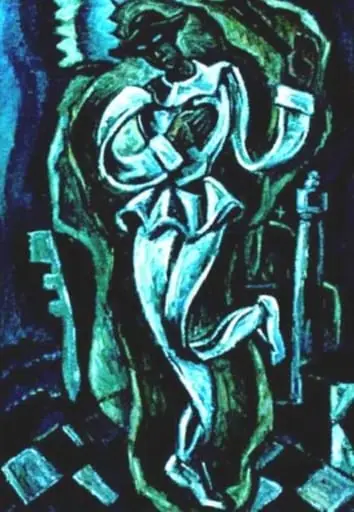
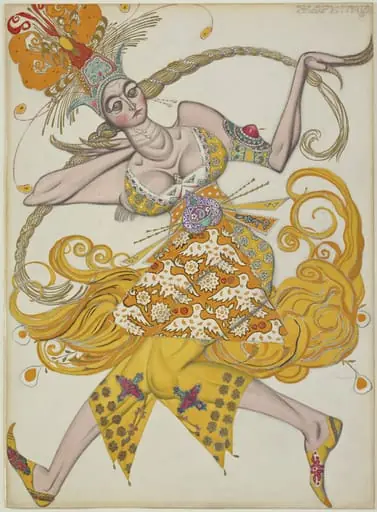
Corneliu Michăilescu’s 1921 composition titled “Floare de lotus” is part of the collection at the Museum of Ethnography. The work presents a central female figure with elongated arms, a mirror in one hand, and a vivid costume of blue, yellow, and red. Surrounding her, abstracted foliage‑like forms swirl in bright hues, while two peripheral women in red and green appear with indistinct faces.
Subject & Meaning
The central figure’s outstretched limbs and reflective object suggest a moment of self‑examination, perhaps alluding to themes of identity or vanity.
The central figure’s outstretched limbs and reflective object suggest a moment of self‑examination, perhaps alluding to themes of identity or vanity. The dreamlike backdrop, rendered as swirling, leaf‑like patterns, creates a liminal space that blurs the boundary between reality and imagination. The presence of the two secondary women, rendered anonymously, may hint at communal or relational aspects surrounding the central subject.
Technique & Style
Michăilescu employs bold, saturated colors and strong contour lines that give the scene a graphic intensity. The background’s swirling motifs are executed with fluid brushwork, producing a sense of movement. The contrast between the flat, decorative surface of the clothing and the more dynamic, atmospheric background reflects an interplay of decorative folk influences and early modernist abstraction.
History & Provenance
Created in 1921, “Floare de lotus” entered the Museum of Ethnography’s holdings sometime after its completion, where it remains on display. The work represents an early example of Michăilescu’s exploration of Romanian folk motifs combined with contemporary artistic trends, marking a transitional moment in his career and in the museum’s acquisition of modern Romanian art.
Artist & collection