Artwork
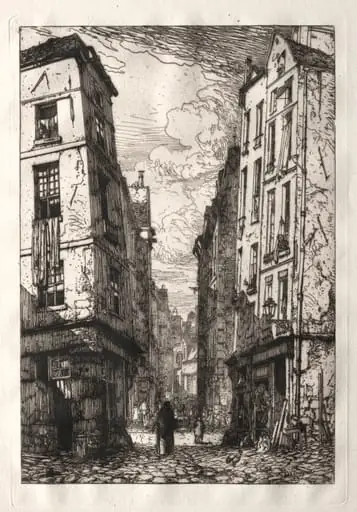
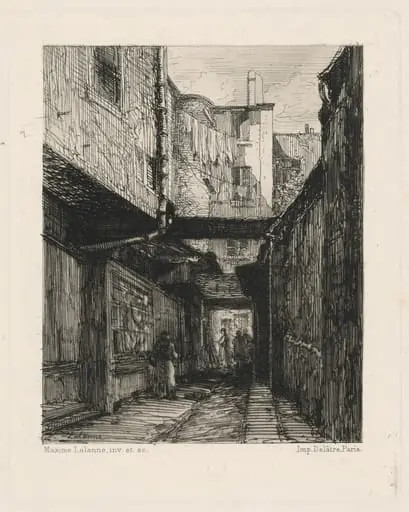
Rue des Marmousets (Quartier de la cite, vieux Paris)
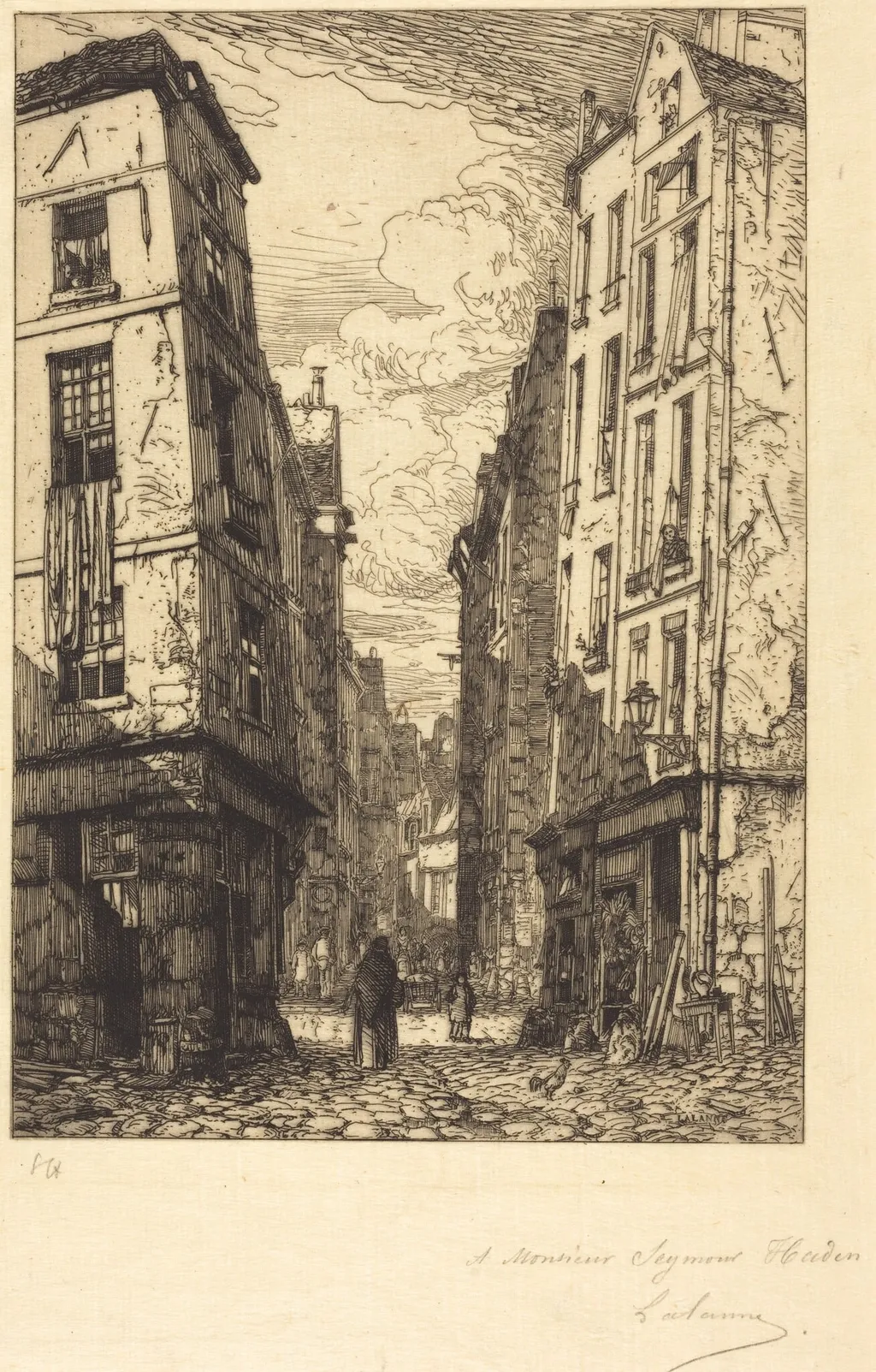
Rue des Marmousets (Quartier de la cite, vieux Paris) is an ink print by the Impressionist artist Maxime Lalanne. It dates from 1862 and is held in the collection of the National Gallery of Art.
About this work
Overview
Rue des Marmousets (Quartier de la cite, vieux Paris) is an 1862 etching on laid tissue paper by French artist François Antoine Maxime Lalanne, capturing a serene scene of old Paris.
Subject & Meaning
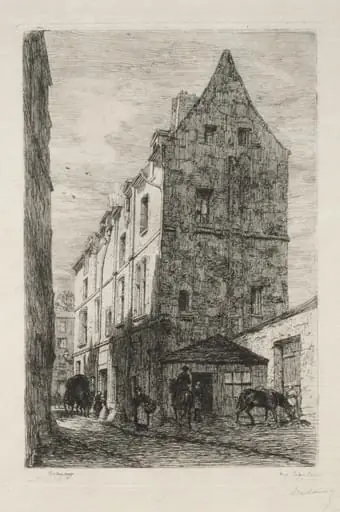
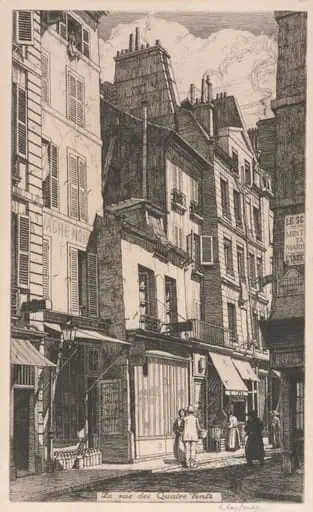
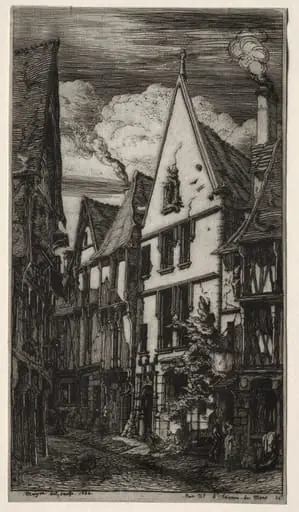
The etching depicts a tranquil Parisian street, lined with ancient stone houses and bare trees, conveying a sense of quietude in an urban setting.
Technique & Style
Lalanne employed a trio of printmaking techniques—etching, drypoint, and aquatint—to achieve a distinctive visual balance of 'velvety shadows' and 'crisp details', leveraging chiaroscuro to create an intense interplay of light and dark.
History & Provenance
Created in 1862, the work exemplifies Lalanne's technical prowess and his penchant for urban themes, contributing to his reputation in 19th-century French art.
Context
Part of a broader 19th-century French artistic focus, this piece reflects the era's interest in capturing the essence of urban life, particularly the contrasts between old and new Paris.
Legacy
Through its innovative combination of printmaking techniques and thoughtful composition, Rue des Marmousets contributes to the evolution of French printmaking and the documentation of Paris's historical landscape.
Artist & collection
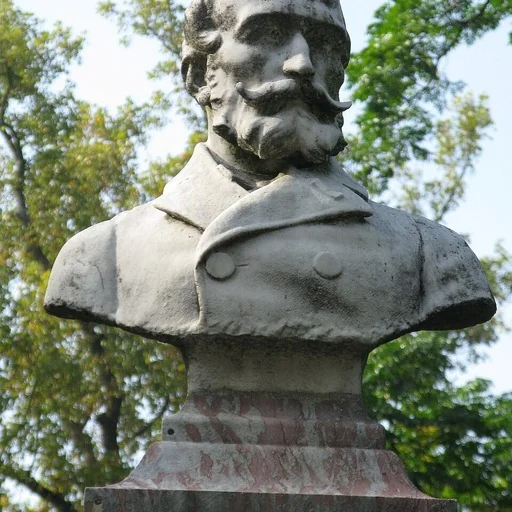
Artist
François Antoine Maxime Lalanne (November 27, 1827 – July 29, 1886) was a French artist known for his etchings and charcoal drawings (fusain).