Artwork
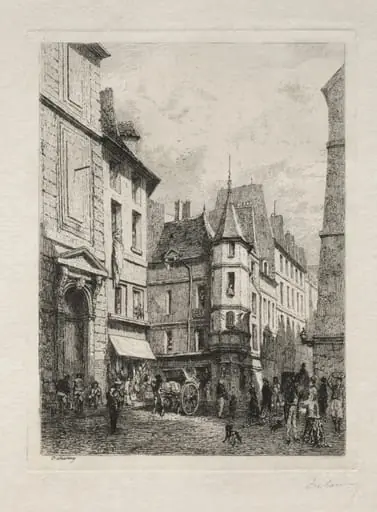
Maison dite de la Reine Blanche, Rue de Marmousets
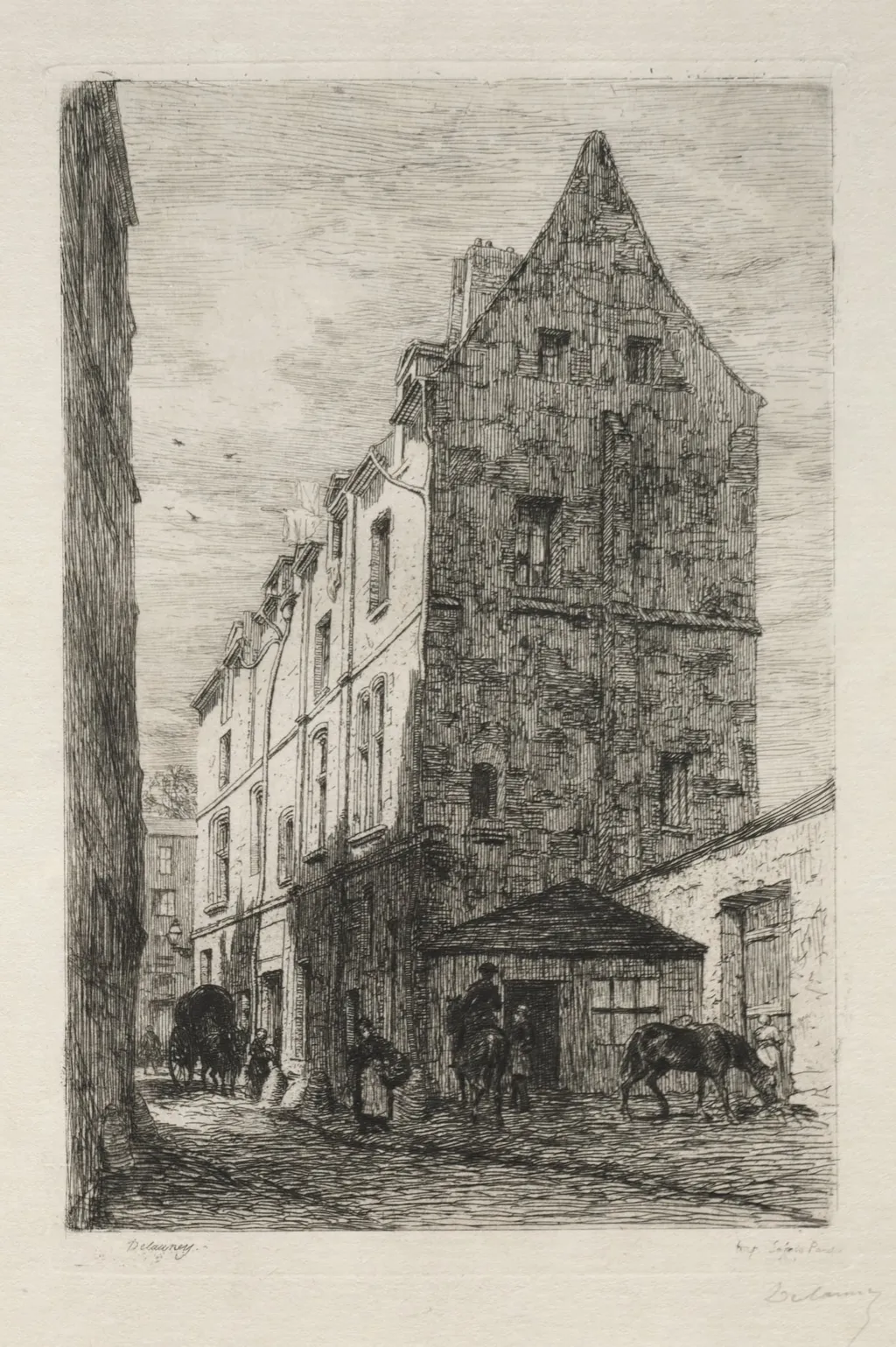
Maison dite de la Reine Blanche, Rue de Marmousets is a print by the Impressionist artist Alfred-Alexandre Delauney. It dates from 1882 and is held in the collection of the Cleveland Museum of Art. Created around 1882 by Alfred Alexandre Delauney, this print depicts a quiet urban alley in Paris known as Rue de Marmousets.
About this work
Overview
Created around 1882 by Alfred Alexandre Delauney, this print depicts a quiet urban alley in Paris known as Rue de Marmousets. The work captures a moment of everyday life with careful attention to architectural detail and atmospheric conditions. It is part of the collection at The Cleveland Museum of Art, where it serves as an example of 19th-century observational drawing.
Subject & Meaning
The scene portrays a narrow street lined with closely packed buildings, where pedestrians navigate wet cobblestones under overcast skies.
The scene portrays a narrow street lined with closely packed buildings, where pedestrians navigate wet cobblestones under overcast skies. A horse-drawn cart and a small vendor’s stall suggest local commerce, while umbrellas hint at recent rain. The composition avoids idealization, instead emphasizing the unremarkable rhythms of urban existence, reflecting a broader interest in the ordinary during the period.
Technique & Style
Delauney employed fine, controlled linework to render textures: the roughness of brickwork, the sheen of wet pavement, and the layered thatch of the stall’s roof. The use of delicate hatching and subtle tonal variation conveys depth without heavy shading. The style is precise yet unembellished, aligning with the observational priorities of Realist draftsmanship rather than dramatic expression.
History & Provenance
The print was produced in the early 1880s, during a time when Parisian streets were being documented by artists and photographers alike. It entered the collection of The Cleveland Museum of Art through established acquisition channels, likely as part of a broader effort to preserve works reflecting urban life in late 19th-century France.
Context
This work emerged amid a cultural shift toward depicting everyday environments without romanticization. Artists and writers of the period turned attention to working-class neighborhoods, capturing their physical and social textures. Delauney’s focus on a modest street aligns with contemporaneous efforts to record the city’s hidden corners, away from grand monuments.
Legacy
Though not widely exhibited, the print contributes to a body of work that documented Paris’s lesser-known thoroughfares. It reflects a quiet but persistent artistic commitment to recording the mundane, influencing later generations interested in urban ethnography and the aesthetic value of ordinary spaces.
Own this work as a print
Artist & collection
Artist
Alfred-Alexandre Delauney (1830–1894) was a French artist, born in Gouville-sur-Mer.

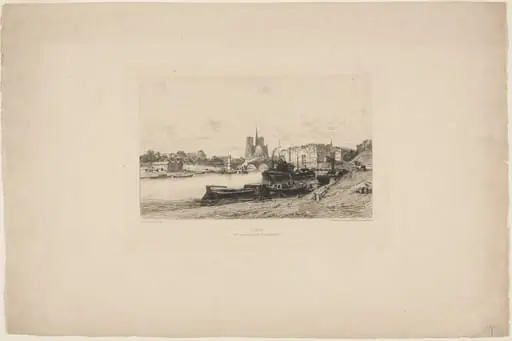
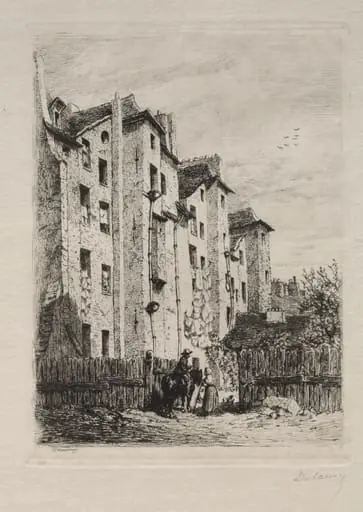
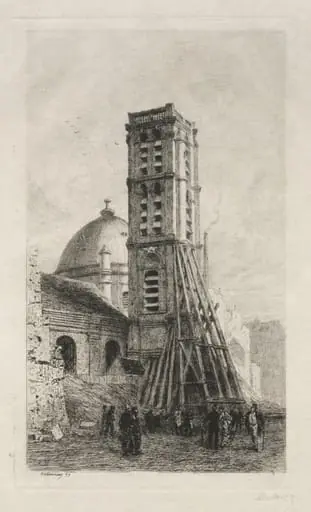
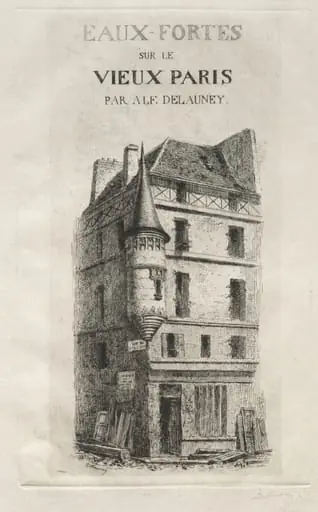
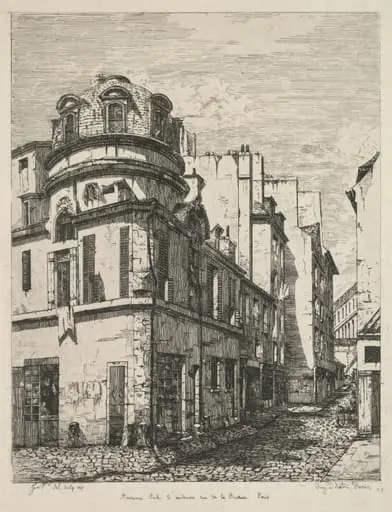 Eaux-Fortes sur le Vieux Paris: Ancienne école de médecine rue de la Bûcherie (Etchings of Old Paris: Former Medical School, rue de la Bucherie)
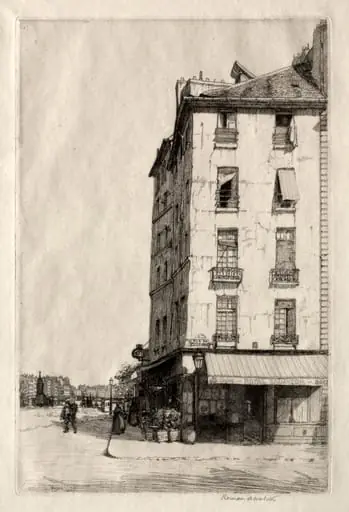 Quay Montebello
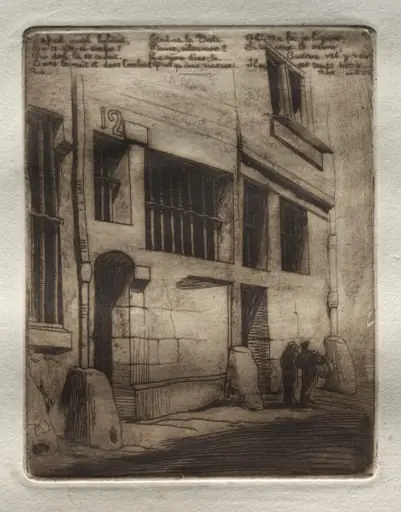 La Rue des Mauvais Garçons
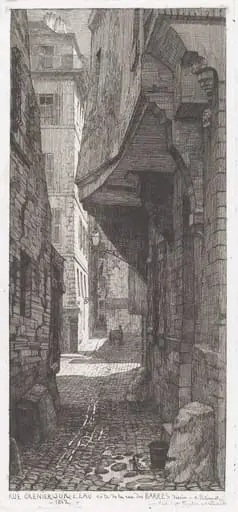 Rue Grenier sur l'eau, côté de la rue des Barres
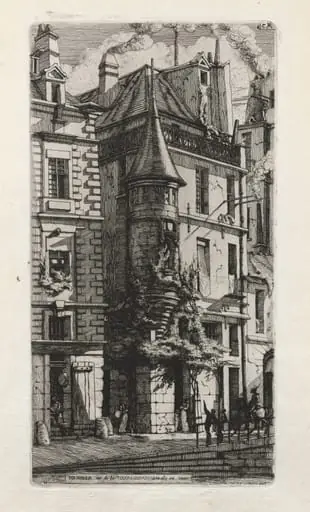 House with a Turret, rue de la Tixéranderie, Paris
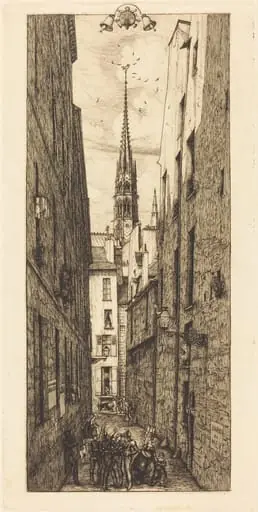 La Rue des Chantres, Paris (Chantrey Street, Paris)
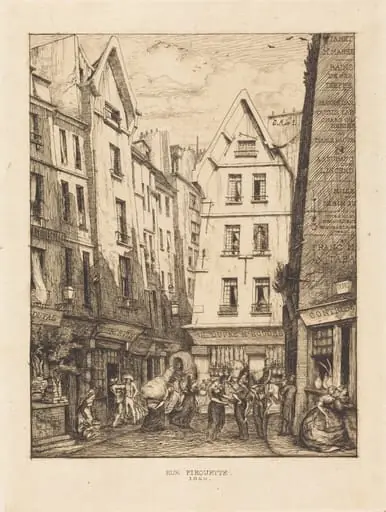 La Rue Pirouette aux halles, Paris (Pirouette Street, Near the Markets, Paris)