Artwork
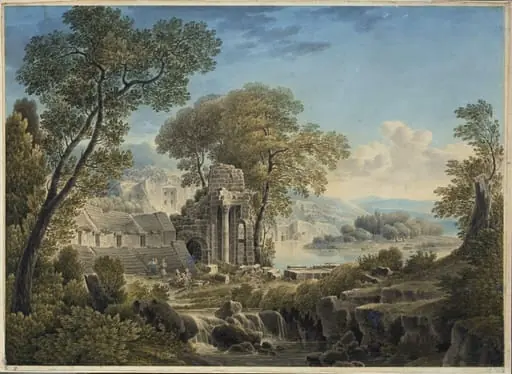
Dawn Landscape with Classical Ruins
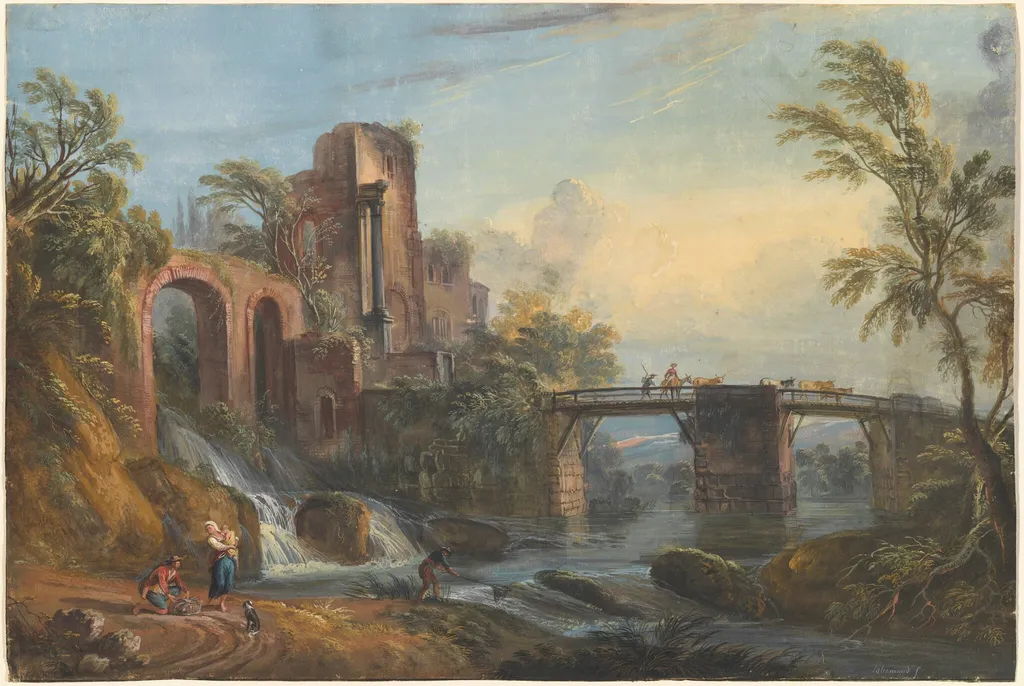
Dawn Landscape with Classical Ruins is a gouache drawing by the Romanticist artist Jean-Baptiste Lallemand. It dates from 1764 and is held in the collection of the National Gallery of Art.
About this work
Overview
Executed on laid paper, the work belongs to the tradition of topographical landscape drawing, blending observed naturalism with idealized antiquity.
Created around 1764, this gouache drawing by Jean-Baptiste Lallemand depicts a tranquil morning scene framed by classical ruins. Executed on laid paper, the work belongs to the tradition of topographical landscape drawing, blending observed naturalism with idealized antiquity. The soft, luminous tones characteristic of gouache capture the subtle shift of light at daybreak, enhancing the quiet atmosphere of the composition.
Subject & Meaning
The scene centers on weathered stone ruins beside a gentle river, crossed by a modest bridge. Figures—some near the water, one on the bridge accompanied by a dog—move quietly, suggesting daily routines rather than grand narrative. The absence of drama or symbolism implies a contemplative mood, where the passage of time is marked not by collapse but by enduring, peaceful coexistence between nature, architecture, and human presence.
Technique & Style
Lallemand employed gouache for its opacity and capacity for layered, muted hues, allowing delicate gradations of dawn light. The washes of pale gold and lavender in the sky contrast with the cool grays of stone and the muted greens of foliage. Brushwork is restrained, favoring soft edges and subtle tonal transitions over sharp detail, reinforcing the hushed, early-hour atmosphere of the scene.
History & Provenance
The work dates from Lallemand’s active period in mid-18th-century France, when landscape drawing was gaining scholarly interest among collectors. Though specific early ownership records are sparse, its preservation in institutional collections suggests it was valued for its refined execution and evocative mood. It reflects the period’s fascination with ruins as poetic remnants of antiquity, rather than mere archaeological subjects.
Context
In the 1760s, French artists increasingly turned to landscapes infused with classical motifs, influenced by Grand Tour imagery and Enlightenment ideals of harmony. Lallemand’s work aligns with this trend, offering a serene alternative to dramatic historical painting. The inclusion of modest human activity within ancient ruins reflects a growing interest in everyday life as a subject worthy of artistic attention.
Legacy
Though not widely exhibited today, the drawing exemplifies the quiet sophistication of French gouache drawing in the pre-Revolutionary era. It contributes to an understudied body of work that bridges topographical accuracy and lyrical atmosphere, influencing later 19th-century landscape traditions that prioritized mood over narrative. Its preservation underscores the enduring appeal of understated, contemplative scenes in art.
Own this work as a print
Artist & collection


 Landscape with Bridge
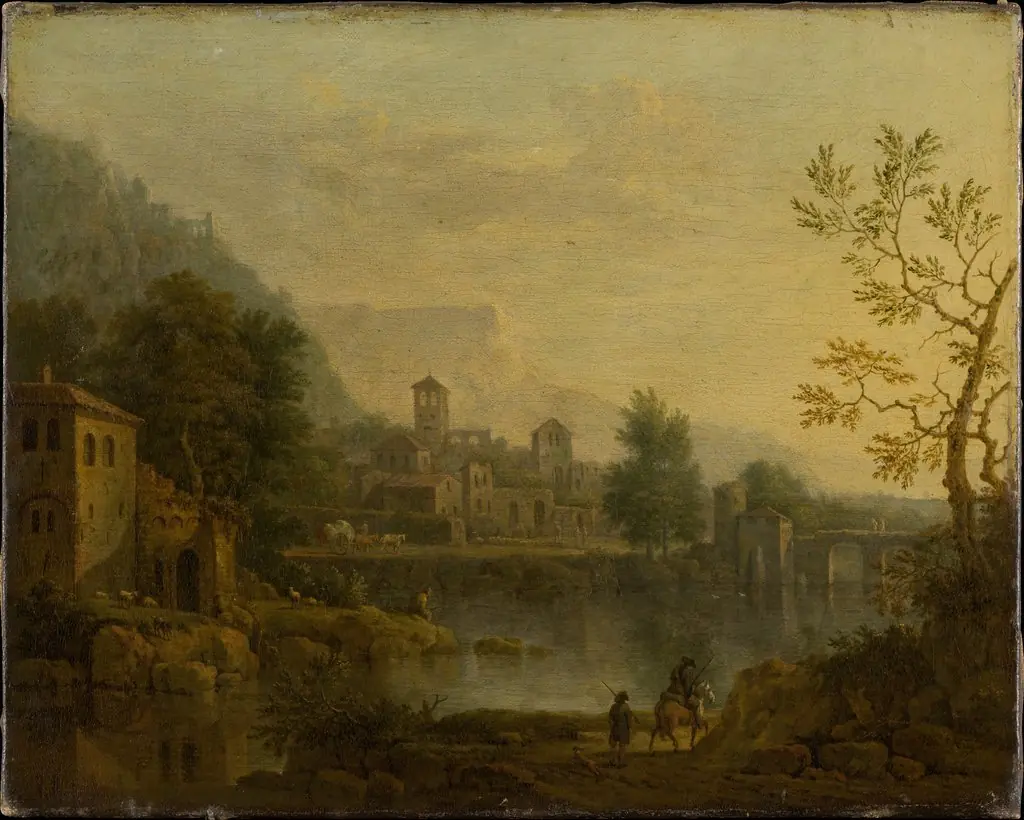 Italian Landscape
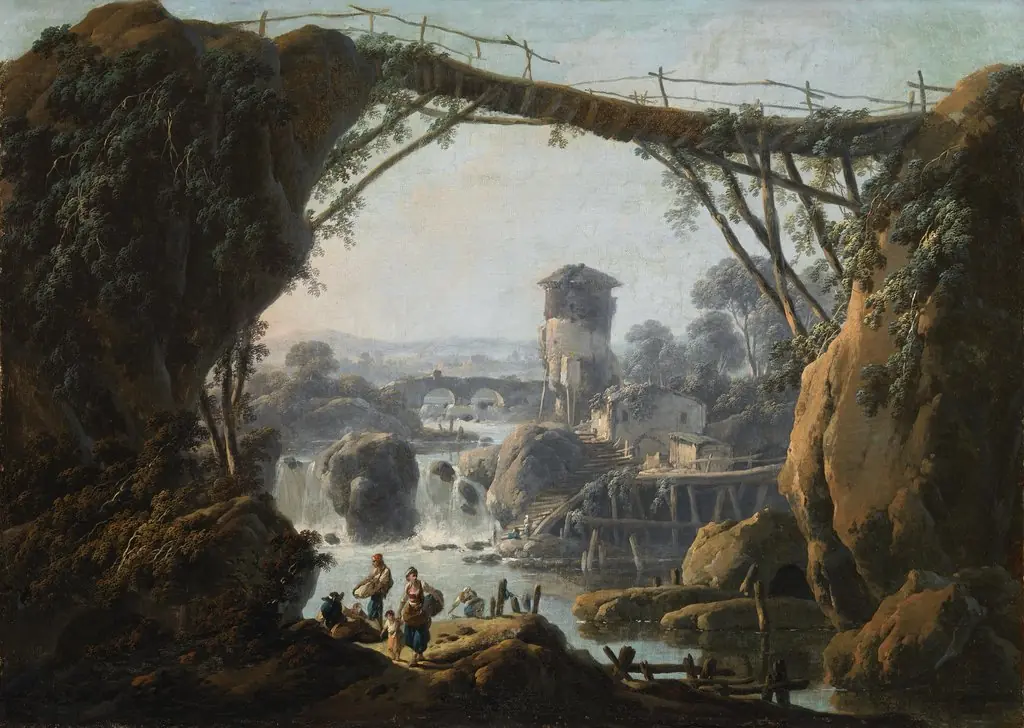 Landscape with Washerwomen and Peasants
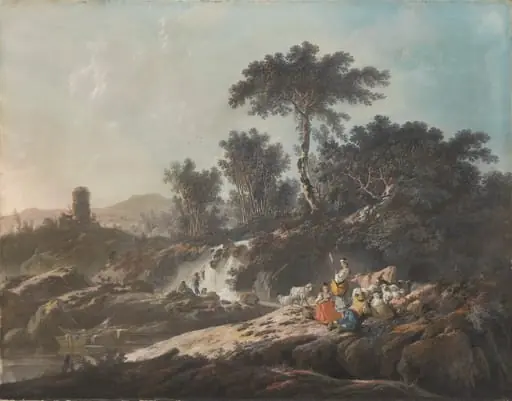 Shepherds Resting by a Stream
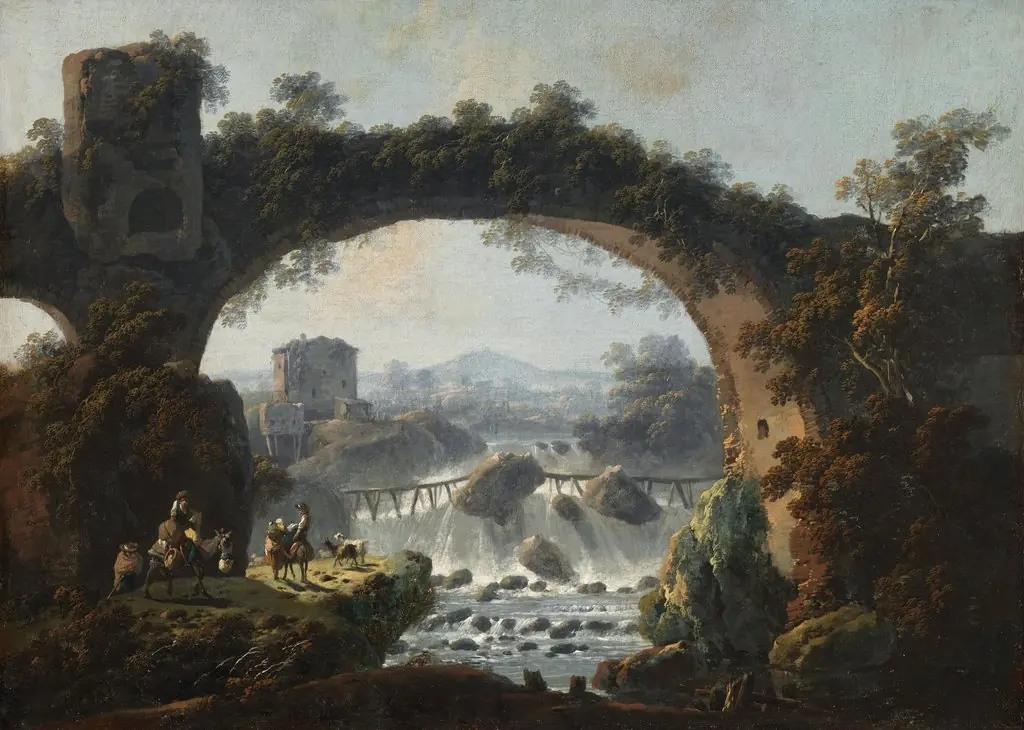 Landscape with Muleteers and Peasants
 Theatre of Myra, now Demre, in Lycia
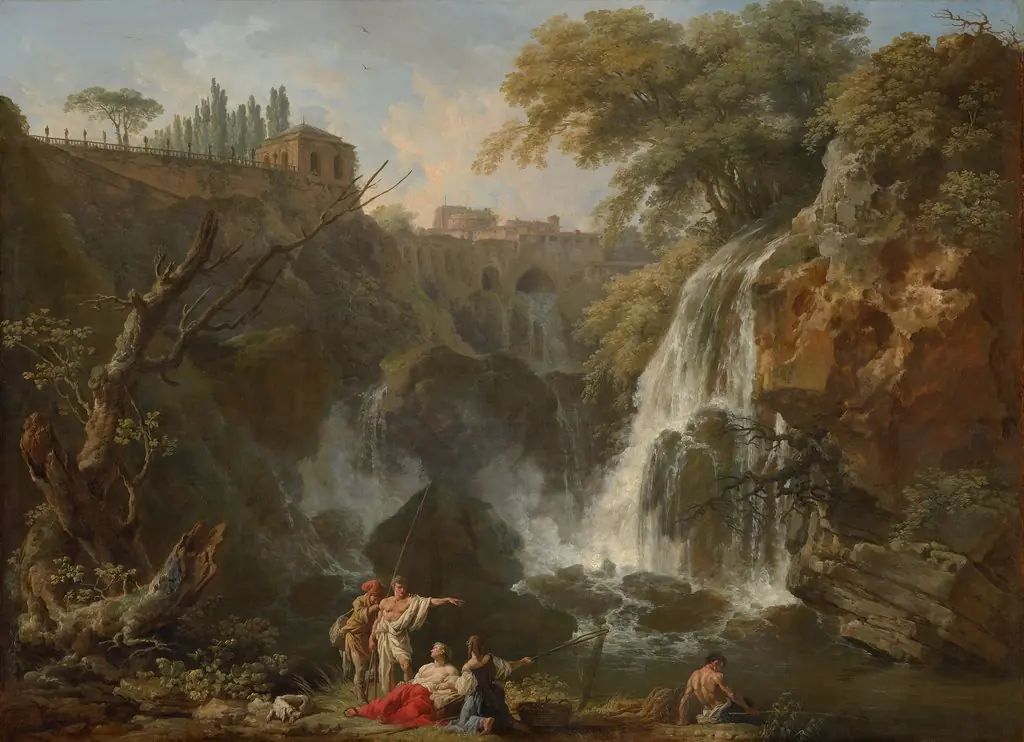 The Waterfalls at Tivoli, with the Villa of Maecenas
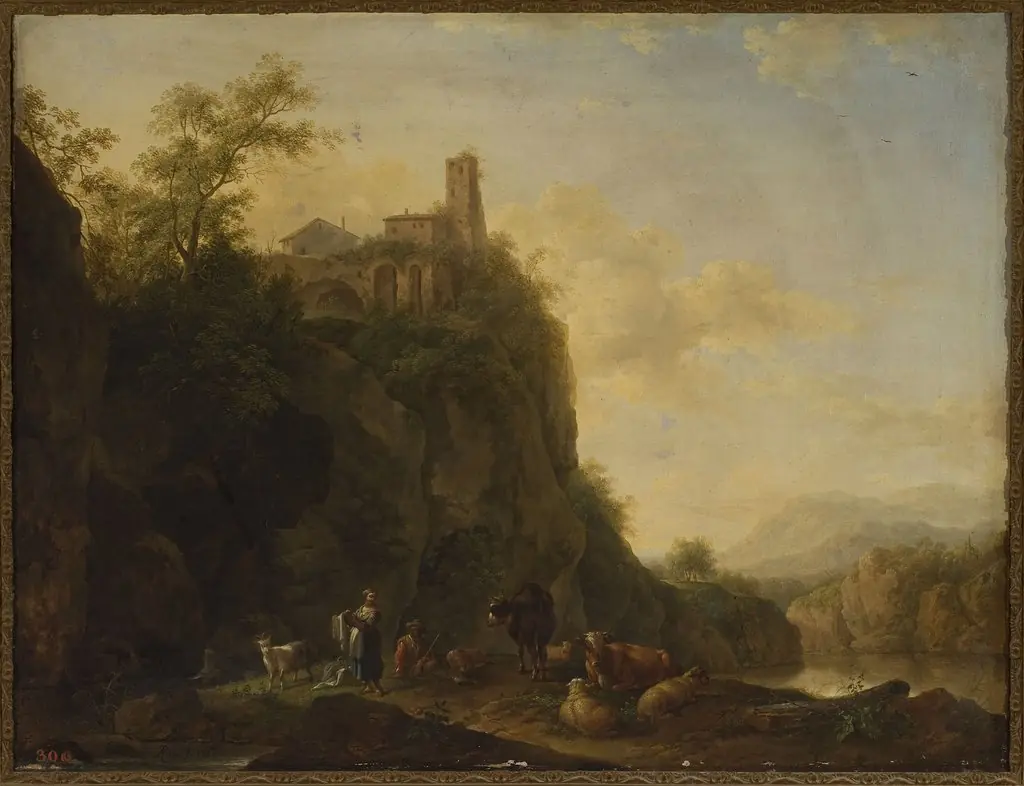 Mountain landscape with cattle
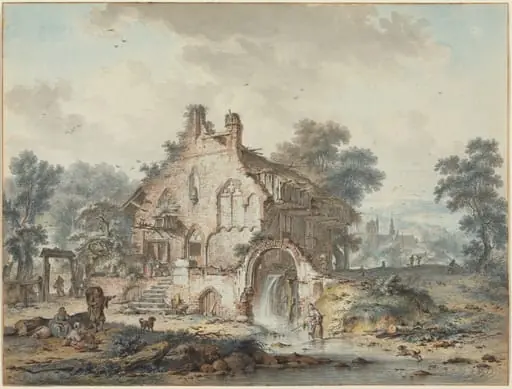 Rustic Watermill in a Gothic Ruin
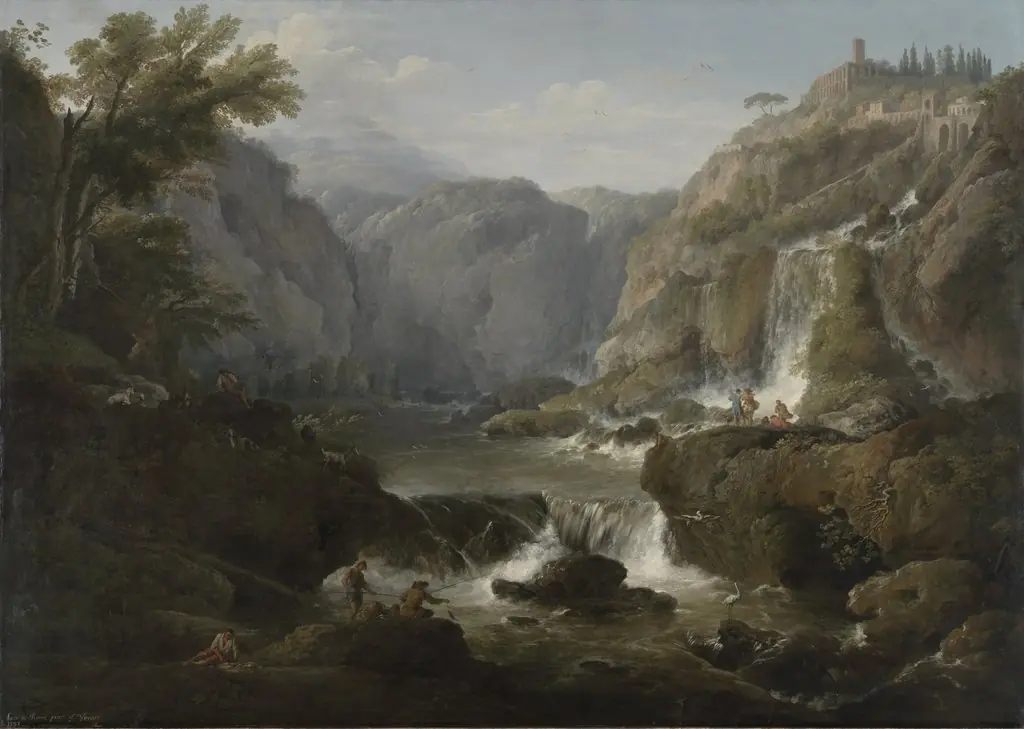 The Waterfalls at Tivoli
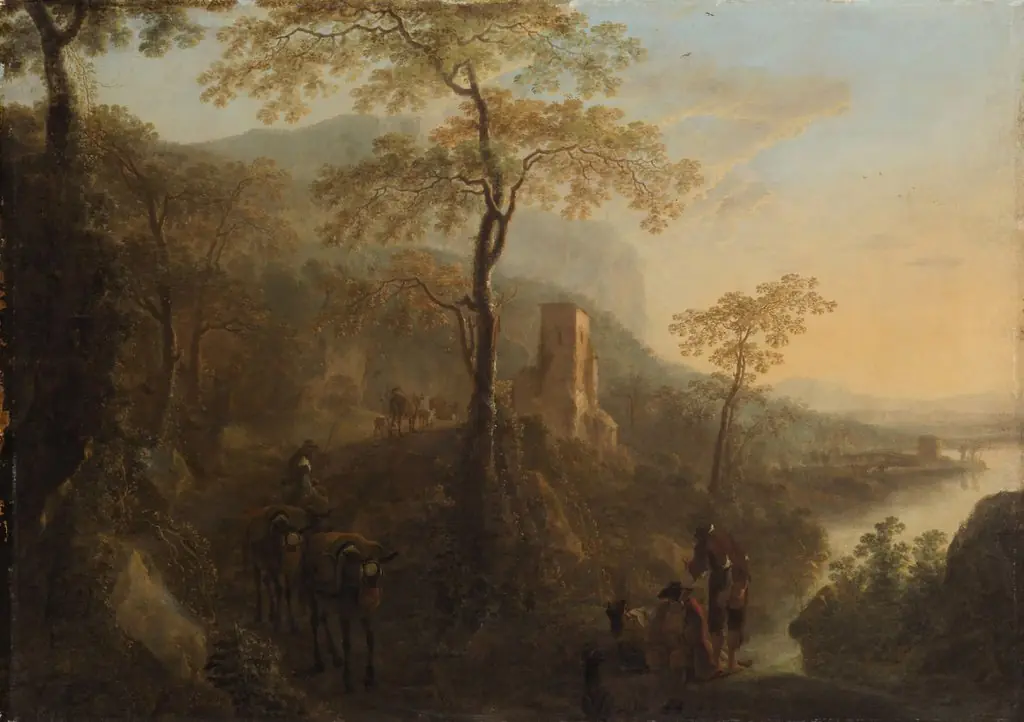 Italienische Landschaft
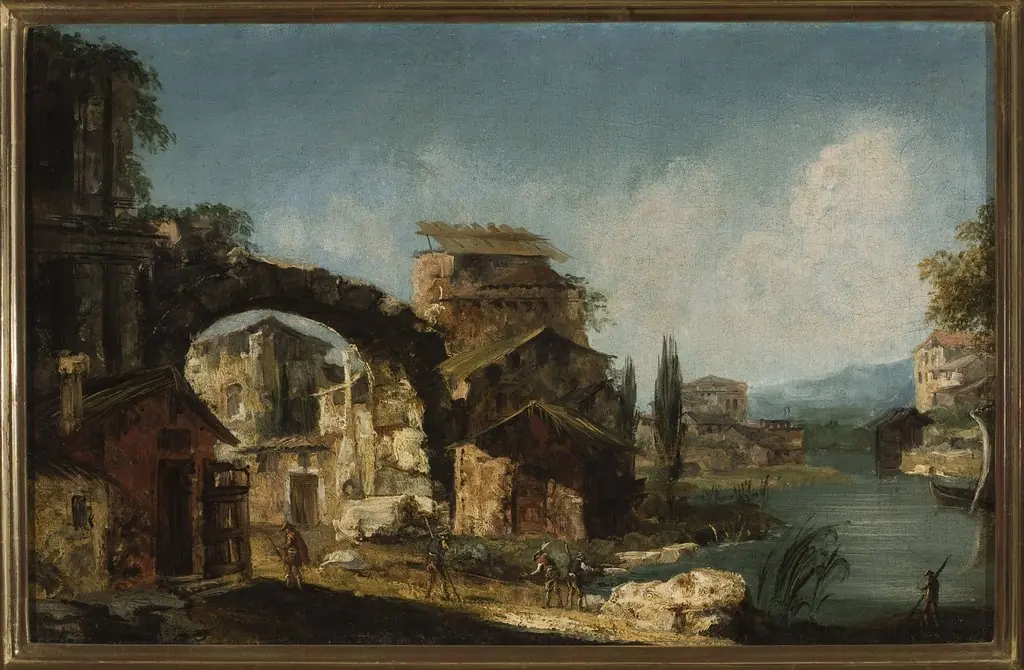 Landscape with ruins