Artwork
Theatre of Myra, now Demre, in Lycia
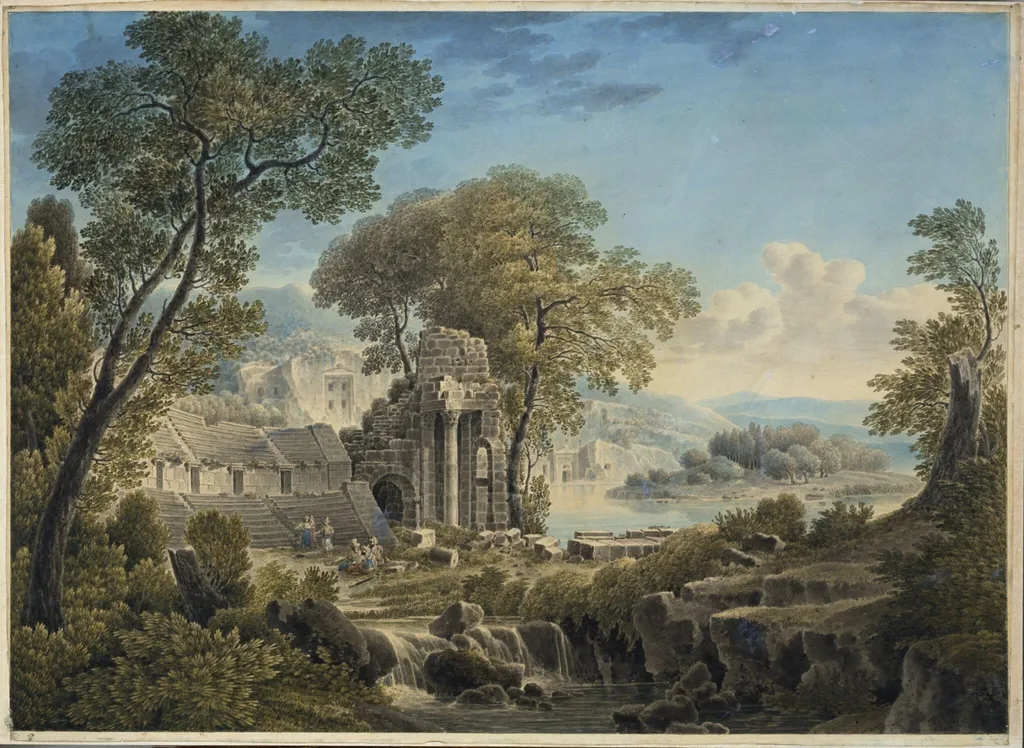
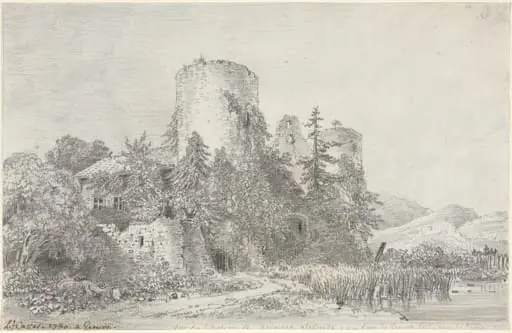
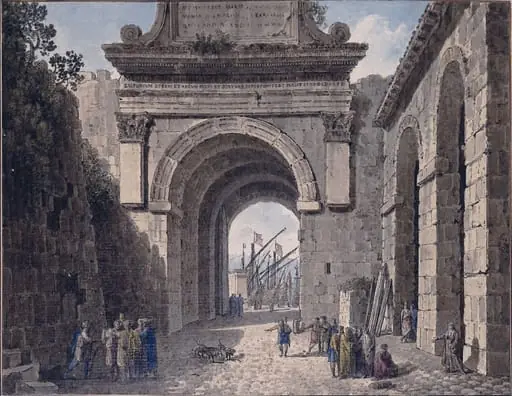
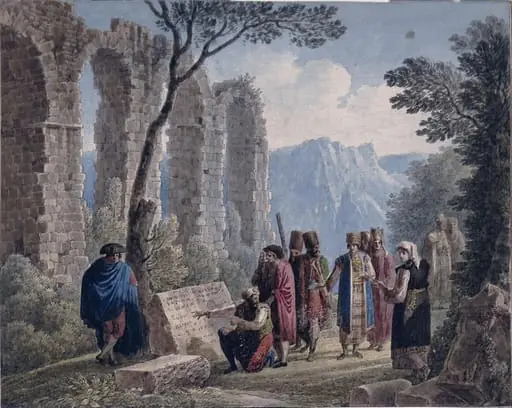
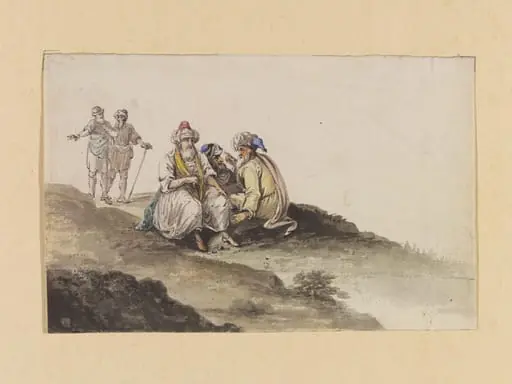
Theatre of Myra, now Demre, in Lycia is a watercolor work on paper by the Romanticist artist Louis-François Cassas. It dates from 1808 and is held in the collection of the Victoria and Albert Museum.
About this work
It’s a watercolor from 1808, showing weathered stone steps and a few scattered seats.
Louis-François Cassas painted the ruined stage of a small ancient theater. It’s a watercolor from 1808, showing weathered stone steps and a few scattered seats. The faded colors make it feel quiet and old.
Cassas traveled widely in the Ottoman world. He drew these ruins with care, adding tiny human figures to show scale. The light hits the stones just right, making shadows soft and edges blurry.
Look for this one at the Victoria and Albert Museum.
Overview
Louis‑François Cassas (1743‑1824) rendered the remains of an ancient theatre at Myra, now Demre in southwestern Turkey, in a watercolor dated 1808. The composition presents weathered stone steps and a few isolated seats, rendered in muted tones that convey a sense of quiet antiquity.
Subject & Meaning
The work depicts the dilapidated stage of the Lycian theatre, a site historically linked to the early Christian community of St Nicholas. Cassas includes small figures of Turks and Greeks engaged in leisurely activities, serving as visual cues for scale and reflecting the 18th‑century fascination with romanticized ruins.
Technique & Style
Executed in watercolor, the painting balances precise architectural drawing with a loosely applied wash that softens shadows and blurs edges. Cassas’s handling of light creates a gentle illumination across the stone, while the surrounding foliage and water features are idealised rather than documentary, aligning with contemporary Romantic conventions.
History & Provenance
Cassas, a French draughtsman who travelled extensively through the Ottoman Empire, produced the image after his 1784‑1786 journeys that took him from Constantinople to Syria, Palestine, Cyprus, Egypt, and later Asia Minor. The watercolor entered the Victoria and Albert Museum collection in the early 20th century as part of its holdings of travel and landscape art.
Context
In the late 18th and early 19th centuries, European patrons, including the French ambassador to the Ottoman Empire, prized images that imagined a harmonious past. Artists like Cassas often embellished natural settings—adding lakes, waterfalls, and abundant trees—to satisfy a Romantic ideal that nature could be improved upon in art.
Artist & collection