Artwork
Rustic Watermill in a Gothic Ruin
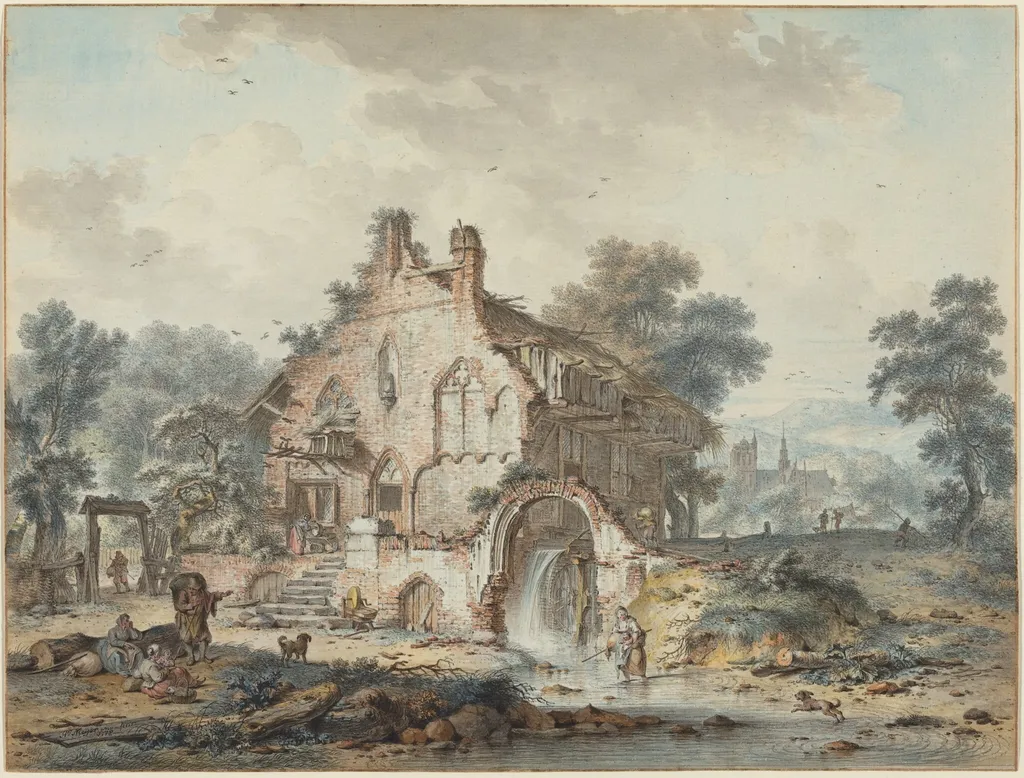
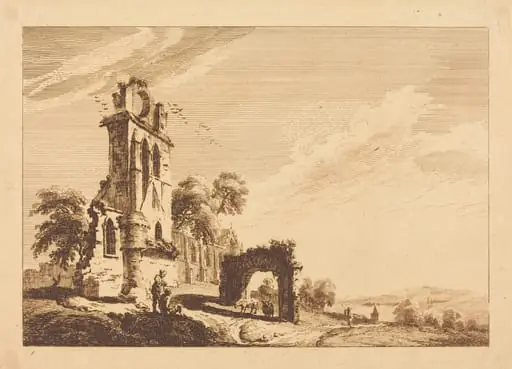
Rustic Watermill in a Gothic Ruin is an ink drawing by the Romanticist artist Hendrik de Meyer II. It dates from 1778 and is held in the collection of the National Gallery of Art.
About this work
Overview
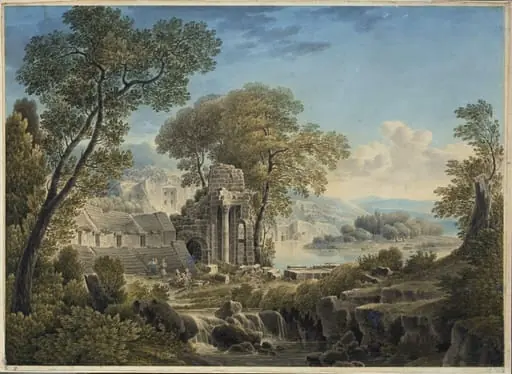
Created in 1778 by Hendrik de Meyer II, this drawing depicts a neglected watermill entwined with vegetation, nestled within the remnants of a Gothic structure.
Created in 1778 by Hendrik de Meyer II, this drawing depicts a neglected watermill entwined with vegetation, nestled within the remnants of a Gothic structure. Executed in pen, black chalk, and watercolor on laid paper, it captures a tranquil, secluded landscape where human presence is minimal and subdued. The composition balances architectural decay with natural reclamation, evoking a mood of quiet contemplation rather than dramatic ruin.
Subject & Meaning
The scene centers on a watermill in advanced disrepair, its stonework overtaken by ivy and moss. Figures scattered along the riverbank and path suggest everyday life continuing amid abandonment. The distant church spire hints at enduring spiritual or communal presence. Together, these elements convey a sense of time’s quiet passage—nature reasserting itself over human endeavor without sentimentality or grandeur.
Technique & Style
De Meyer employed black chalk for loose, expressive underdrawing, then layered translucent watercolor washes to suggest weathered stone and atmospheric haze. Glazing techniques softened transitions between light and shadow, enhancing the illusion of depth and moisture in the air. The ink lines define structural elements with restraint, allowing the watercolor to dominate the emotional tone—delicate, muted, and evocative.
History & Provenance
The drawing was completed in 1778, during a period when Dutch artists increasingly turned to landscape and ruin motifs as subjects of quiet reflection. Its early provenance is undocumented, but it likely remained within private collections in the Netherlands before entering institutional hands. No major exhibitions or publications are recorded prior to its modern cataloging.
Context
In late 18th-century Northern Europe, interest in ruins and pastoral scenes grew alongside Enlightenment ideals of nature and time. De Meyer’s work aligns with a regional trend of depicting modest, unheroic decay—contrasting with grander antiquarian ruins elsewhere. His focus on a local watermill reflects a shift toward intimate, vernacular landscapes rather than classical or exotic subjects.
Legacy
Though not widely known outside specialist circles, the drawing exemplifies a subtle strand of Dutch topographical art that valued observation over drama. Its restrained palette and attention to atmospheric detail influenced later 19th-century landscape draftsmen who sought emotional resonance in everyday decay. The work remains a quiet testament to the aesthetic value of impermanence.
Artist & collection


 Pastoral Landscape with a Ruin
 Mill with Bridge and Figures
 Le Petit Trianon, Versailles
 Theatre of Myra, now Demre, in Lycia
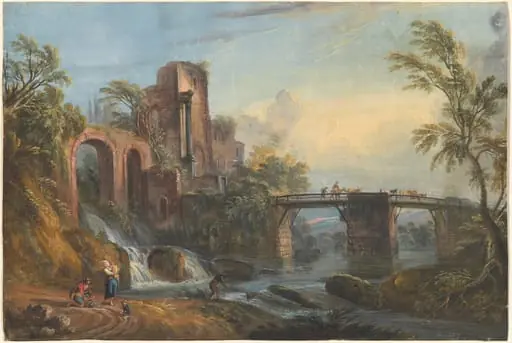 Dawn Landscape with Classical Ruins
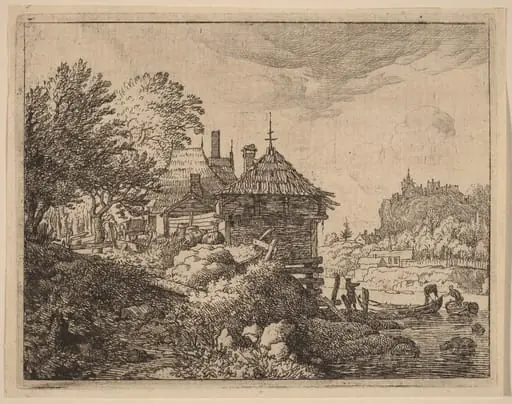 Two Boats Approaching a Hut
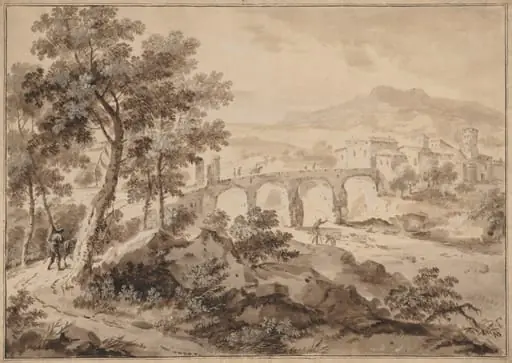 Landscape with Bridge
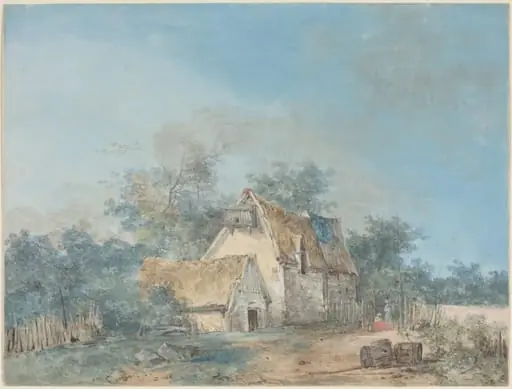 Landscape
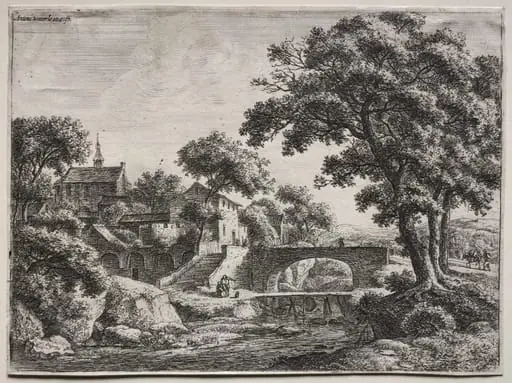 Twelve landscapes (H.95-106): The Two Bridges
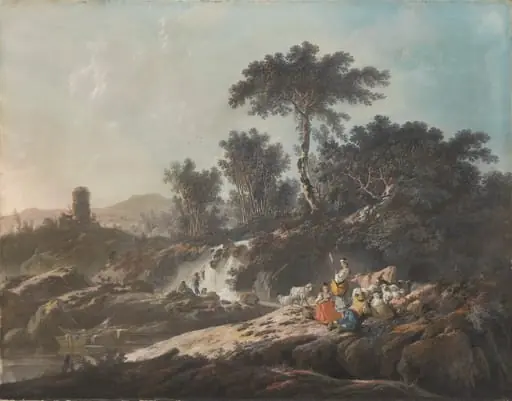 Shepherds Resting by a Stream
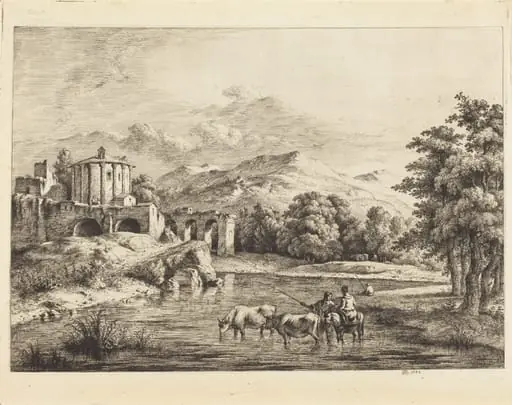 The Temple of Vesta
 Ruined Abbey