Artwork
Thistle, Pumpkin and a Goat
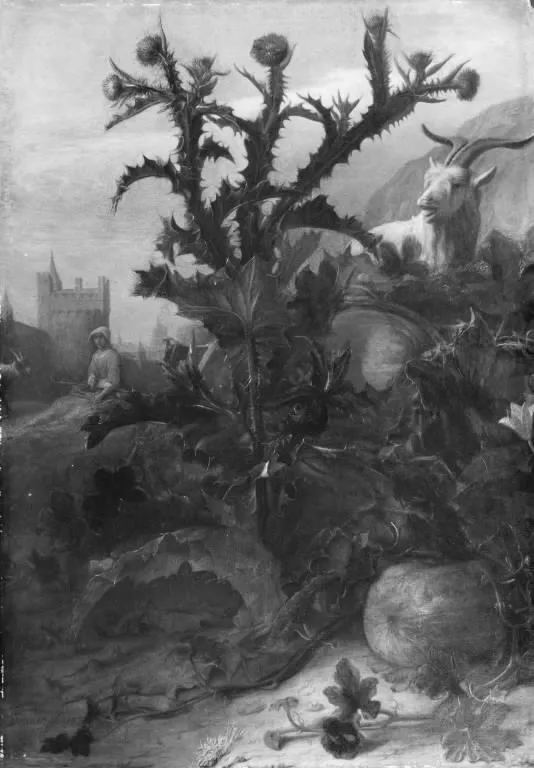
Thistle, Pumpkin and a Goat is an unspecified painting by the Dutch Golden Age artist Lambert Doomer. It dates from 1675 and is held in the collection of the Statens Museum for Kunst.
About this work
The artist, Lambert Doomer, was a Dutch painter who lived in the 17th century.
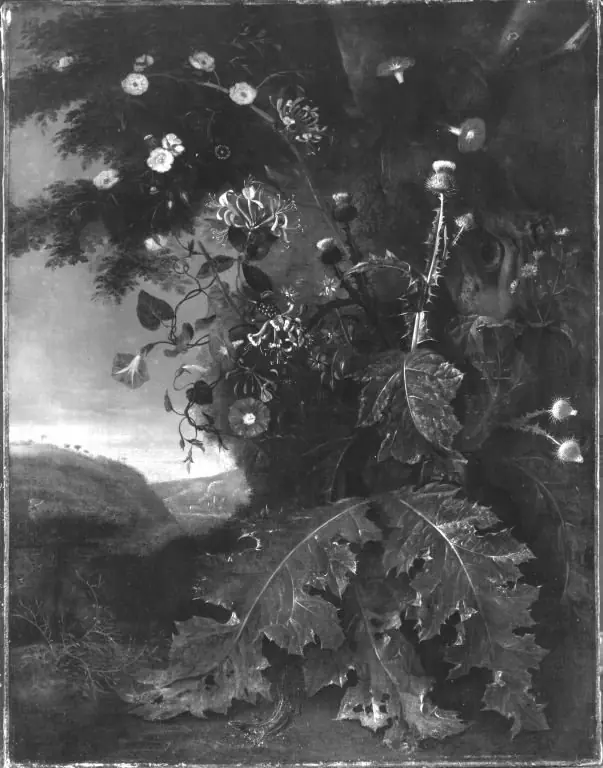
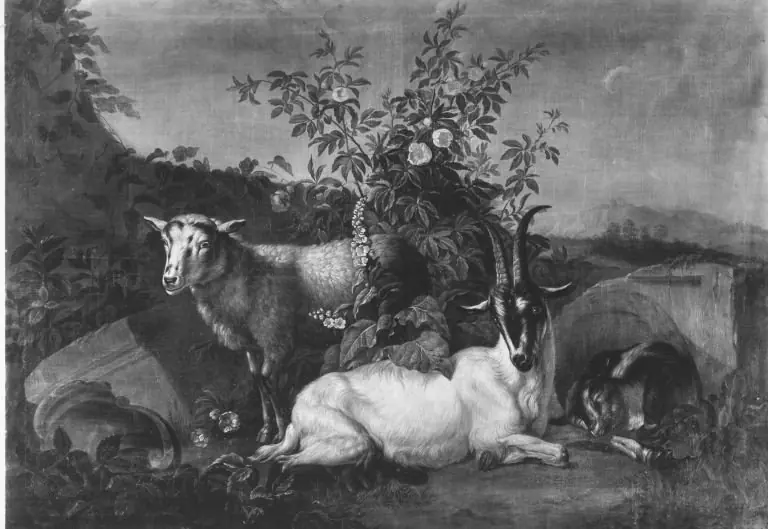
This painting shows a thistle plant with prickly leaves and a few flowers. A goat is standing behind the plant, looking to the right. There's a large pumpkin on the ground in front of the thistle. In the background, there's a castle and some hills. The painting is in black and white.
The painting has a lot of detail, especially in the thistle plant. You can see the texture of the leaves and the flowers. The goat is also well-drawn, with its fur and horns visible.
The artist, Lambert Doomer, was a Dutch painter who lived in the 17th century. This painting is one of his works, created in 1675. It's now held at the Statens Museum for Kunst.
Overview
Lambert Doomer’s 1675 canvas entitled *Thistle, Pumpkin and a Goat* presents a modest rural tableau rendered in monochrome. Central to the composition is a thistle with its characteristic spiny foliage and modest blossoms, a sizable pumpkin rests at its base, and a goat stands just behind, gazing toward the right. In the distance, a low castle and undulating hills complete the setting.
Subject & Meaning
The work juxtaposes cultivated and wild elements—a cultivated pumpkin, a hardy thistle, and a domestic goat—suggesting a contemplation of the relationship between human agriculture and the surrounding landscape. The distant castle hints at human presence beyond the immediate scene, while the goat’s attentive pose may imply a quiet observation of its environment.
Technique & Style
Doomer employs fine, linear drawing to articulate the textures of the thistle’s leaves and the goat’s fur, achieving a tactile quality despite the limited palette. The monochromatic scheme emphasizes tonal contrasts, allowing the intricate detailing of foliage and animal anatomy to stand out against the softer, atmospheric background of hills and architecture.
History & Provenance
Created in the latter half of the 17th century, the painting entered the collection of Denmark’s Statens Museum for Kunst, where it remains on display. Its attribution to Doomer aligns with his known oeuvre of Dutch landscape and genre scenes, confirming its place within his productive period of the 1670s.
Artist & collection