Artwork
Hollow Tree, after Roelant Savery
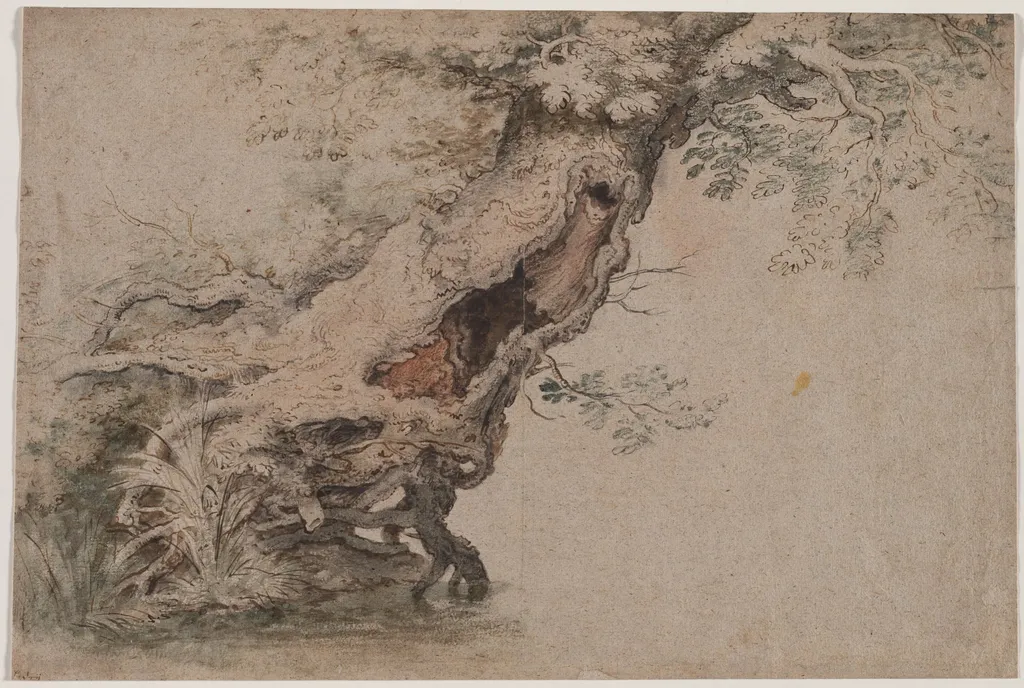
Hollow Tree, after Roelant Savery is a drawing by the Baroque artist Lambert Doomer. It dates from 1670 and is held in the collection of the Cleveland Museum of Art.
About this work
Overview
Executed in brown and gray washes with subtle green accents, it captures a gnarled tree with a hollow trunk and sprawling roots on uneven terrain.
Created in 1670 by Lambert Doomer, this drawing is a study after a composition by Roelant Savery. Executed in brown and gray washes with subtle green accents, it captures a gnarled tree with a hollow trunk and sprawling roots on uneven terrain. The loose, rapid handling suggests it was made as a preparatory observation rather than a finished work. It resides in the collection of The Cleveland Museum of Art.
Subject & Meaning
The drawing centers on a solitary, weathered tree, its hollow trunk and exposed roots suggesting age and resilience. The barren branches, sparsely dotted with leaves, evoke a quiet sense of endurance amid rocky, unforgiving ground. Rather than idealizing nature, Doomer presents it as a tangible, lived-in environment—emphasizing the tree’s physical presence over symbolic meaning.
Technique & Style
Doomer employed ink and wash to build texture, using varied brushstrokes to render the rough bark and uneven earth. The palette is restrained—browns, grays, and faint greens—enhancing the drawing’s immediacy. The sketchy, unpolished quality reflects a direct engagement with the subject, aligning with Baroque-era practices that valued observational accuracy over finish.
History & Provenance
The drawing is attributed to Lambert Doomer, a Dutch artist active in the mid-to-late 17th century known for his landscape studies. It derives from a composition by Roelant Savery, whose detailed natural scenes were widely admired. The work entered the Cleveland Museum of Art’s collection through established acquisition channels, though its earlier provenance remains undocumented.
Context
In the Dutch Golden Age, artists frequently made studies after earlier works as part of their training. Doomer’s drawing reflects this tradition, engaging with Savery’s reputation for naturalistic detail. Such sketches were common among artists seeking to understand composition and texture, particularly in depictions of trees and wilderness, which held cultural resonance in a landscape-conscious society.
Legacy
This drawing exemplifies how 17th-century artists preserved and reinterpreted visual ideas through direct observation. While not widely exhibited, it contributes to understanding the transmission of compositional motifs among Dutch draftsmen. Its modest scale and unfinished character highlight the value placed on process and study in the period’s artistic culture.
Artist & collection


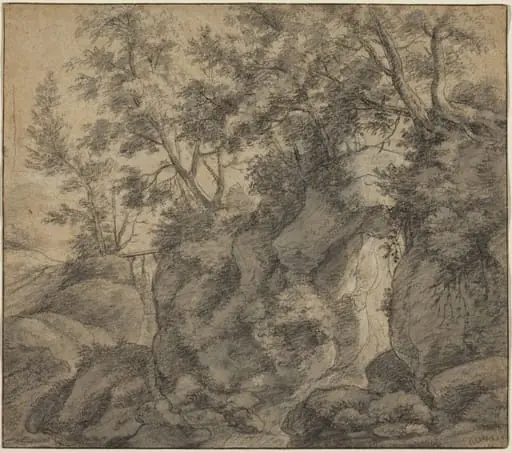 Landscape with a Wooded Ravine
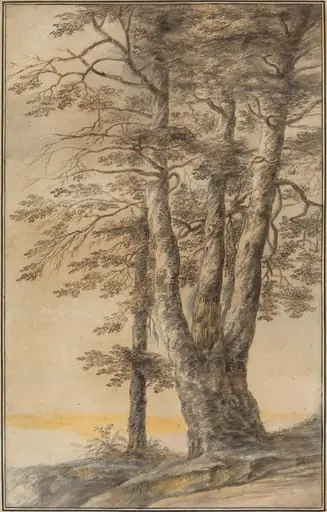 Study of Trees
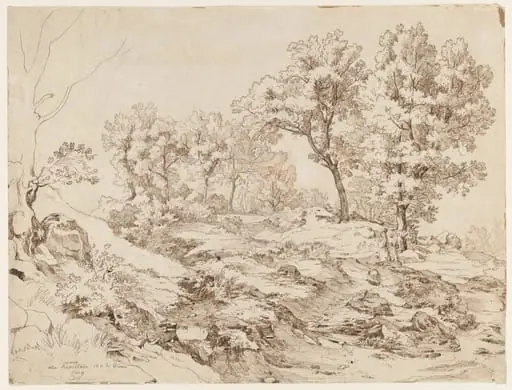 La Serpentara near Olevano
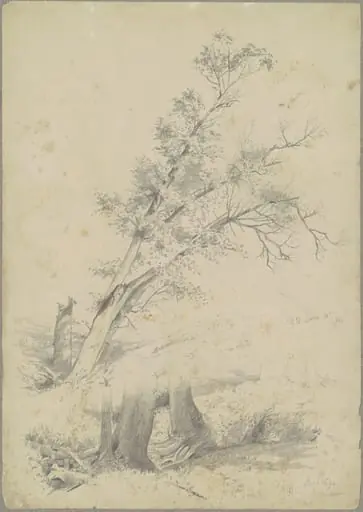 Trees, Hudson
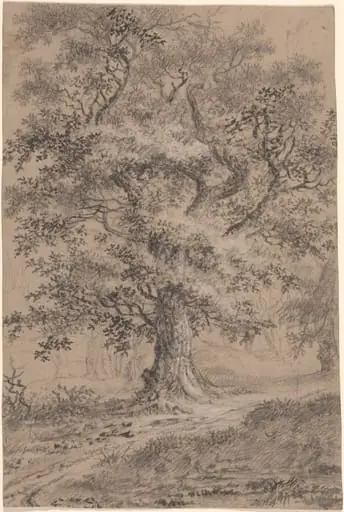 A Leafy Oak by a Woodland Path
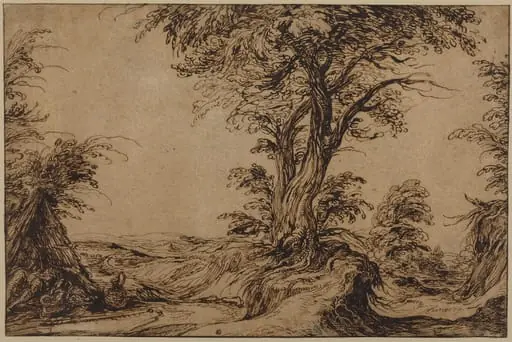 Landscape with Sleeping Peasants
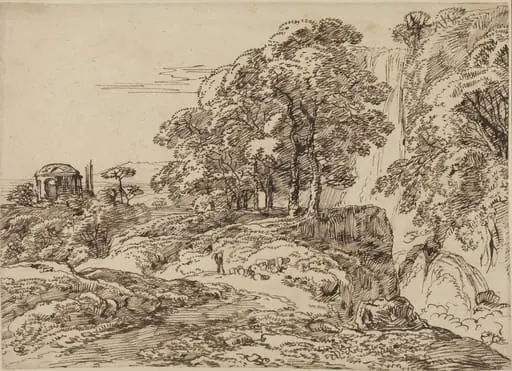 Pastoral Landscape with a Waterfall and a Temple
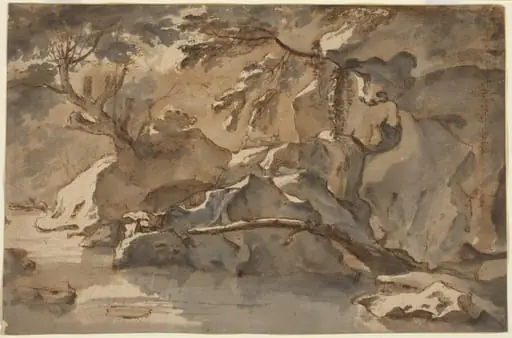 Landscape (after Paul Bril)
 Two Figures Fishing in a Landscape
 Wooded Landscape
 Meadow with a Shepherd and Cows
 An Ancient Tree Fallen Beside a Stream