Artwork
Sibyl Agrippina
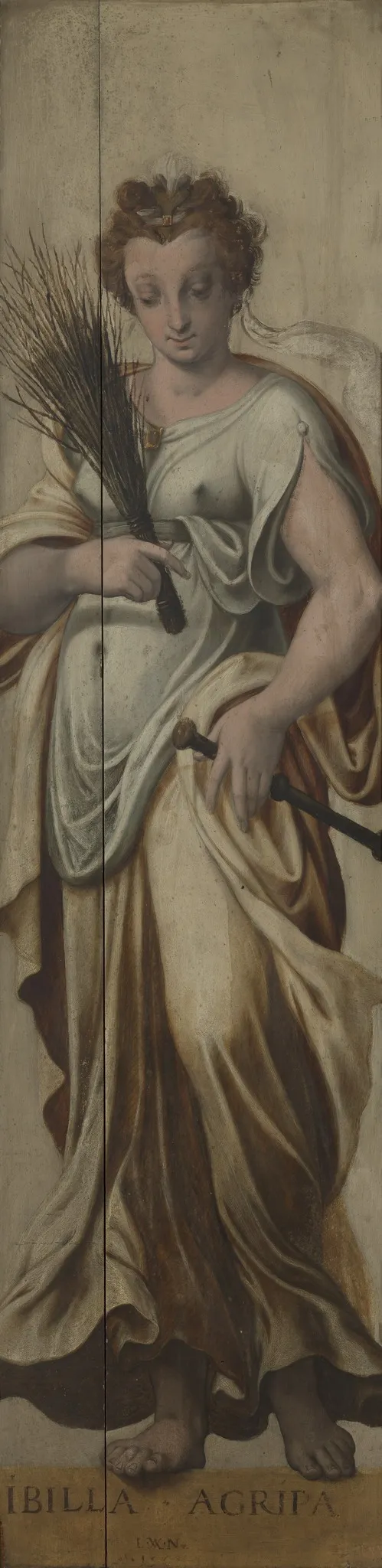
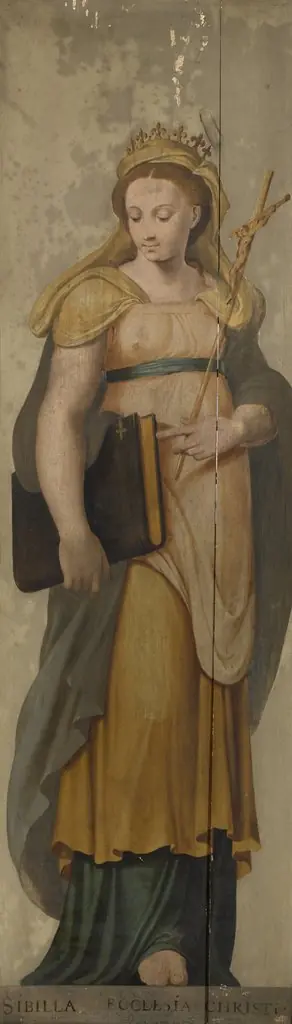
Sibyl Agrippina is an oil painting by the Mannerist artist Lambert van Noort. It dates from 1565 and is held in the collection of the Royal Museum of Fine Arts Antwerp.
About this work
Overview
Her bare feet and simple yet symbolic attributes suggest a figure drawn from classical or religious tradition, though her exact identity remains interpretive.
Painted in 1565 by Lambert van Noort, this oil on panel work portrays a female figure identified as Sibyl Agrippina. It resides in the Royal Museum of Fine Arts Antwerp. The composition centers on a solitary woman, rendered with quiet dignity against a neutral background. Her bare feet and simple yet symbolic attributes suggest a figure drawn from classical or religious tradition, though her exact identity remains interpretive.
Subject & Meaning
The figure is traditionally associated with the Sibyls—prophetic women of antiquity. The sheaf of wheat may symbolize fertility, harvest, or divine provision, while the staff implies authority or guidance. Her serene expression and composed posture evoke a sense of inner wisdom rather than dramatic revelation. The absence of elaborate narrative elements invites contemplation of her role as a silent oracle, bridging earthly and divine realms.
Technique & Style
Van Noort employs subtle chiaroscuro to model the figure’s form, lending volume without dramatic contrast. The white garment catches light softly, contrasting with the muted beige background to isolate the subject. Brushwork is restrained, favoring smooth transitions over texture. The flowing cloak and delicate folds suggest attention to classical drapery traditions, while the bare feet and headband reinforce an archaic, almost ritualistic presence.
History & Provenance
The painting entered the collection of the Royal Museum of Fine Arts Antwerp in the 19th century, though its earlier ownership is undocumented. It was likely commissioned for private devotion or as part of a series of Sibyls, common in Northern Renaissance art. No records of its initial display or patron exist, but its preservation suggests it was valued within a collector’s circle familiar with classical themes.
Context
In mid-16th century Antwerp, interest in classical antiquity flourished among humanist circles. Sibyls frequently appeared in religious and scholarly art as pagan prophets who foreshadowed Christian revelation. Van Noort’s depiction aligns with this trend, offering a restrained, introspective take compared to more theatrical interpretations. The painting reflects the city’s intellectual climate, where myth and faith coexisted in visual culture.
Legacy
While not widely reproduced, the work contributes to the understanding of how Northern artists engaged with classical iconography beyond grand historical scenes. Its quiet intensity distinguishes it from more ornate contemporaries. As one of van Noort’s few surviving religious figures, it remains a quiet testament to the period’s nuanced approach to mythological subjects in a predominantly Protestant region.
Artist & collection