Artwork
Samson destroying the Temple
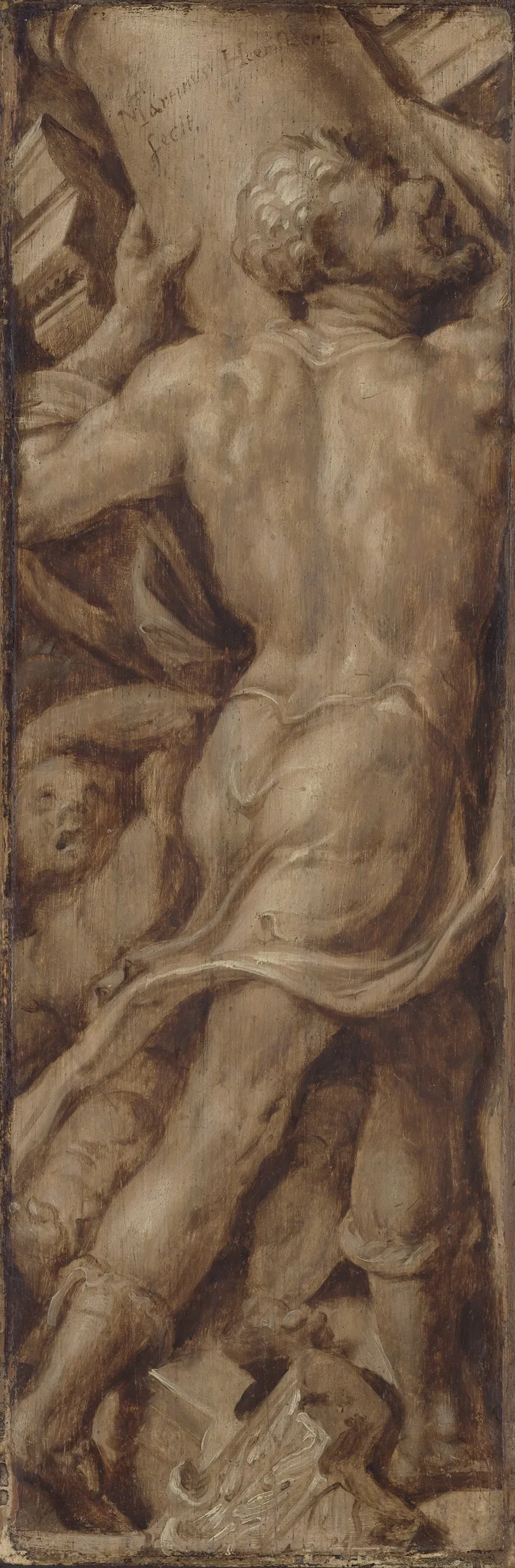
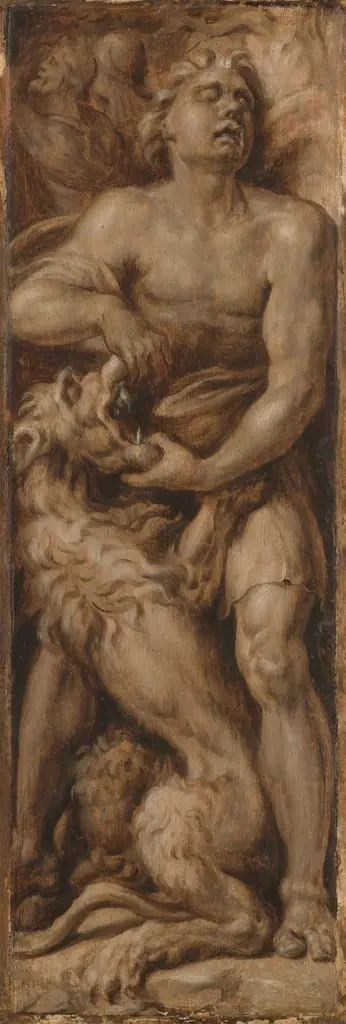
Samson destroying the Temple is an oil painting by the Mannerist artist Maarten van Heemskerck. It dates from 1550 and is held in the collection of the Rijksmuseum.
About this work
Overview
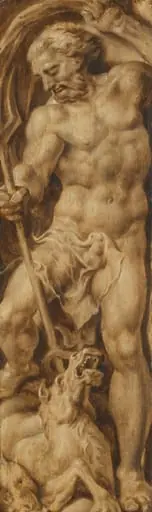
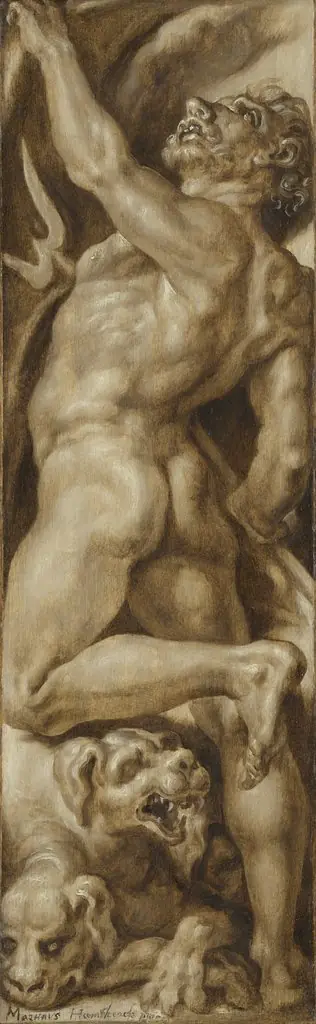
Maarten van Heemskerck’s oil painting *Samson destroying the Temple* dates to circa 1550. Executed in a Mannerist idiom, the work captures a moment of biblical violence, with the hero Samson tearing down a massive stone temple. The composition is dominated by a muscular figure whose strained pose and outstretched arms convey the physical effort of the collapse.
Subject & Meaning
The scene draws on the Old Testament story of Samson, whose final act of strength brings down the Philistine sanctuary, killing his enemies and himself. By emphasizing the raw power and the chaotic aftermath, the painting reflects themes of divine retribution and the paradox of strength that leads to self‑destruction, resonating with contemporary moral narratives.
Technique & Style
Heemskerck employs pronounced chiaroscuro to model the central figure, creating a stark contrast between illuminated musculature and shadowed background. The exaggerated anatomy and dynamic pose are hallmarks of Mannerist aesthetics, while the densely packed debris and turbulent sky heighten the sense of movement and emotional intensity.
History & Provenance
The Dutch artist, a pupil of Jan van Scorel, spent four years in Italy (1532‑1536), absorbing the Italian Renaissance’s compositional strategies before returning to Haarlem. *Samson destroying the Temple* entered the Rijksmuseum’s collection, where it remains part of the museum’s holdings of 16th‑century Dutch painting.
Artist & collection
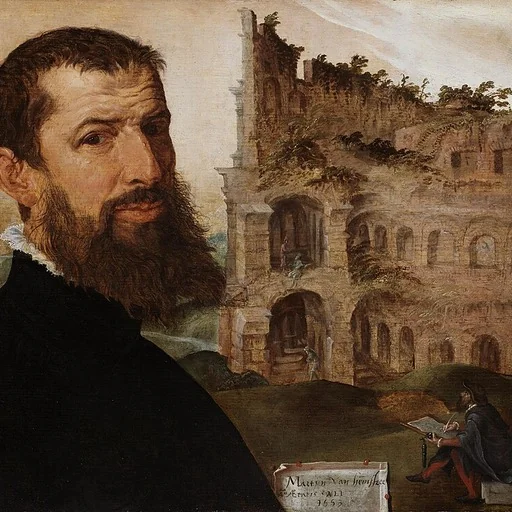
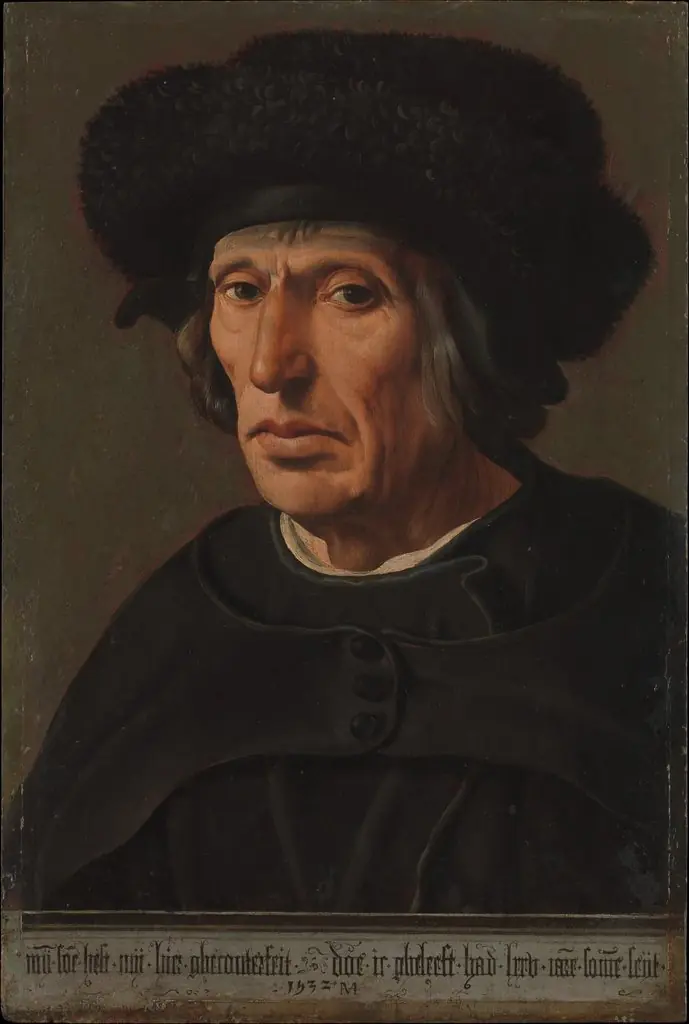
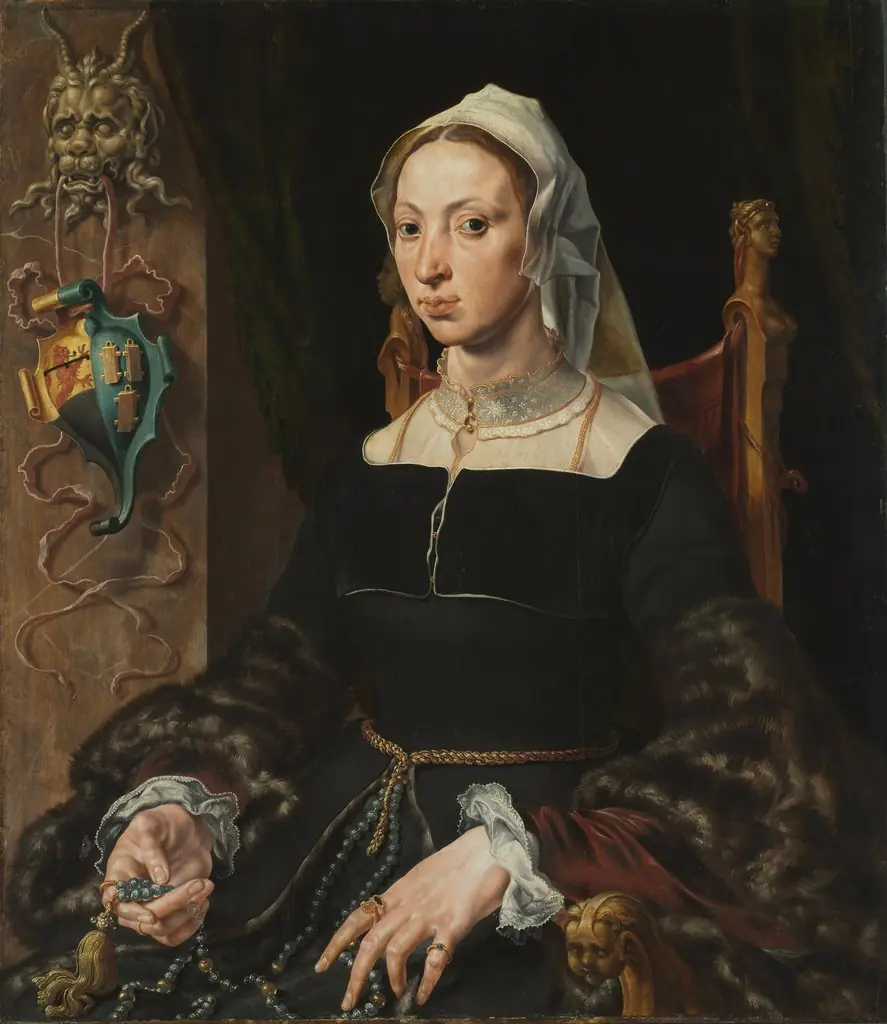
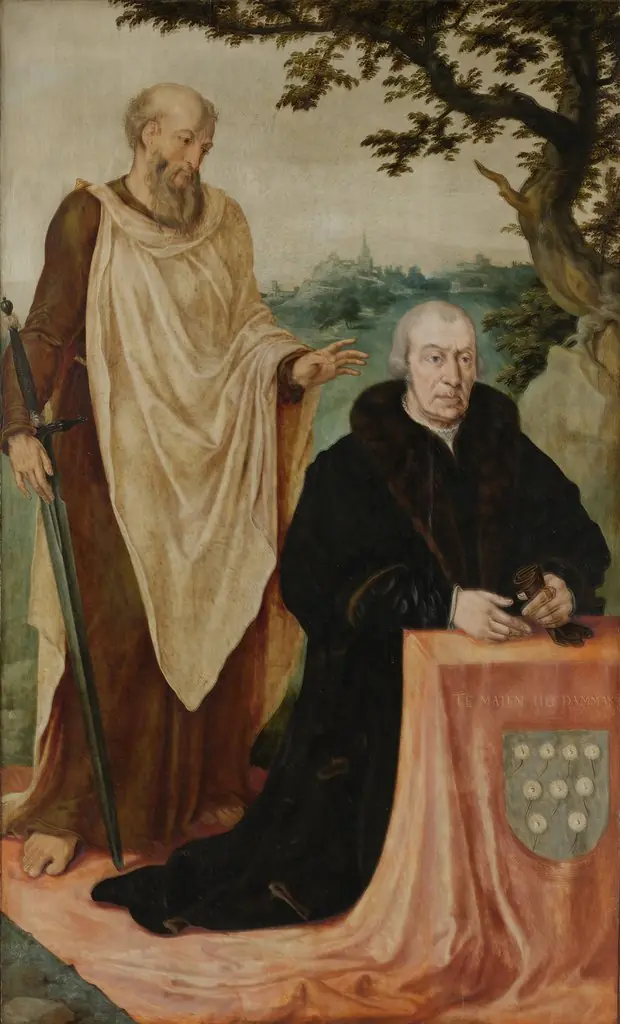
Artist
Maarten van Heemskerck (born Maerten Jacobsz van Veen; 1 June 1498 – 1 October 1574), also known as Marten Jacobsz Heemskerk van Veen, was a Dutch portrait and religious painter, who spent most of his career in Haarlem.