Artwork
Sibyl from Delphi

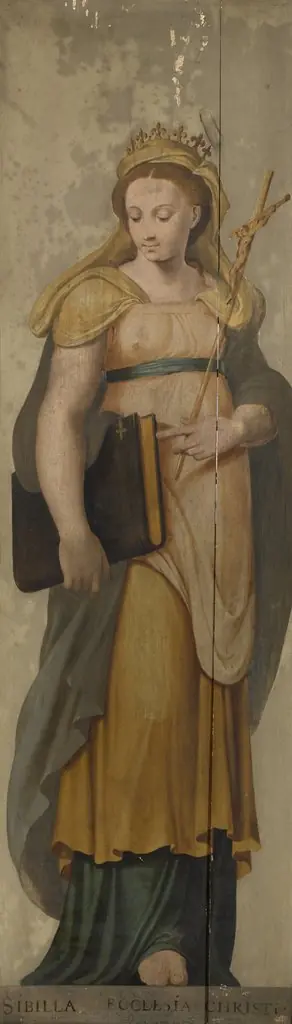
Sibyl from Delphi is an oil painting by the Mannerist artist Lambert van Noort. It dates from 1565 and is held in the collection of the Royal Museum of Fine Arts Antwerp.
About this work
Overview
Painted in 1565 by Lambert van Noort, this oil-on-panel work portrays a figure identified as the Sibyl of Delphi. It resides in the Royal Museum of Fine Arts Antwerp, where it is among the few surviving panel paintings by the artist. The composition centers on a solitary female figure against a muted background, emphasizing her symbolic presence over narrative detail.
Subject & Meaning
Unlike traditional depictions, the object resists clear identification, inviting contemplation rather than literal interpretation.
The figure represents the Delphic Sibyl, a prophetic woman from classical antiquity often associated with divine inspiration. Her crown suggests authority or sacred status, while the dark, thorned object she holds may symbolize the burden of prophecy or the duality of foresight—both gift and curse. Unlike traditional depictions, the object resists clear identification, inviting contemplation rather than literal interpretation.
Technique & Style
Van Noort employs fine brushwork to render the folds of the yellow garment, creating a sense of weight and texture. The crown is detailed with precision, contrasting with the simplified background in pale beige. The dark, spiky object in her hands introduces a stark tonal contrast, drawing attention without narrative explanation. The style reflects Northern Renaissance attention to detail, tempered by a restrained, almost austere composition.
History & Provenance
The painting entered the collection of the Royal Museum of Fine Arts Antwerp in the 19th century, likely through municipal or ecclesiastical acquisitions common after the dissolution of religious institutions. Its attribution to Lambert van Noort is based on stylistic comparison with signed works and archival records from Antwerp’s artistic circles of the mid-16th century. No earlier documentation of its ownership is known.
Context
In the mid-1500s, Antwerp was a hub for religious and mythological imagery, often blending classical and Christian themes. The Sibyls, as pagan prophetesses foretelling Christ’s coming, were popular subjects in Counter-Reformation art. Van Noort’s version, however, omits overt Christian symbolism, suggesting a more humanist or antiquarian interest in classical figures than doctrinal messaging.
Legacy
Though not widely reproduced or studied, this painting remains a rare example of van Noort’s panel work and reflects the persistence of classical themes in Northern European art after the Reformation. Its quiet intensity and ambiguous symbolism distinguish it from more dramatic contemporaries, offering a subtle meditation on prophecy and authority in a time of religious upheaval.
Artist & collection