Artwork
Etude de femme
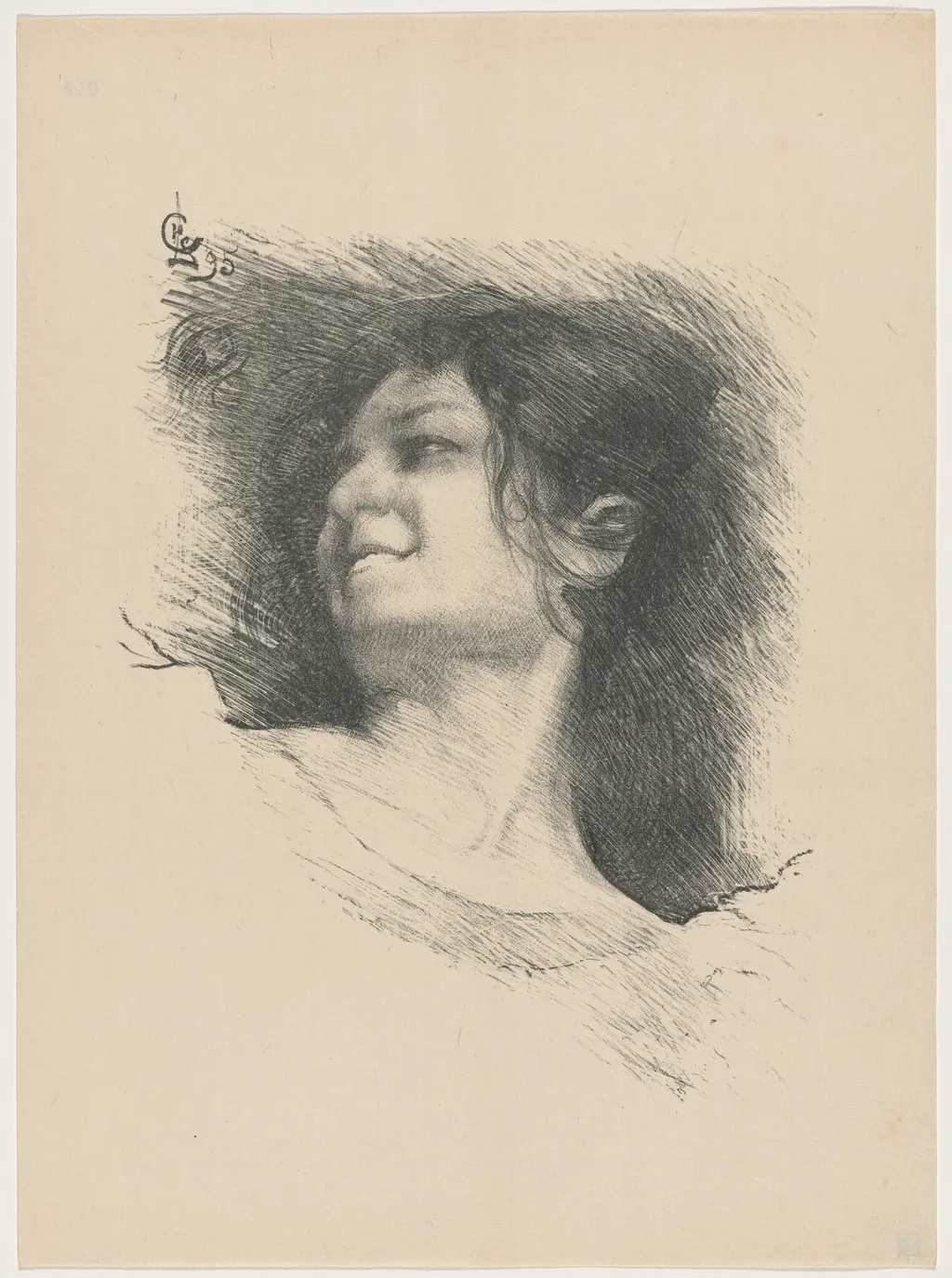
Etude de femme is an ink print by the Impressionist artist Lapierre. It dates from 1895 and is held in the collection of the National Gallery of Art.
About this work
Overview
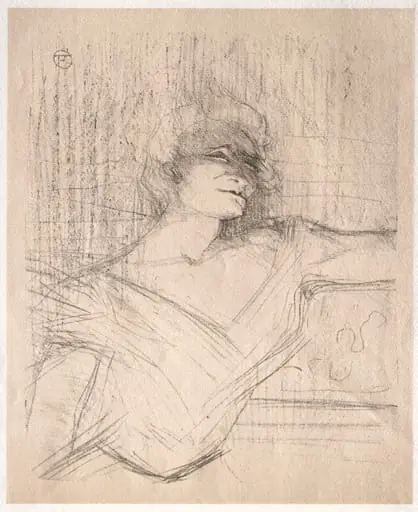
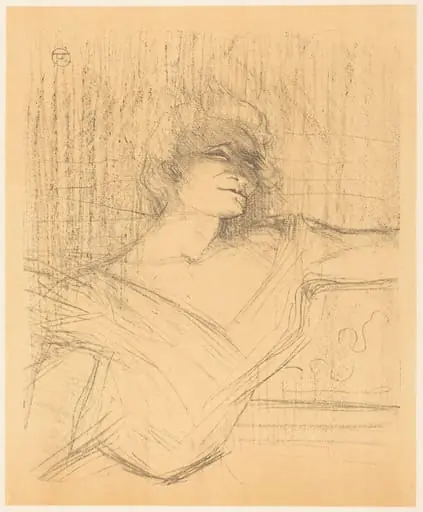
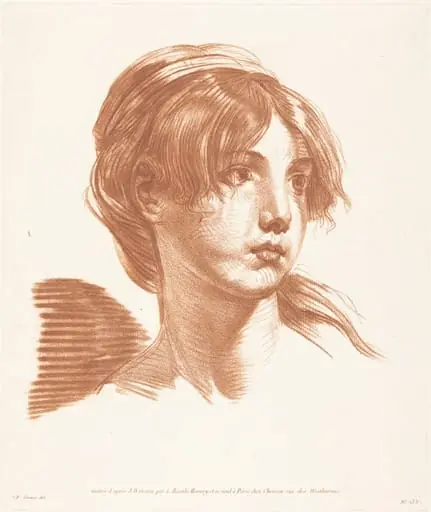
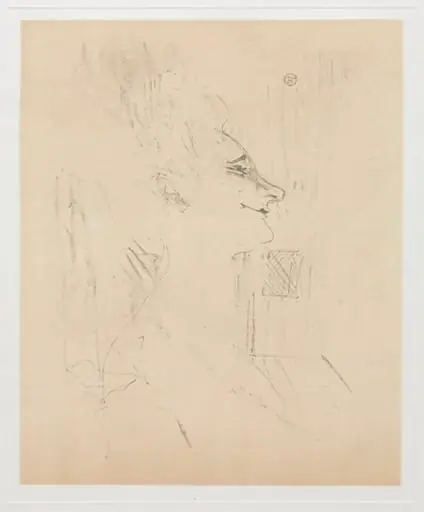
Created in 1895, Etude de femme is a lithograph by Lapierre, executed in green-black ink on thin Japan paper. The work presents a close-up of a woman’s head and shoulders, rendered with restrained tonal variation. Its modest scale and delicate medium reflect an intimate approach to portraiture, emphasizing quiet observation over dramatic expression.
Subject & Meaning
The subject is a woman with tousled dark hair and downcast eyes, suggesting introspection or quiet contemplation. Her expression is neither staged nor theatrical, avoiding narrative clarity in favor of psychological nuance. The absence of context or identifying details invites the viewer to focus on the subtlety of her demeanor, evoking a sense of private stillness.
Technique & Style
Lapierre employed lithography to achieve soft gradations of green-black ink, exploiting the absorbent quality of Japan paper for delicate tonal transitions. Light is suggested through minimal shading, gently modeling the contours of the face without sharp definition. The background remains muted and unobtrusive, allowing the figure to emerge through subtle contrast rather than bold outline.
History & Provenance
The work dates from the mid-1890s, a period when lithography was increasingly used by artists for private studies and limited editions.
The work dates from the mid-1890s, a period when lithography was increasingly used by artists for private studies and limited editions. While Lapierre’s broader oeuvre remains less documented, this piece aligns with contemporaneous practices among French printmakers who favored intimate, non-commercial subjects. Its survival on fragile Japan paper suggests it was likely preserved by a collector or artist’s circle.
Context
Produced during the late 19th century, the image reflects a broader interest in informal portraiture among artists moving beyond academic conventions. Though not formally part of Impressionism, its focus on fleeting expression and subdued palette resonates with the movement’s sensitivity to mood and atmosphere, particularly in works by lesser-known printmakers of the era.
Legacy
Etude de femme endures as an example of quiet, skilled draftsmanship in printmaking. It represents a moment when lithography served as a vehicle for personal, non-monumental expression. While not widely exhibited, it contributes to understanding the diversity of late 19th-century graphic art beyond major movements and celebrated names.
Artist & collection