Artwork
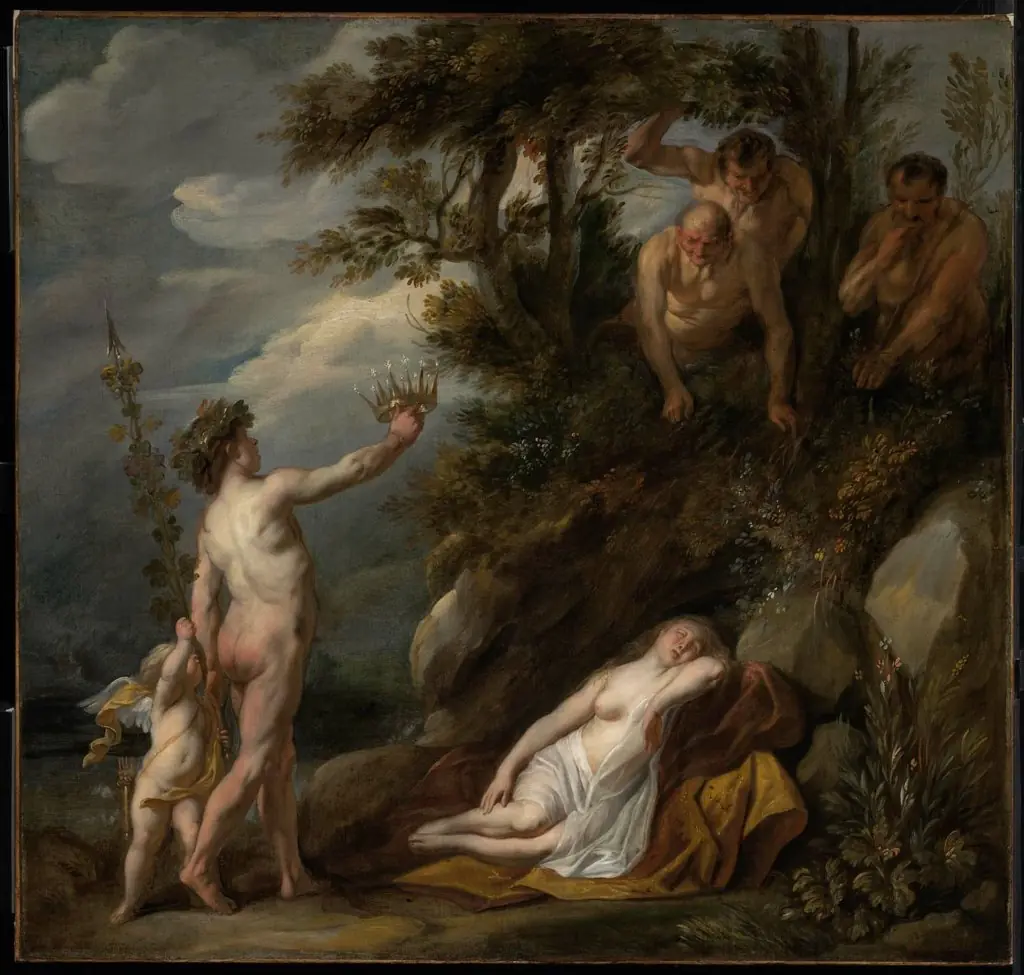
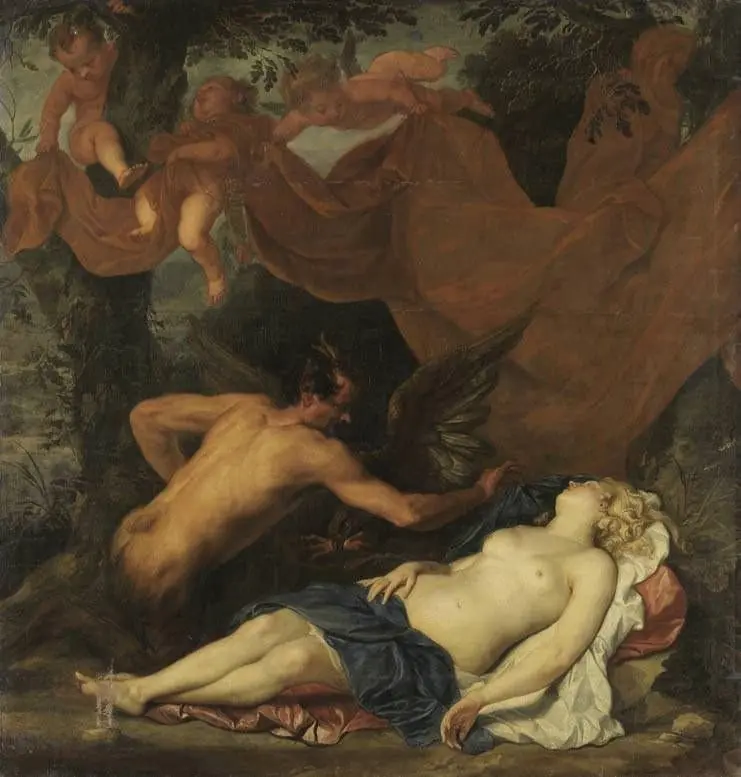
Sleeping Nymph Watched by a Man
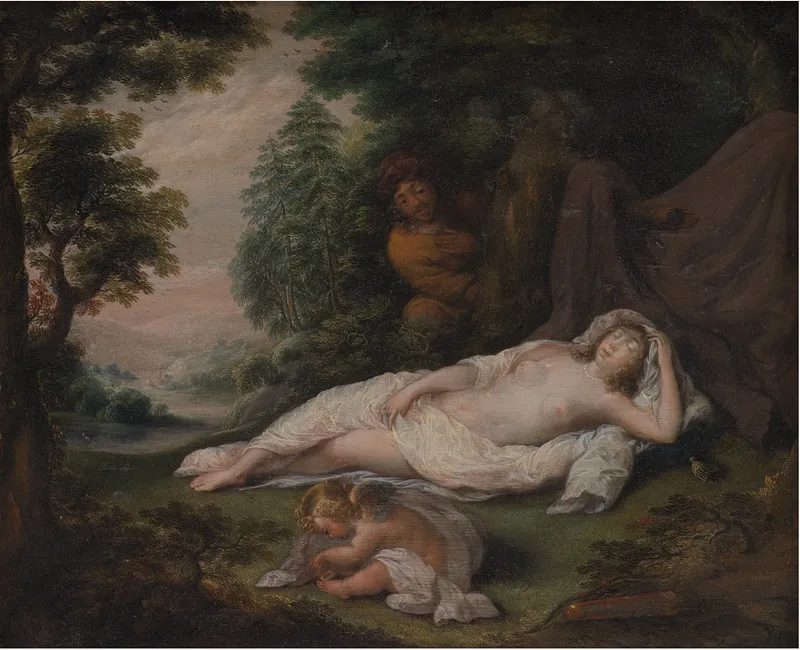
Sleeping Nymph Watched by a Man is an unspecified painting by the Flemish Baroque painting artist Laurentius de Neter. It dates from 1649 and is held in the collection of the Statens Museum for Kunst.
About this work
The painting is called "Sleeping Nymph Watched by a Man" and it was made by Laurentius de Neter in 1649.
This painting shows a woman lying on the ground, covered by a white cloth. She is surrounded by trees and bushes. A man is sitting behind her, watching her. He is wearing a yellow shirt and brown pants. There is also a small child sitting on the ground in front of the woman.
The woman is sleeping, and the man is looking at her. The child is playing with something on the ground. The painting is very detailed, with lots of colors and textures. You can see the leaves on the trees and the folds in the woman's cloth.
The painting is called "Sleeping Nymph Watched by a Man" and it was made by Laurentius de Neter in 1649. You can see more paintings like this one by looking up the artist Laurentius de Neter.
Overview
Laurentius de Neter’s 1649 canvas, titled Sleeping Nymph Watched by a Man, presents a quiet, wooded scene in which a reclining female figure, draped in a white veil, lies amid foliage. A seated man in a yellow shirt observes her, while a small child crouches nearby, occupied with an object on the ground. The work is part of the collection of Denmark’s Statens Museum for Kunst.
Subject & Meaning
The central figure is a nymph, a mythological spirit associated with nature, depicted in a state of repose. The attentive male figure suggests a narrative of voyeurism or protective watchfulness, while the child’s playful activity adds a domestic, almost tender counterpoint. The composition invites contemplation of the boundaries between the divine, the mortal, and innocence.
Technique & Style
De Neter employs a meticulous baroque palette, rendering foliage with layered greens and detailed leaf veins. The white cloth’s folds are modeled through subtle chiaroscuro, creating a tactile sense of texture. Fine brushwork captures the varied fabrics and the natural environment, while the figures are rendered with a soft, almost luminous flesh tone typical of mid‑17th‑century Northern European painting.
History & Provenance
Created in 1649, the painting entered the Statens Museum for Kunst’s holdings during the 20th century, though the exact acquisition date remains undocumented in public records. Its presence in the museum’s collection underscores the institution’s focus on preserving works that illustrate the mythological genre within Danish and broader European art histories.
Context
The work reflects the 17th‑century fascination with classical mythology, a theme popular among Northern European artists who adapted ancient stories to local sensibilities. De Neter’s choice to combine a serene natural setting with intimate human figures aligns with contemporary trends that emphasized narrative detail and moral allegory within mythic frameworks.
Artist & collection