Artwork
A Corner of the Gardens of the Villa Borghese
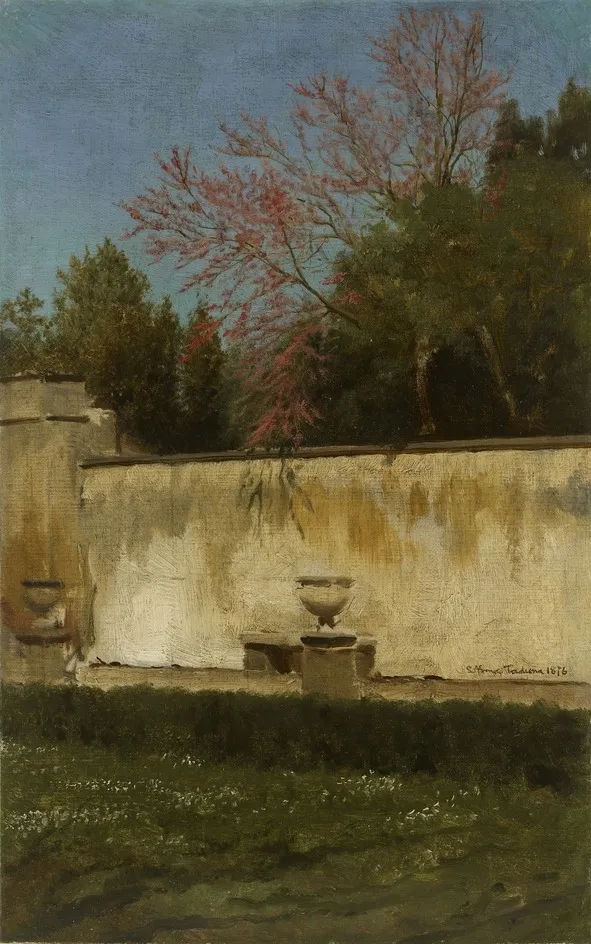
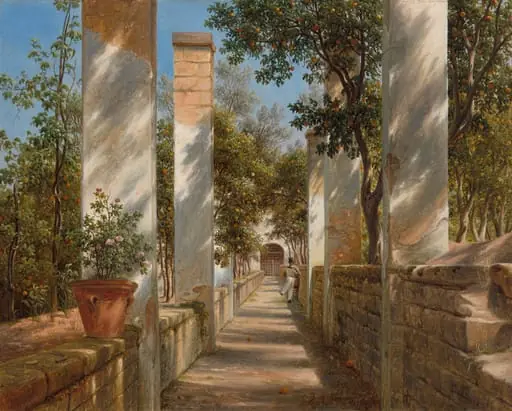
A Corner of the Gardens of the Villa Borghese is an oil painting by the Impressionist artist Lawrence Alma-Tadema. It dates from 1888 and is held in the collection of the Ashmolean Museum.
About this work
The artist's use of color and composition creates a sense of tranquility, inviting the viewer to step into the peaceful atmosphere of the gardens.
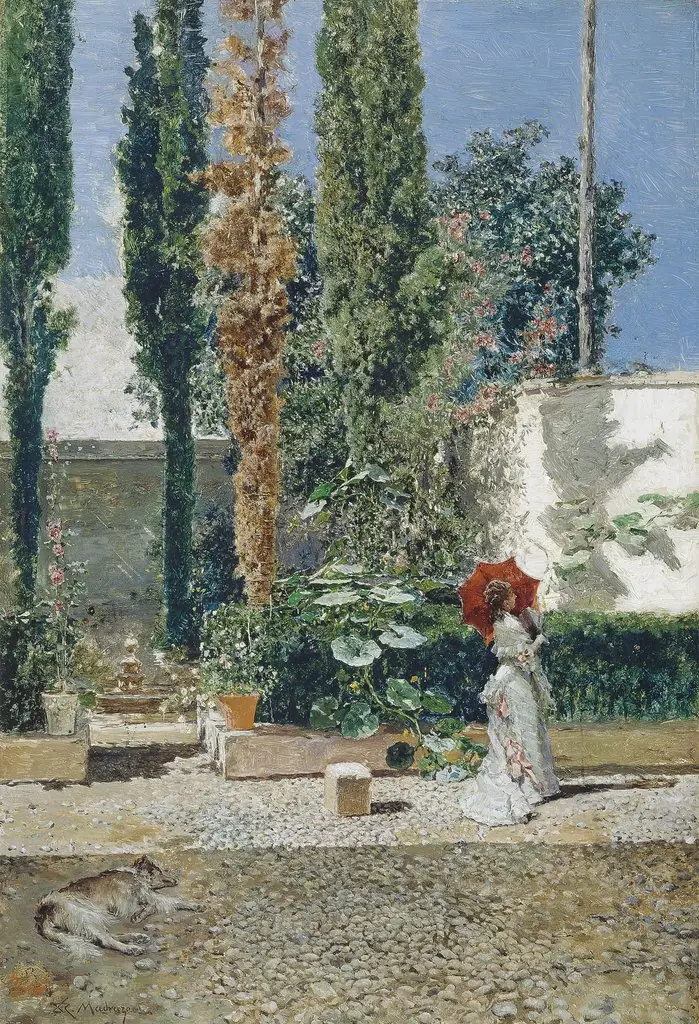
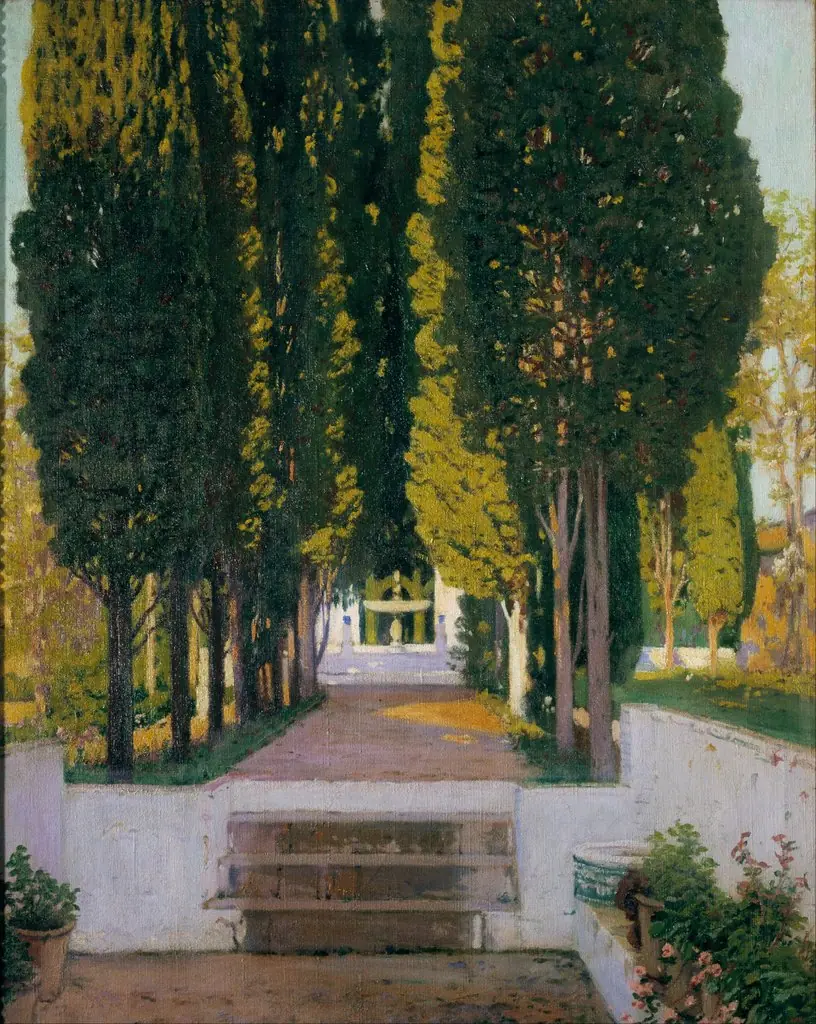
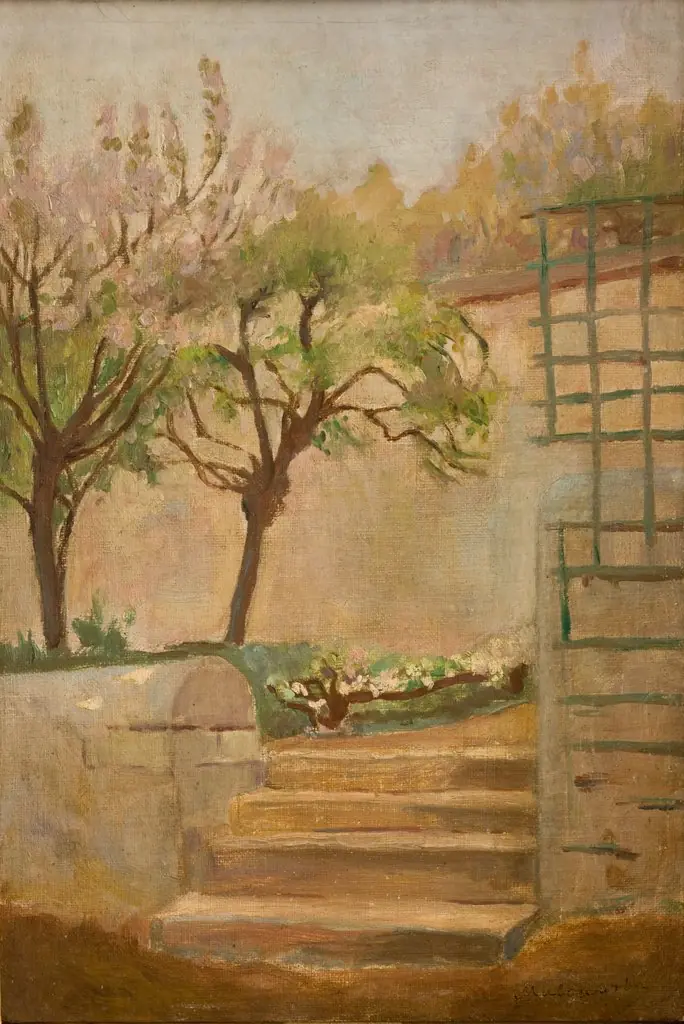
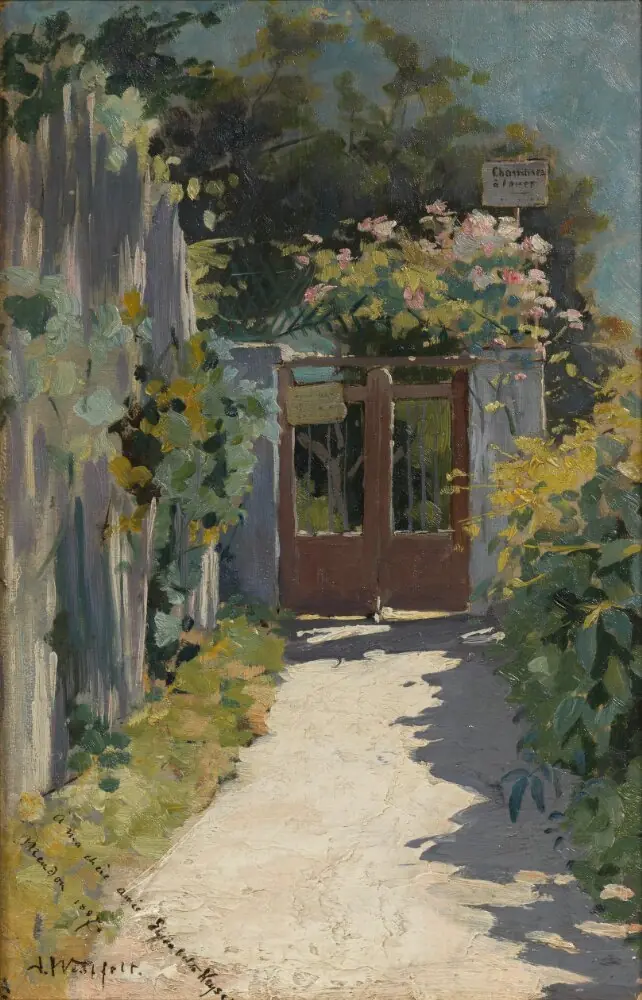
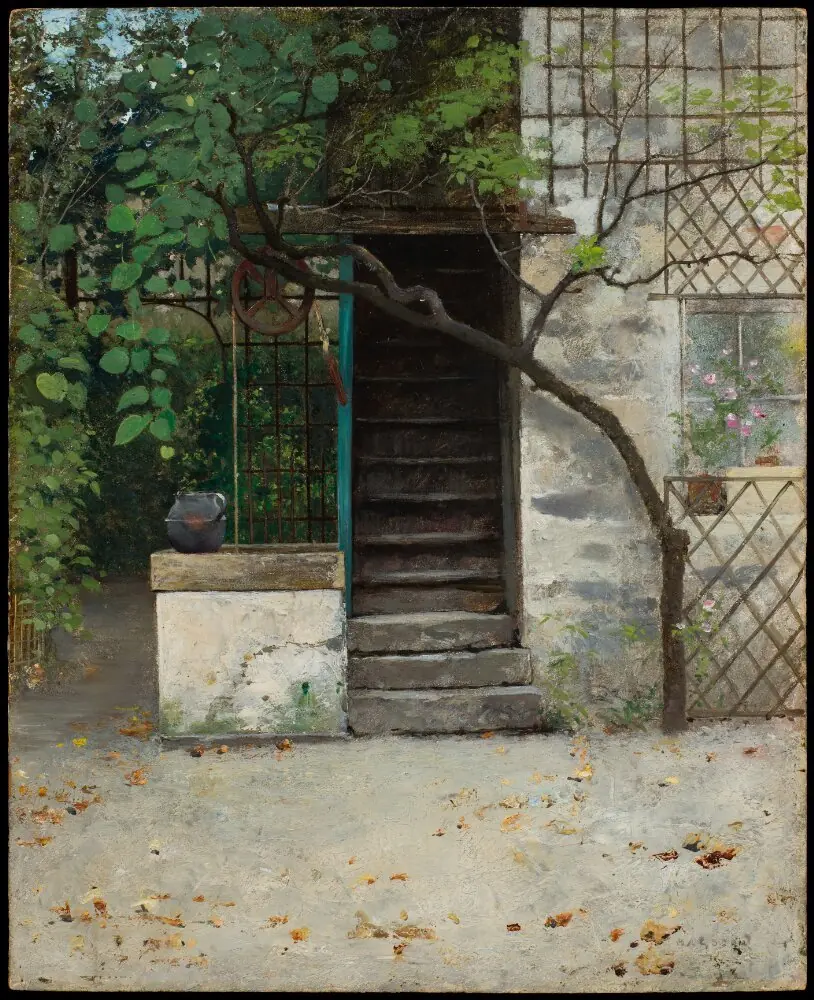
The painting depicts a serene scene from the gardens of the Villa Borghese. A weathered stone wall, adorned with a few planters, stands in the foreground. Behind the wall, lush greenery and trees are visible, with a few branches bearing red leaves. The sky above is a soft blue.
In the lower left corner of the painting, a signature is visible, along with the date "1876". The artist's use of color and composition creates a sense of tranquility, inviting the viewer to step into the peaceful atmosphere of the gardens.
To learn more about the artist's techniques and style, explore the work of Lawrence Alma-Tadema.
Overview
Painted in 1888, *A Corner of the Gardens of the Villa Borghese* is an oil work by Lawrence Alma-Tadema, a Dutch artist who made England his home after 1870. Though often associated with classical antiquity, this piece departs from his usual themes, focusing instead on a quiet, naturalistic garden setting. The painting is part of the Ashmolean Museum’s collection and reflects Alma-Tadema’s evolving engagement with light and landscape beyond historical narratives.
Subject & Meaning
The scene captures a secluded corner of the Villa Borghese gardens in Rome, framed by an ancient stone wall and potted plants. Beyond, dense foliage and autumnal red leaves suggest seasonal change, while the soft blue sky enhances the calm mood. There is no human presence, emphasizing solitude and the quiet endurance of nature. The composition invites contemplation rather than narrative, marking a shift from Alma-Tadema’s more theatrical works.
Technique & Style
Alma-Tadema applied oil paint with precision, rendering textures of weathered stone, leaf surfaces, and atmospheric haze with subtle gradations. His brushwork is controlled yet fluid, avoiding the loose strokes typical of Impressionism despite the painting’s luminous quality. Color is restrained—greens, ochres, and muted reds dominate—creating harmony without dramatic contrast. The signature and date in the lower left corner confirm the work’s origin and authorship.
History & Provenance
The painting was completed in 1888, though the date '1876' inscribed on the canvas may indicate an earlier sketch or study used as reference. It entered the Ashmolean Museum’s collection through documented acquisition, likely from a private source in Britain. No major exhibitions or ownership changes are recorded prior to its museum accession, suggesting it remained in private hands until the 20th century.
Context
During the late 1880s, Alma-Tadema was increasingly drawn to non-classical subjects, possibly influenced by British landscape traditions and the growing interest in plein air painting. While his reputation rested on Roman antiquity, this garden scene aligns with broader Victorian tastes for serene, picturesque settings. It reflects a personal retreat from mythological themes, responding to contemporary shifts in artistic focus toward everyday tranquility.
Legacy
Though less celebrated than his classical compositions, this work illustrates Alma-Tadema’s versatility and sensitivity to natural light. It stands as a quiet counterpoint to his grand historical scenes, revealing his capacity for understated observation. Art historians note it as evidence of his broader engagement with European landscape traditions, enriching understanding of his artistic range beyond antiquarianism.
Artist & collection

Artist
Sir Lawrence Alma-Tadema ( AL-mə TAD-ay-mə; born Lourens Alma Tadema, Dutch: ; 8 January 1836 – 25 June 1912) was a Dutch painter who later settled in the United Kingdom, becoming the last officially recognised denizen in 1873.