Artwork
The Grimsel Pass
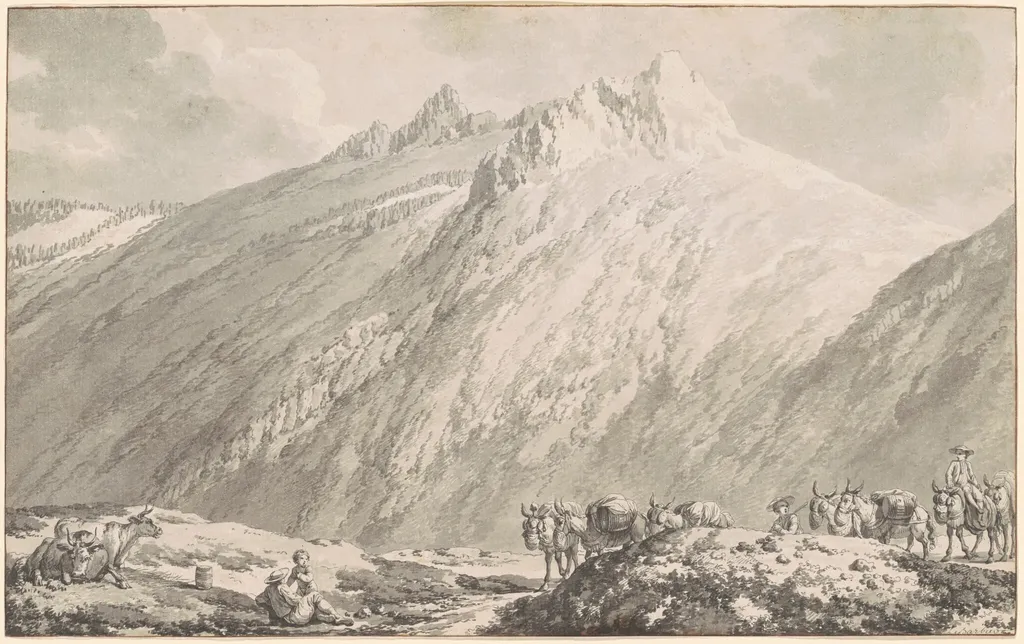
The Grimsel Pass is an ink drawing by the Romanticist artist Jean-Jacques-François Le Barbier I. It dates from 1778 and is held in the collection of the National Gallery of Art. Created in 1778, this pen and ink drawing by Jean‑Jacques‑François Le Barbier I depicts the Grim Grimsel Pass, a high Alpine route.
About this work
Overview
Created in 1778, this pen and ink drawing by Jean‑Jacques‑François Le Barbier I depicts the Grim Grimsel Pass, a high Alpine route. The composition presents a narrow, winding road threading between sharply defined peaks, rendered with precise line work and subtle gray washes that convey the rugged terrain and atmospheric depth.
Subject & Meaning
The image captures a dramatic mountain passage, emphasizing the precariousness of travel through the high Alps. By juxtaposing the diminutive road against towering cliffs, the artist highlights the formidable challenges faced by travelers, suggesting both the awe of the natural landscape and the human effort required to traverse it.
Technique & Style
Le Barbier employs fine, intersecting lines and layered hatching to model the rock faces, while a muted gray wash adds tonal variation and shadow. This combination of cross‑hatching and wash creates a sense of texture and three‑dimensionality, allowing the viewer to discern the contours of the peaks and the recession of the distant sky.
History & Provenance
The drawing is among the limited surviving pieces from Le Barbier’s early period, before he turned to large‑scale historical canvases. Its preservation offers insight into his formative practice of detailed, small‑scale studies, reflecting a phase when he explored topographical subjects alongside his later narrative ambitions.
Context
During the late eighteenth century, interest in Alpine geography grew among scholars and travelers, and artists often produced topographic sketches for scientific or touristic purposes. This work aligns with that trend, functioning both as a visual record of a specific pass and as an artistic exploration of landscape rendering techniques of the era.
Own this work as a print
Artist & collection

Artist
Jean-Jacques-François Le Barbier I
Jean-Jacques-François Le Barbier I (1780–1780) was an artist.

 Cromlech, Pass of Llanberis
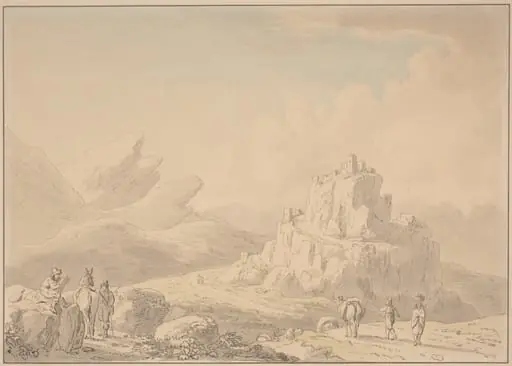 Zahara
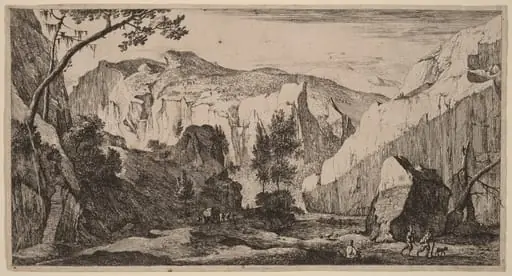 Rocky Landscape: pl.2
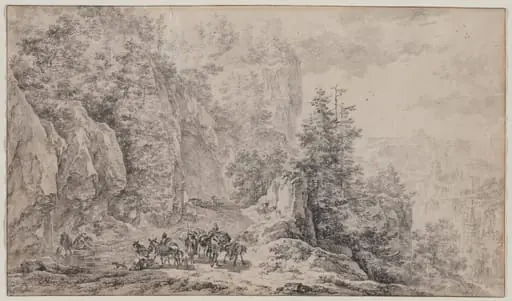 Mountainous Landscape
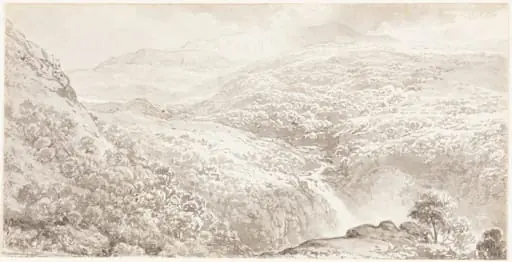 A Mountain Valley with a Waterfall
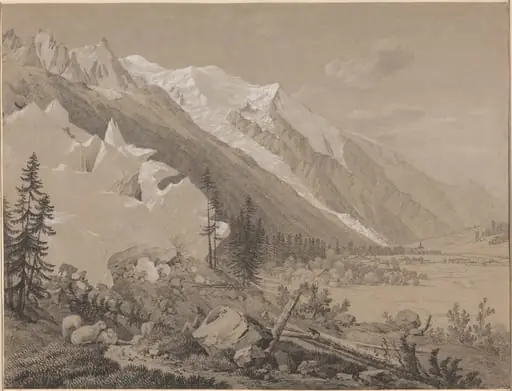 Vue du Mont Blanc
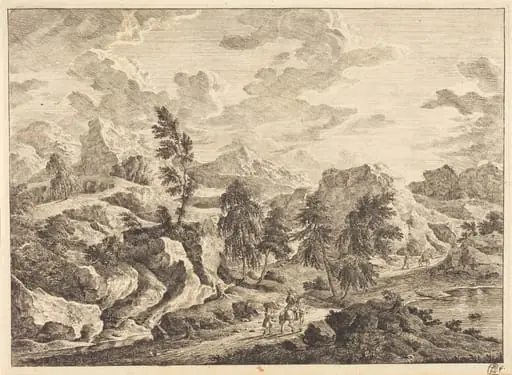 Landscape with the Rising Sun and a Rider with Attendant
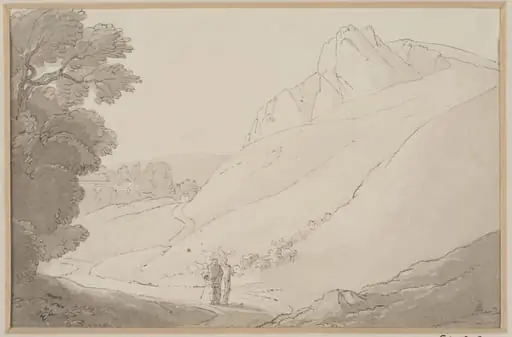 Untitled
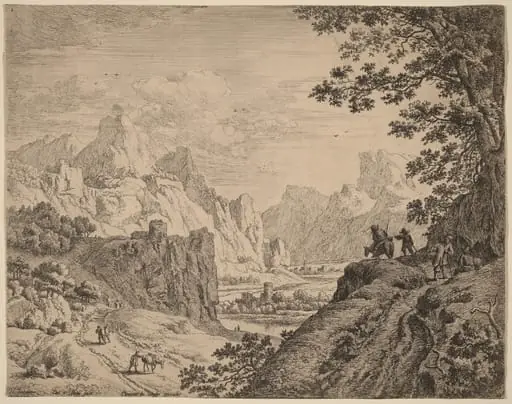 View of the River Rhine
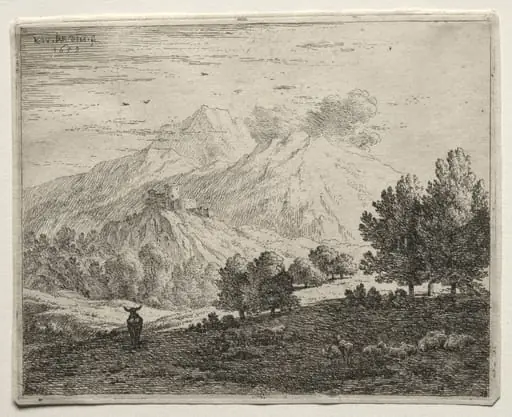 The Four Mountains
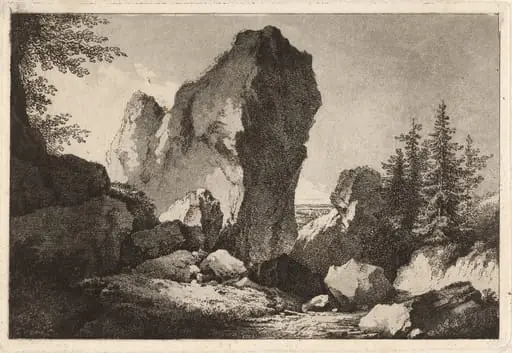 Mountain Landscape with a Rocky Outcrop
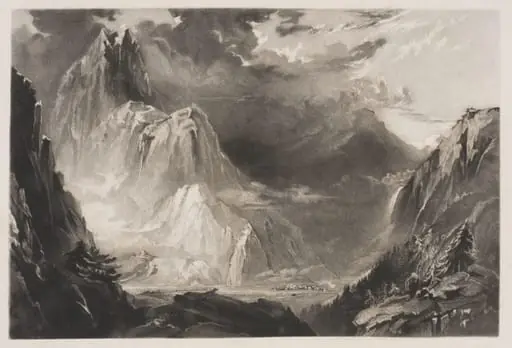 The Pass Between Dale and Dalsjed