Artwork
Rocky Landscape: pl.2
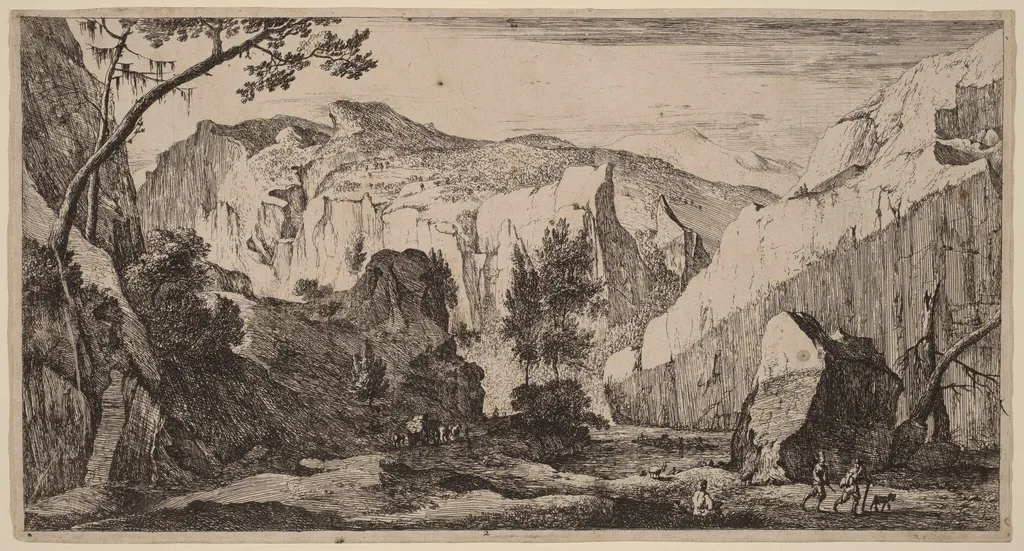
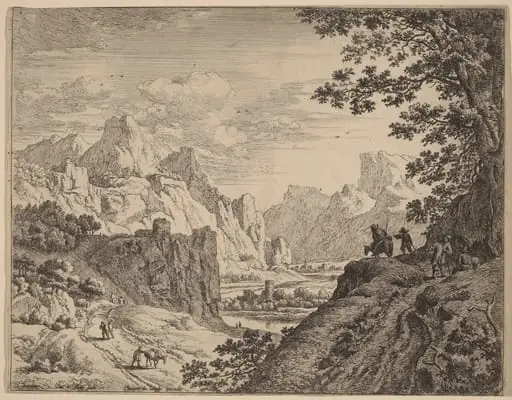
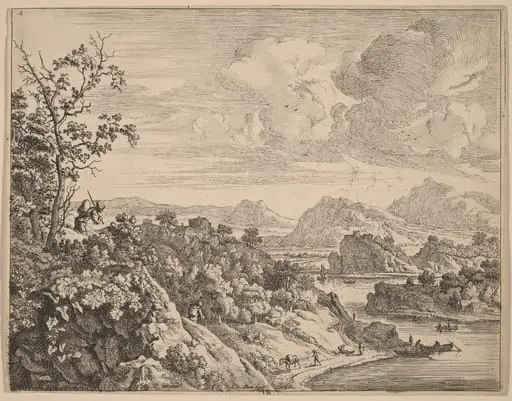
Rocky Landscape: pl.2 is an ink print by the Baroque artist Roelant Roghman. It dates from 1660 and is held in the collection of the National Gallery of Art. Rocky Landscape: pl.
About this work
Overview
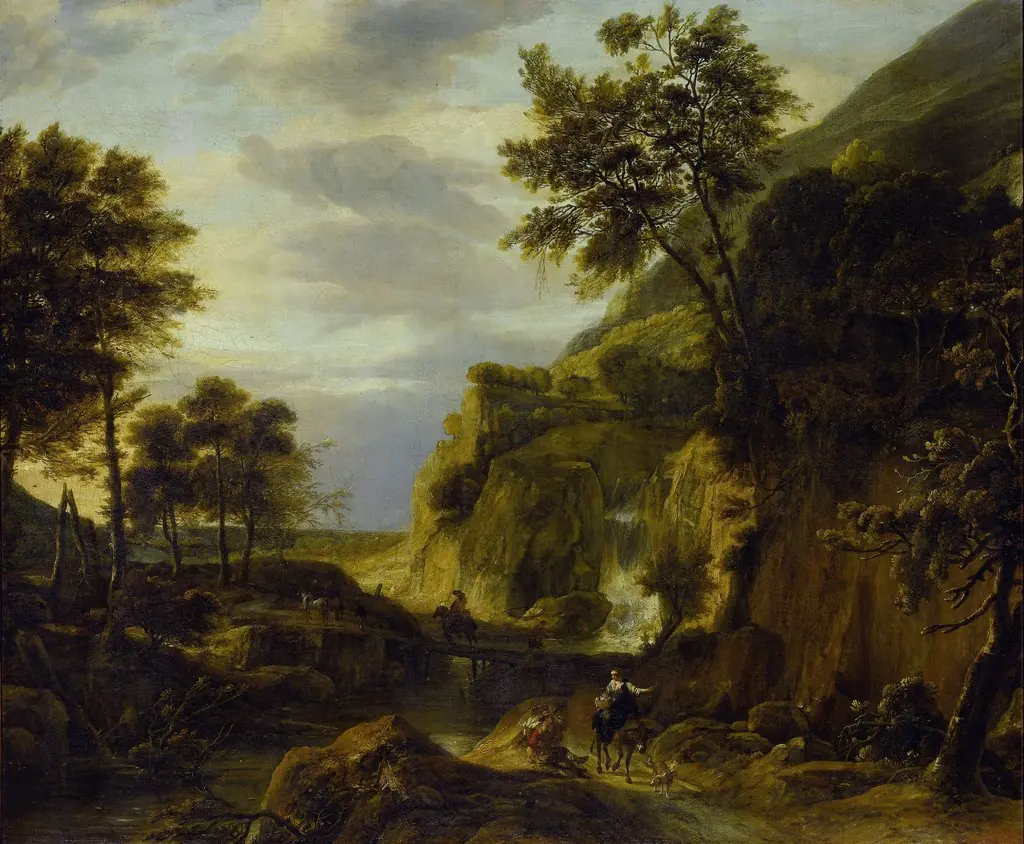
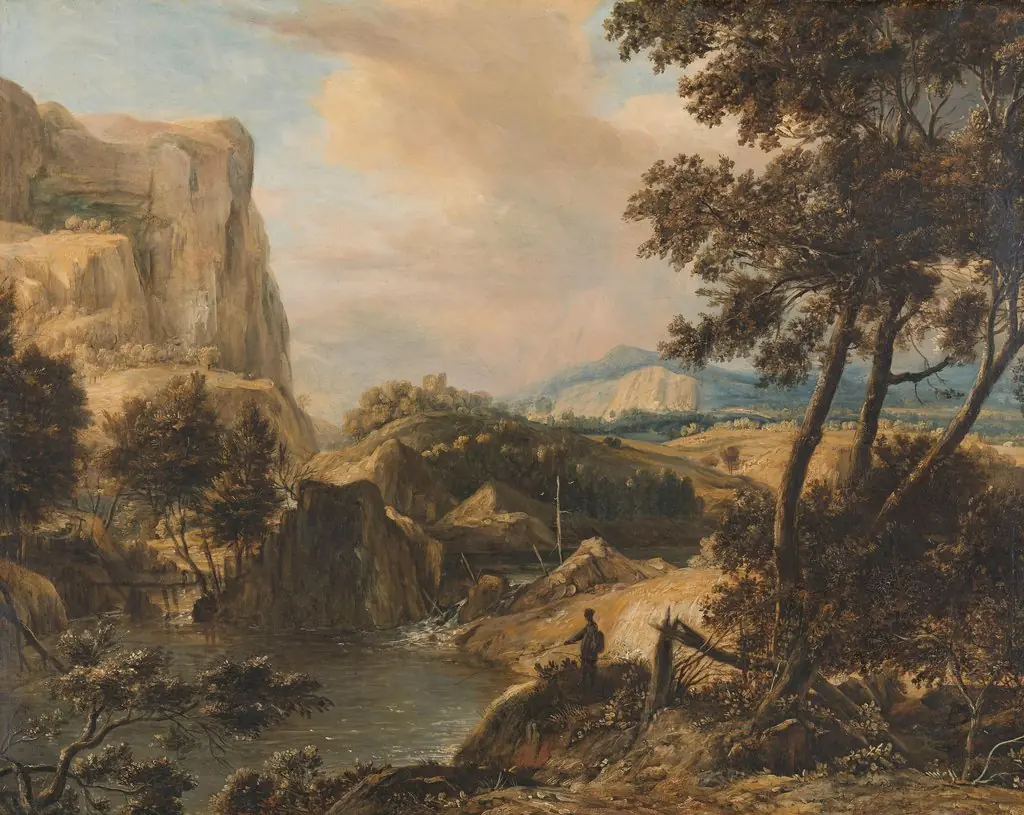
Rocky Landscape: pl. 2 is an etching executed by Dutch artist Roelant Roghman around 1660. The print presents a rugged terrain dominated by sharp cliffs, a narrow river winding through the valley, and sparse vegetation clinging to the slopes. Small human figures are placed along the water’s edge, adding a sense of scale to the untamed scenery.
Subject & Meaning
The composition emphasizes the raw power of nature, contrasting the solid, jagged rock formations with the delicate presence of trees and wandering figures. The minimal sky and subdued atmospheric hints suggest a quiet, perhaps solitary moment within a harsh landscape, inviting contemplation of humanity’s modest place amid geological forces.
Technique & Style
Roghman employed the fine line work characteristic of 17th‑century etching, using delicate incisions to render the texture of stone and foliage. Dark, scratchy strokes convey the uneven surface of the cliffs, while lighter, more fluid lines suggest clouds or mist. The overall effect is a detailed, almost tactile representation achieved through careful control of line density and contrast.
History & Provenance
Created in the mid‑17th century, the print belongs to a series of landscape studies Roghman produced during his career in the Dutch Republic. While specific ownership records for this particular impression are limited, the work reflects the period’s growing interest in topographical subjects and the development of printmaking as a means of disseminating such images.
Artist & collection


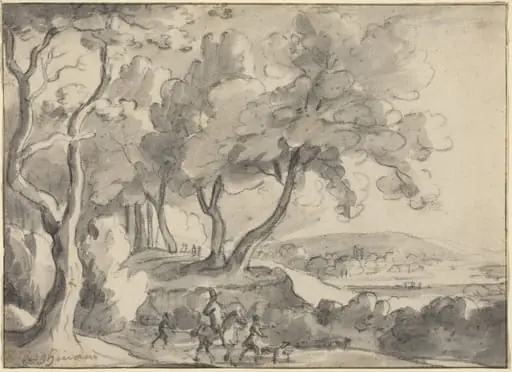
 View of the River Rhine
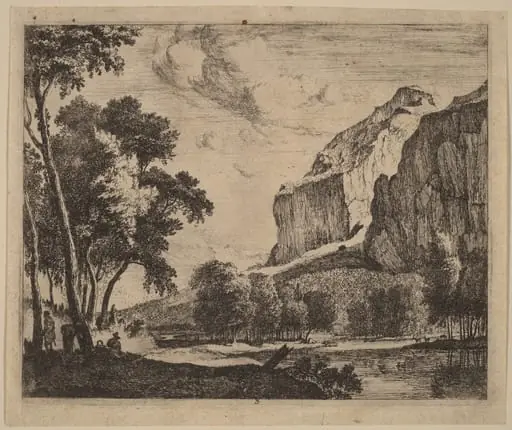 Riverscape with Rocks on the Right: pl.3
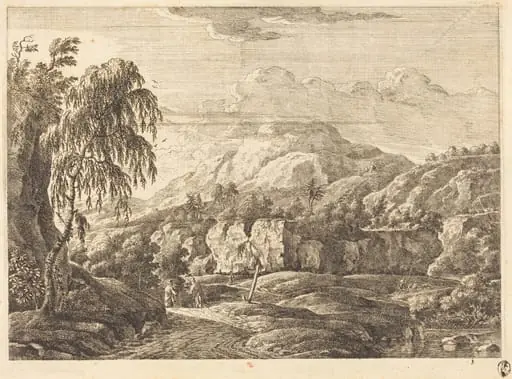 Landscape with Cross and Figures
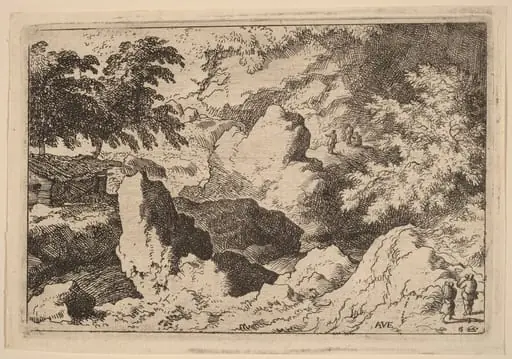 Three Men on a Rock
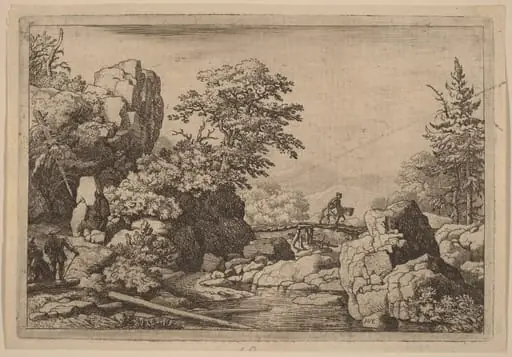 Horseman on a Bridge
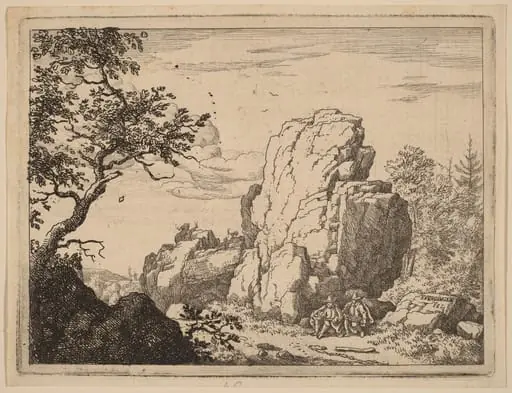 Two Men Seated at the Foot of a High Rock
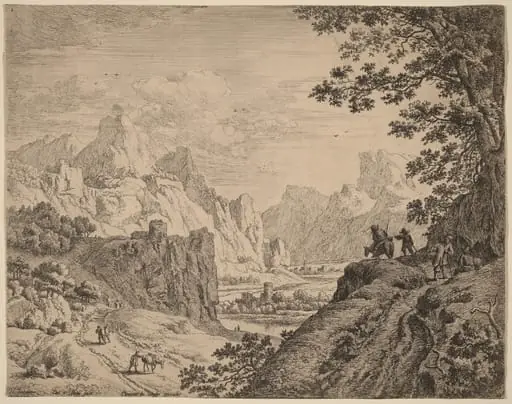 View of the River Rhine
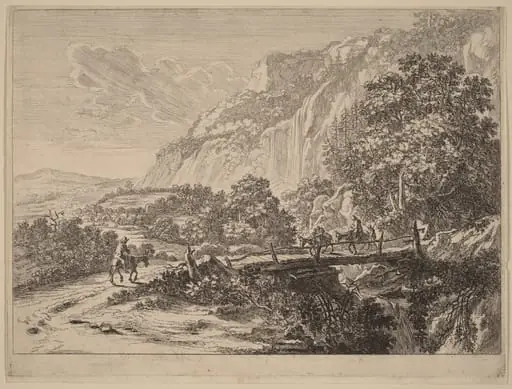 The Wooden Bridge at Sulmona, near Tivoli
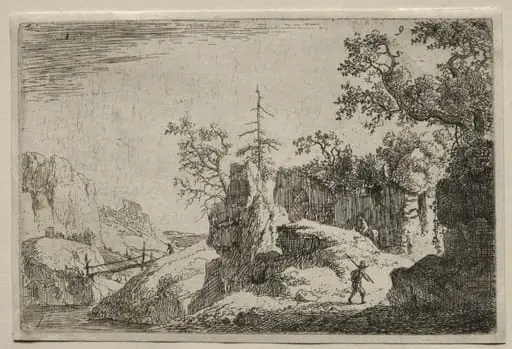 A Mountain Landscape
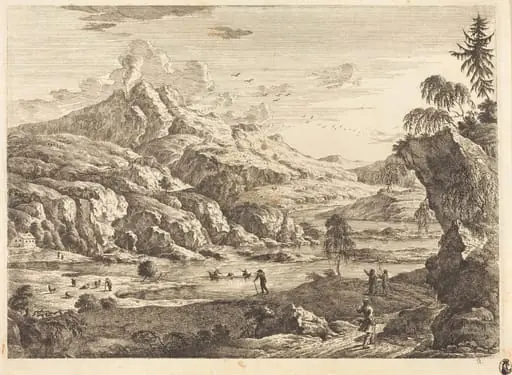 Mountainous Riverscape with Figures
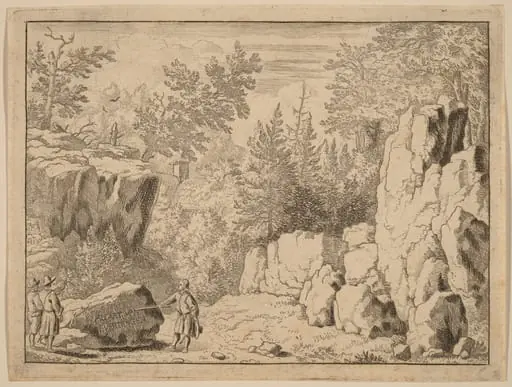 The Inscription on the Rock
 View of the River Rhine