Artwork
Pallas Athene in the Form of a Bird Leaving Nestor and Telemachus
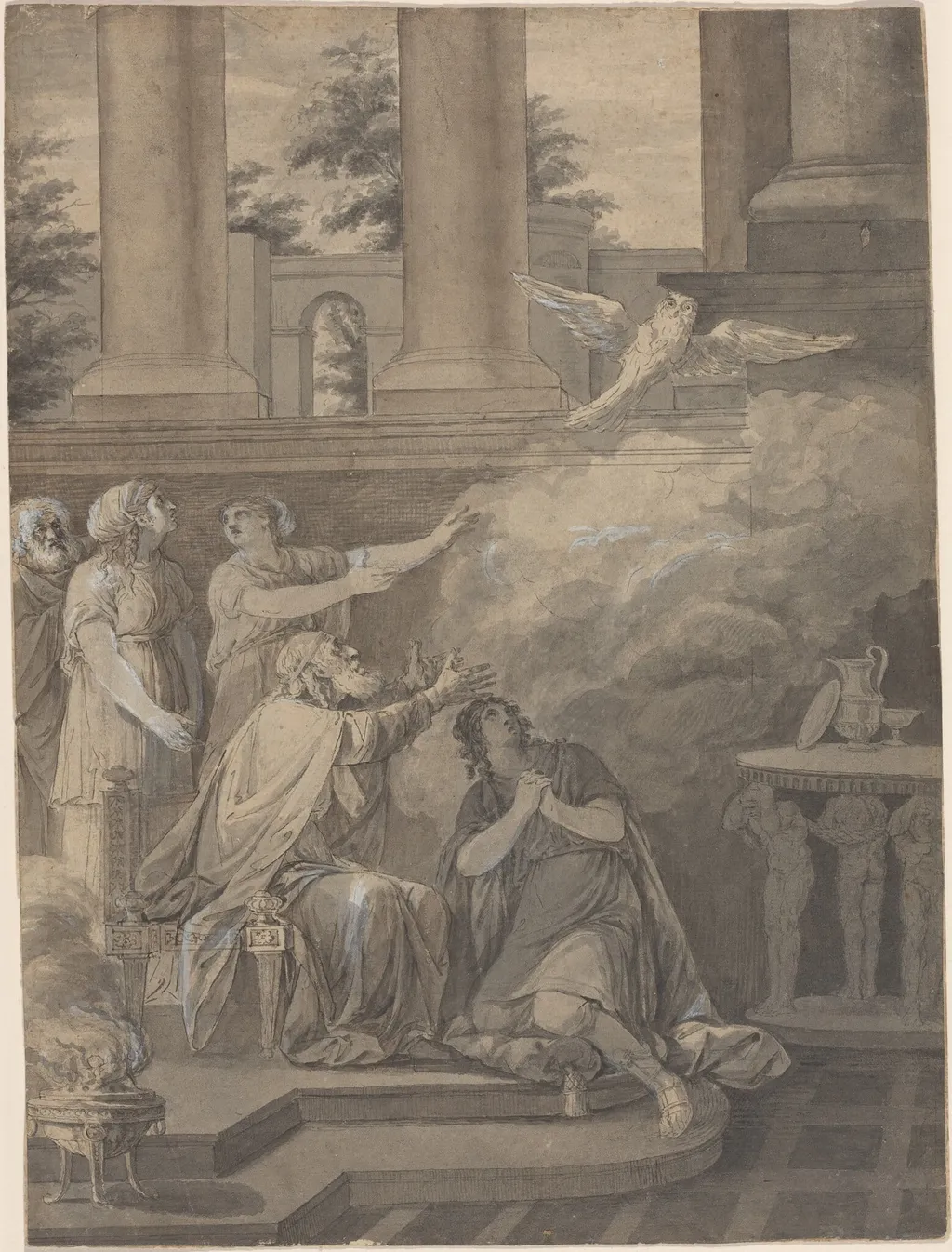
Pallas Athene in the Form of a Bird Leaving Nestor and Telemachus is an ink drawing by the Romanticist artist Jean-Jacques-François Le Barbier I. It dates from 1780 and is held in the collection of the National Gallery of Art.
About this work
Overview
Pallas Athene in the Form of a Bird Leaving Nestor and Telemachus is a drawing by Jean-Jacques-François Le Barbier I, dated to circa 1780. Executed in pen, black ink, gray and brown washes over graphite, with white highlights, on laid paper, it depicts a mythological scene.
Subject & Meaning
The drawing illustrates a moment from Greek mythology where Pallas Athene, disguised as a bird, departs from Nestor and Telemachus. A bird in flight dominates the upper part of the composition, while the two figures are shown in contemplative poses amidst a group, set against a classical backdrop.
Technique & Style
Le Barbier I employed a multifaceted technique to achieve depth and texture. Pen and black ink defined forms, while gray and brown washes over graphite added shading and nuance. White highlights introduced luminosity, contributing to a detailed, layered visual effect.
History & Provenance
Created around 1780, the drawing's style aligns with the burgeoning interest in classical themes during the late 18th century. However, specific provenance details are not provided in the available information.
Context
While often associated with Romanticism due to its emotional and imaginative elements, the work's classical subject matter and precise technique also reflect the Neoclassical influences prevalent during the late 18th century.
Legacy
The drawing's impact or influence on subsequent artistic movements or works is not explicitly documented in the provided sources, highlighting a gap in its recorded legacy.
Artist & collection

Artist
Jean-Jacques-François Le Barbier I
Jean-Jacques-François Le Barbier I (1780–1780) was an artist.

 Mythological Scene
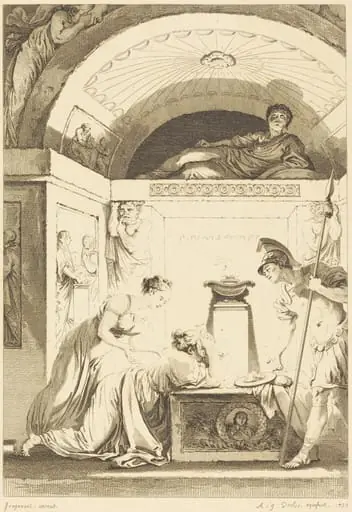 La matrone d'Ephese
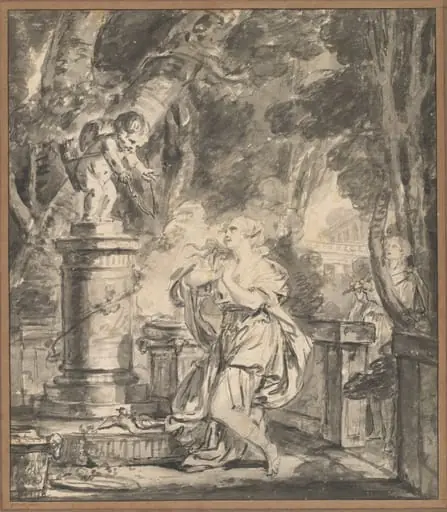 Sacrifice to Love
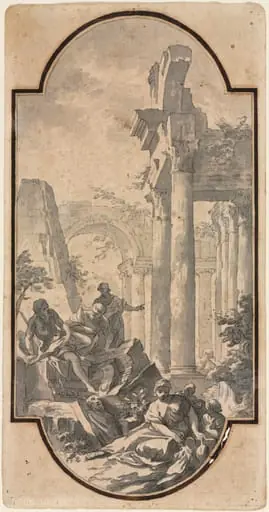 Figures Near the Ruins of a Corinthian Temple (recto)
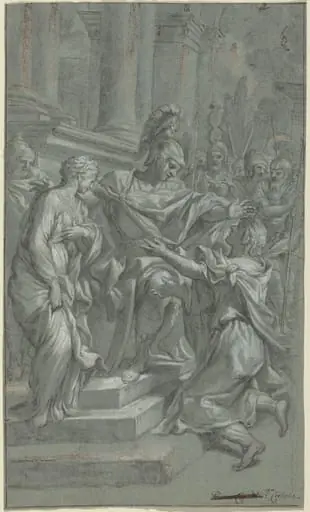 Scipio Restoring His Captive to Her Lover
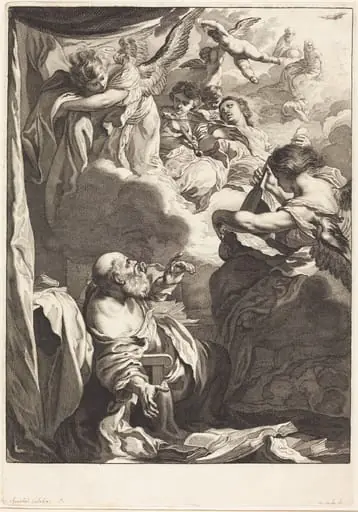 The Ecstasy of Saint Paul
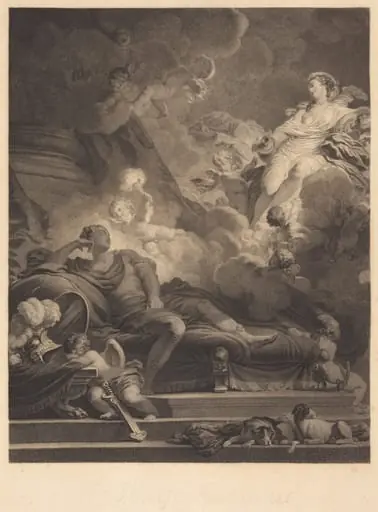 Le Songe d'Amour (Love's Dream)
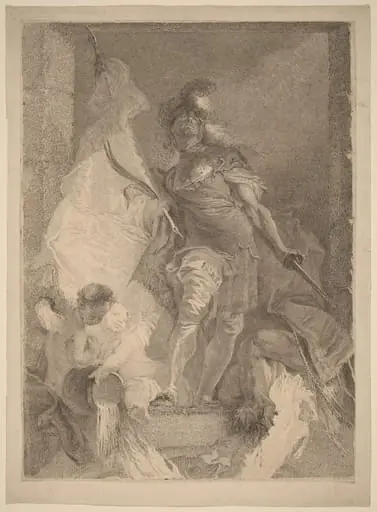 Saint Florian
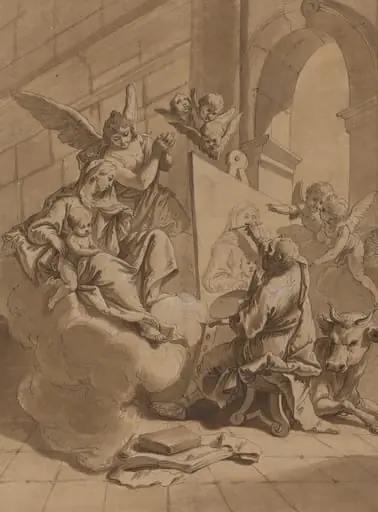 Saint Luke Painting the Virgin
 The Adoration of the Magi
 Abraham Kneeling before the Three Angels
 Tremblez malheureux Roi, votre Règne est passe