Artwork
The Resting Horseman
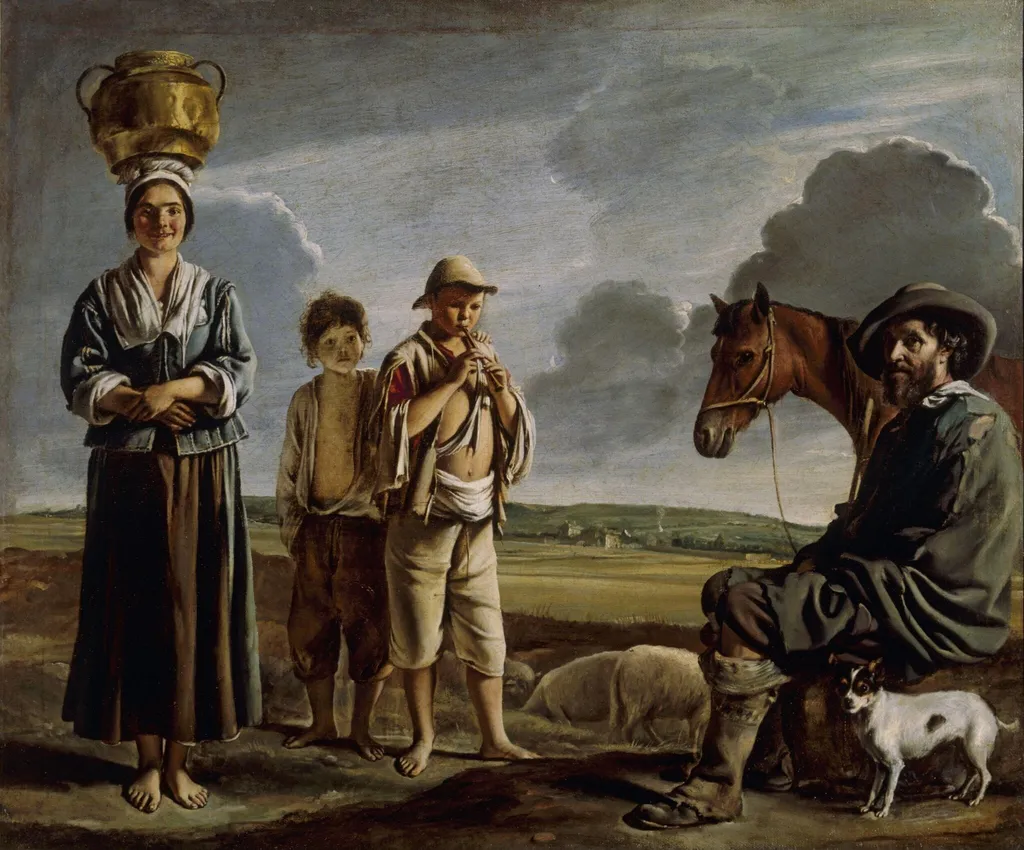
The Resting Horseman is an oil painting by the Barbizon school artist Louis Le Nain. It dates from 1644 and is held in the collection of the Victoria and Albert Museum.
About this work
Overview
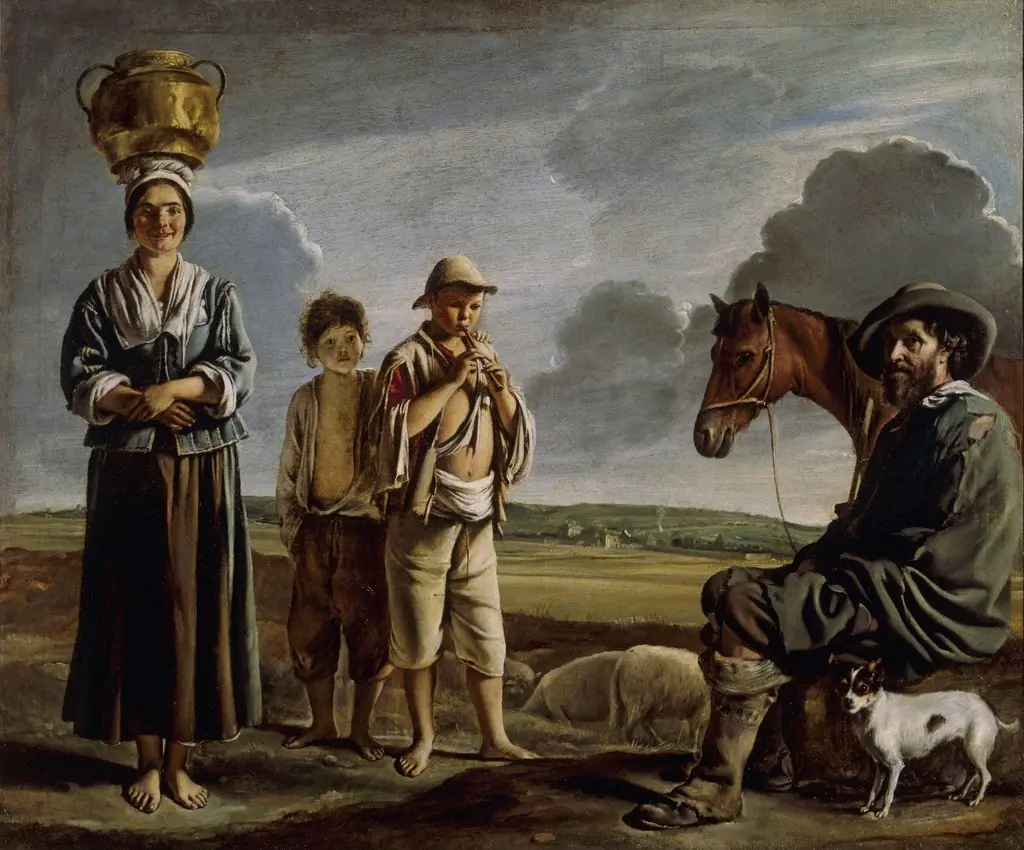
The work titled The Resting Horseman is an oil painting of considerable size that captures a solitary rider pausing beneath a tree. The figure leans forward, his boots dusted with earth, while his horse stands nearby, head lowered. A single side of the rider’s face is illuminated, creating a subdued, contemplative atmosphere.
Subject & Meaning
The scene presents a weary horseman in a moment of quiet respite, suggesting themes of labor, travel, and the fleeting pause between movement and rest. The composition emphasizes the dignity of an ordinary figure, aligning with the Le Nain brothers’ interest in portraying everyday people with a sober respect.
Technique & Style
Executed in oil, the painting employs a restrained palette of muted tones and soft lighting that model the forms without dramatic contrast. The handling of the horse’s ears, turned forward, and the subtle play of light on the rider’s cheek demonstrate a careful observation of detail, characteristic of the Le Nain workshop’s realistic approach.
History & Provenance
Recent scholarship has firmly attributed the canvas to Louis Le Nain, one of the three Le Nain brothers active in Paris during the early‑mid‑17th century. The brothers shared a studio in Saint‑Germain‑des‑Prés and were known for genre scenes that introduced a new French focus on peasant life.
Context
Within the broader development of French genre painting, the work reflects the Le Nain brothers’ contribution to elevating humble subjects to a level of monumental presence. Their treatment of ordinary figures with a sober dignity was unusual for the period and helped shape the direction of French art in the second quarter of the 1600s.
Own this work as a print
Artist & collection