Artwork
Milkmaid's Family
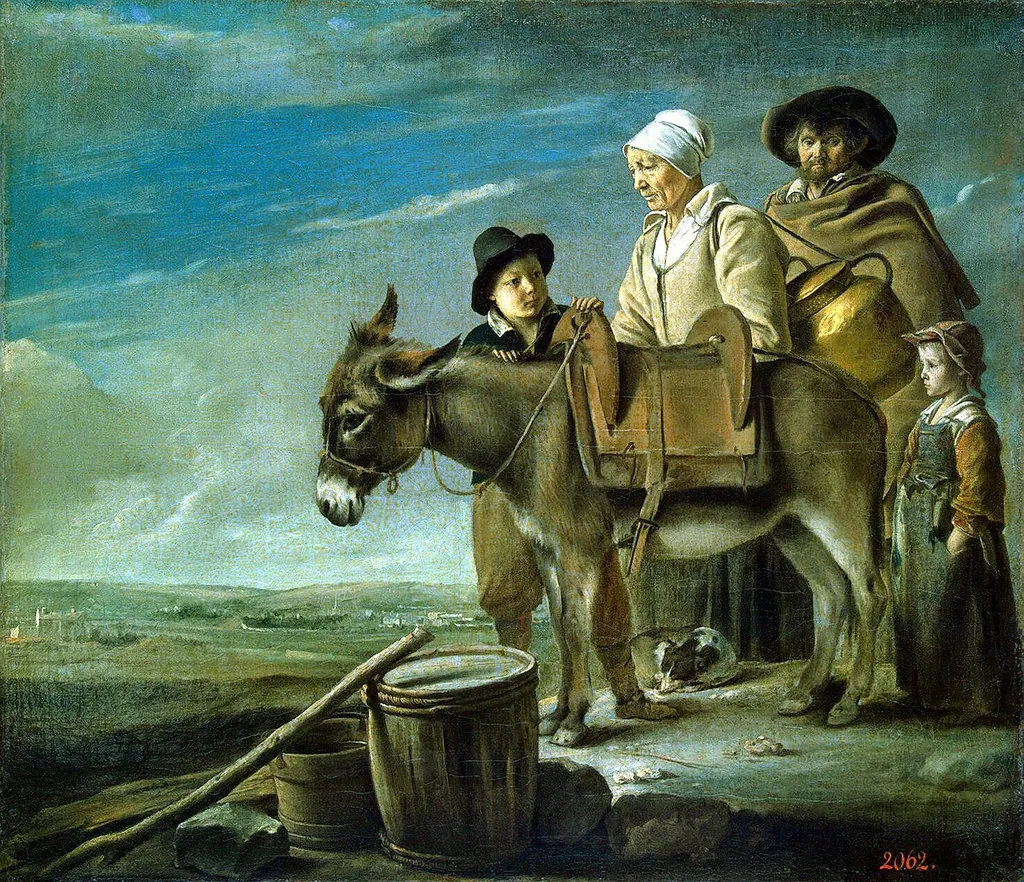
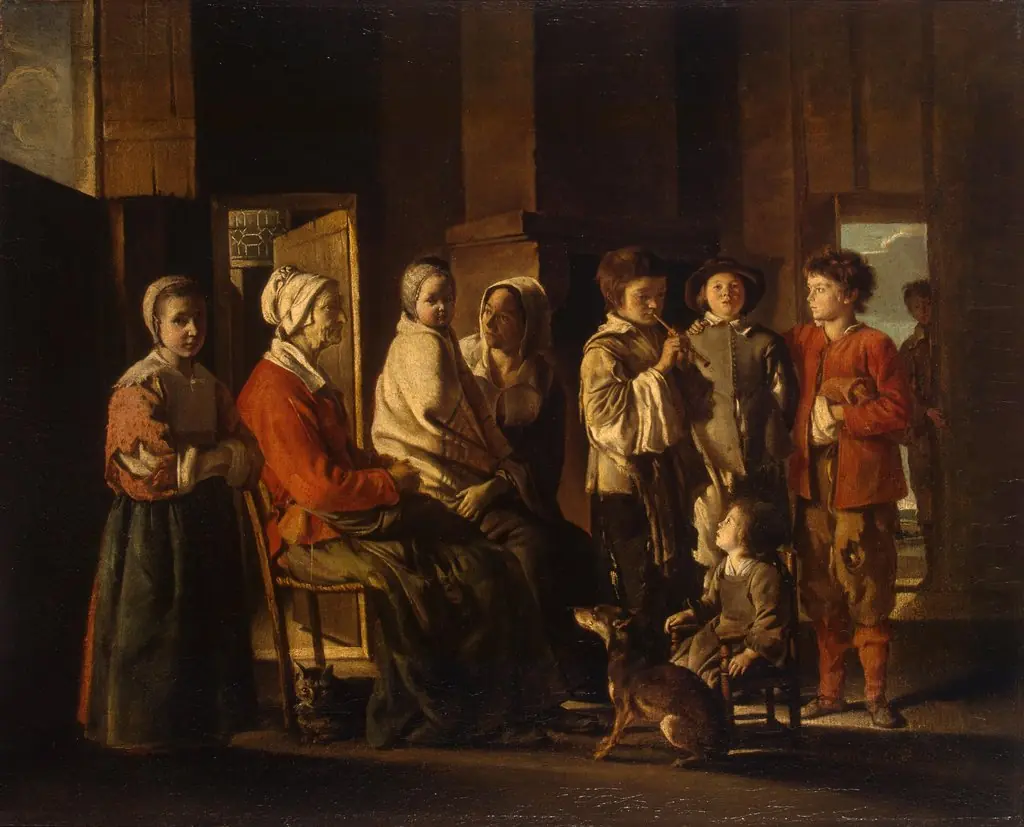
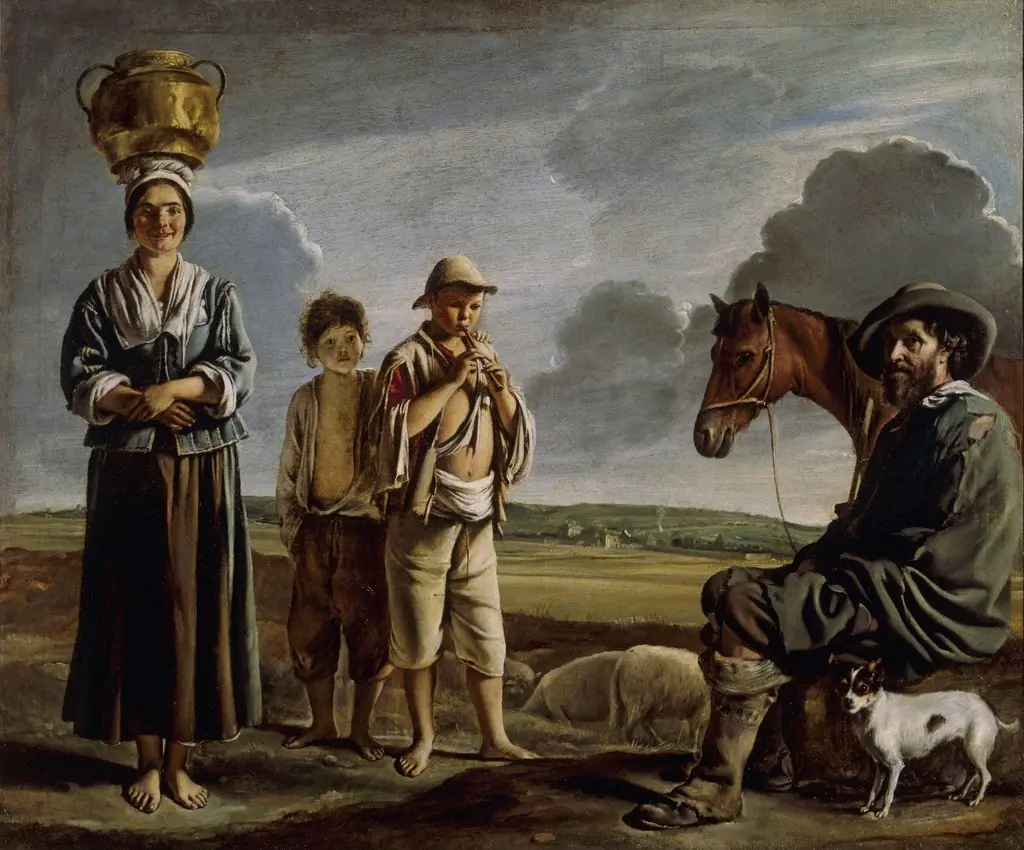
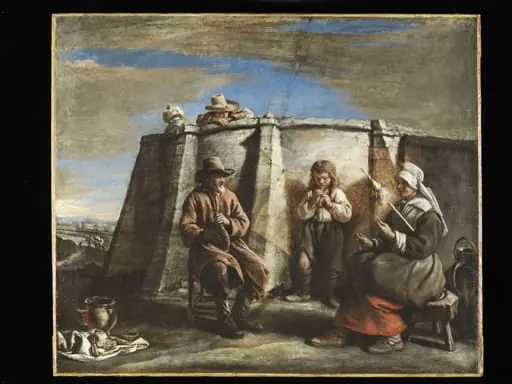
Milkmaid's Family is an oil painting by the French Classical Baroque artist Louis Le Nain. It dates from 1640 and is held in the collection of the Hermitage Museum.
About this work
Overview
Louis Le Nain’s Milkmaid’s Family, executed in oil around 1640, presents a modest rural group set upon a rocky slope. The work is part of the State Hermitage Museum’s collection. Four figures—a woman, a boy, an older man, and a small child—are gathered beside a donkey, against a muted horizon that hints at a distant settlement.
Subject & Meaning
The scene captures a moment of everyday labor, emphasizing familial ties and the interdependence of human and animal. The central woman steadies the donkey’s reins, while the boy clings to her, suggesting protection and continuity. The older man’s relaxed posture against the animal conveys a sense of endurance within a humble agrarian lifestyle.
Technique & Style
Le Nain employs chiaroscuro to separate the figures from the flat backdrop, using strong contrasts of light and shadow that give the characters a three‑dimensional presence. The donkey’s coat and the clothing are rendered with brisk, textured brushwork, adding tactile contrast to the smoother, atmospheric landscape beyond.
History & Provenance
Created in the early 1640s, the painting entered the Russian imperial collection before being transferred to the State Hermitage Museum, where it remains on display. Its provenance reflects the 18th‑century interest of European courts in French genre painting, particularly works that depict the dignity of ordinary life.
Context
Louis Le Nain, one of the three Le Nain brothers, was known for portraying the French peasantry with empathy rather than idealization. Milkmaid’s Family aligns with the broader 17th‑century Baroque interest in realism and moral narrative, offering a counterpoint to the grand historical subjects favored by many of his contemporaries.
Own this work as a print
Artist & collection