Artwork
Soldiers in a Windy Landscape
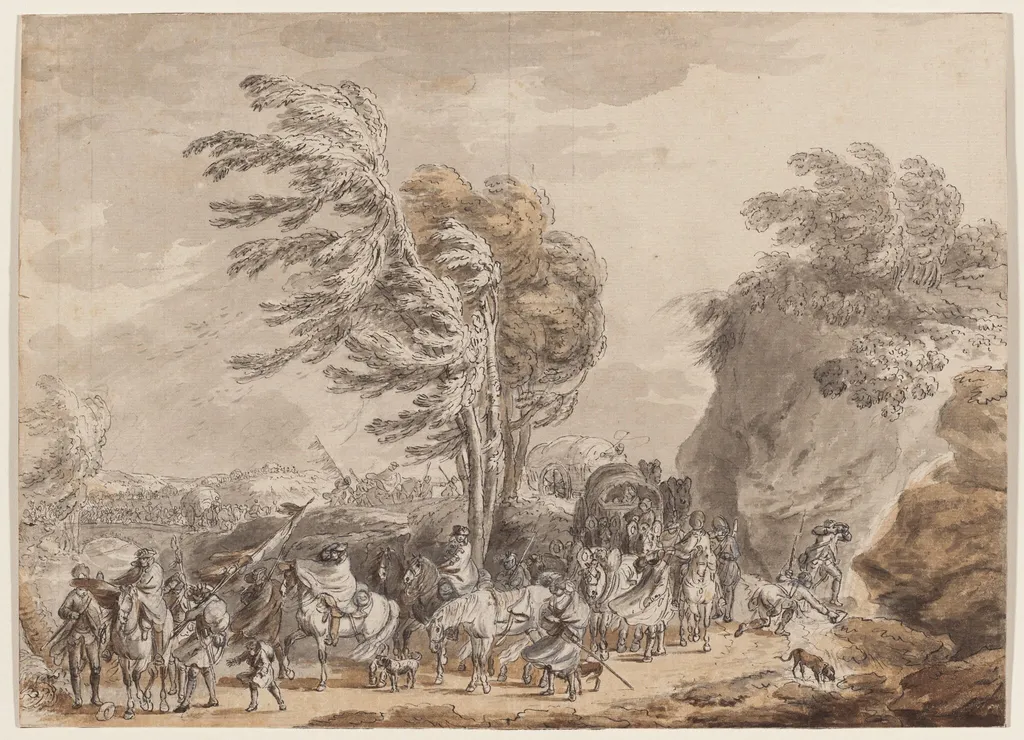
Soldiers in a Windy Landscape is a chalk drawing by the Romanticist artist Jean-Baptiste Le Paon. It dates from 1774 and is held in the collection of the National Gallery of Art.
About this work
Overview
Jean‑Baptiste Le Paon’s drawing *Soldiers in a Windy Landscape*, executed around 1774, is a black‑chalk and pen study enriched with brown ink and a brown‑gray wash on laid paper. The work is part of the National Gallery of Art’s collection in Washington, D.C., and measures roughly the size of a typical sheet of drawing paper of the period.
Subject & Meaning
The drawing conveys the precariousness of outdoor campaigns and the interplay between human activity and natural elements.
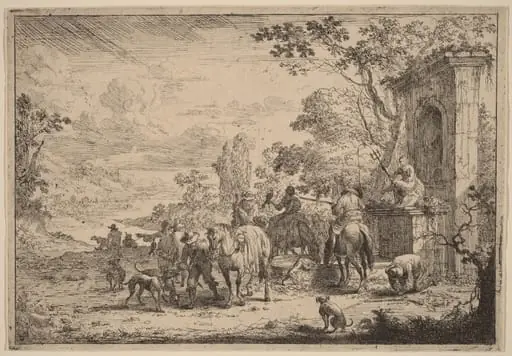
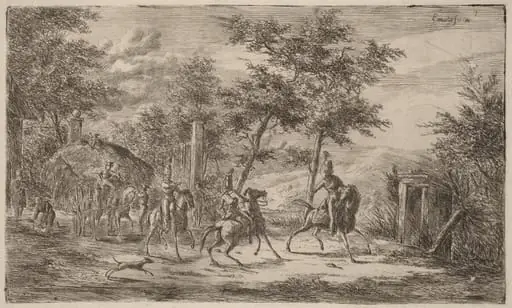
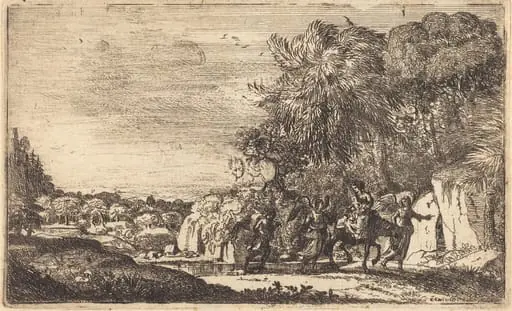
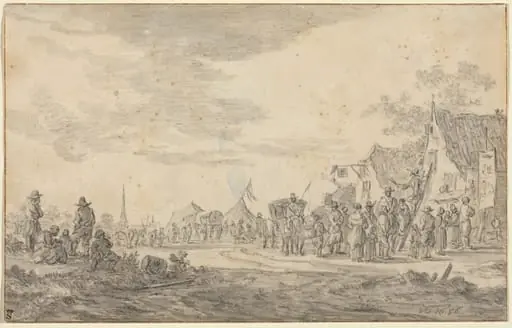
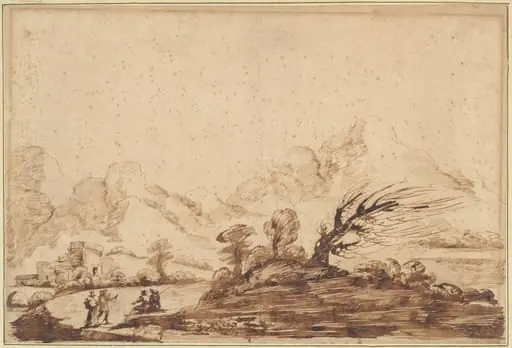
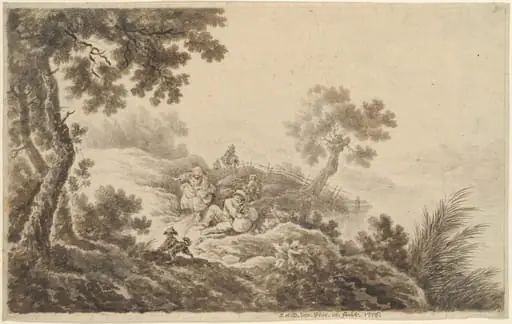
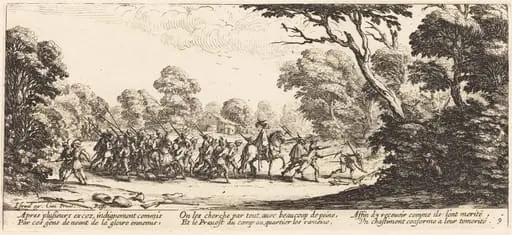
The composition depicts a small military detachment gathered beside a horse‑drawn carriage amid a gusty countryside. Figures in period uniforms hunch against the wind, their cloaks and hats billowing, while a solitary tree dominates the centre, its branches bent by the same force that animates the scene. The drawing conveys the precariousness of outdoor campaigns and the interplay between human activity and natural elements.
Technique & Style
Le Paon combines black chalk for initial modeling with pen lines that define the soldiers’ forms and the carriage. Brown ink outlines the main structures, and a wash of brown and gray creates atmospheric depth, especially in the distant hills. Cross‑hatching in the foreground adds texture to foliage and fabric, reinforcing the sense of motion generated by the wind.
History & Provenance
Created in the late eighteenth century, the drawing entered the National Gallery of Art’s holdings through a mid‑twentieth‑century acquisition, though earlier ownership records are sparse. Its presence in the museum’s collection reflects an interest in French military genre drawings that document both artistic practice and historical costume.
Artist & collection