Artwork
Four Landscapes after Le Sueur
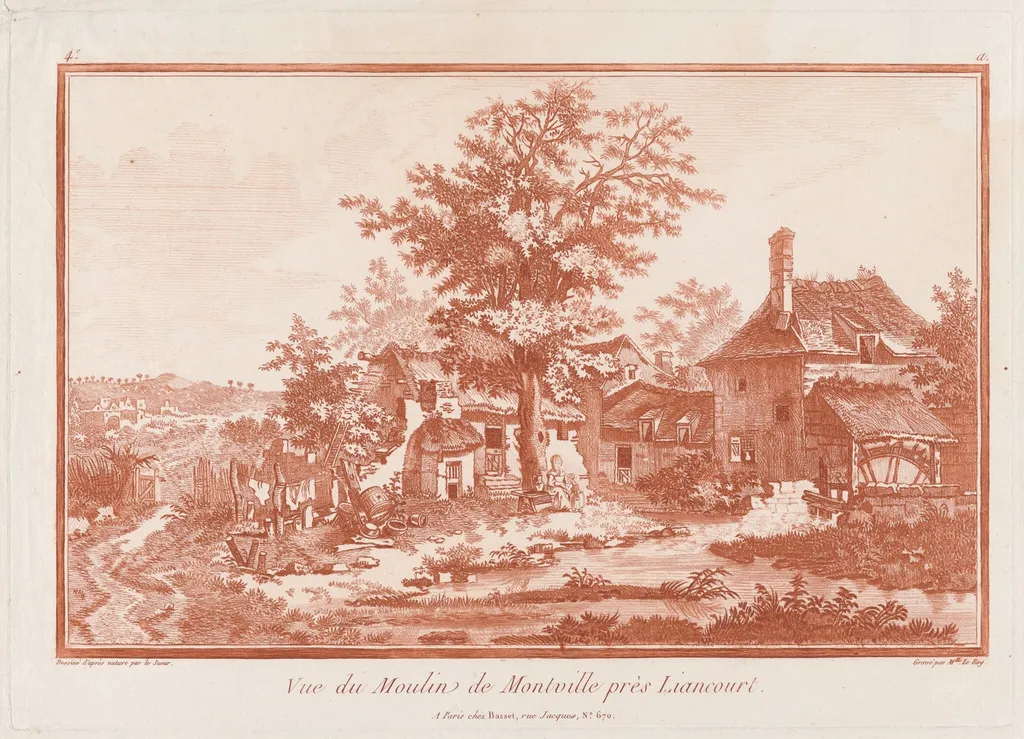
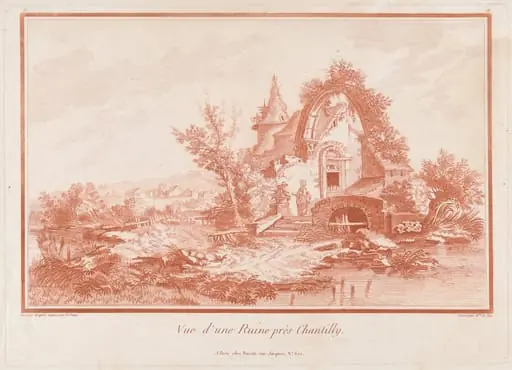
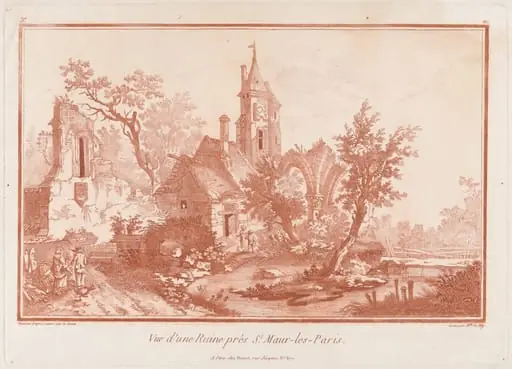
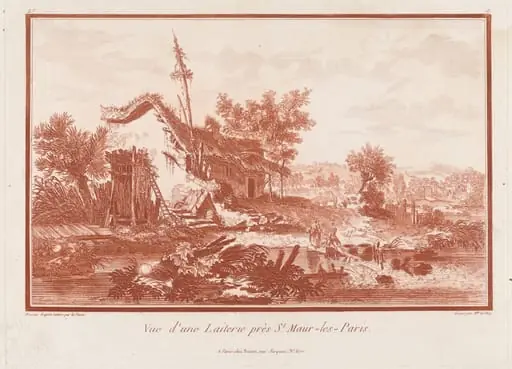
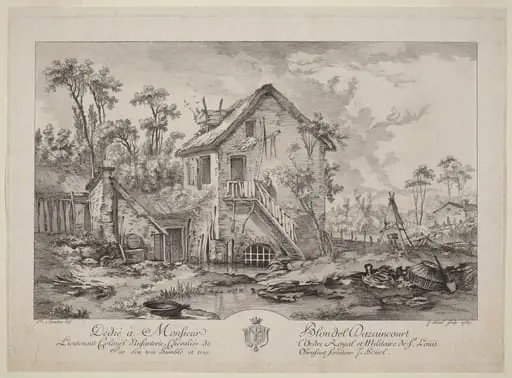
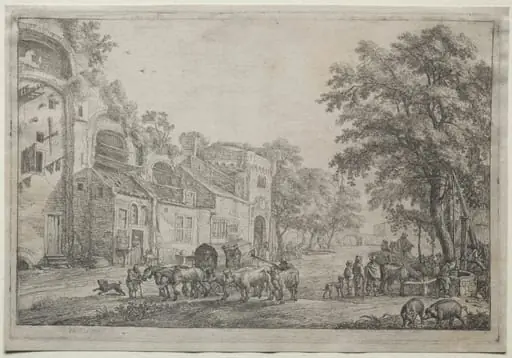
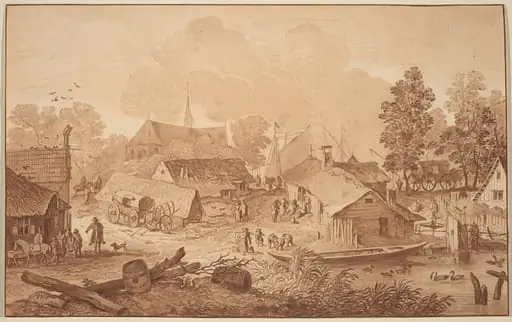
Four Landscapes after Le Sueur is a chalk print by the Romanticist artist Le Roy. It dates from 1772 and is held in the collection of the National Gallery of Art.
About this work
Overview
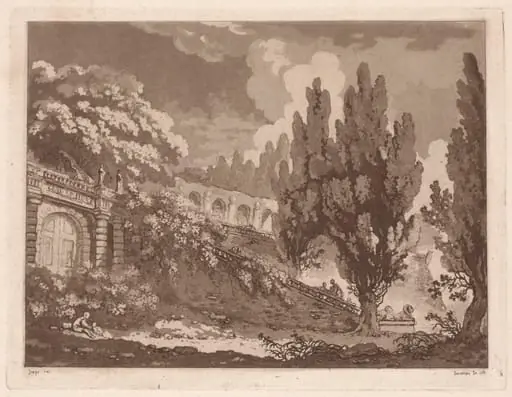
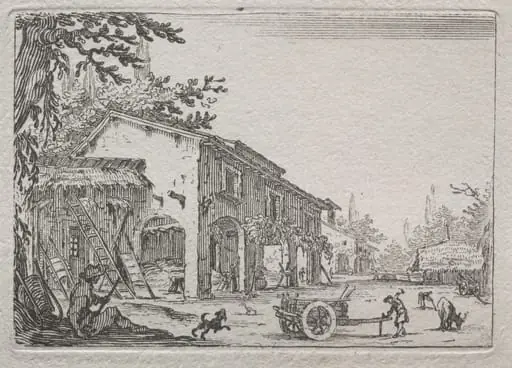
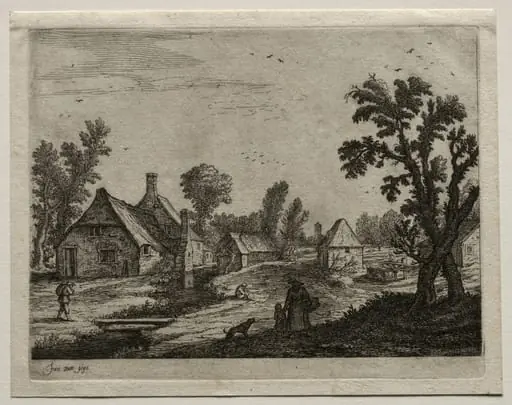
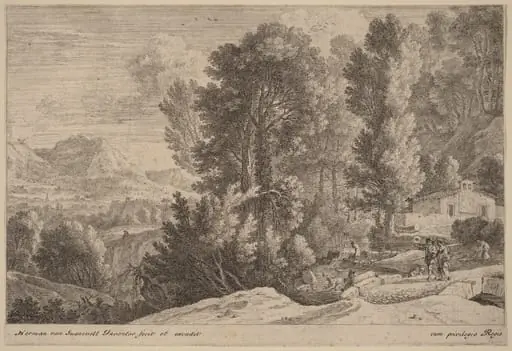
Four Landscapes after Le Sueur is a red chalk‑manner print on laid paper, executed by the French engraver Le Roy around 1772. The work measures a modest size and is part of the National Gallery of Art’s collection in Washington, D.C. It reproduces a pastoral scene originally designed by the earlier painter Charles Le Sueur, translating his composition into the print medium.
Subject & Meaning
The image presents a tranquil countryside vista dominated by a solitary, spreading tree at its centre. Around the trunk a cluster of modest buildings nestles amid gentle hills, while a winding path invites the eye to move deeper into the composition. The arrangement suggests an idealized, harmonious relationship between nature and human habitation, a common theme in 18th‑century pastoral art.
Technique & Style
Le Roy employed the chalk‑manner technique, applying red ink to a laid‑paper surface to achieve a soft, velvety tone. Fine, cross‑hatching lines render foliage, architecture, and the ground, while subtle chiaroscuro creates volume and depth. The reddish hue lends the scene a nostalgic, almost atmospheric quality, and the texture of the laid paper contributes a tactile sense to the printed image.
History & Provenance
Its attribution to Le Roy as an “after Le Sueur” indicates that the artist was working from an existing composition rather than an original design.
Created circa 1772, the print reflects the period’s practice of reproducing celebrated paintings for broader circulation. It entered the National Gallery of Art’s holdings through a 20th‑century acquisition, though earlier ownership records are sparse. Its attribution to Le Roy as an “after Le Sueur” indicates that the artist was working from an existing composition rather than an original design.
Context
During the late Enlightenment, French printmakers frequently produced landscape series that catered to the growing taste for bucolic imagery among educated patrons. Le Roy’s work fits within this trend, offering a refined, decorative alternative to oil paintings. The choice of red chalk‑manner aligns with contemporary experiments in color printing, which sought to expand the visual possibilities of the print medium beyond monochrome.
Artist & collection