Artwork
Stairs in an Italian Garden
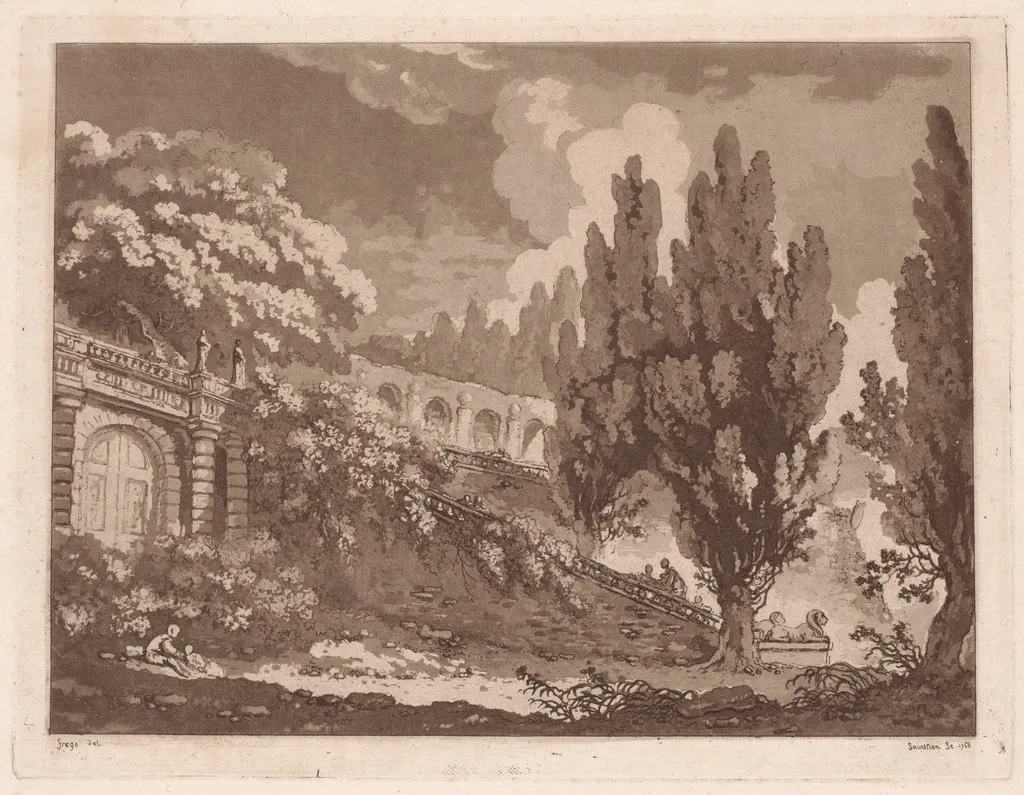
Stairs in an Italian Garden is a print by the Romanticist artist Jean-Claude-Richard Saint-Non. It dates from 1766 and is held in the collection of the Cleveland Museum of Art.
About this work
Overview
Stairs in an Italian Garden is a 1766 print by Jean‑Claude‑Richard Saint‑Non, presently in the collection of the Cleveland Museum of Art. The composition presents a descending stone staircase set within a cultivated garden, framed by a classical façade with arched windows and columns. The scene is populated by a few figures near a water feature, while trees of varying foliage line the path.
Subject & Meaning
The work depicts an idealized Italian landscape, where architecture and nature intertwine to suggest leisure and contemplation.
The work depicts an idealized Italian landscape, where architecture and nature intertwine to suggest leisure and contemplation. The grand building on the left anchors the view, while the winding stairs guide the eye downward, implying a journey from the elevated to the tranquil water below. The presence of solitary figures enhances the sense of quiet activity within an aristocratic garden setting.
Technique & Style
Saint‑Non employs delicate gradations of tone to create a subtle chiaroscuro effect, softening the transition between light and shadow across the stairs, trees, and architectural elements. This nuanced shading imparts a serene atmosphere and a sense of depth, allowing the viewer to perceive the three‑dimensional space within the two‑dimensional medium of print.
History & Provenance
Executed in 1766, the print reflects the mid‑eighteenth‑century European fascination with Italianate scenery. It entered the Cleveland Museum of Art’s holdings through acquisition, though the precise chain of ownership prior to its museum entry is not extensively documented. The piece remains an example of Saint‑Non’s output during a period when prints served both decorative and educational purposes.
Context
During the Enlightenment, prints of idealized gardens circulated widely, informing taste for the picturesque and the classical. Saint‑Non’s depiction aligns with contemporary trends that celebrated harmonious landscapes, integrating architectural grandeur with natural elements. The work thus illustrates the period’s aesthetic values and the role of printmaking in disseminating them across Europe.
Artist & collection

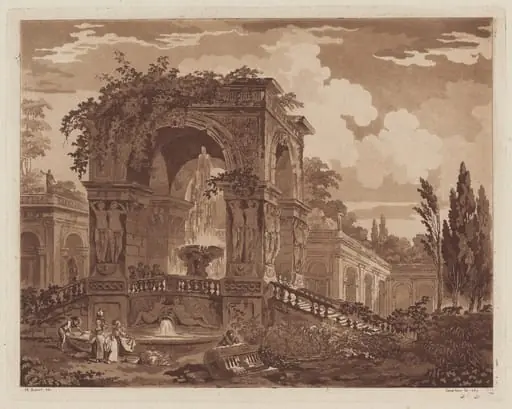 View of an Antique Fountain
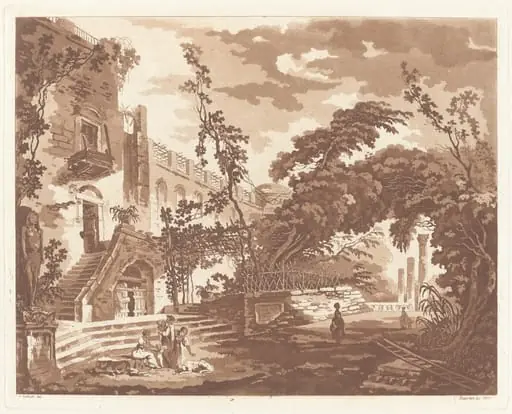 Entrance of the Temple of Serapis at Pozzuoli
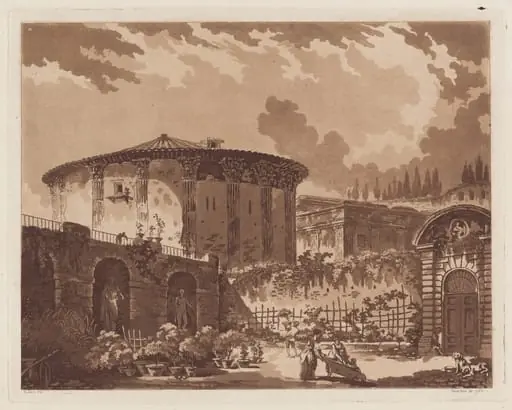 View in the Garden of a Roman Villa, with the Temple of Hercules Victor and the Temple of Portunus
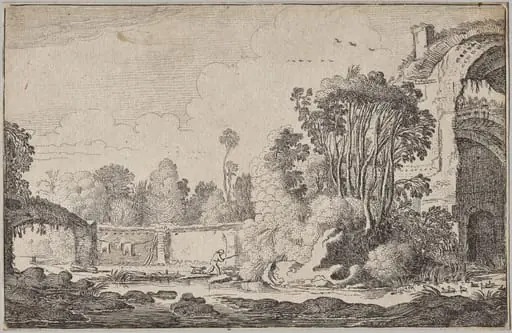 Landscapes, part III: Roman Ruins in Wooded Surroundings
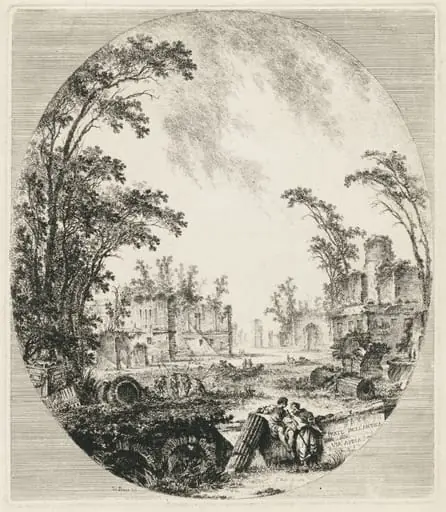 Parte dell'antica via Appia (Section of the Old Appian Way)
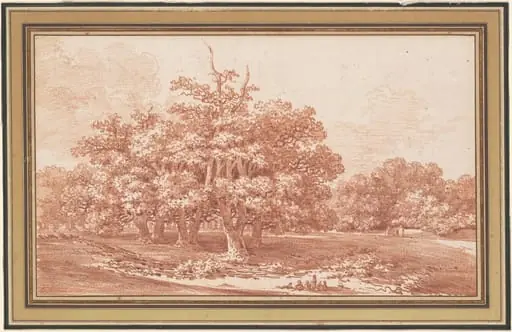 The Carrefour de l'Aiguille in the Forest of Fontainebleau
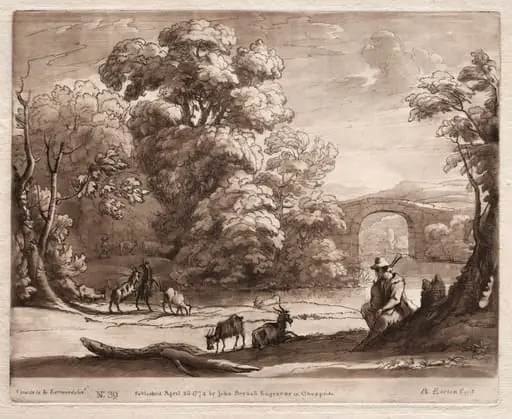 Liber Veritatis: No. 39, A Landscape with Herdsman Playing a Bagpipe and Goats Browsing
 An Italian View
 Landscape with Peasants before an Inn
 Liber Veritatis: No. 160, Tobias and the Angel