Artwork
Vue d’Église et Entrée du Village d’Essômes
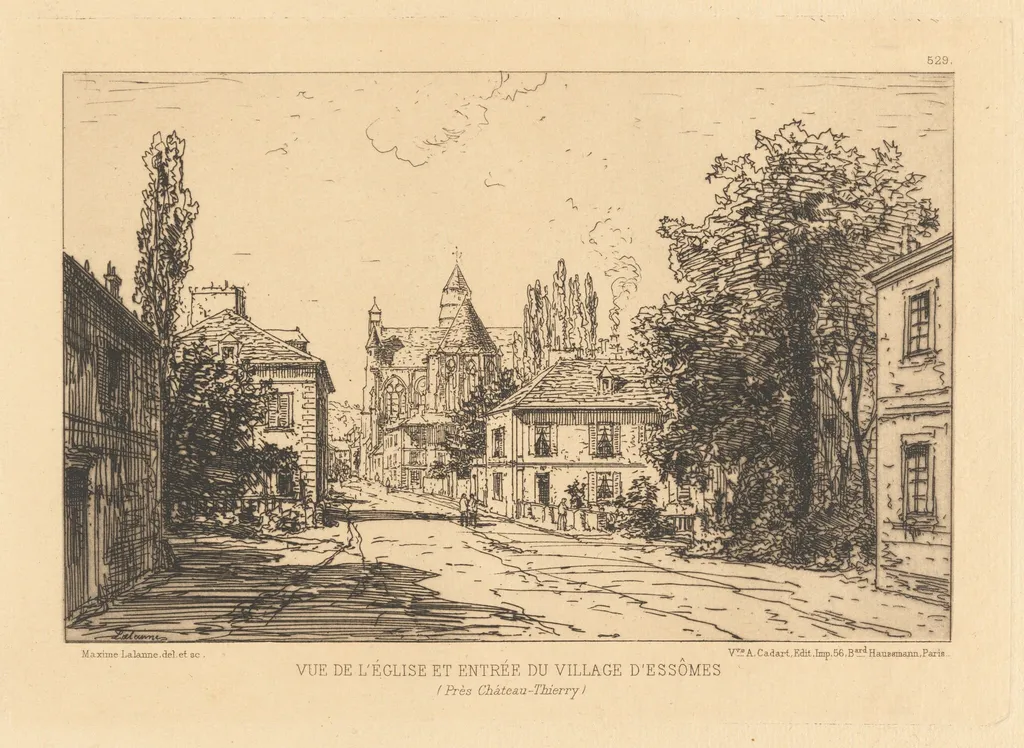
Vue d’Église et Entrée du Village d’Essômes is an ink print by the Impressionist artist Maxime Lalanne. It dates from 1880 and is held in the collection of the National Gallery of Art.
About this work
Overview
Vue d’Église et Entrée du Village d’Essômes is an 1880 etching by French artist Maxime Lalanne, executed on chine collé laid paper. This print captures a serene rural scene, characteristic of Lalanne’s detailed and atmospheric depictions of everyday settings.
Subject & Meaning
The etching portrays a tranquil village scene centered around a church with a distinctive tall spire and arched windows, surrounded by simpler structures and lined with trees. A few pedestrians are shown near the church, emphasizing the quiet, daily life of the village.
Technique & Style
Lalanne utilized etching techniques to achieve fine linework and textures, leveraging the medium’s ability to retain ink in metal plate grooves. The resultant monochromatic print has a sketchy, hand-drawn quality, blending the precision of etching with the intimacy of a drawing.
History & Provenance
Created in 1880, this work reflects Lalanne’s proficiency in 19th-century French printmaking, known for its technical exactness and capturing of mundane, rural themes.
Context
Part of a broader 19th-century French artistic trend focusing on rural life, this etching aligns with the period’s interest in detailed, realistic representations of everyday environments.
Own this work as a print
Artist & collection
Artist
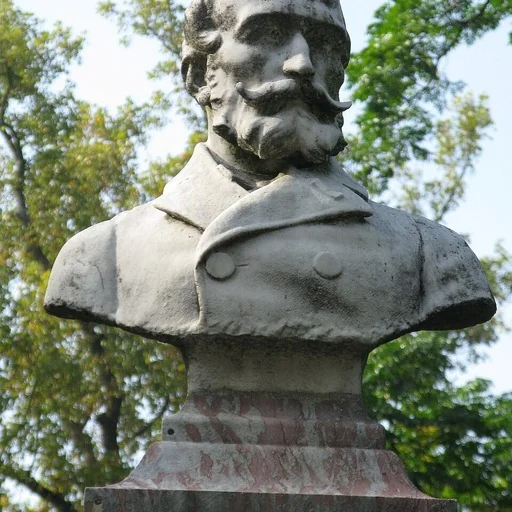
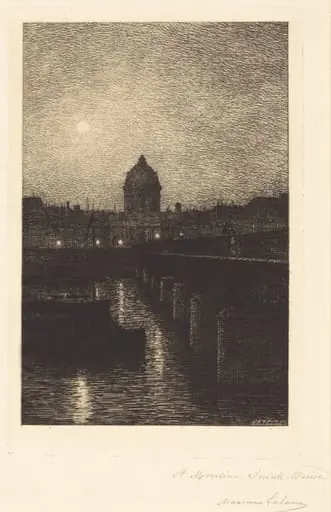
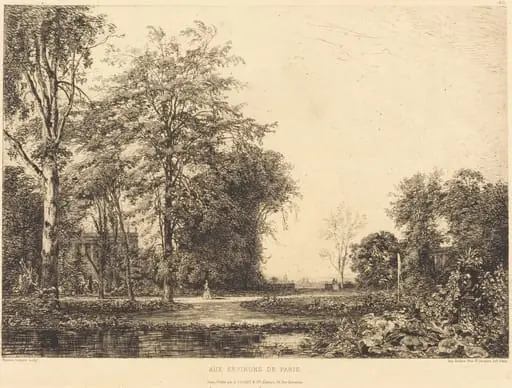
François Antoine Maxime Lalanne (November 27, 1827 – July 29, 1886) was a French artist known for his etchings and charcoal drawings (fusain).

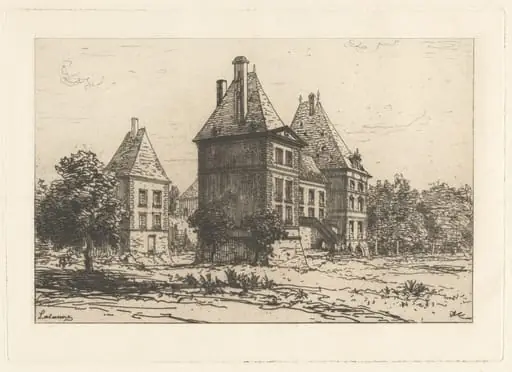 Castle with Two Wings
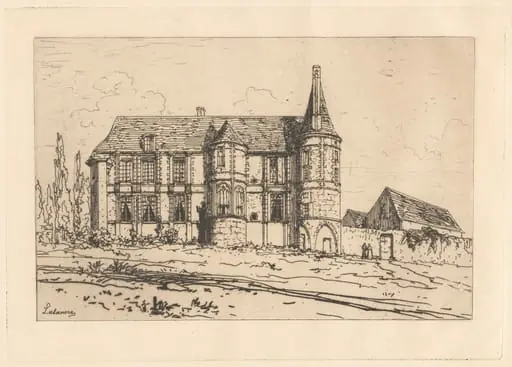 Castle with Two Towers
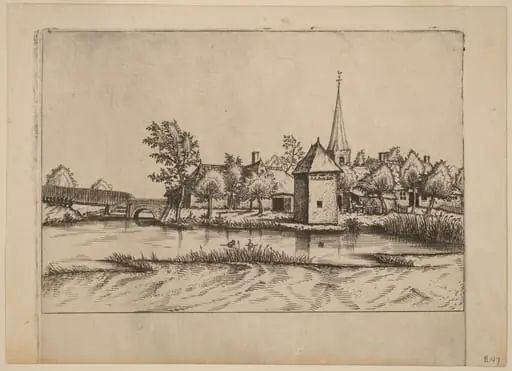 Country Village with Church and Bridge
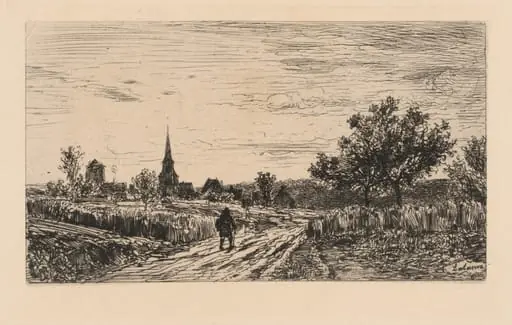 Evening Landscape (Return to the Lodgings)
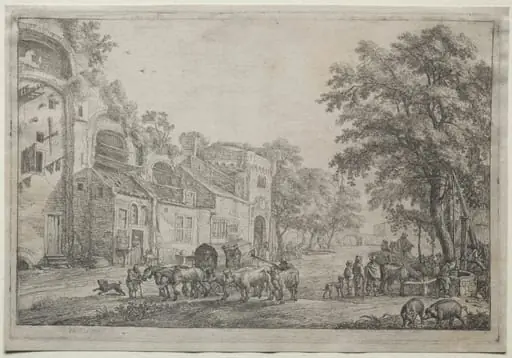 The Approach to a Village
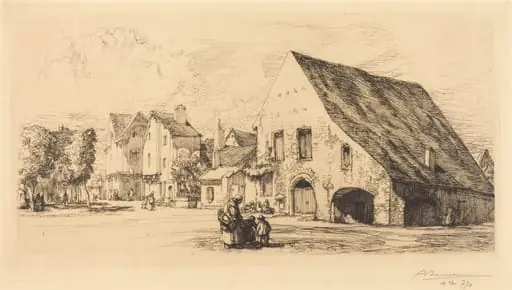 Provins (Seine et Marne)
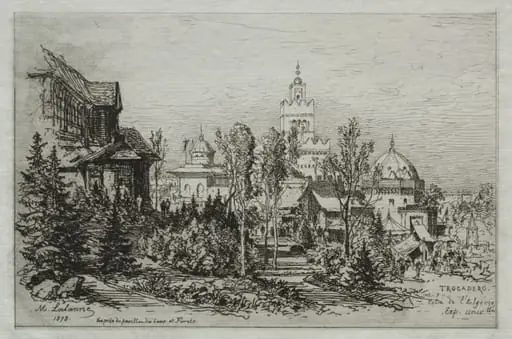 The Algerian Palace at the Trocadero
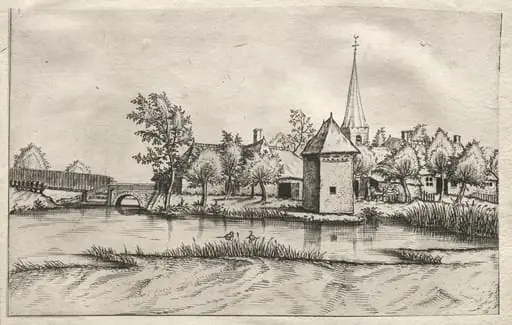 Views of Villages in Brabant and Campine: A Moated Village
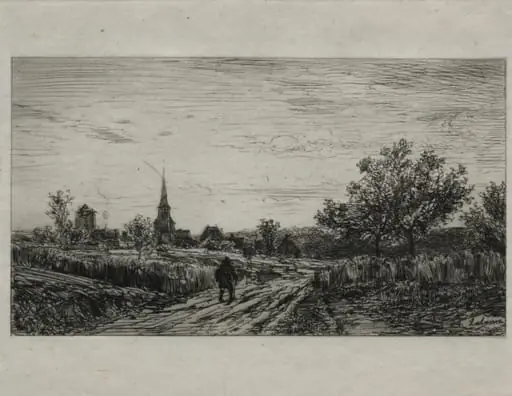 Landscape, Evening (Returning Home)
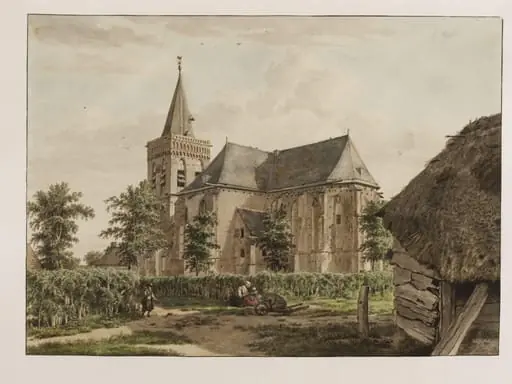 View of the Oude Kerk at Ede in Gelderland
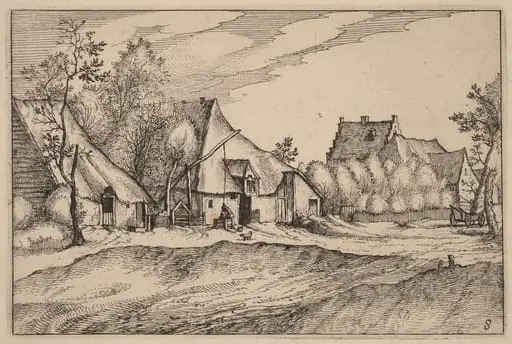 Farms in a Village