Artwork
Diana and Endymion
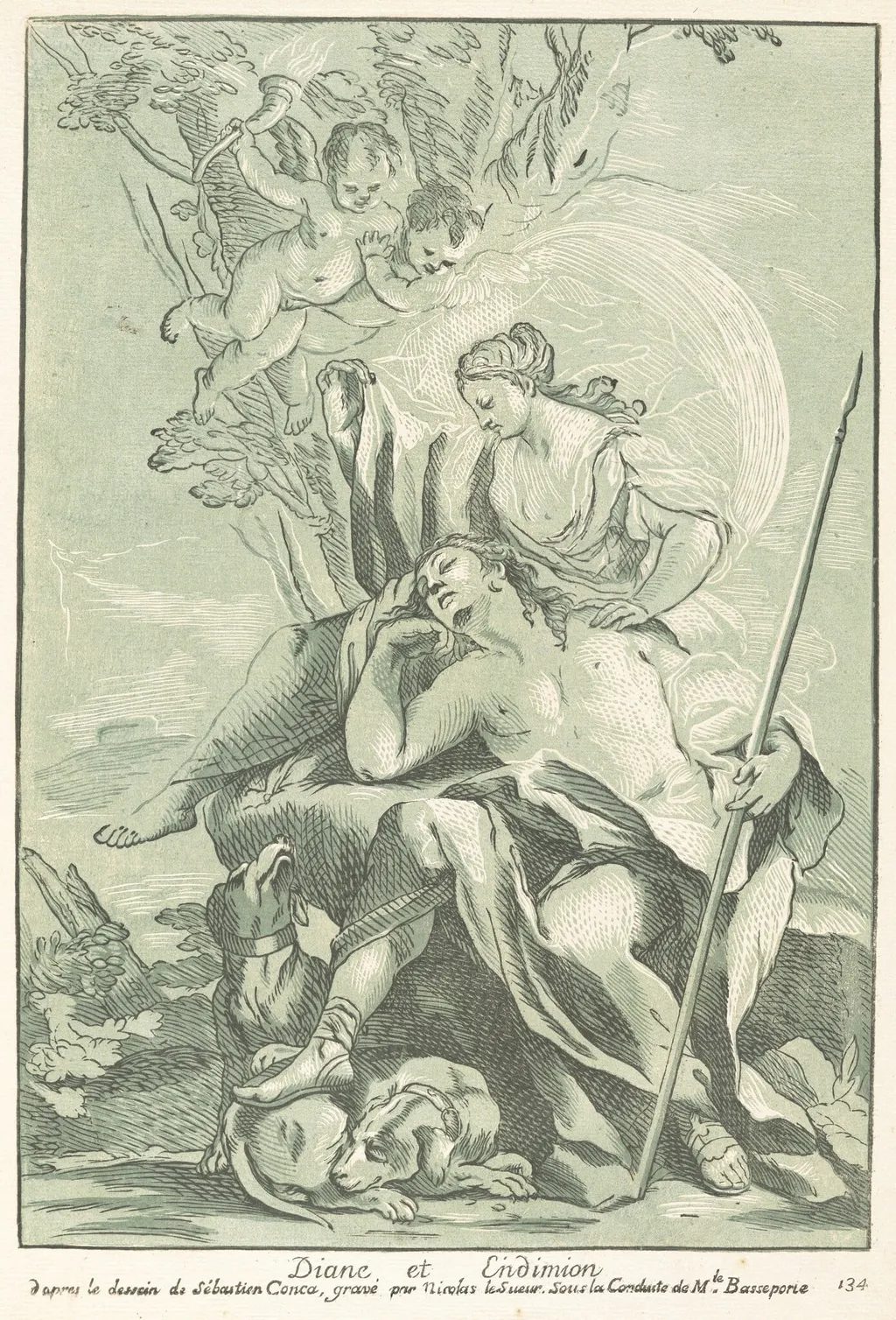
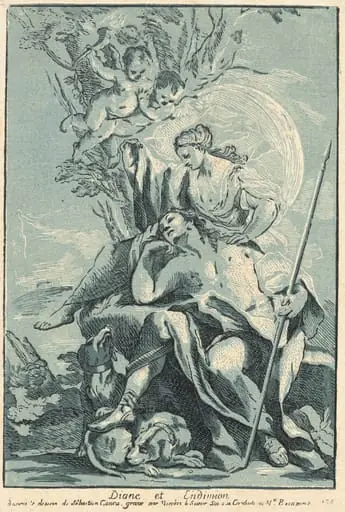
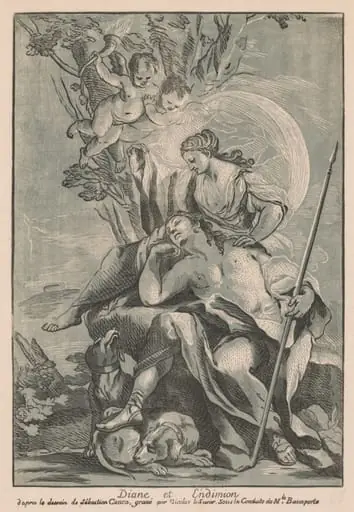
Diana and Endymion is an ink print by the Baroque artist Nicolas Le Sueur. It dates from 1736 and is held in the collection of the National Gallery of Art.
About this work
Overview
Created around 1736 by Nicolas Le Sueur, this chiaroscuro woodcut depicts a scene from classical mythology using only green and black ink on laid paper.
Created around 1736 by Nicolas Le Sueur, this chiaroscuro woodcut depicts a scene from classical mythology using only green and black ink on laid paper. The print is part of the National Gallery of Art’s collection in Washington, D.C. Its layered tonal contrasts and delicate carving reflect the technical sophistication of 18th-century printmaking, where light and shadow were manipulated to suggest volume and atmosphere without color.
Subject & Meaning
The scene illustrates the myth of Diana, the moon goddess, and Endymion, a mortal shepherd favored by her. Diana is shown reclining on a rocky ledge, while Endymion kneels beside her, spear in hand, as if in reverent awe. Floating cherubs surround them, their presence suggesting divine attention or celestial observation. The moment captures a quiet, timeless encounter between the immortal and the mortal, emphasizing stillness over action.
Technique & Style
Le Sueur employed the chiaroscuro woodcut technique, using multiple carved blocks to layer green and black ink, creating subtle gradations of tone. The contrast between the soft, diffused light of the sky and the textured, rugged ground enhances spatial depth. Fine lines define drapery and cloud forms, while broader, coarser cuts suggest stone and foliage. The method mimics the effects of drawn chiaroscuro studies, translating them into print with remarkable nuance.
History & Provenance
The print was produced in France during the early 1730s, a period when mythological subjects remained popular among printmakers seeking to emulate painting’s grandeur. Le Sueur, active in Paris, was known for adapting compositional ideas from contemporary artists into woodcut form. The work entered the National Gallery of Art’s collection through established acquisition channels, likely from a private European collection in the 20th century.
Context
In early 18th-century France, mythological themes were frequently revisited in decorative arts and prints, often as expressions of refined taste. Chiaroscuro woodcuts, though less common than etchings or engravings, were valued for their ability to mimic the dramatic lighting of Baroque painting. Le Sueur’s work aligns with a broader trend of translating painterly effects into print, catering to collectors who prized both intellectual allusion and technical finesse.
Legacy
Though not widely reproduced or celebrated in its time, Le Sueur’s Diana and Endymion stands as a refined example of French chiaroscuro woodcutting. It preserves a method that declined after the mid-18th century, making it a rare witness to a transitional phase in printmaking. Its survival and preservation in a major public collection ensure its continued study as a technical and aesthetic artifact of its era.
Artist & collection