Artwork
Saint Jerome
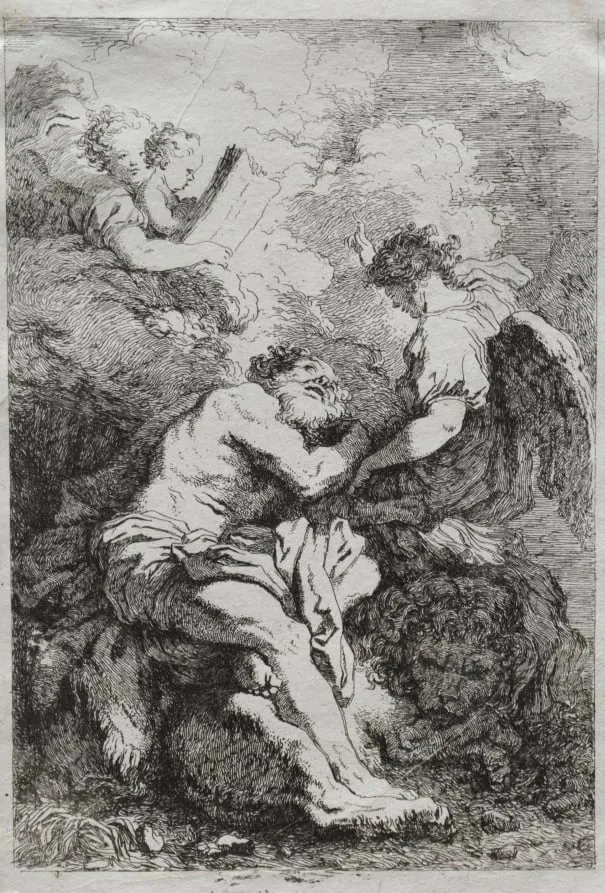
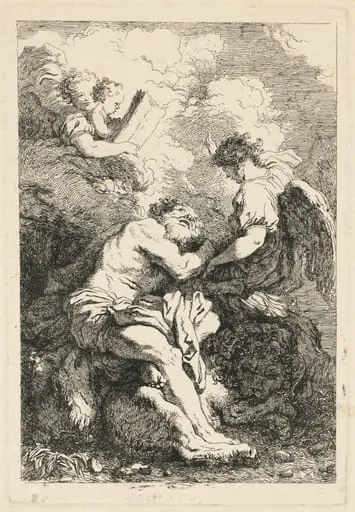
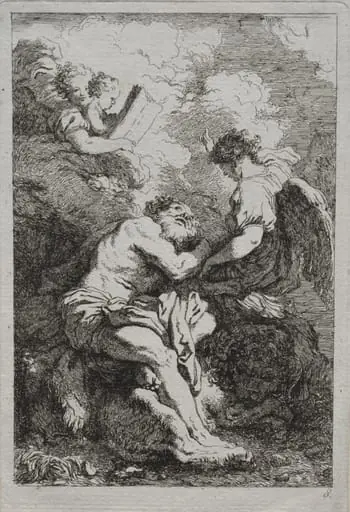
Saint Jerome is a print by the Romanticist artist Jean Honoré Fragonard. It dates from 1764 and is held in the collection of the Cleveland Museum of Art.
About this work
This work is interesting because it's a religious scene, which was unusual for the 18th century, a time when people preferred lighter themes.
The painting shows Saint Jerome in a quiet moment.
He's surrounded by books and papers, looking thoughtful.
This work is interesting because it's a religious scene, which was unusual for the 18th century, a time when people preferred lighter themes.
The artist likely chose this subject to appeal to a different kind of buyer.
The scene is calm and peaceful, with a focus on the saint's solitude.
This sub-fact makes the painting stand out from others of the time.
You can learn more about this style by looking into the technique of sfumato.
Overview
This print depicts Saint Jerome in a contemplative moment, surrounded by books and manuscripts. Unlike most 18th-century prints, which favored lighthearted or decorative subjects, this work turns to a quiet religious figure. Its rarity lies in its serious tone during an era dominated by secular, cheerful themes favored by the urban middle class.
Subject & Meaning
Saint Jerome, known for translating the Bible into Latin, is shown not in dramatic action but in solitary study. The emphasis on his quiet concentration and scholarly environment suggests a meditation on intellectual devotion. This portrayal aligns with humanist ideals rather than popular theatrical or mythological narratives common at the time.
Technique & Style
The composition uses subdued tones and careful detail to evoke stillness. Lines are precise, and the arrangement of books and paper creates a sense of ordered intimacy. While sfumato is not a feature of printmaking in this context, the artist achieves soft transitions through fine hatching and controlled shading, enhancing the introspective mood.
History & Provenance
The print likely originated from a niche market of educated patrons who valued religious scholarship over entertainment. Its survival suggests it was owned by individuals with clerical, academic, or devotional interests—uncommon among the broader bourgeois collectors who favored decorative art. No major collection records trace its early ownership.
Context
In the 18th century, domestic art favored bright colors and scenes from opera, fable, or daily life. Religious imagery was largely confined to churches or private chapels. This print’s existence indicates a small but persistent interest in spiritual introspection, possibly linked to Enlightenment-era reevaluations of faith and learning.
Legacy
Though not widely influential in its time, the print stands as a quiet counterpoint to prevailing trends. It reflects how religious themes persisted in private spheres despite public tastes. Later scholars have noted it as an example of how devotional art adapted to domestic settings, preserving older iconographies amid secularizing culture.
Artist & collection

Artist
Jean-Honoré Fragonard was born on 5 April 1732 in Grasse, the son of a glover, and moved with his family to Paris in 1738.