Artwork
Diana and Endymion
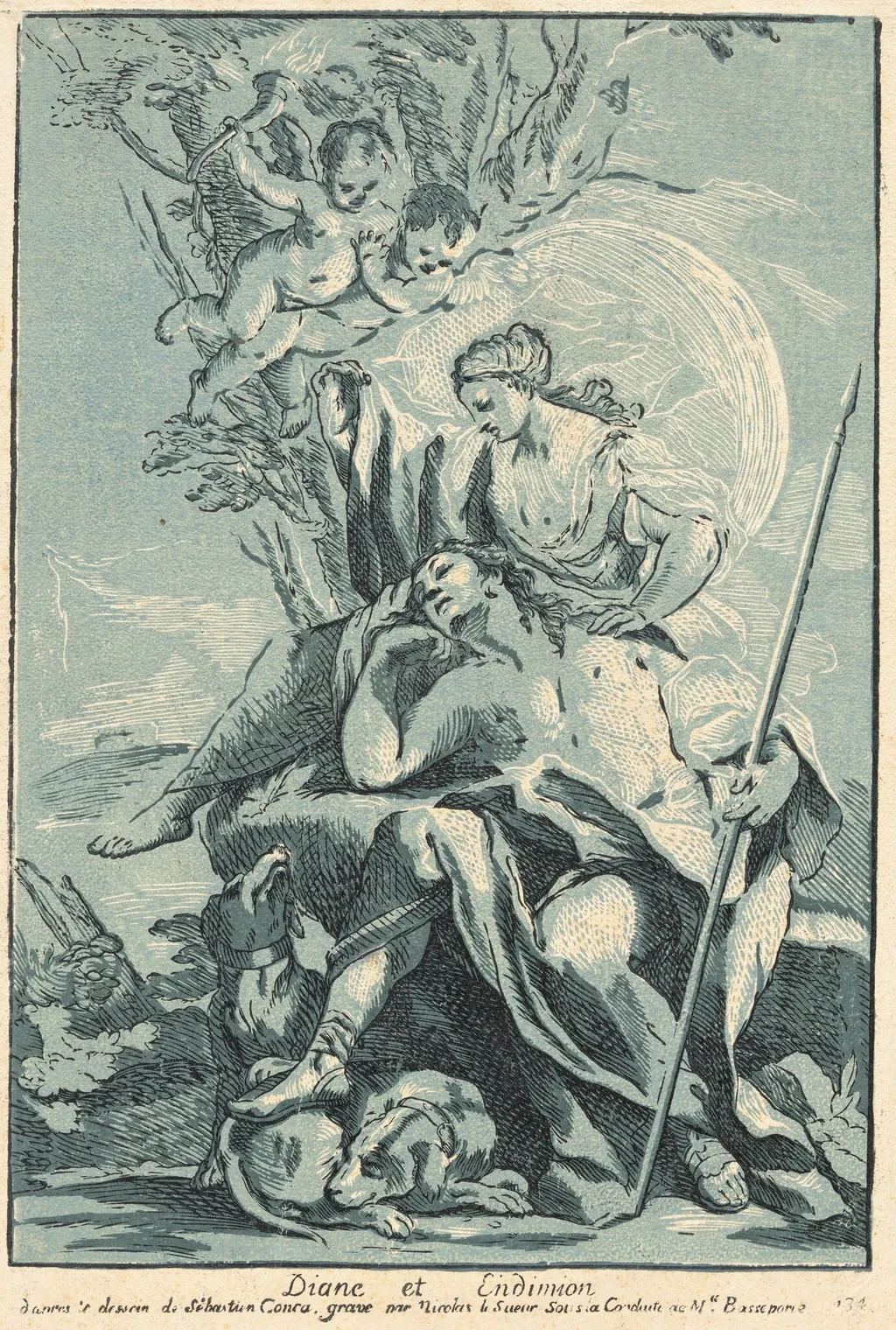
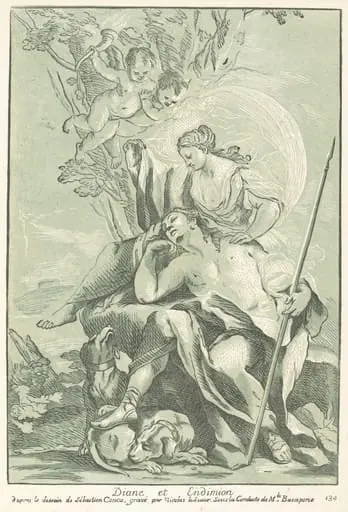
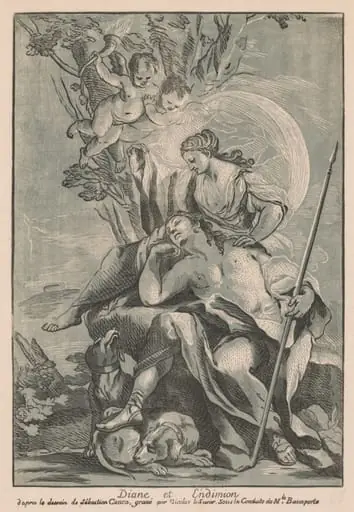
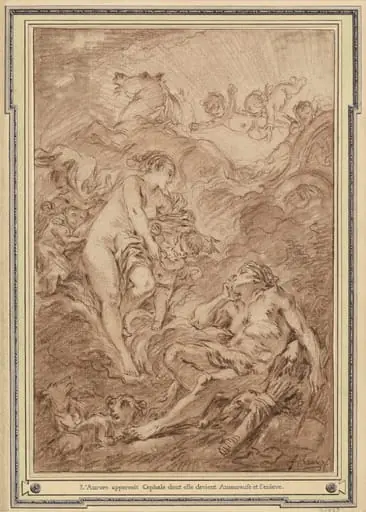
Diana and Endymion is an ink print by the Baroque artist Nicolas Le Sueur. It dates from 1736 and is held in the collection of the National Gallery of Art.
About this work
Overview
Nicolas Le Sueur’s woodcut *Diana and Endymon* dates from around 1736. Executed as a chiaroscuro print, it combines a stark black line block with two tone blocks in gray‑blue and light blue on heavy laid paper. The composition presents a mythological encounter set against a rugged landscape, rendered in a limited palette that emphasizes contrast and atmosphere.
Subject & Meaning
The scene alludes to the classical tale in which the moon goddess watches the eternally youthful Endymion, intertwining themes of desire and divine observation.
The image depicts the goddess Diana, poised with a spear, confronting the sleeping shepherd Endymion, who lies on the ground gazing upward. Small, ethereal figures hover above, some bearing branches or musical instruments, suggesting a celestial audience. The scene alludes to the classical tale in which the moon goddess watches the eternally youthful Endymion, intertwining themes of desire and divine observation.
Technique & Style
Le Sueur employed a three‑block chiaroscuro process: a black line block defines the contours, while separate gray‑blue and light‑blue blocks are printed successively to build tonal depth. The heavy laid paper absorbs the ink, producing a textured surface. Swirling lines and the limited color scheme create a dramatic sense of space, characteristic of early 18th‑century French woodcut experimentation.
History & Provenance
The print was produced in the mid‑1730s, a period when chiaroscuro woodcuts enjoyed renewed interest among French printmakers. While specific ownership records are scarce, the work is catalogued among Le Sueur’s surviving prints and appears in several museum collections devoted to 18th‑century graphic art, confirming its attribution and dating.
Artist & collection