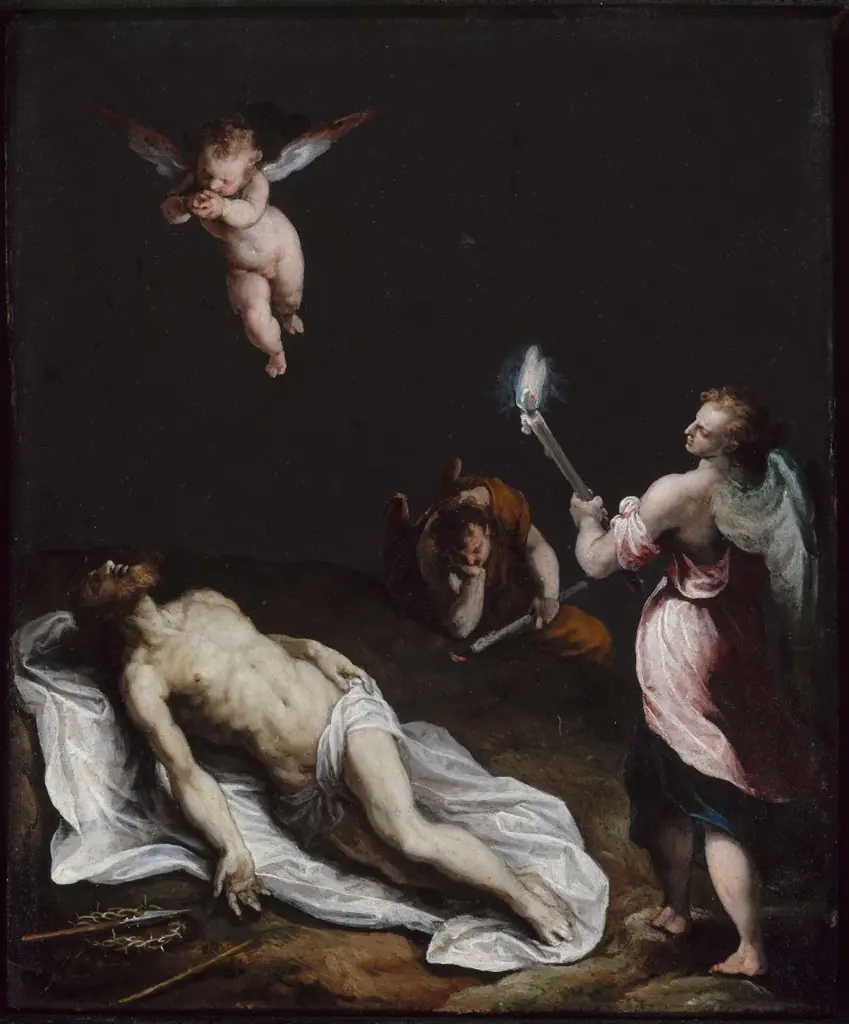
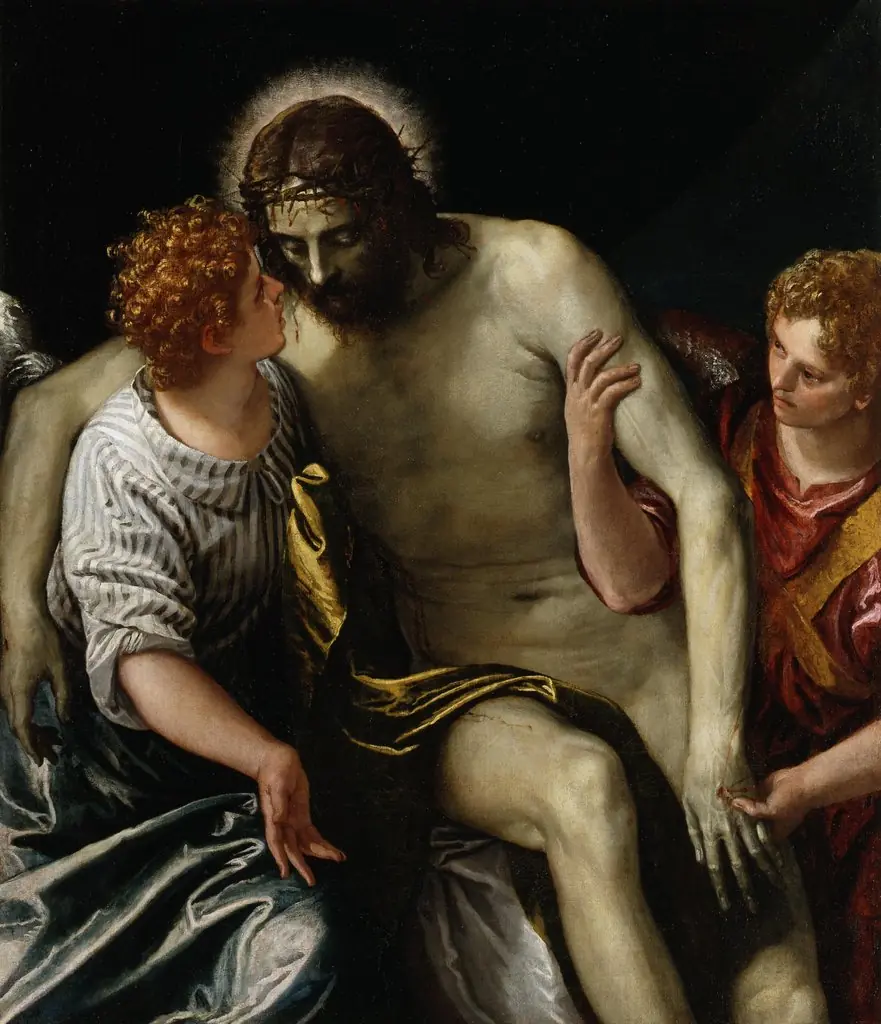
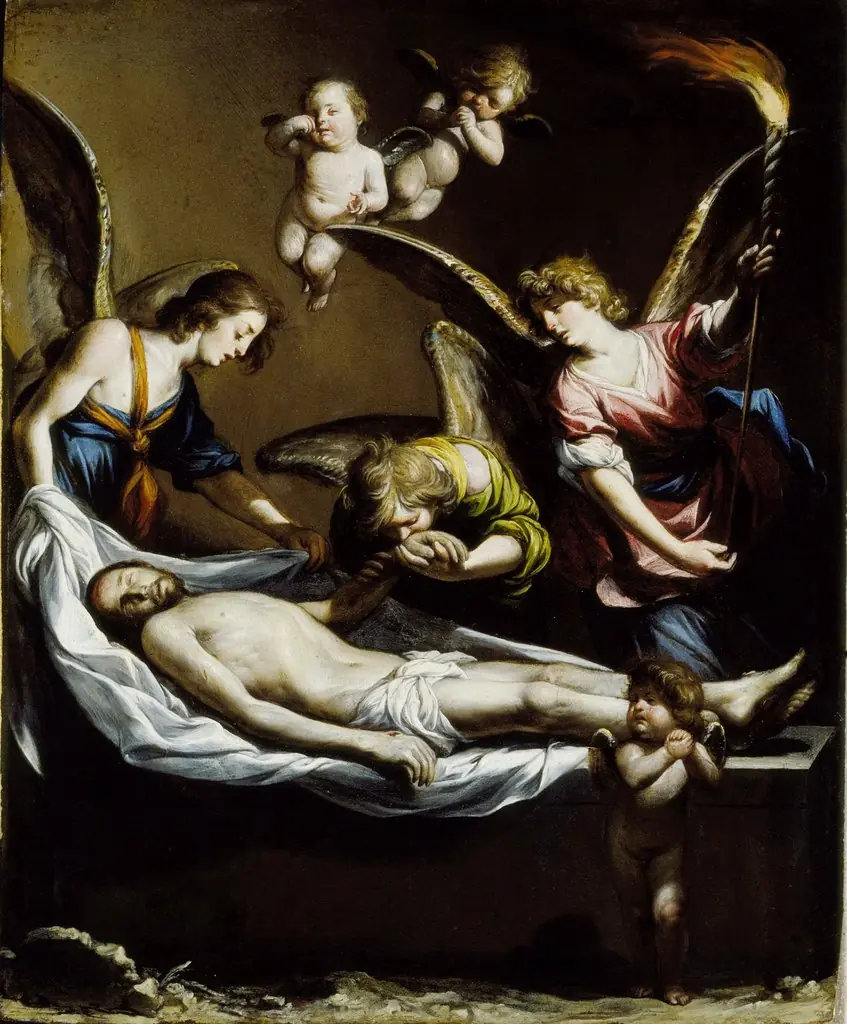
Artwork
The Dead Christ with Angels
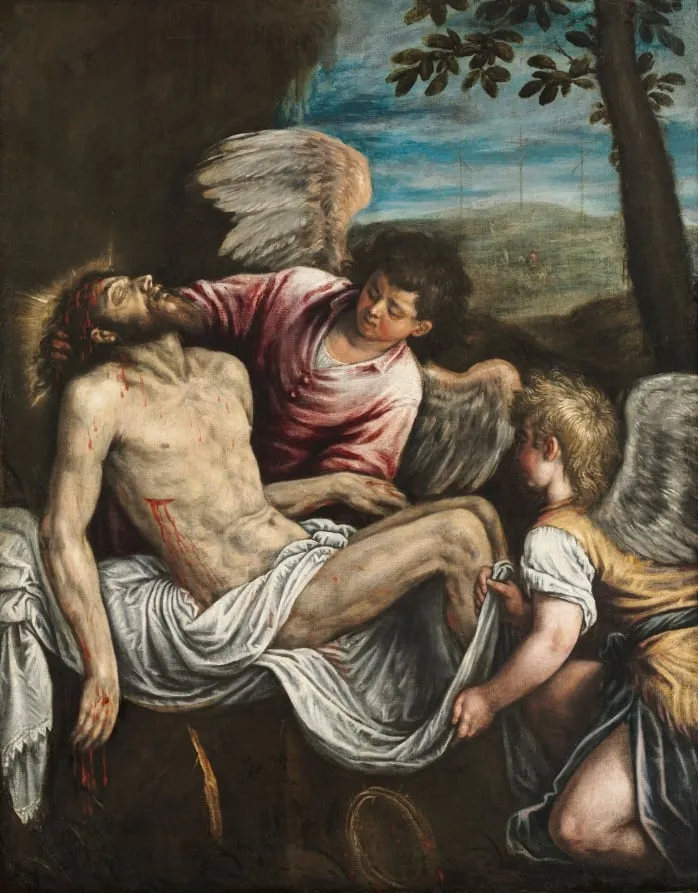
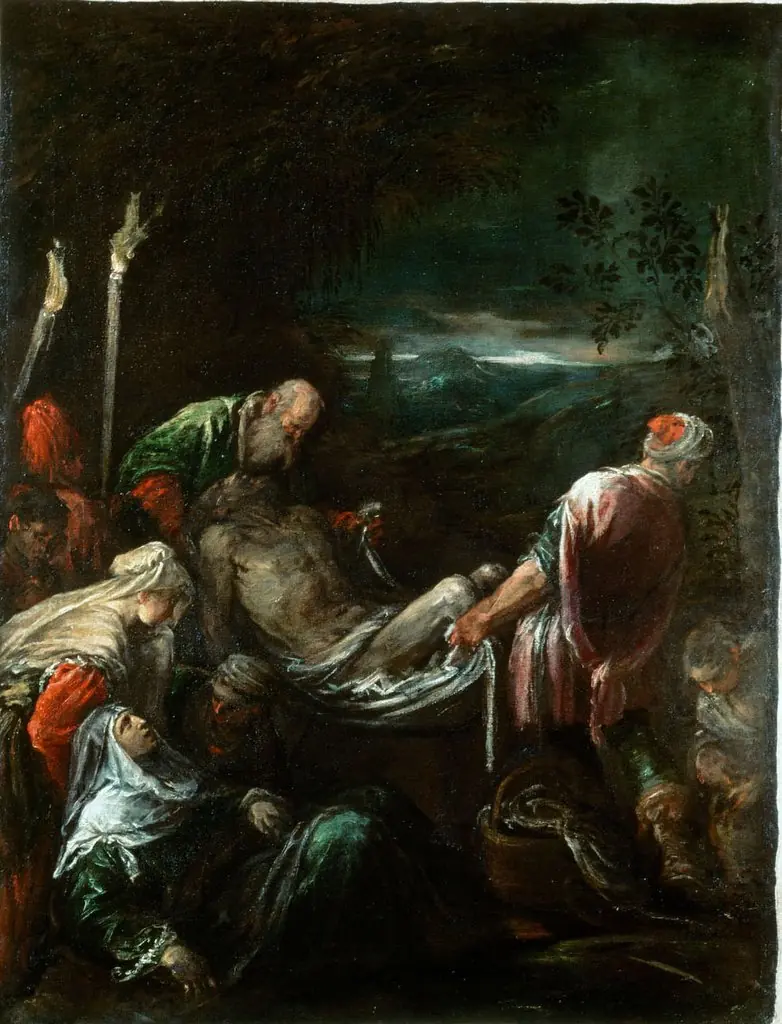
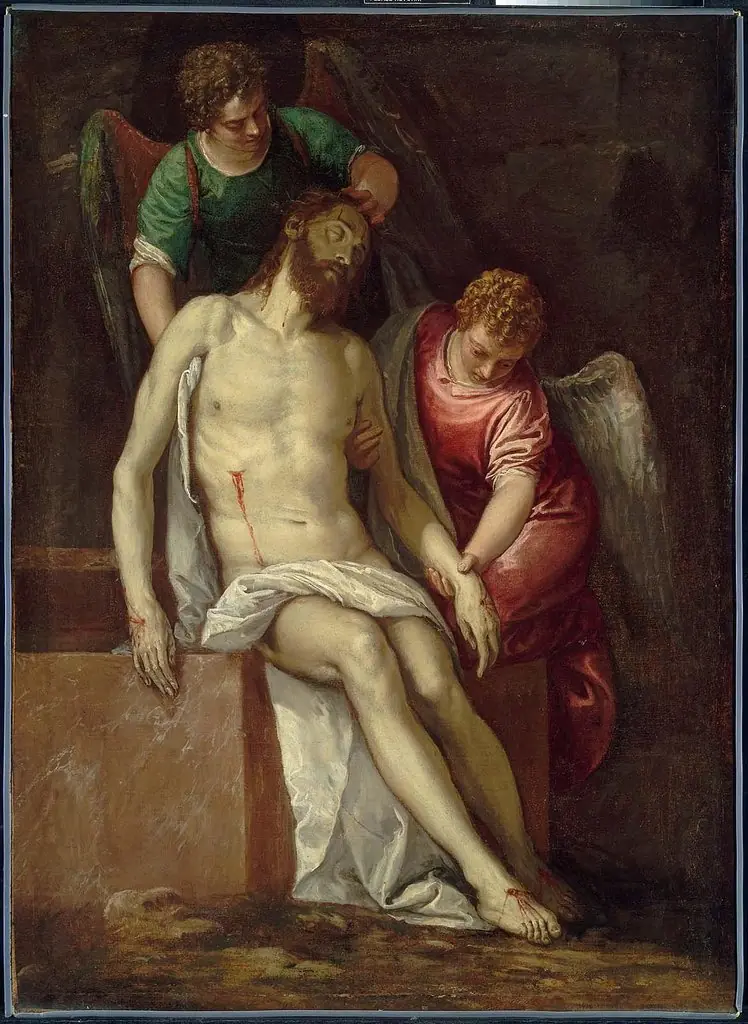
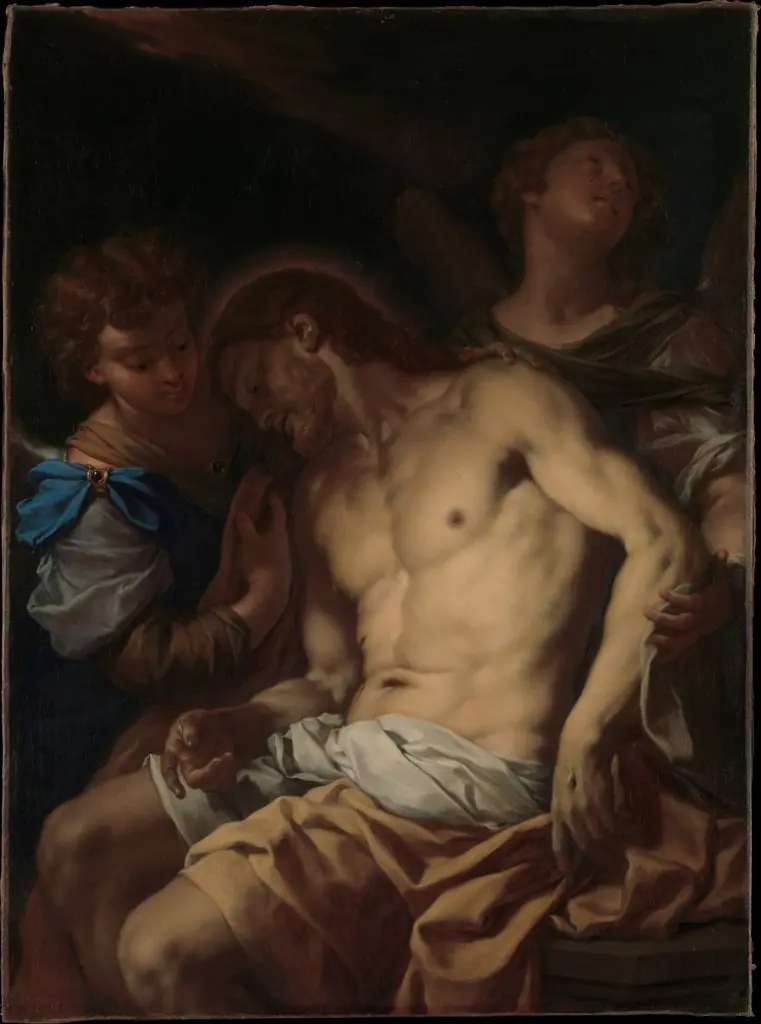
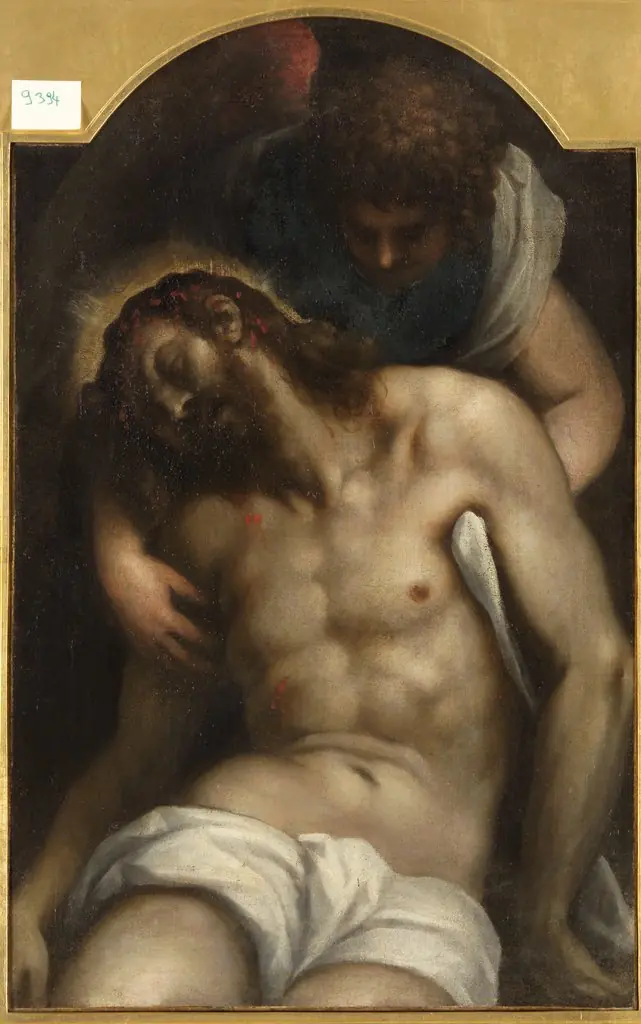
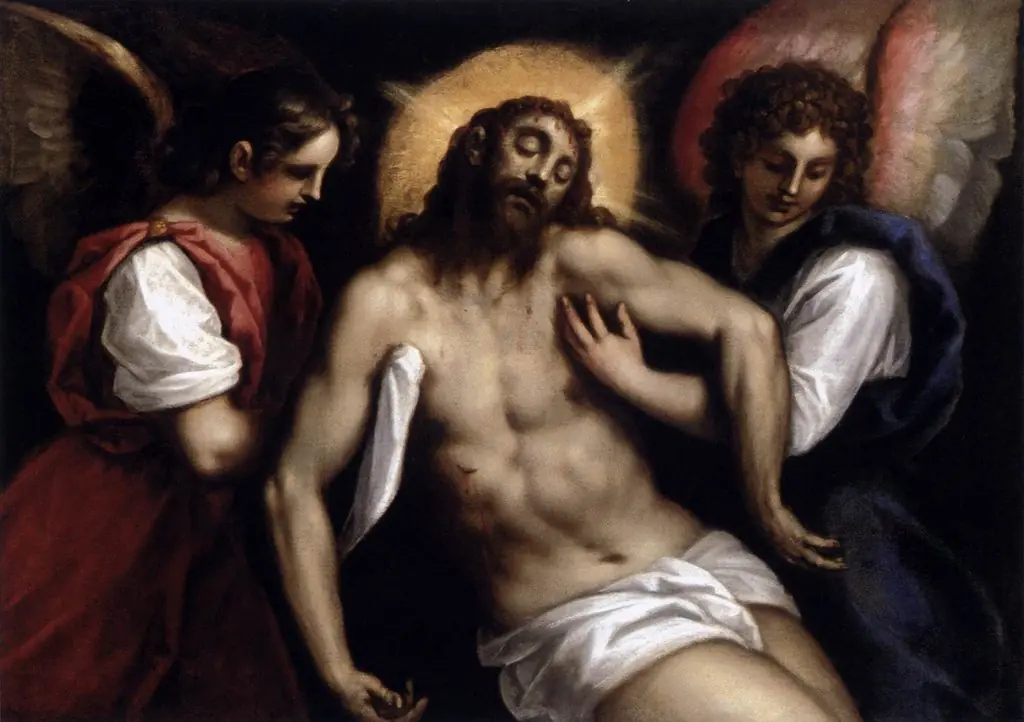
The Dead Christ with Angels is an unspecified painting by the Mannerist artist Leandro Bassano. It dates from 1580 and is held in the collection of the Cleveland Museum of Art.
About this work
Overview
Leandro Bassano painted The Dead Christ with Angels in late 16th-century Venice, depicting Christ’s body resting on a stone slab attended by two angels.
Leandro Bassano painted The Dead Christ with Angels in late 16th-century Venice, depicting Christ’s body resting on a stone slab attended by two angels. Unlike dramatic renditions of the subject, this work emphasizes stillness and quiet reverence. The composition avoids theatrical gestures, focusing instead on intimate presence and subdued emotion. Bassano, trained in a family of Venetian painters, applied the region’s characteristic use of light and shadow to create a sense of quiet solemnity.
Subject & Meaning
The painting portrays Christ after crucifixion, his body lifeless yet dignified, cradled by stillness. Two angels hover above, their hands folded and expressions gentle, not in mourning but in watchful care. This interpretation shifts focus from suffering to serenity, suggesting divine presence in death rather than its violence. The absence of overt grief transforms the scene into a moment of contemplative reverence, aligning with devotional practices that valued inner reflection.
Technique & Style
Bassano employed chiaroscuro to model Christ’s form with soft transitions between light and shadow, enhancing the tactile realism of the flesh without harsh contrast. The angels are rendered with delicate brushwork, their drapery subtly catching ambient light. His palette is restrained, favoring muted tones that reinforce the painting’s quiet mood. Influenced by Tintoretto’s atmospheric handling of figures, Bassano’s technique prioritizes emotional resonance over narrative drama.
History & Provenance
Created in Venice, the painting emerged from a family workshop long established in Bassano del Grappa and active in Venetian art circles. Leandro Bassano inherited his brother Francesco’s studio after 1592 and continued its production of religious and portrait works. Similar versions of this composition exist in the Galleria Colonna in Rome and the Civic Museum in Bassano del Grappa, suggesting the subject was a recurring theme in the family’s output during this period.
Context
In late Renaissance Venice, religious imagery often balanced emotional intensity with spiritual restraint, reflecting Counter-Reformation ideals. Bassano’s approach aligns with a trend toward intimate, contemplative depictions of sacred moments, moving away from the grandeur of earlier Mannerist styles. His work reflects the influence of Venetian colorism and the growing emphasis on personal devotion, where quiet presence held greater spiritual weight than spectacle.
Legacy
Though primarily known for portraiture, Bassano’s religious works like this one demonstrate his sensitivity to emotional nuance and light. The painting’s understated tone influenced later Venetian devotional art, where restraint became a vehicle for spiritual depth. Copies in multiple collections indicate its resonance within contemporary religious circles, securing its place as a quiet but enduring example of late 16th-century sacred imagery.
Artist & collection
Artist
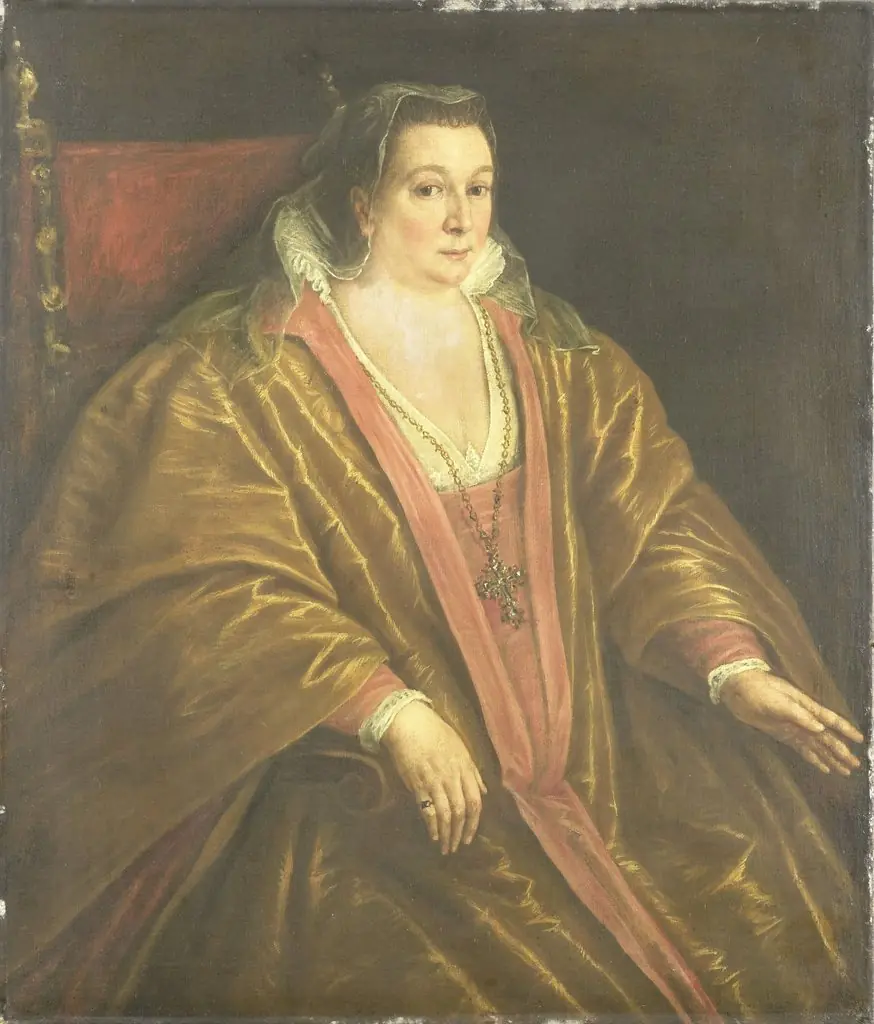
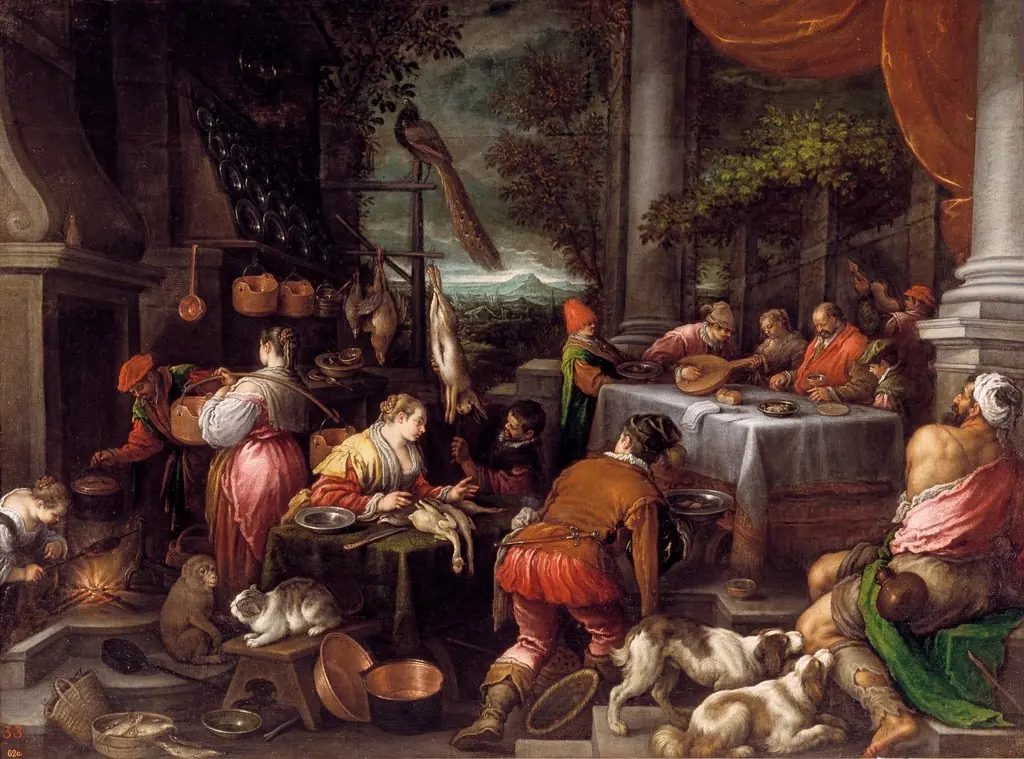
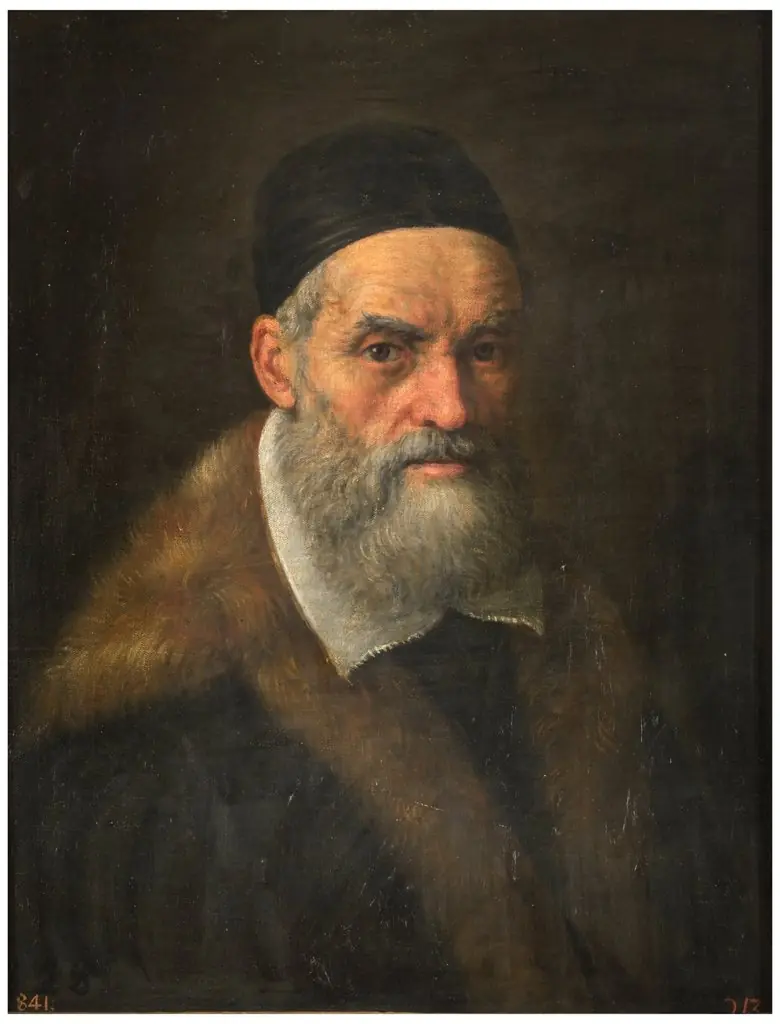
Leandro Bassano (10 June 1557 – 15 April 1622), also called Leandro dal Ponte, was an Italian Renaissance painter from Bassano del Grappa who was awarded a knighthood by the Doge of Venice.