Artwork
Chorepiskopi
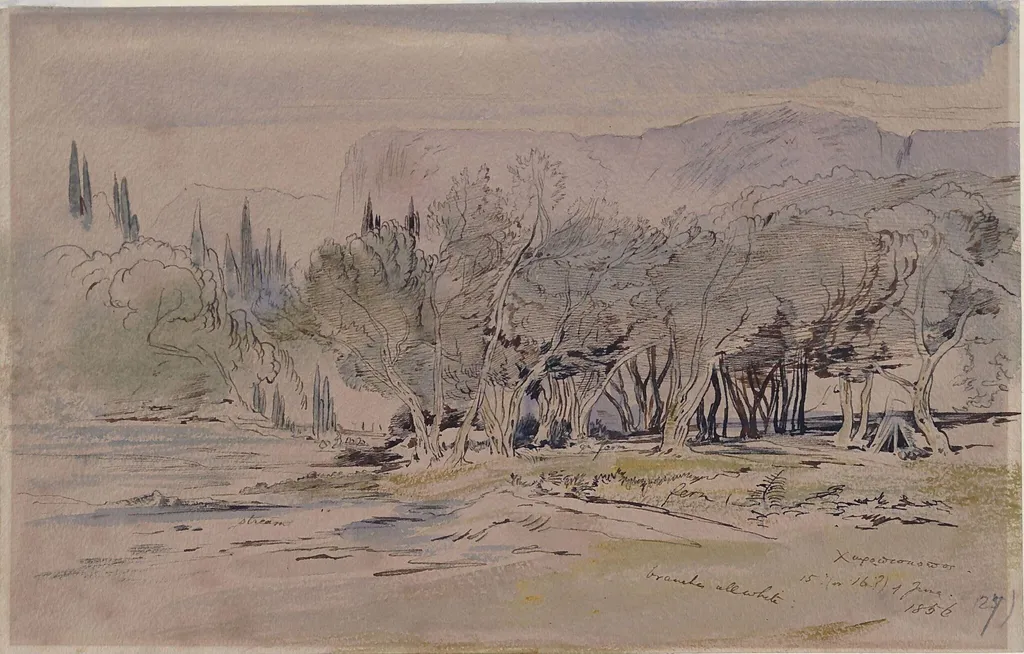
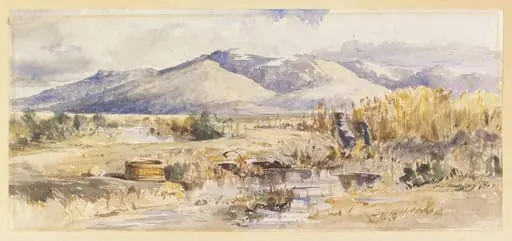
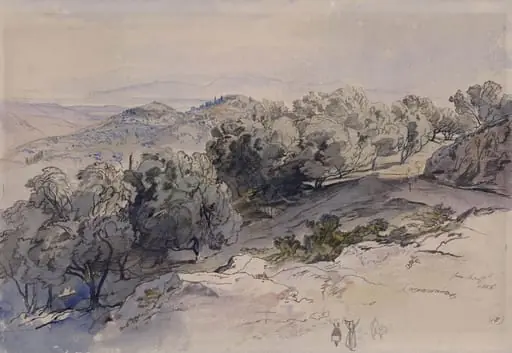
Chorepiskopi is a watercolor work on paper by the Impressionist artist Edward Lear. It dates from 16 and is held in the collection of the Victoria and Albert Museum.
About this work
Overview
Edward Lear created *Chorepiskopi* in 1848 as a watercolour sketch during his travels in the eastern Mediterranean. Executed in delicate, translucent washes, the work reflects his practice of recording landscapes on location. It is now part of the Victoria and Albert Museum’s collection, preserved as an example of his observational drawings rather than finished illustrations.
Subject & Meaning
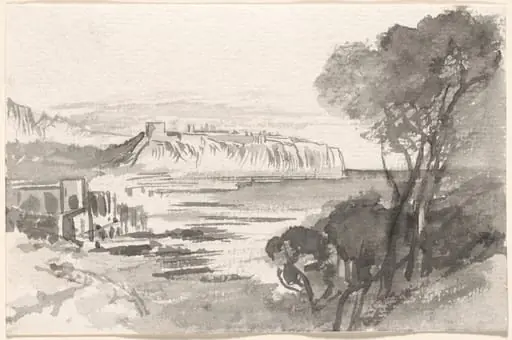
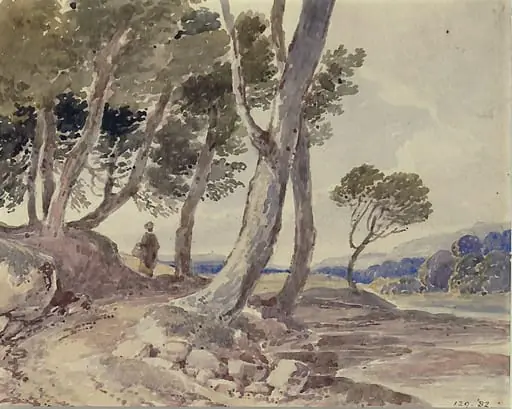
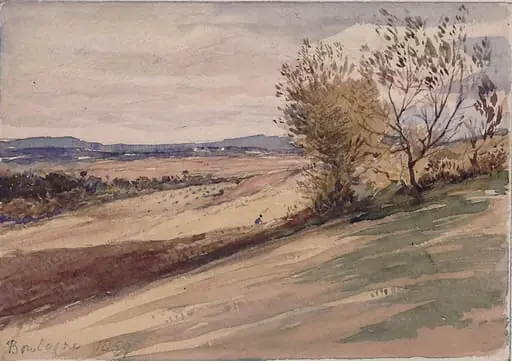
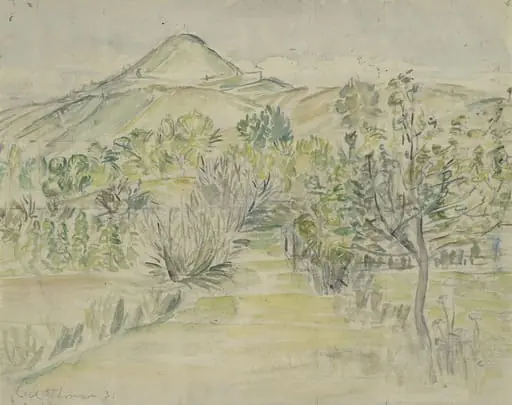
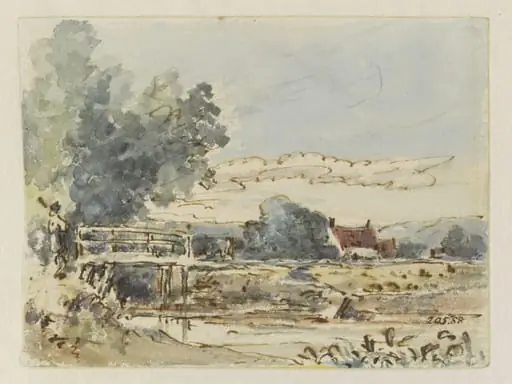
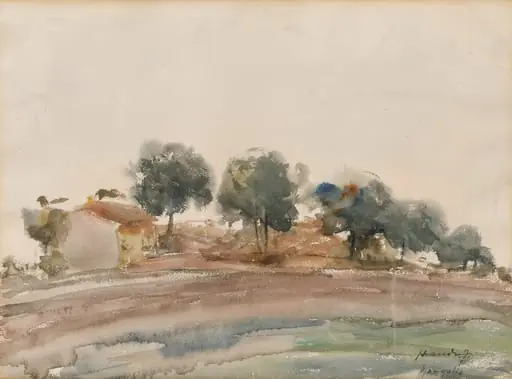
The scene depicts a quiet olive grove under a soft, sunlit sky, with gnarled trees rising from dry, sun-baked earth.
The scene depicts a quiet olive grove under a soft, sunlit sky, with gnarled trees rising from dry, sun-baked earth. A faint path threads through the vegetation, suggesting quiet human presence without overt activity. Lear’s marginal notes—words like 'olive' and 'stream'—indicate his focus on botanical and topographical detail, grounding the image in a specific, observed place rather than an imagined one.
Technique & Style
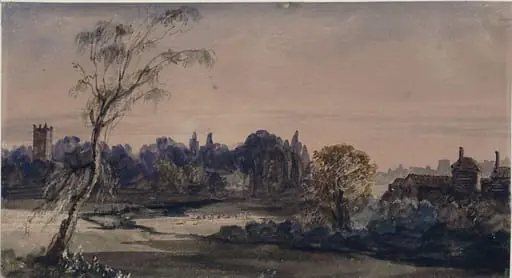
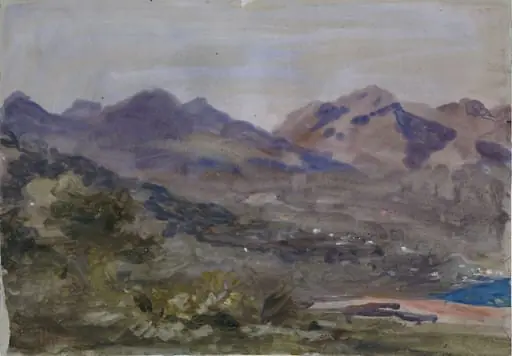
Lear employed loose, rapid watercolour brushwork, allowing pigment to bleed slightly at the edges and leaving unpainted paper to suggest light. The palette is restrained, dominated by pale greens, ochres, and greys, enhancing the sense of heat and stillness. The technique prioritizes immediacy over finish, capturing the atmosphere of a single moment rather than constructing a polished composition.
History & Provenance
Created during Lear’s extensive travels through Greece and the Levant, the sketch was likely made en plein air and later retained in his personal archive. It entered the Victoria and Albert Museum’s holdings through established donation channels, consistent with the institution’s acquisition of 19th-century British topographical drawings. Its survival reflects Lear’s habit of preserving preliminary studies alongside published work.
Context
Lear produced hundreds of such sketches during his journeys, many of which informed later published illustrations for travel books and ornithological works. Unlike his whimsical literary output, these landscapes reveal a disciplined, quiet engagement with place. His watercolours served both as records and as visual diaries, bridging scientific observation and personal experience in an era before photography.
Legacy
*Chorepiskopi* exemplifies Lear’s contribution to the tradition of British topographical watercolour, where accuracy and atmosphere coexist. Though less known than his nonsense verse, these sketches influenced later generations of travel artists and documentarians. Their unembellished quality offers insight into how 19th-century observers engaged with foreign landscapes—not as exotic spectacles, but as tangible, lived environments.
Artist & collection
Artist
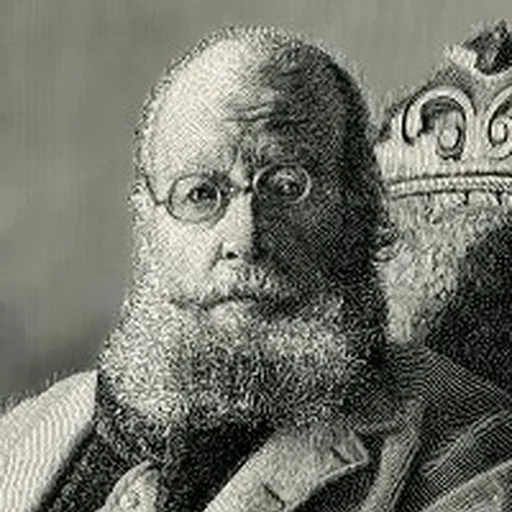
Edward Lear (12 May 1812 – 29 January 1888) was an English artist, illustrator, musician, author and poet, who is known mostly for his literary nonsense in poetry and prose and especially his limericks, a form he popularised but which term…