Artwork
Tanjore, India
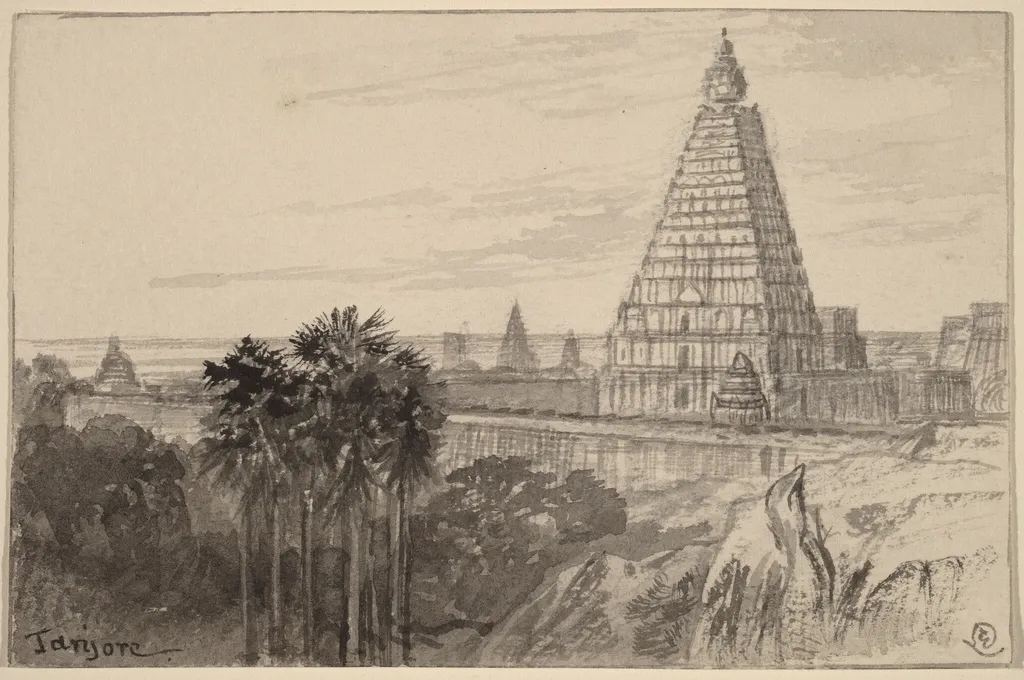
Tanjore, India is a graphite drawing by the Impressionist artist Edward Lear. It dates from 1884 and is held in the collection of the National Gallery of Art.
About this work
Overview
Created in 1884 by Edward Lear, this drawing depicts the Indian town of Tanjore.
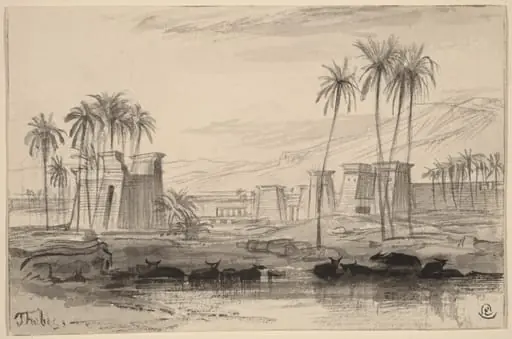
Created in 1884 by Edward Lear, this drawing depicts the Indian town of Tanjore. Executed in gray and black wash over faint graphite lines on cardstock, it belongs to a series of topographical sketches made during his travels across South Asia. Lear, primarily known for his literary whimsy, maintained a rigorous practice of visual documentation, treating each location with careful observation and restrained tonal modulation.
Subject & Meaning
The drawing captures the architectural character of Tanjore, likely focusing on its temples or civic structures. Rather than idealizing the scene, Lear presents it with observational neutrality, emphasizing form and spatial arrangement over narrative or symbolic content. The work serves as a record of place, reflecting his interest in preserving the visual details of sites he encountered during his journeys through India.
Technique & Style
Lear employed layered washes of gray and black ink over light graphite underdrawing, allowing subtle gradations of tone to suggest volume and light. The medium’s fluidity enabled quick yet precise rendering, suited to on-site sketching. His style avoids ornamental flourish, favoring clarity and structural accuracy—hallmarks of his approach to travel drawing, where documentation took precedence over artistic embellishment.
History & Provenance
This drawing was produced during Lear’s final years of travel, when he focused on South Indian sites after earlier expeditions in the Mediterranean and the Balkans. It remained in his personal collection until his death in 1888. Later, it entered institutional holdings, likely through bequest or acquisition by a collector interested in 19th-century travel art, preserving it as part of his visual archive.
Context
In the 19th century, European artists often traveled to colonial territories to record landscapes and monuments, contributing to both scientific and aesthetic understanding of distant regions. Lear’s work aligns with this tradition, though his approach was less imperialistic and more personally driven. His drawings functioned as private records, later adapted for publication, bridging personal observation and public dissemination.
Legacy
Though Lear is remembered chiefly for his nonsense verse, his extensive body of topographical drawings remains a significant contribution to the visual record of 19th-century South Asia. These works, including *Tanjore, India*, offer insight into how Western artists engaged with non-European environments—not as exoticized fantasies, but as subjects of quiet, methodical study.
Own this work as a print
Artist & collection
Artist
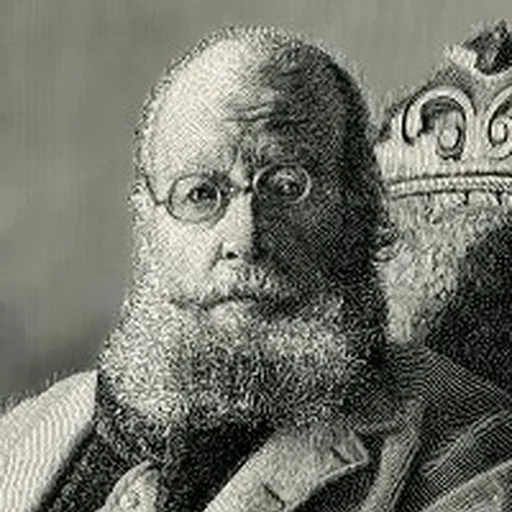
Edward Lear (12 May 1812 – 29 January 1888) was an English artist, illustrator, musician, author and poet, who is known mostly for his literary nonsense in poetry and prose and especially his limericks, a form he popularised but which term…

 Painting
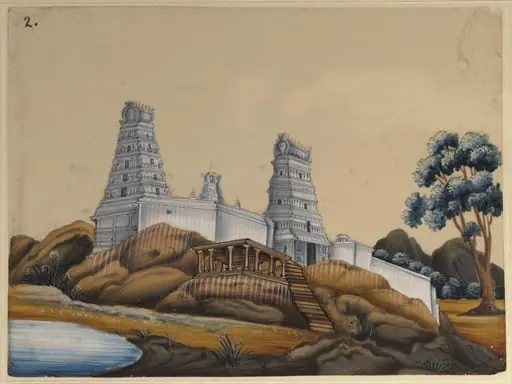 One of sixteen paintings of unidentified South Indian temples.
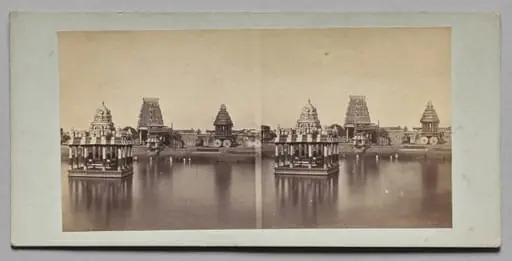 Temple Tank, Tamil Nadu
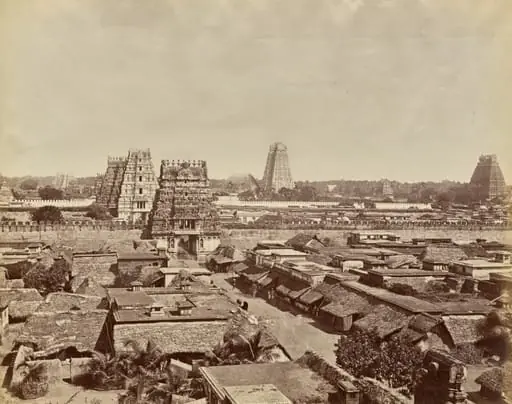 View from the Top of the Rock, looking over the native Town, Trichinopoly, India
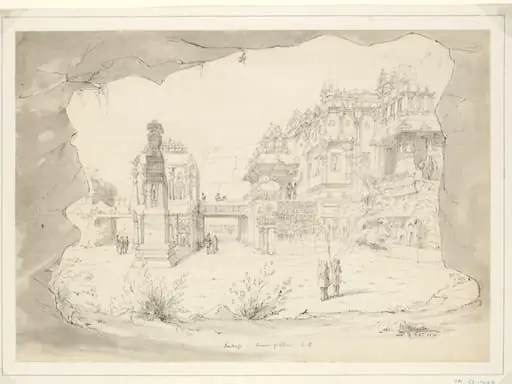 Kailasanatha Temple, Ellora
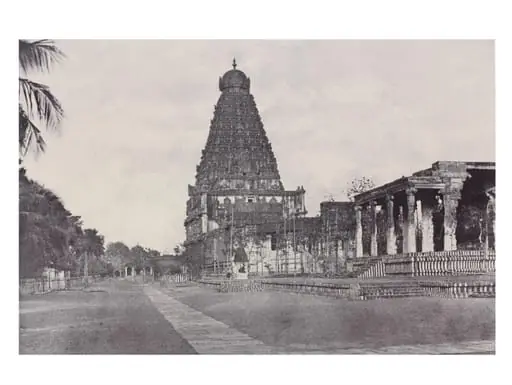 The Central Tower of the Great Pagoda
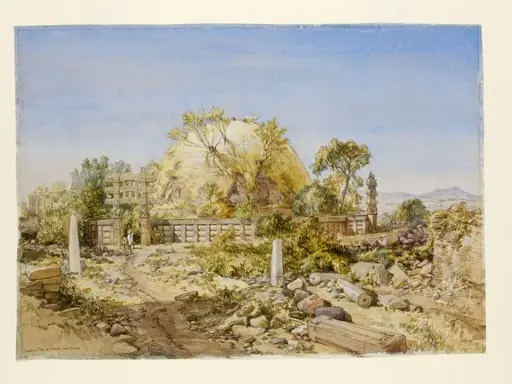 The Sanchi tope
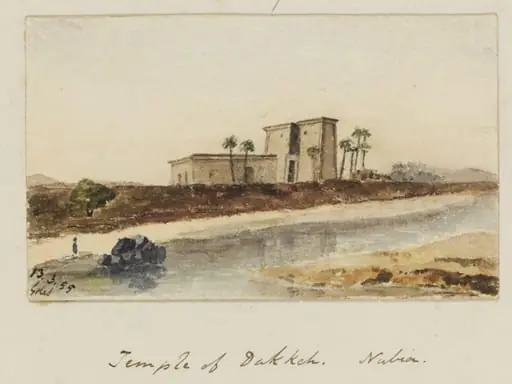 `Temple of Dakkeh. Nubia'
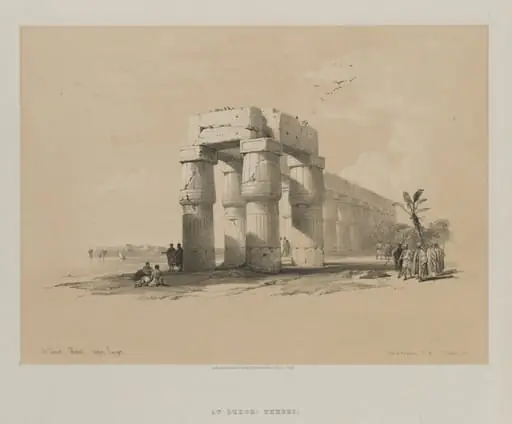 Egypt and Nubia, Volume I: At Luxor, Thebes, Upper Egypt
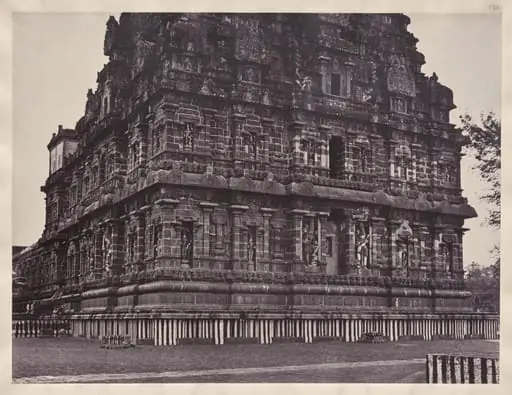 West and South Sides of the Vimana Walls, Great Temple (Brihadeshvara) at Tanjore (Thanjavur)
 Thebes