Artwork
Sketches in Italy [recto]
![Sketches in Italy [recto], by Edward Lear, chalk, 1842](https://artifactworldgallery.com/img/edward-lear--sketches-in-italy-recto--976e8557435634e9-w1024.webp)
Sketches in Italy [recto] is a chalk drawing by the Romanticist artist Edward Lear. It dates from 1842 and is held in the collection of the National Gallery of Art.
About this work
Overview
Executed in black chalk, graphite, and subtle washes on light brown wove paper, it exemplifies his practice of capturing fleeting moments outdoors.
Created in 1842 during Edward Lear’s travels through Italy, this drawing is a spontaneous record of a rural landscape. Executed in black chalk, graphite, and subtle washes on light brown wove paper, it exemplifies his practice of capturing fleeting moments outdoors. The work’s worn surface and loose handling suggest it was made on the move, likely as preparatory material for later, more polished illustrations in his travel publications.
Subject & Meaning
The scene depicts a quiet Italian countryside with twisted trees, a winding path or stream, and a distant hillside structure. A small human figure leans over another lying on the ground, hinting at an unspoken moment of care or distress. The absence of narrative clarity invites interpretation, emphasizing the sketch’s role as an observational record rather than a staged composition—reflecting Lear’s interest in everyday life amid natural settings.
Technique & Style
Lear employed swift, scratchy lines with minimal detail, using gray and white washes to suggest form and atmosphere without defining edges. The soft tonal gradations create depth without heavy modeling, aligning with the conventions of plein air sketching. The paper’s texture and the medium’s fragility enhance the immediacy of the work, revealing the artist’s focus on capturing light and spatial relationships quickly during travel.
History & Provenance
This drawing originated from Lear’s extended journey across Italy in the early 1840s, a period when he produced hundreds of such studies. While the exact provenance of this sheet is undocumented, it likely passed through his personal collection before entering institutional holdings. Its condition—worn, handled, and lightly stained—suggests it was carried and referenced repeatedly during his return to England, possibly while preparing illustrations for published volumes.
Context
In the 1840s, British artists increasingly traveled to Italy to study classical ruins and landscapes, often producing sketches as both personal records and source material for publications. Lear’s work fits within this tradition, though his focus on informal, unidealized scenes distinguished him from more academic contemporaries. His sketches were not merely artistic exercises but functional documents, later refined into lithographs for his travel books aimed at a growing middle-class readership.
Legacy
Lear’s Italian sketches, including this one, helped redefine the role of the travel drawing in 19th-century art. Rather than polished finishes, he prioritized direct observation and expressive line, influencing later generations of illustrators and landscape artists. These works remain valuable for their unvarnished documentation of rural Italy and for revealing the iterative process behind his published illustrations, bridging personal experience and public dissemination.
Artist & collection
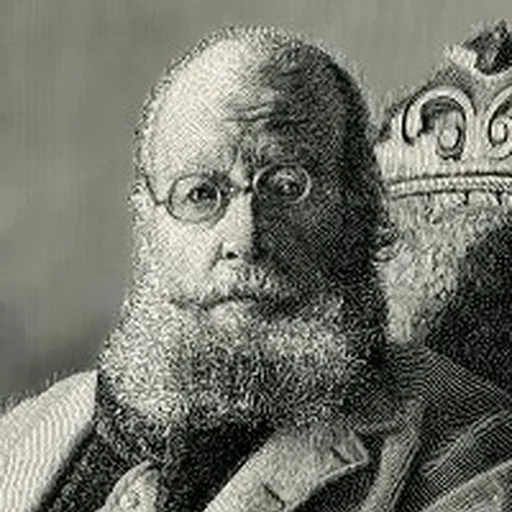
Artist
Edward Lear (12 May 1812 – 29 January 1888) was an English artist, illustrator, musician, author and poet, who is known mostly for his literary nonsense in poetry and prose and especially his limericks, a form he popularised but which term…


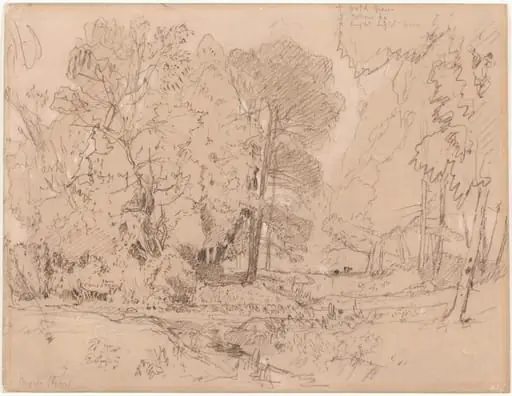 Wooded Landscape
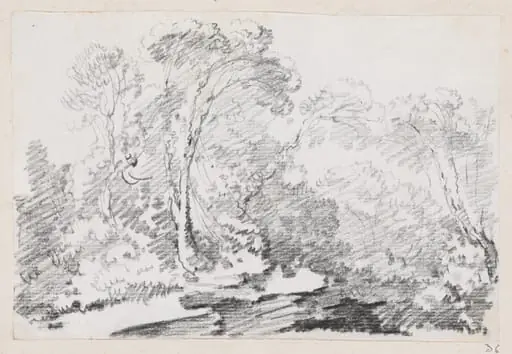 Trees
Trees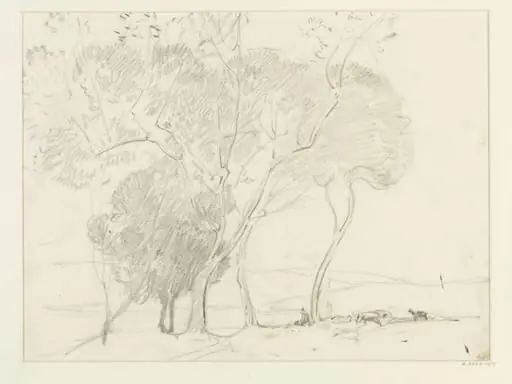 On the Severn
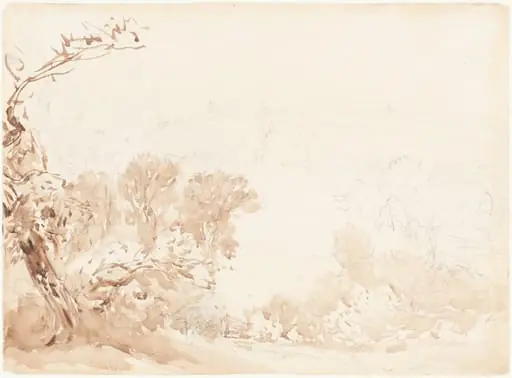 Hillside and Trees
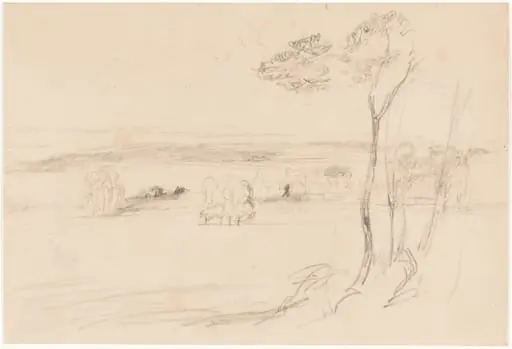 Trouville-sur-Mer
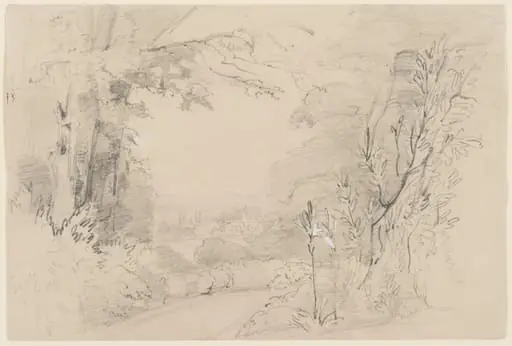 Sketch of landscape with trees
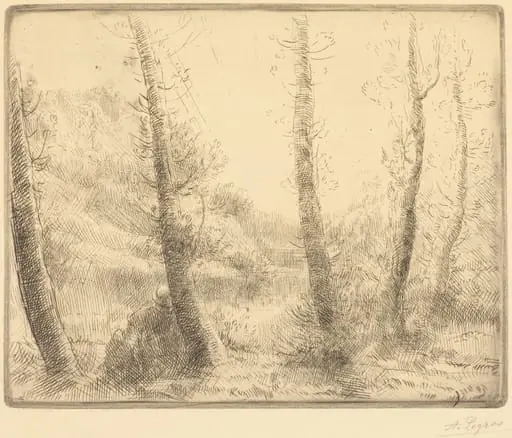 Small Lake (Le petit lac)
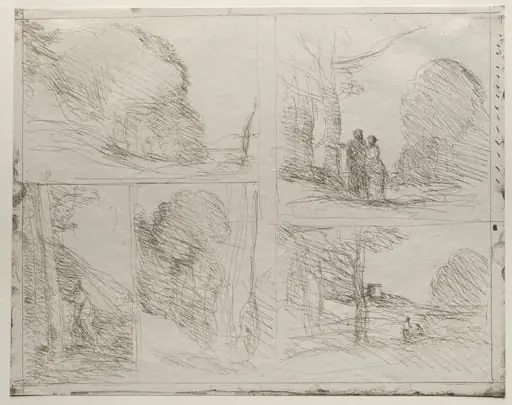 The Garden of Pericles; The Painter's Lane; Scrawl; The Large Woodcutter; The Tower of Henry VIII
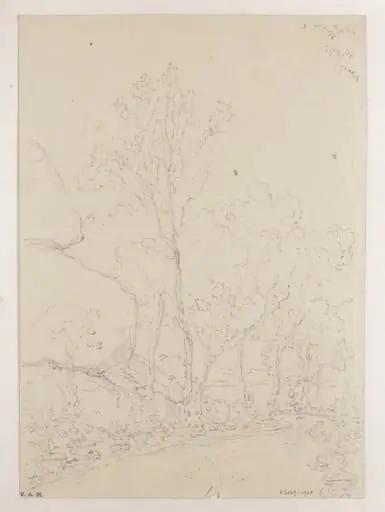 Casa Garden, Macau
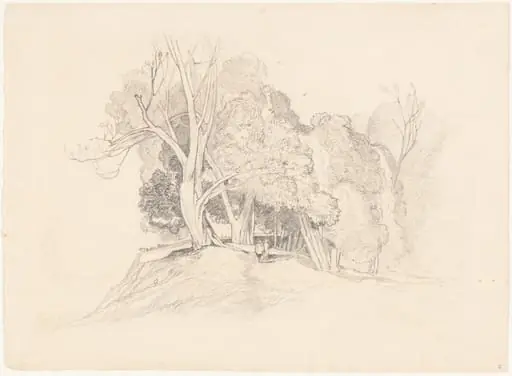 Landscape with Trees
![View through the Trees at Tivoli [recto], by Jasper Francis Cropsey](https://artifactworldgallery.com/img/jasper-francis-cropsey--view-through-the-trees-at-tivoli-recto--982b0e365e4ea403-w320.webp) View through the Trees at Tivoli [recto]
View through the Trees at Tivoli [recto]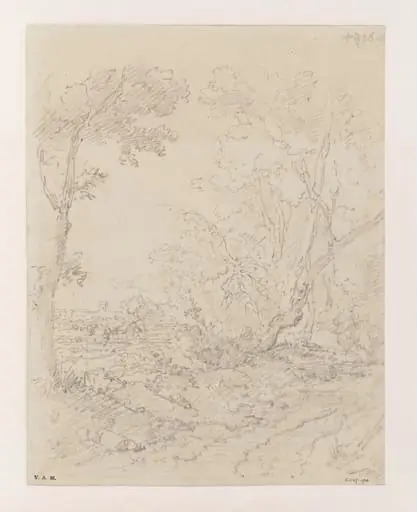 The buildings of Macau seen across fields from a tree-lined lane