Artwork
King's Mill Lane, Stamford, Rutlandshire
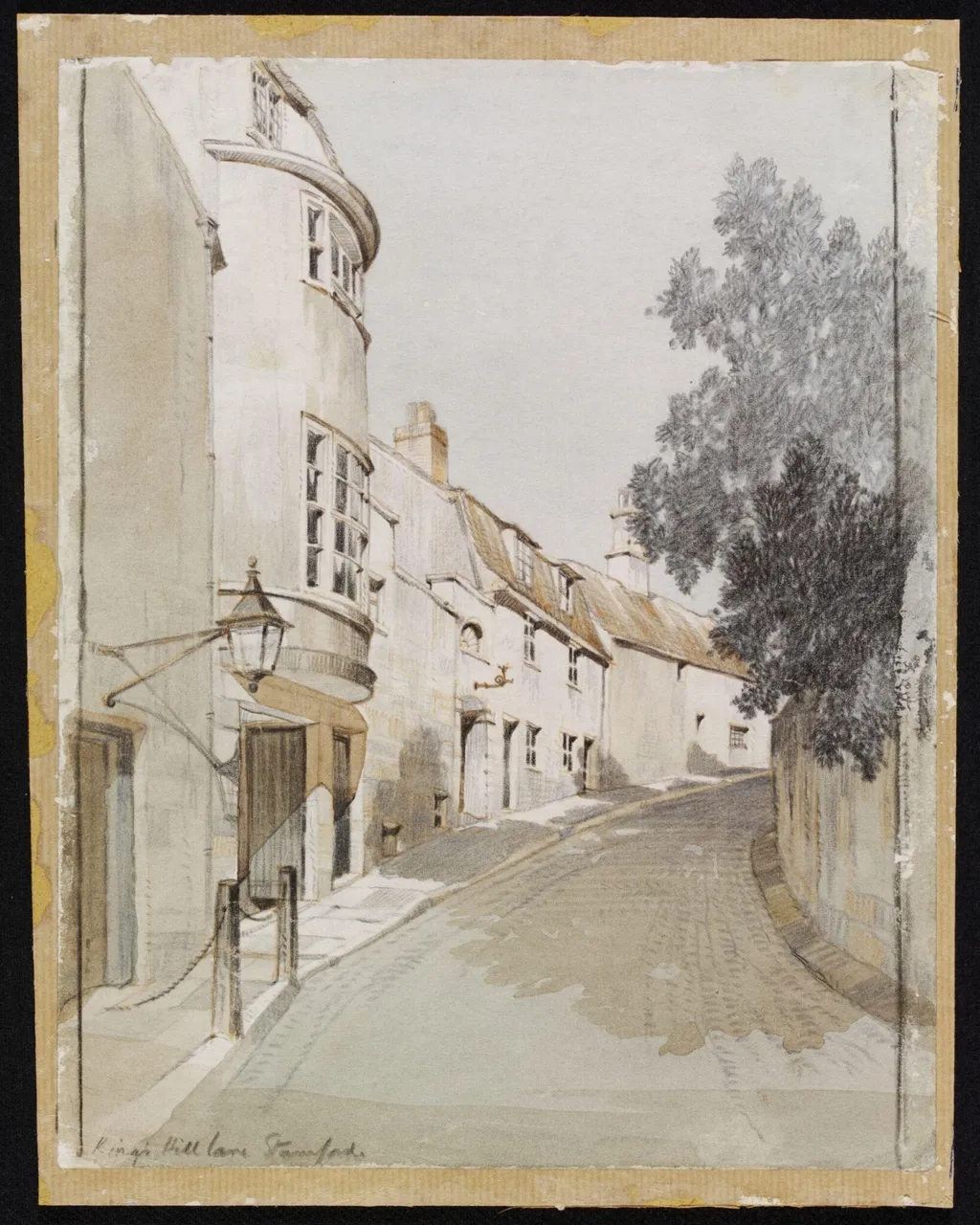
King's Mill Lane, Stamford, Rutlandshire is a watercolor work on paper by Julian Leathart. It dates from 1940 and is held in the collection of the Victoria and Albert Museum.
About this work
Overview
Created in 1940, *King's Mill Lane, Stamford, Rutlandshire* is a watercolour by Julian Leathart, produced under the 'Recording Britain' initiative.
Created in 1940, *King's Mill Lane, Stamford, Rutlandshire* is a watercolour by Julian Leathart, produced under the 'Recording Britain' initiative. This government-backed project sought to visually archive the nation’s architectural and rural character during wartime. The work is one of more than 1,500 contributions by 97 artists, capturing everyday scenes deemed vulnerable to destruction or transformation during the conflict.
Subject & Meaning
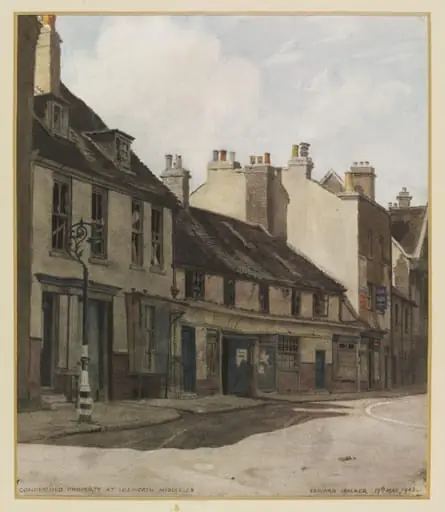
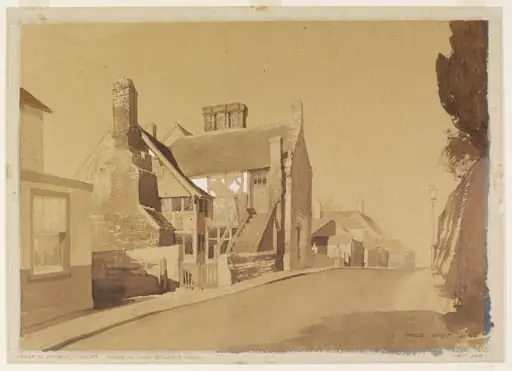
The painting portrays a quiet, sloping lane in Stamford lined with modest terraced houses and cottages. A single lamppost and a lone tree frame the composition, emphasizing stillness and order. The absence of people and the muted tones suggest a pause in daily life, reflecting the project’s intent to preserve ordinary places that might vanish due to war or modernization. The scene holds no grandeur, yet its quiet dignity underscores its historical value.
Technique & Style
Leathart employed watercolour to achieve a delicate, translucent effect, allowing the paper’s texture to subtly influence the tone. Soft washes define the buildings’ facades and the overcast sky, while fine lines suggest architectural details like chimneys and window frames. The restrained palette and gentle brushwork convey a sense of calm, aligning with the project’s aim to document with sensitivity rather than drama.
History & Provenance
Commissioned by the Ministry of Labour and National Service, the 'Recording Britain' project was overseen by Sir Kenneth Clark. The initiative responded to fears of cultural loss during wartime, collecting works from artists across the country. Leathart’s painting entered the collection of the Victoria and Albert Museum as part of this effort, where it remains as a documented artifact of Britain’s mid-20th-century landscape.
Context
During the Second World War, Britain faced widespread threats to its historic fabric—from aerial bombing to postwar redevelopment. 'Recording Britain' emerged as a cultural preservation effort, prioritizing vernacular architecture and rural scenes over monuments. Leathart’s depiction of King’s Mill Lane reflects this focus on the unremarkable, recognizing that everyday spaces held collective memory even when they lacked architectural fame.
Legacy
The 'Recording Britain' collection endures as a vital visual archive of pre-war and wartime Britain. Leathart’s watercolour contributes to a broader understanding of how ordinary streetscapes were perceived during a time of national uncertainty. Today, such works inform conservation efforts and historical studies, offering quiet testimony to places that have since changed or disappeared.
Artist & collection
Artist
This British artist fills small watercolor pages with quiet corners of early-20th-century England.