Artwork
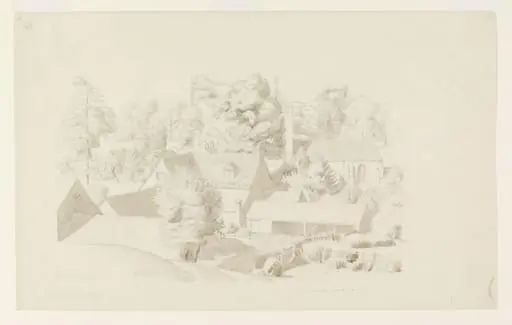
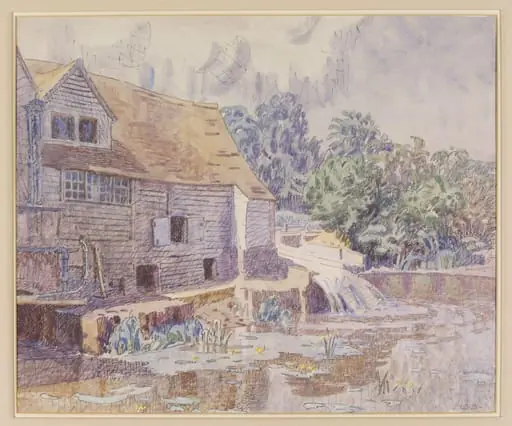
The Mill, Duddington
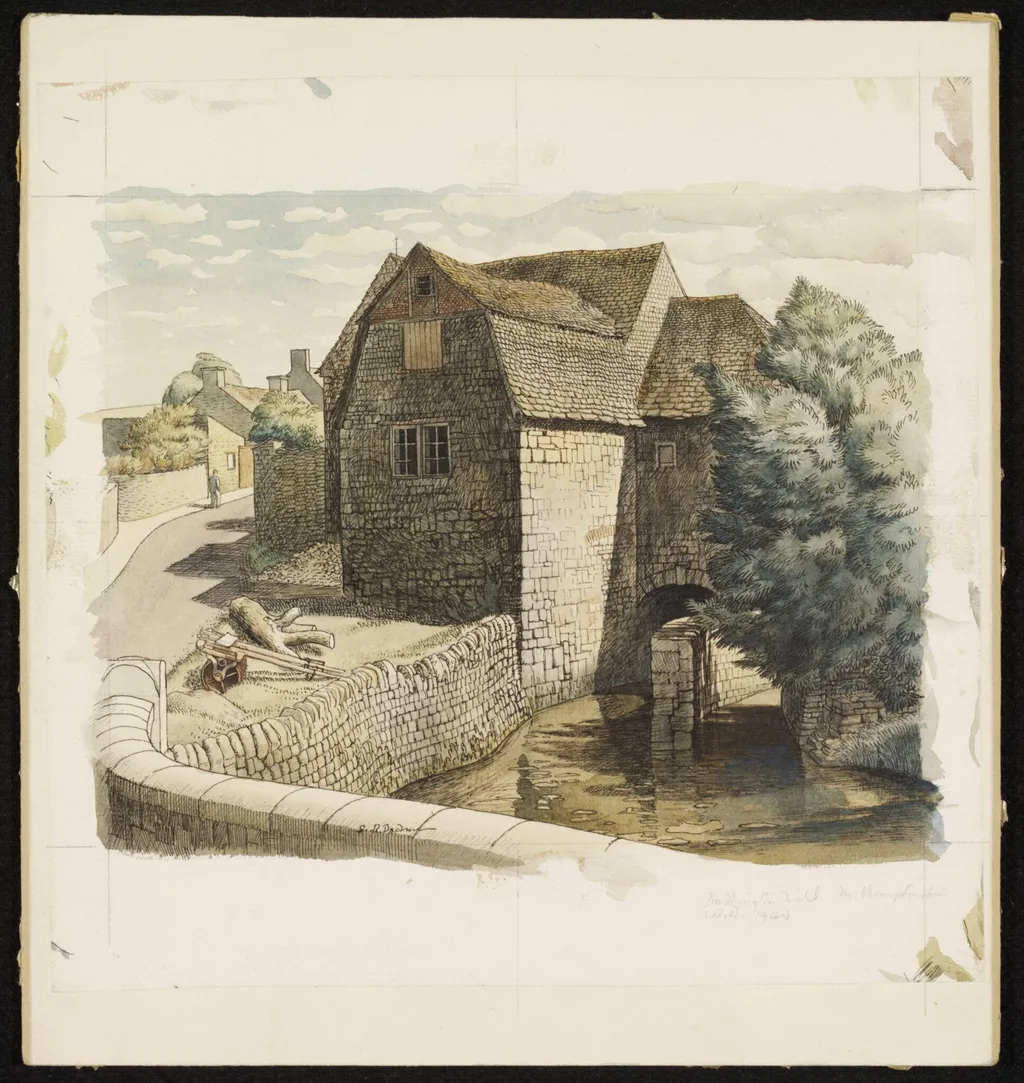
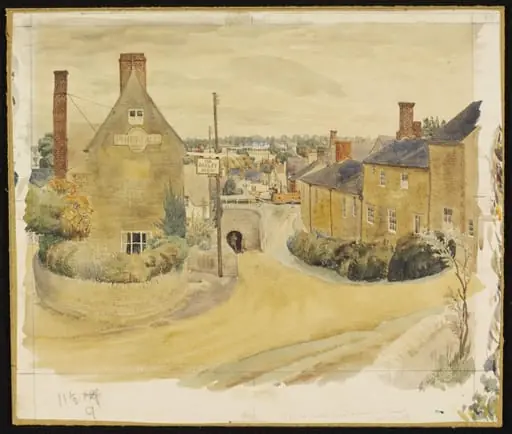
The Mill, Duddington is a watercolor work on paper by Badmin. It dates from 1940 and is held in the collection of the Victoria and Albert Museum.
About this work
Overview
The piece is signed by the artist and belongs to a collection of over 1,500 works commissioned to document England’s vernacular architecture and rural life.
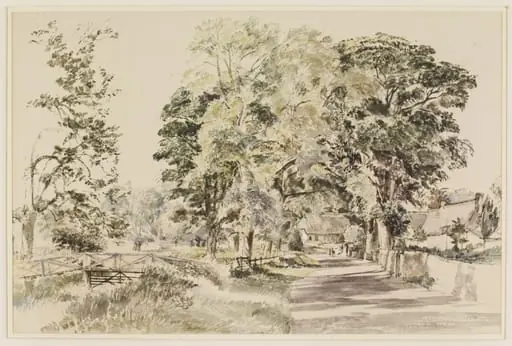
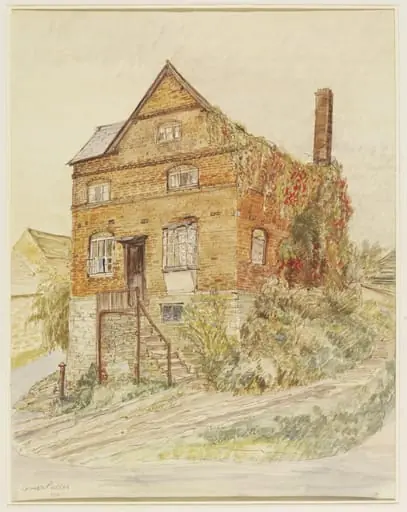
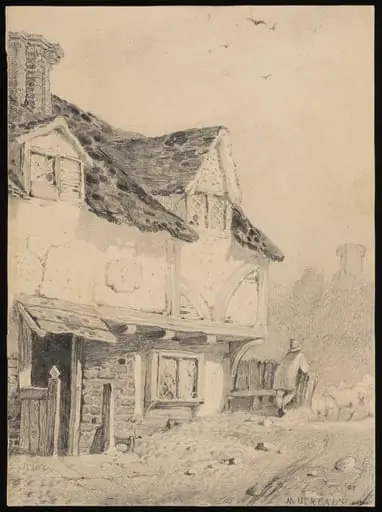
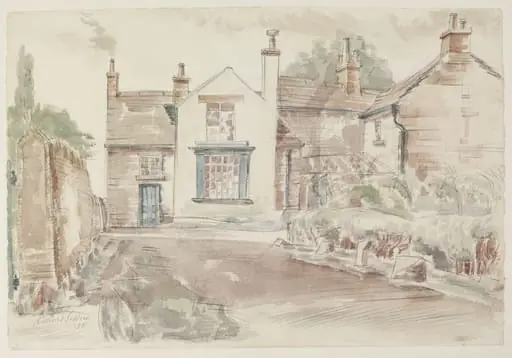
Created in 1940 by Badmin, this watercolour captures a rural stone mill in Duddington, a small settlement in England. Executed as part of the Recording Britain initiative, the work reflects a broader effort to preserve visual records of landscapes and structures at risk during wartime. The piece is signed by the artist and belongs to a collection of over 1,500 works commissioned to document England’s vernacular architecture and rural life.
Subject & Meaning
The mill, situated along a gentle river bend, is depicted with quiet dignity. Its thatched roof, weathered stonework, and adjacent arched bridge suggest a longstanding presence in the landscape. A solitary cart near the water hints at quiet, ongoing use, while the absence of figures emphasizes stillness. The scene conveys a sense of endurance, framing the mill not as a monument but as an ordinary, lived-in element of the English countryside.
Technique & Style
Badmin employed delicate watercolour washes to render the mill’s rough stone walls, the smooth flow of water, and the soft texture of the thatch. Subtle tonal variations suggest natural light filtering through a hazy sky, enhancing the scene’s tranquility. The composition is restrained, with attention to material textures rather than dramatic perspective, reflecting the project’s emphasis on accurate, unembellished observation.
History & Provenance
Commissioned by the Recording Britain project, this watercolour was produced under the auspices of the Pilgrim Trust and directed by Sir Kenneth Clark. The initiative sought to create a visual archive of England’s threatened rural heritage during the Second World War. The work entered the Victoria and Albert Museum’s collection as part of this effort, where it remains accessible as a historical record of pre-war English landscapes.
Context
The Recording Britain project emerged in 1940 amid fears of wartime destruction and rapid modernization. Artists were sent across England to document buildings and sites deemed emblematic of national character, excluding northern counties and certain areas of Wales and Scotland. Rural industries, like this mill, were prioritized as symbols of continuity, offering a counter-narrative to the upheaval of war.
Legacy
The watercolour contributes to a significant archive of British topographical art, preserving the appearance of ordinary places that have since changed or vanished. Badmin’s work, like others in the collection, serves as a quiet historical document, valued for its fidelity and restraint. The piece continues to inform studies of wartime cultural preservation and the evolving English landscape.
Artist & collection
Artist
Stanley Roy Badmin was an English painter and etcher particularly notable for his book illustrations and landscapes.