Artwork
The Wool Hall, Lavenham
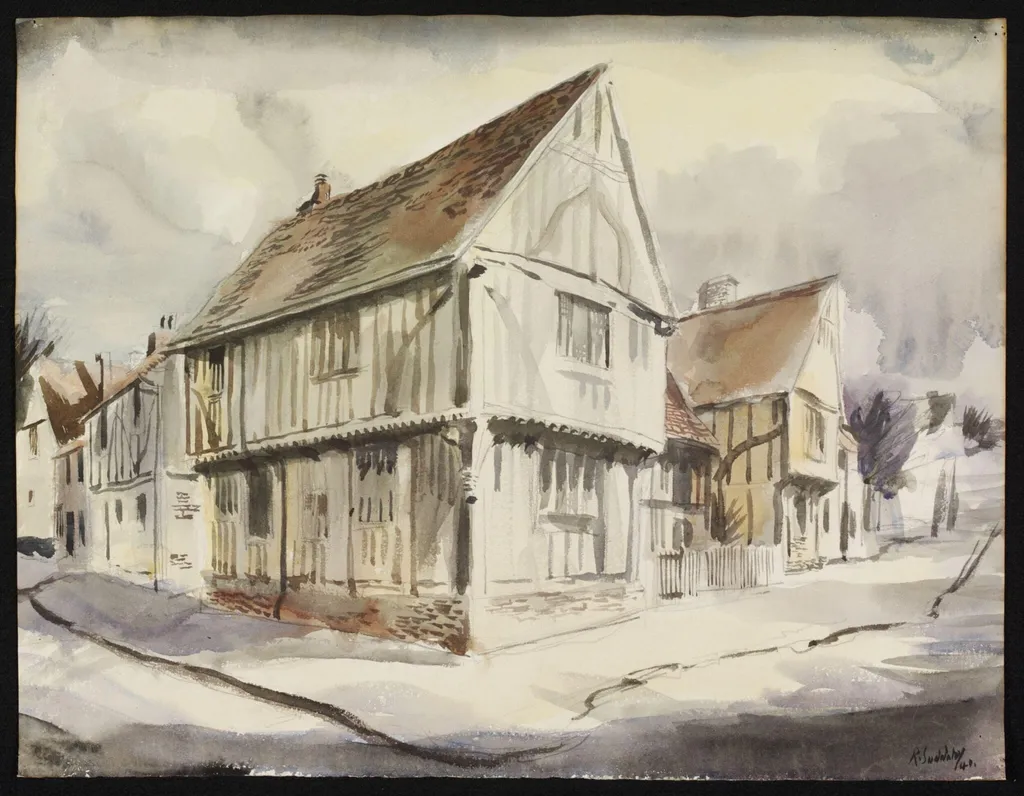
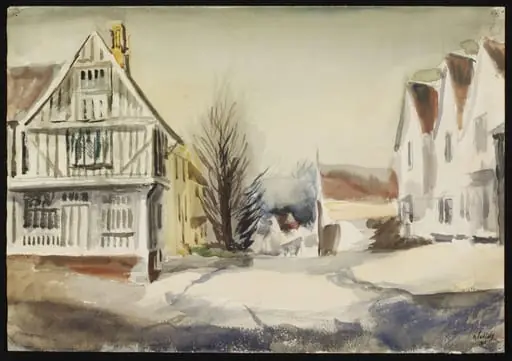
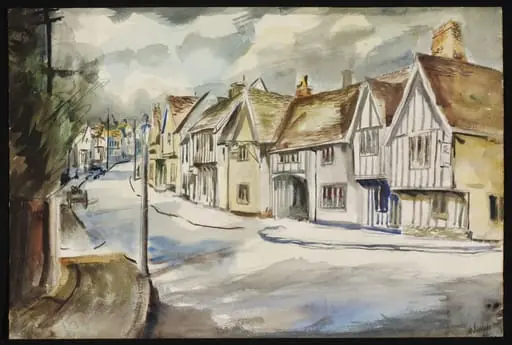
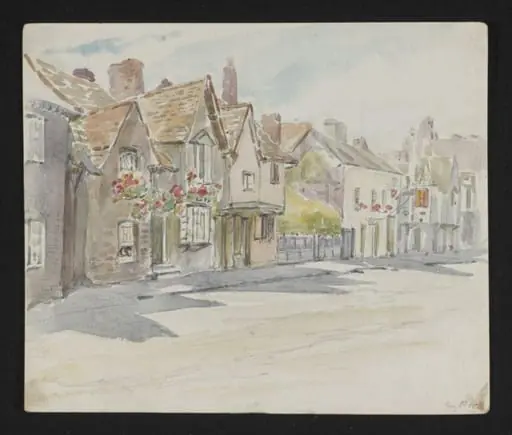
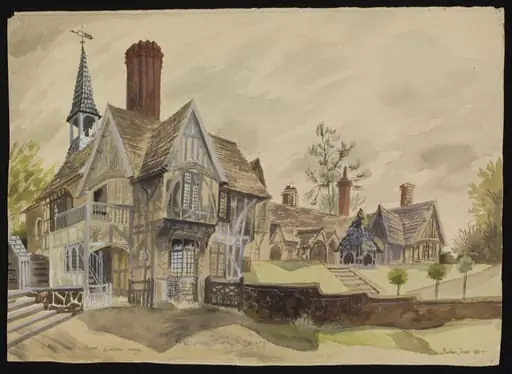
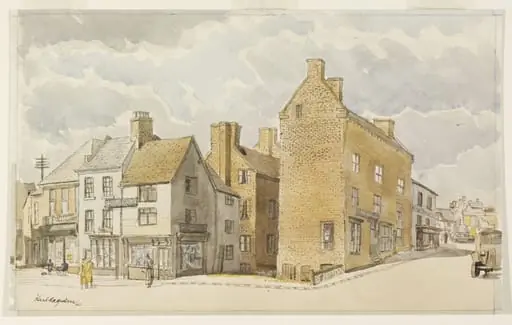
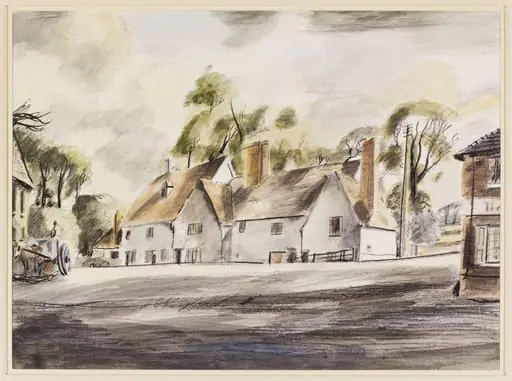
The Wool Hall, Lavenham is a watercolor work on paper by Suddaby. It dates from 1941 and is held in the collection of the Victoria and Albert Museum.
About this work
Overview
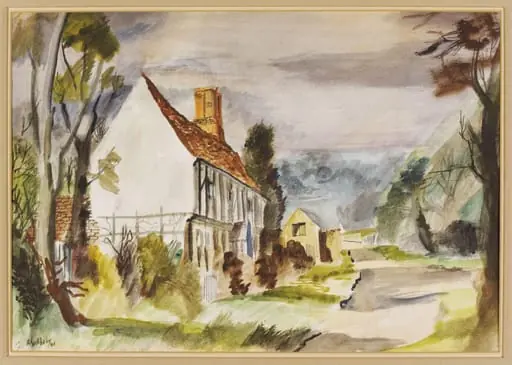
The Wool Hall, Lavenham is a 1941 watercolour by Edward Bawden Suddaby, capturing a half-timbered Tudor building in Lavenham. Part of the 'Recording Britain' collection, it documents a British scene during wartime.
Subject & Meaning
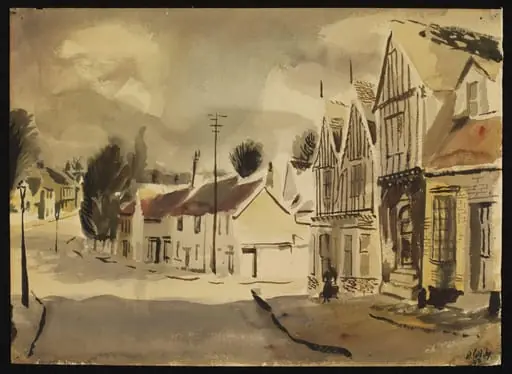
The painting depicts The Wool Hall, a historic, corner-sited building in Lavenham, emphasizing its architectural character amidst a mundane, wet street scene, reflecting the project's goal to preserve national heritage images.
Technique & Style
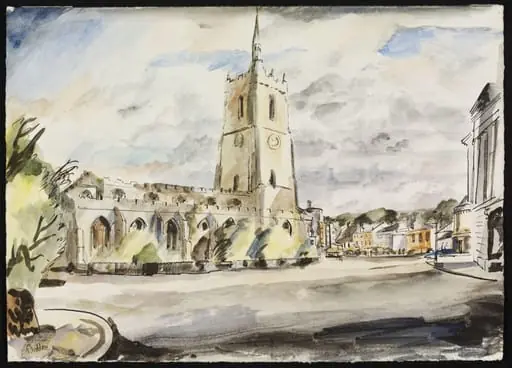
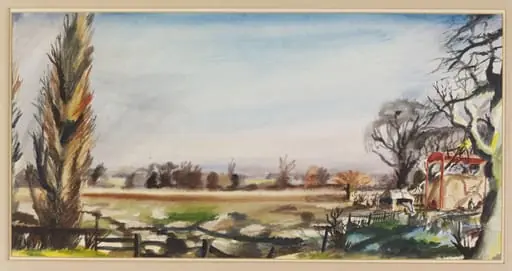
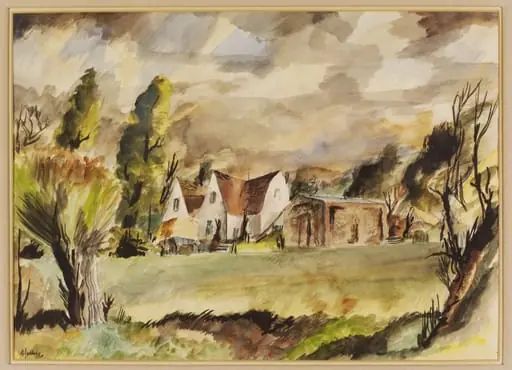
Executed in light, sketchy watercolour with soft gray and brown tones, the work prioritizes suggestive simplicity over detail, evoking a spontaneous, snapshot-like quality in its rendering of textures and forms.
History & Provenance
Created between 1940-1943 under the 'Recording Britain' initiative, funded by the Pilgrim Trust and led by Sir Kenneth Clark, the piece was part of a broader effort to record Britain's landscape amid wartime concerns.
Context
Painted during WWII, the work responds to anxieties over the destruction of Britain's architectural and natural heritage, contributing to a national record of sites like Lavenham's Wool Hall.
Legacy
Now part of a significant collection, it remains accessible through institutions like the Victoria and Albert Museum, illustrating the enduring value of the 'Recording Britain' project in preserving cultural memory.
Artist & collection
Artist
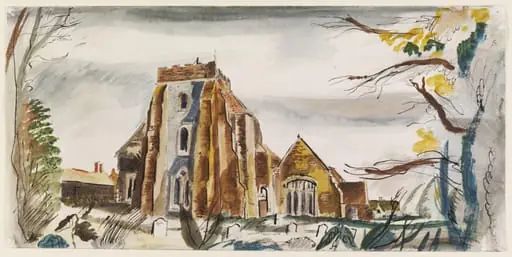
A British watercolor artist from the mid-20th century, Suddaby painted quiet, detailed scenes of East Anglia’s streets and churches in the 1940s.