Artwork
Fortified Bridge against Distant Mountains
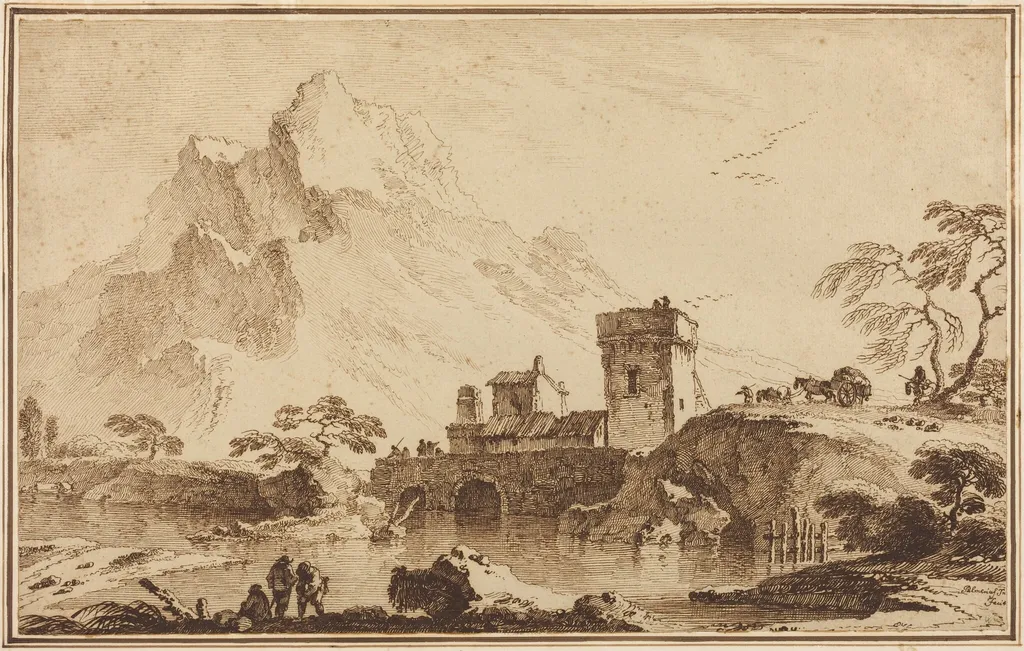
Fortified Bridge against Distant Mountains is a chalk drawing by the Romanticist artist Pietro Giacomo Palmieri. It dates from 1760 and is held in the collection of the National Gallery of Art.
About this work
Overview
Created around 1760 by Pietro Giacomo Palmieri, this drawing depicts a fortified bridge set against a backdrop of distant mountains. Executed in pen and brown ink over a foundation of black chalk, the work belongs to the tradition of topographical landscape drawing. It balances architectural precision with atmospheric depth, capturing a quiet moment in a rugged natural setting.
Subject & Meaning
The central subject is a stone bridge with a fortified tower and gatehouse, suggesting a strategic passage through the landscape. The mountains recede into soft haze, emphasizing distance and isolation. Figures and trees in the foreground anchor the scene, not as narrative elements but as indicators of scale and human presence within an enduring natural order.
Technique & Style
Palmieri employed black chalk to establish tonal structure and form, then refined contours and shadows with pen and brown ink. The layered medium allowed for both delicate linework and subtle gradations, enhancing the sense of depth. The brushwork is restrained, favoring clarity over flourish, characteristic of 18th-century Italian draftsmanship focused on observed reality.
History & Provenance
The drawing is attributed to Palmieri, an Italian artist active in the mid-18th century, known for his topographical studies. While specific early ownership records are sparse, the work aligns with the practice of artists documenting architectural and landscape features for patrons or scholarly interest. Its survival suggests it was valued as a study or record rather than a decorative piece.
Context
This drawing emerged during a period when Italian artists increasingly turned to landscape as a subject worthy of careful observation. Though not overtly Romantic, its emphasis on scale and solitude anticipates later aesthetic concerns. It reflects a broader trend of documenting Italy’s architectural heritage amid shifting political and cultural landscapes of the time.
Legacy
Its influence lies not in fame but in its embodiment of a disciplined, observational approach to landscape that informed later topographical traditions.
Palmieri’s drawing contributes to a body of 18th-century Italian works that bridge cartographic precision and artistic expression. It remains a quiet example of how draftsmen captured the relationship between human construction and natural terrain. Its influence lies not in fame but in its embodiment of a disciplined, observational approach to landscape that informed later topographical traditions.
Own this work as a print
Artist & collection


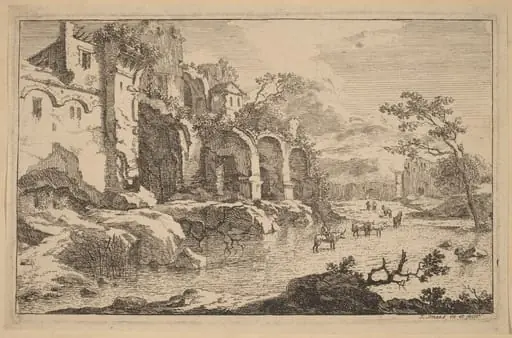 Building in Ruins at the Side of a River
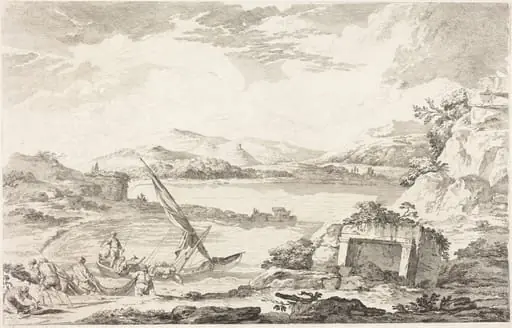 View of the Ancient Port of Phaleron, Athens
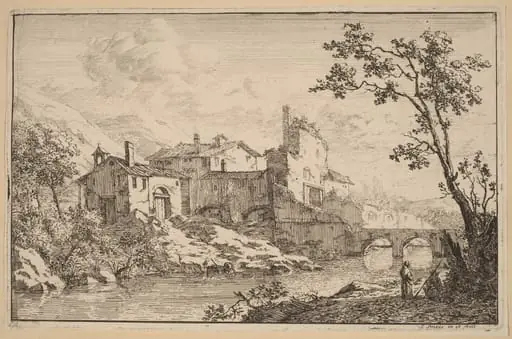 Houses at the Side of a River
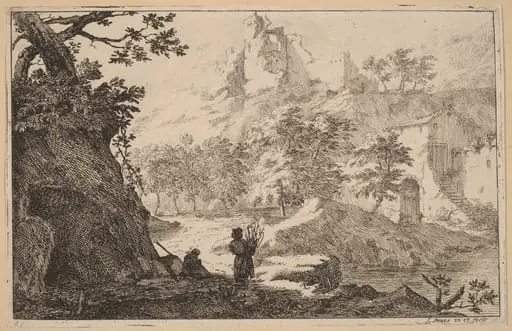 Ruins on a Hilltop
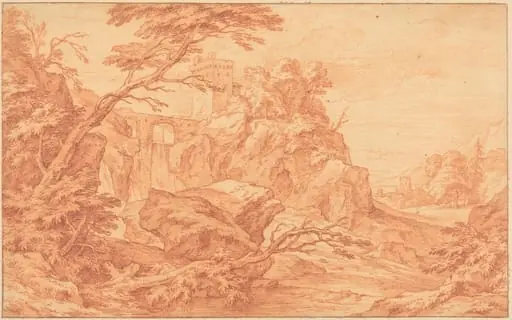 A Rocky Landscape with a Stone Tower and a Waterfall
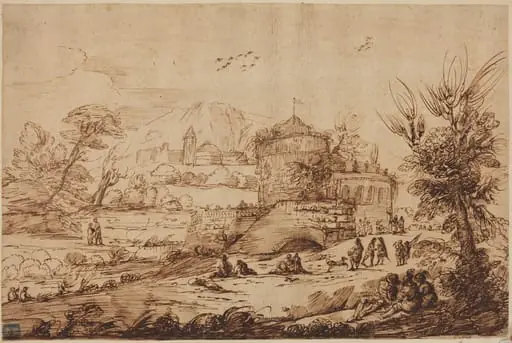 Landscape with Fortress and River
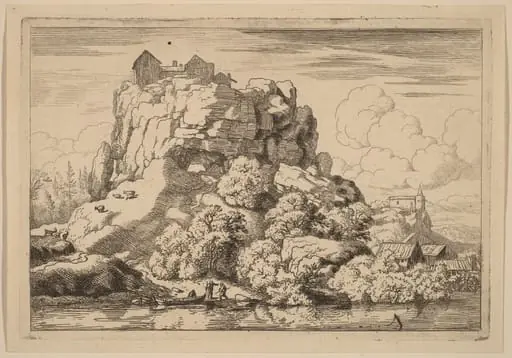 River at the Foot of a High Rock
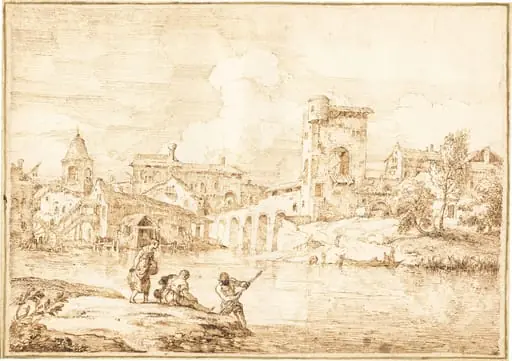 A Fortified Village along a River
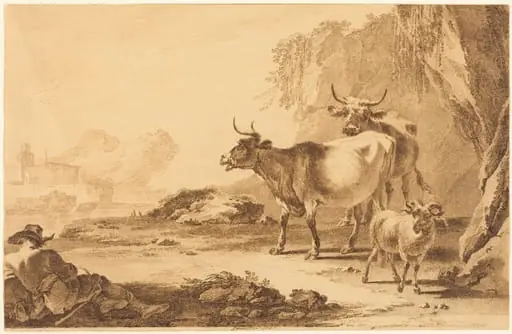
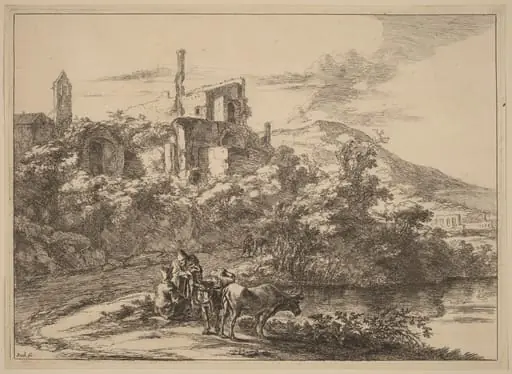 Two Cows near the River at Tivoli
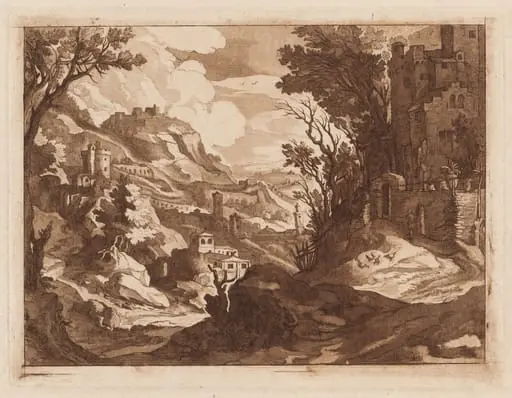 Alpine Landscape
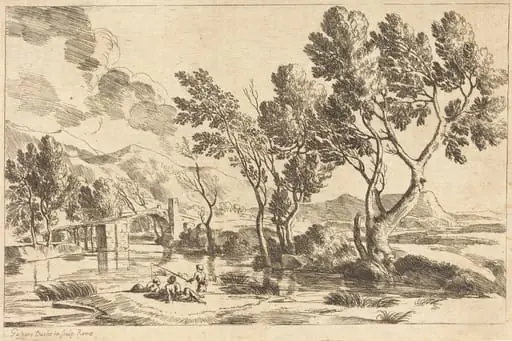 Roman Landscape
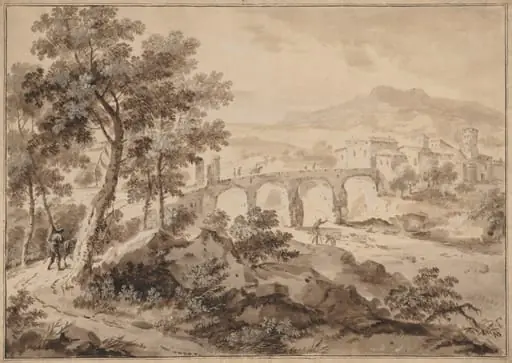 Landscape with Bridge