Artwork
Hilly Forest View with a Fern
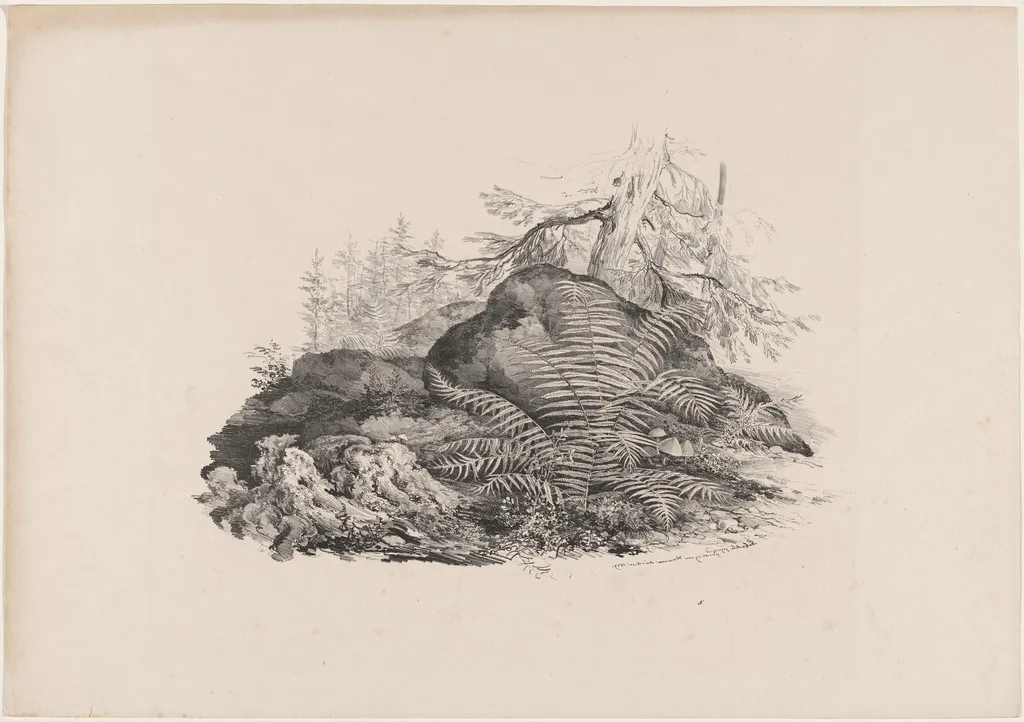
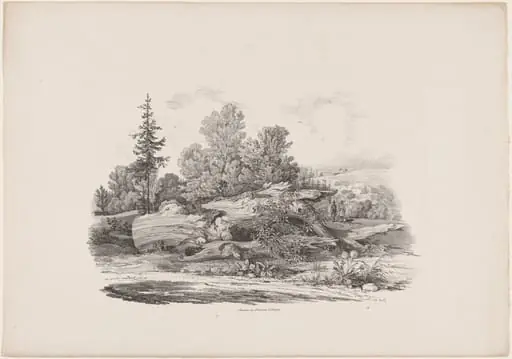
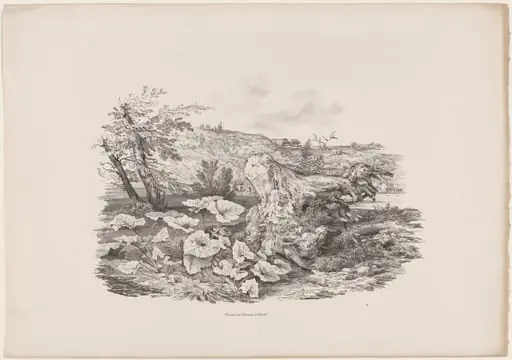
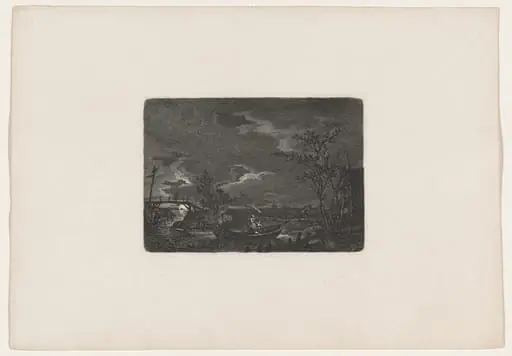
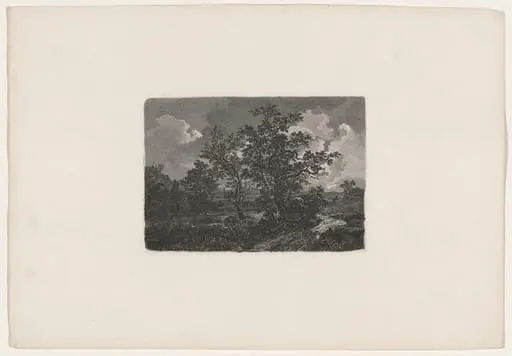
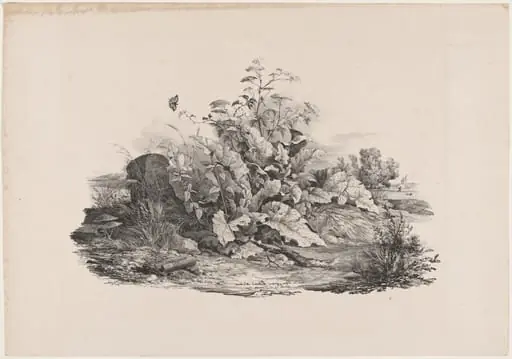
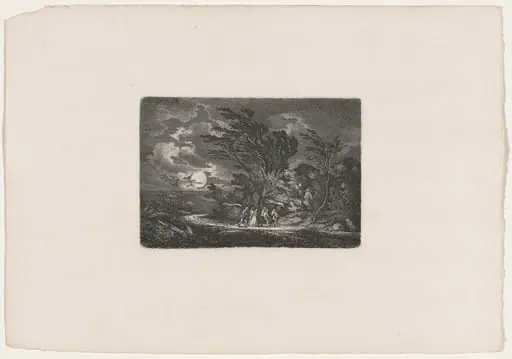
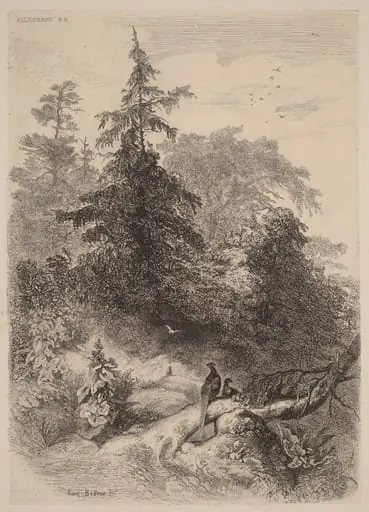
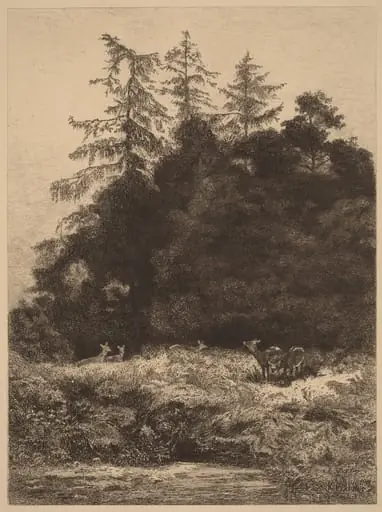
Hilly Forest View with a Fern is an ink print by the Romanticist artist Carl August Lebschée. It dates from 1829 and is held in the collection of the National Gallery of Art.
About this work
Overview
The composition emphasizes undulating terrain blanketed in vegetation, with no human presence or architectural elements.
Created in 1829 by Carl August Lebschée, this lithograph on wove paper depicts a tranquil woodland landscape. The composition emphasizes undulating terrain blanketed in vegetation, with no human presence or architectural elements. The work belongs to a tradition of topographical prints that sought to record natural scenery with observational precision, using the lithographic process to achieve subtle tonal gradations.
Subject & Meaning
The scene portrays a quiet, unpopulated forested hillside, dominated by dense clusters of ferns and slender, upright trees. The absence of figures or signs of human activity suggests a focus on nature’s quiet autonomy. The ferns, rendered with energetic marks, imply growth and resilience, while the layered hills suggest depth and continuity, evoking a sense of secluded, untouched wilderness.
Technique & Style
Lebschée employed lithography to capture texture through loose, gestural lines rather than precise detail. The ferns appear as rapid, overlapping strokes, suggesting movement and density, while the hills are modeled with soft washes and hatching to convey light and shadow. This sketch-like approach prioritizes atmospheric effect over realism, aligning with early 19th-century interests in expressive naturalism.
History & Provenance
The print was produced in 1829 during Lebschée’s active period in Munich, where he documented landscapes and architectural subjects. Though not widely exhibited at the time, it reflects his engagement with the growing market for landscape prints among educated middle-class collectors. Its survival in private and institutional collections indicates modest but sustained interest in his topographical work.
Context
In the 1820s, lithography emerged as a favored medium for landscape reproduction, offering artists greater control over tonal effects than traditional engraving. Lebschée’s work aligns with German Romantic tendencies to idealize nature, yet his approach remains grounded in direct observation rather than allegory. This print reflects broader European trends toward documenting natural environments with scientific and aesthetic intent.
Legacy
While Lebschée is not a major figure in art history, his lithographs contribute to the archive of 19th-century landscape documentation. This work exemplifies how artists used emerging print technologies to translate firsthand sketches into accessible images, influencing later generations interested in naturalistic representation and the aesthetic potential of lithographic line.
Artist & collection