Artwork
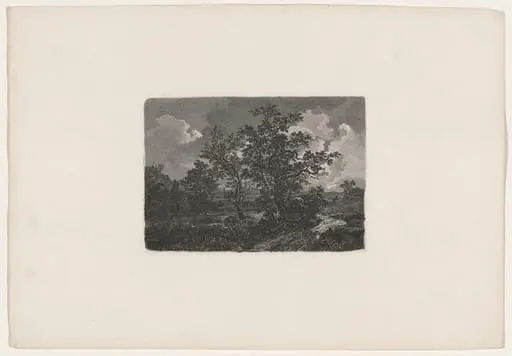
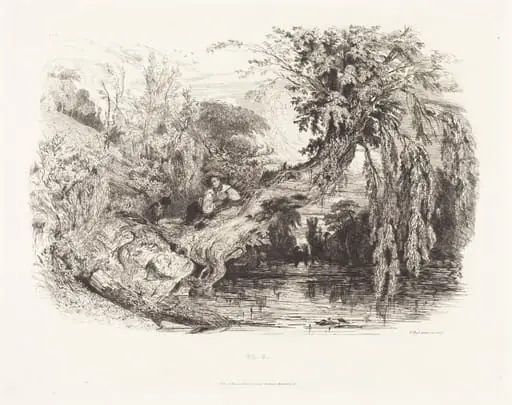
Landscape with a Tree Trunk
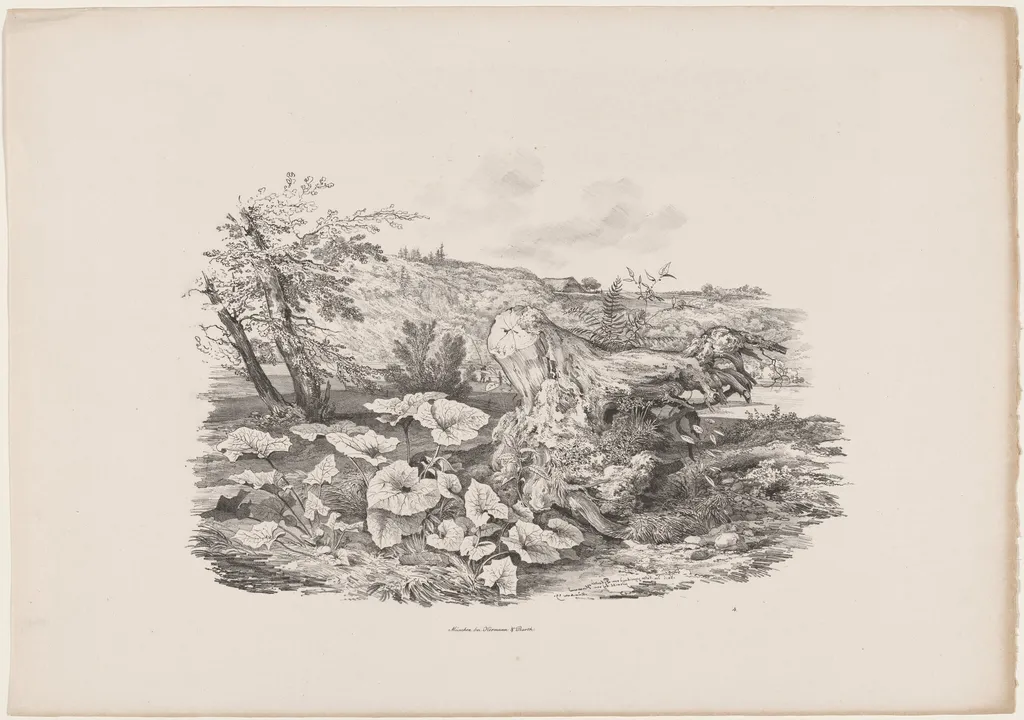
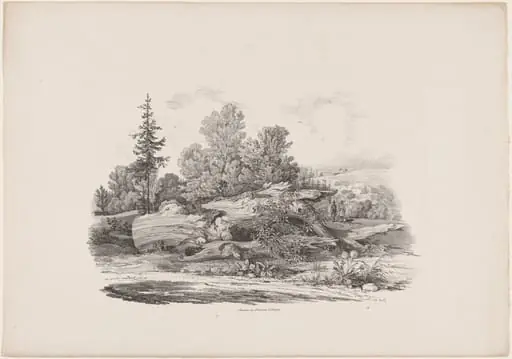
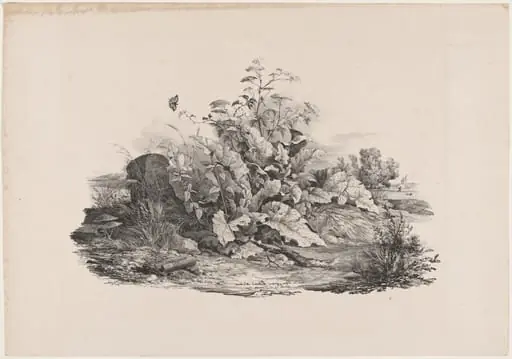
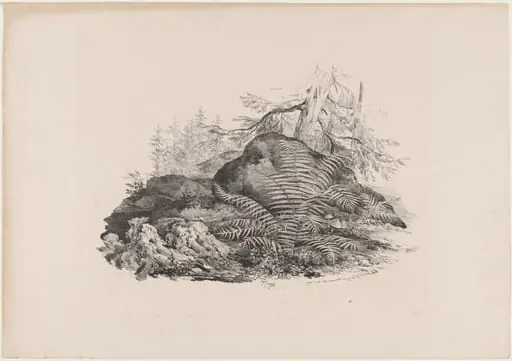
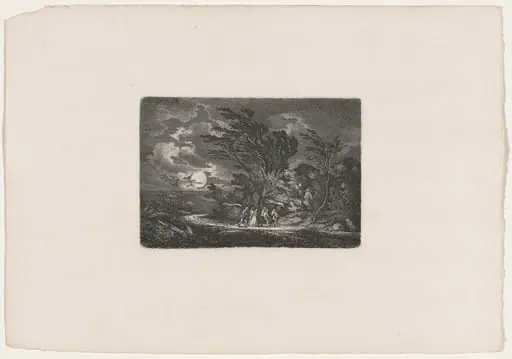
Landscape with a Tree Trunk is an ink print by the Romanticist artist Carl August Lebschée. It dates from 1829 and is held in the collection of the National Gallery of Art.
About this work
Overview
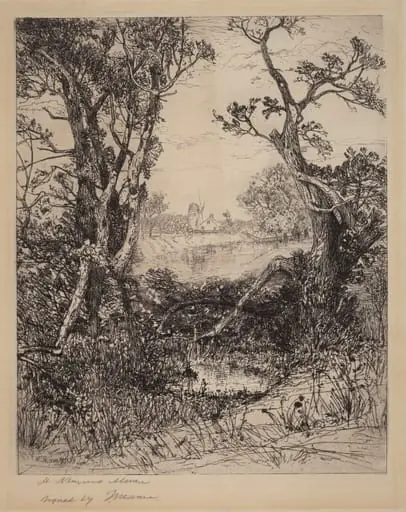
Created in 1829, this lithograph by Carl August Lebschée presents a tranquil, mist‑filled landscape. Rendered on wove paper, the composition centers on a rocky slope beside a narrow stream, with dense foliage framing the water and a few barren trees receding into a soft, clouded sky.
Subject & Meaning
The scene captures a quiet moment in nature, emphasizing the interplay of water, stone, and vegetation. The prominence of the tree trunk and the lush undergrowth suggests a contemplation of growth and decay, while the muted atmosphere evokes a sense of calm introspection.
Technique & Style
Executed in lithography, the work demonstrates the early‑19th‑century fascination with precise natural detail. Lebschée’s handling of line creates convincing textures: the leaves appear almost tactile, and the rocky surfaces convey a rugged roughness, reflecting the period’s interest in realistic observation.
History & Provenance
The print was produced during Lebschée’s mature period, when he was active in the German-speaking art world. It entered private collections shortly after its release and has since been documented in several catalogue raisonnés of 19th‑century German prints.
Context
Lithography in the 1820s offered artists a means to reproduce detailed landscapes for a broader audience. Lebschée’s work aligns with contemporary trends that valued accurate depictions of the natural world, paralleling the Romantic movement’s focus on atmospheric scenery.
Artist & collection