Artwork
Les Faisans
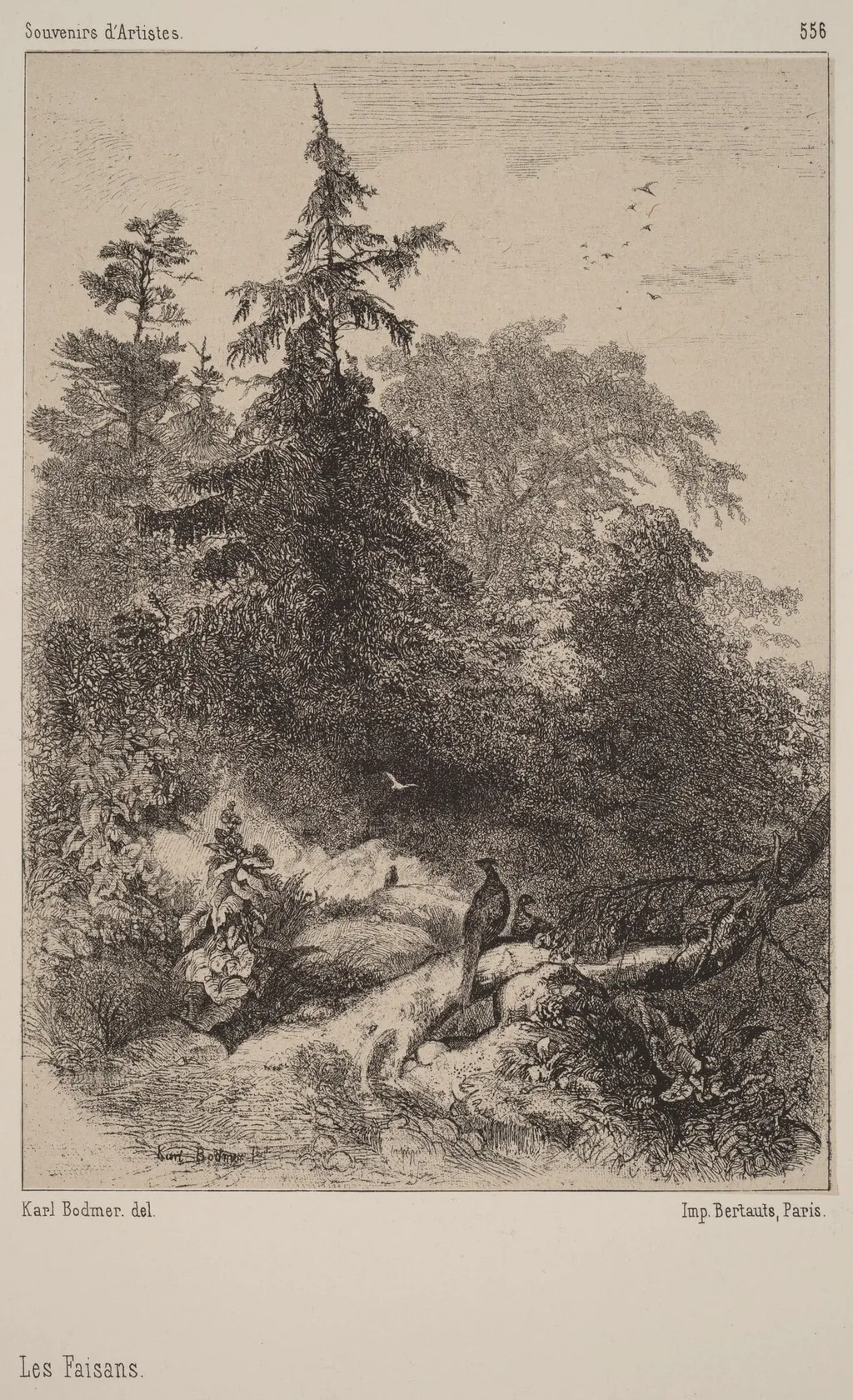
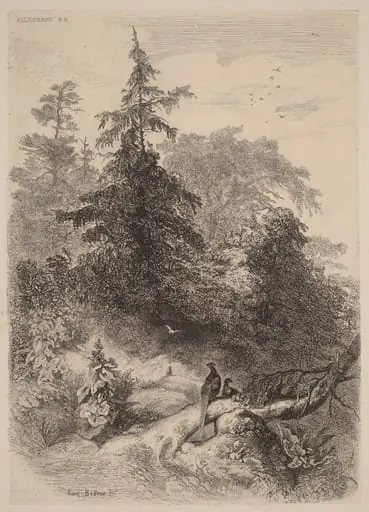
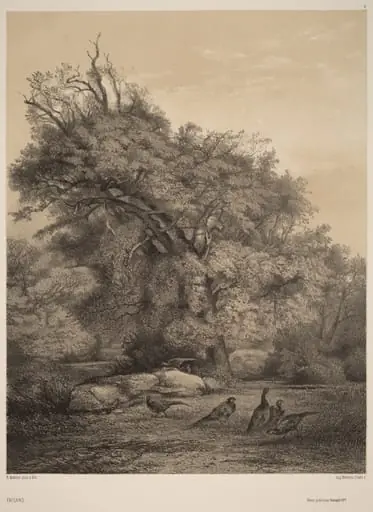
Les Faisans is an ink print by the Romanticist artist Karl Bodmer. It dates from 1851 and is held in the collection of the National Gallery of Art.
About this work
Overview
Karl Bodmer produced the lithograph *Les Faisans* in 1851, a work that exemplifies his engagement with printmaking during the mid-nineteenth century.
Karl Bodmer produced the lithograph *Les Faisans* in 1851, a work that exemplifies his engagement with printmaking during the mid-nineteenth century. Though trained in Switzerland and active across Europe, Bodmer developed a distinctive approach to landscape representation through lithography, watercolor, and etching. This piece reflects his technical precision and sensitivity to natural forms, aligning with broader European artistic interests in the period.
Subject & Meaning
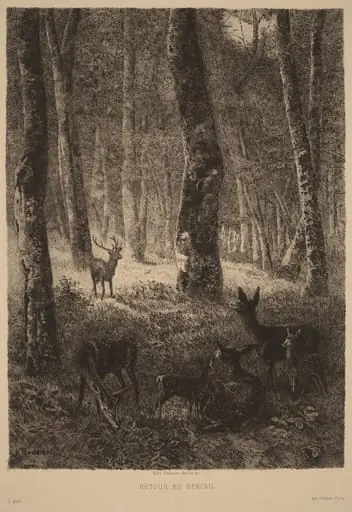
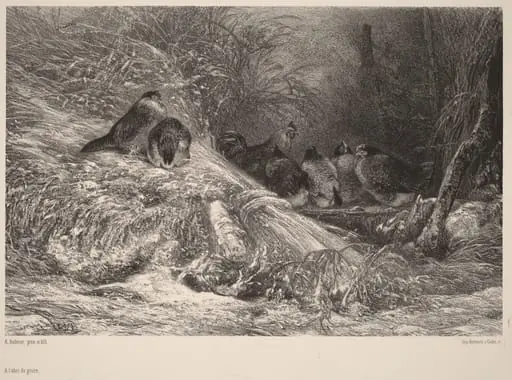
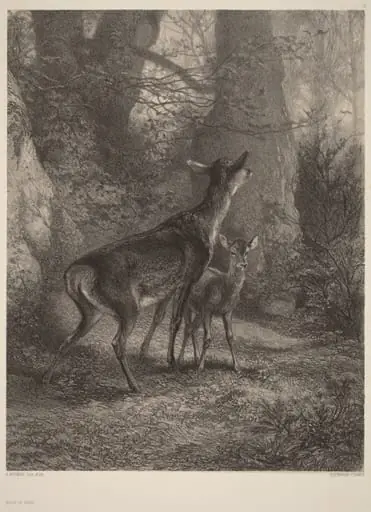
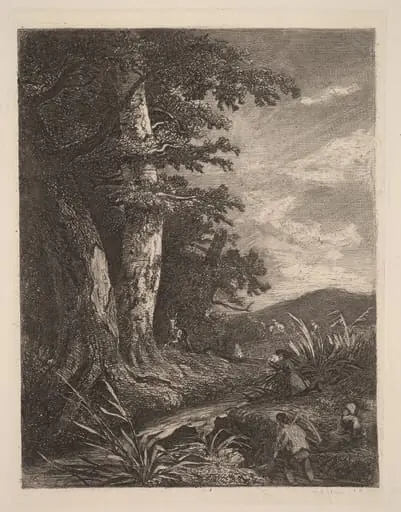
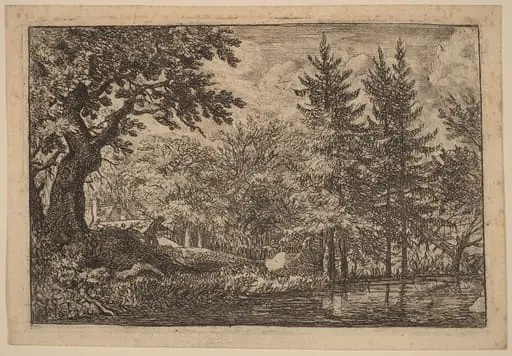
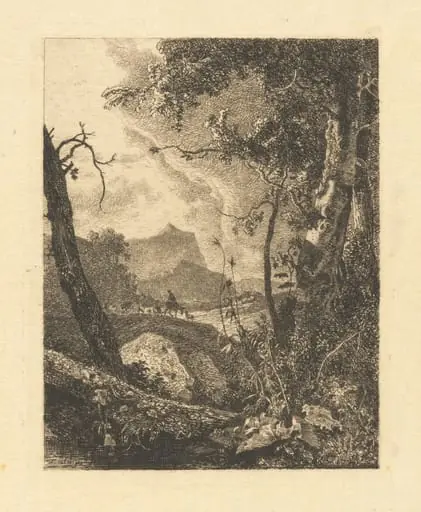
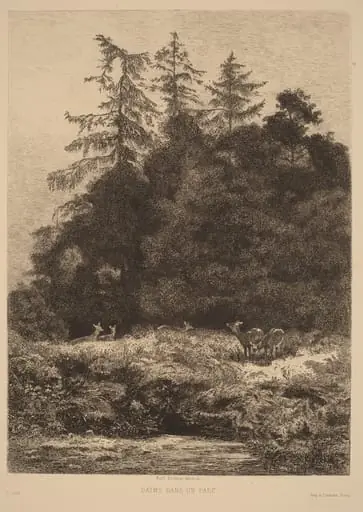
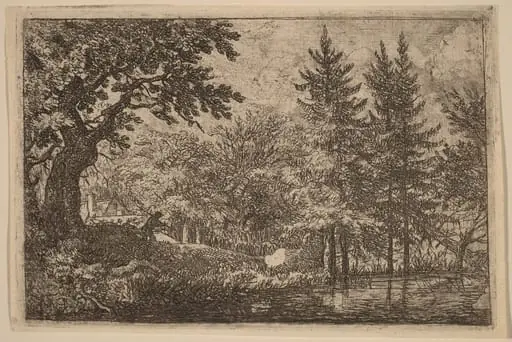
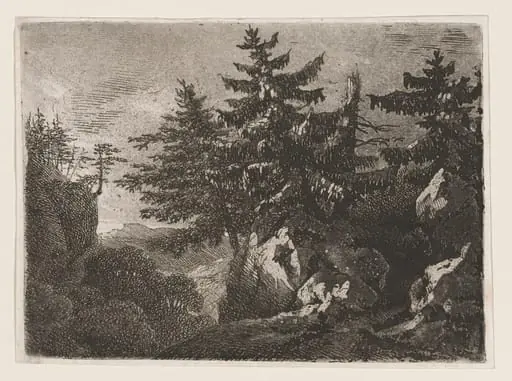
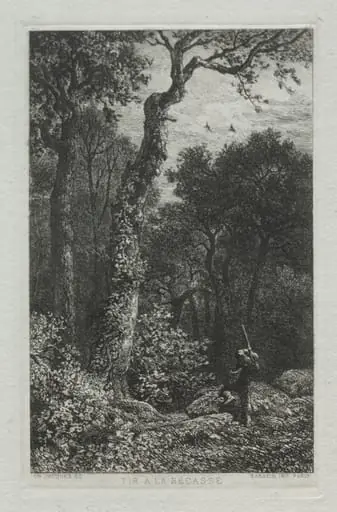
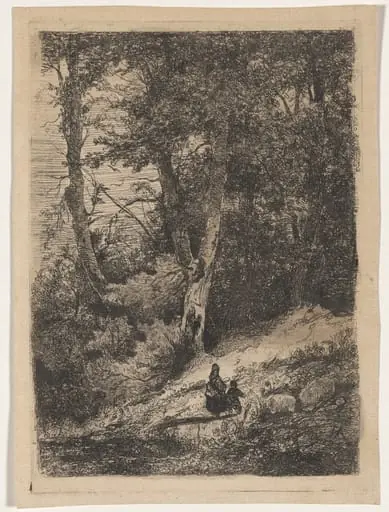
The image depicts a tranquil forest scene with towering pines and rugged terrain, but no pheasants are visible despite the title. The absence of the birds named in the title invites contemplation of nature’s quietude rather than its fauna. The composition emphasizes stillness and atmosphere, suggesting a poetic rather than documentary intent—consistent with Romantic ideals that valued mood over literal representation.
Technique & Style
Bodmer employed lithography to achieve soft, fluid lines that mimic the spontaneity of a sketch. The ink work is delicate, with subtle tonal gradations suggesting shadow and depth without heavy contrast. The rocky ground and pine trunks are rendered with loose, suggestive strokes, avoiding rigid detail. This approach reflects a preference for atmospheric effect over topographical accuracy, characteristic of his printmaking style.
History & Provenance
Created in 1851, *Les Faisans* emerged during Bodmer’s later career, after his earlier work documenting North American expeditions. By this time, he had settled into European artistic circles, particularly in France and Germany, where lithography was widely adopted for both artistic and commercial purposes. The print likely circulated among collectors and artists familiar with Romantic landscape traditions.
Context
In mid-century Europe, lithography allowed artists to reproduce nature studies with greater accessibility than traditional engraving. Bodmer’s work fits within a broader Romantic movement that idealized wild, unspoiled landscapes as sites of emotional resonance. His focus on quiet, unpopulated scenes aligns with contemporaries who sought to convey nature’s sublime presence without human intervention.
Legacy
Though not among Bodmer’s most widely recognized works, *Les Faisans* illustrates his sustained interest in printmaking as a medium for intimate landscape expression. It contributes to the understanding of how European artists used lithography to explore natural themes beyond grand narratives, influencing later generations interested in the poetic potential of the printed line.
Artist & collection
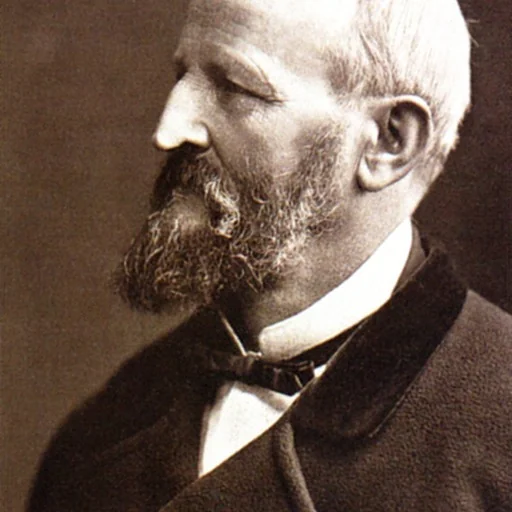
Artist
Johann Carl Bodmer (11 February 1809 – 30 October 1893) was a Swiss-French printmaker, etcher, lithographer, zinc engraver, draughtsman, painter, illustrator, and hunter.