Artwork
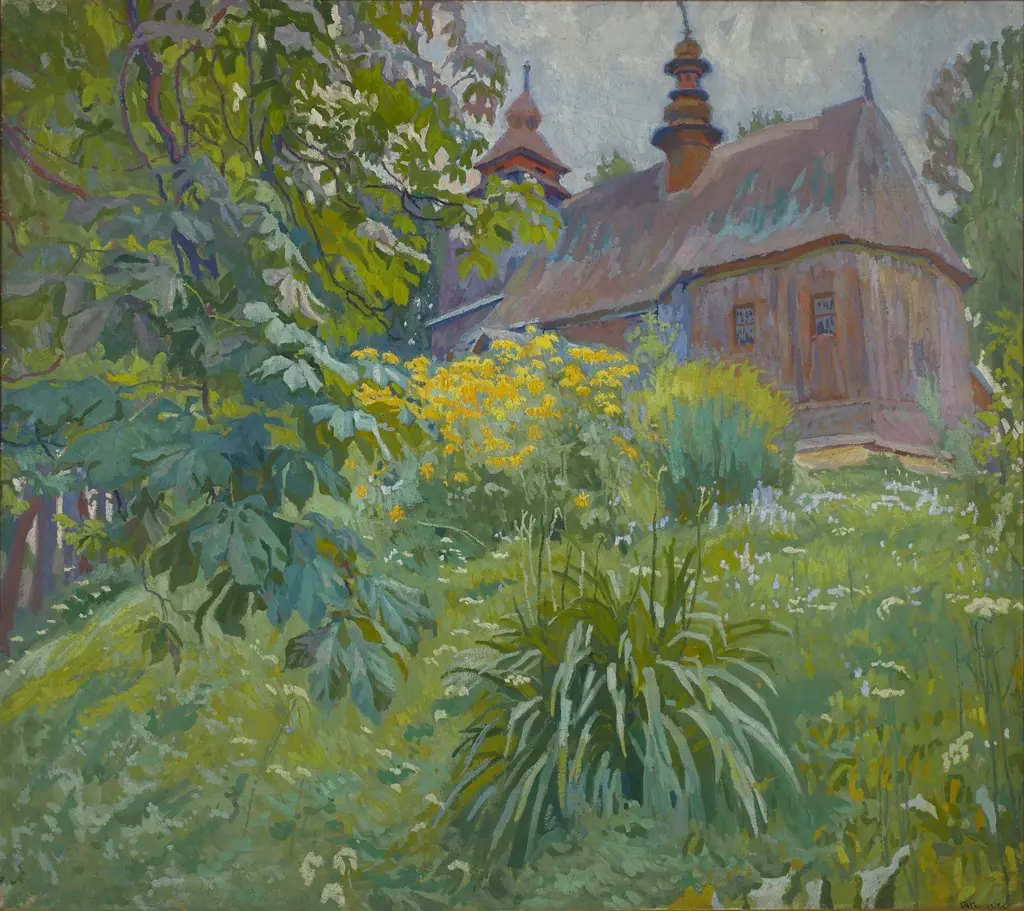
Kirkkoaittoja
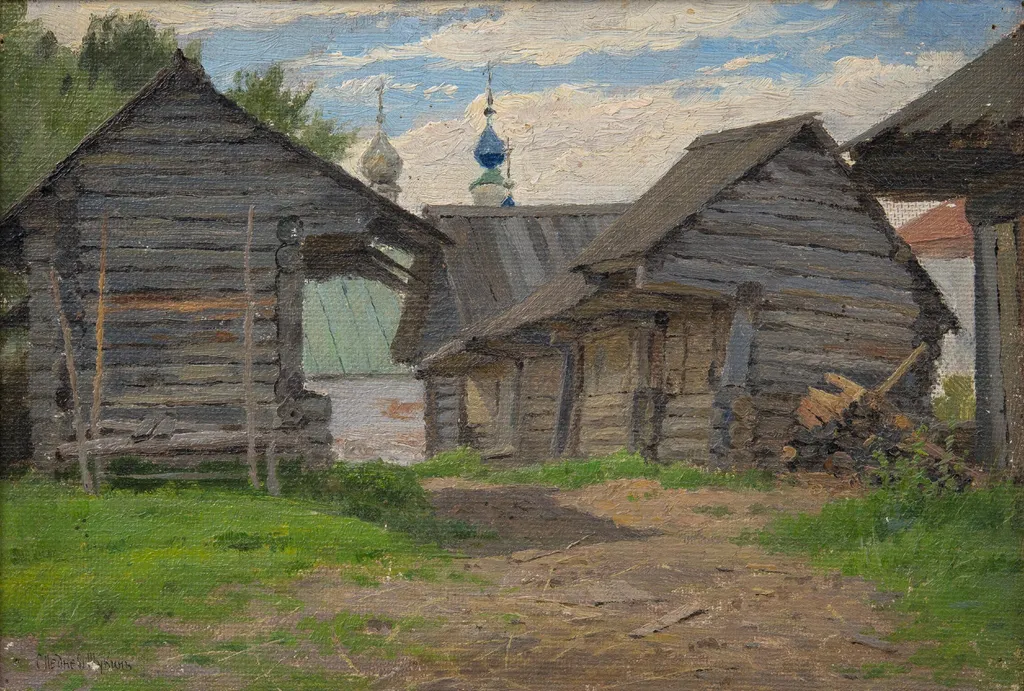
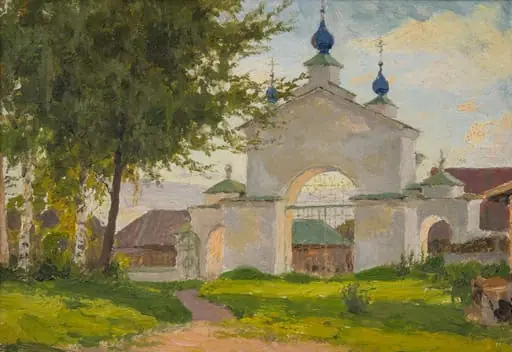
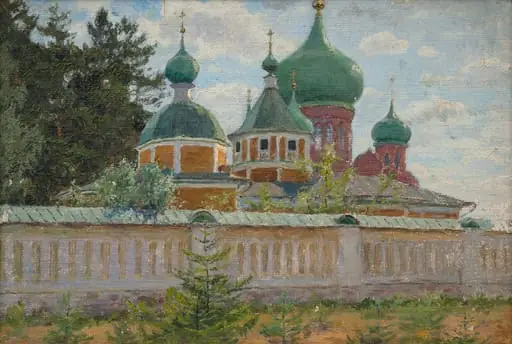
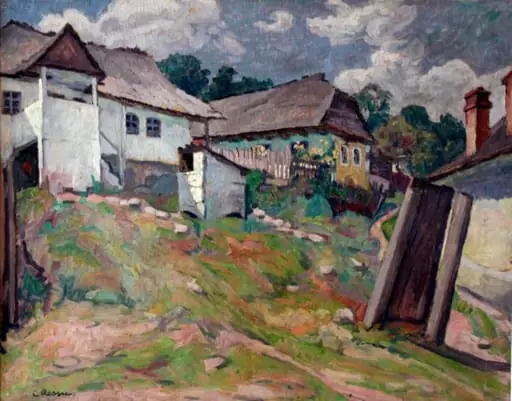
Kirkkoaittoja is a photography by Sergei Lednev-Schukin. It is held in the collection of the Järvenpää Art Museum.
About this work
Overview
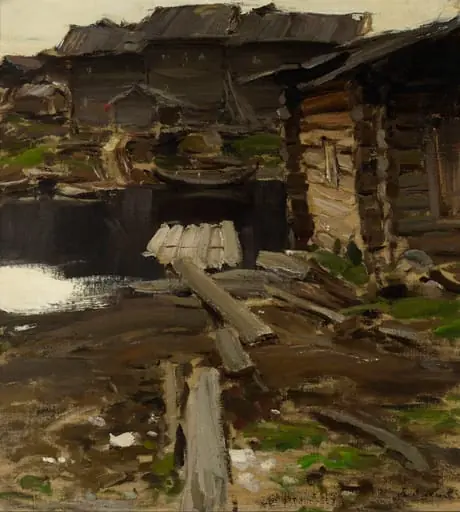
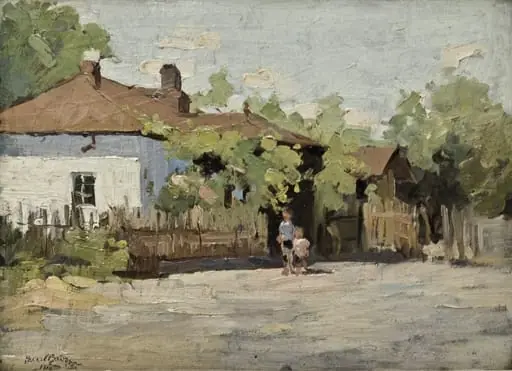
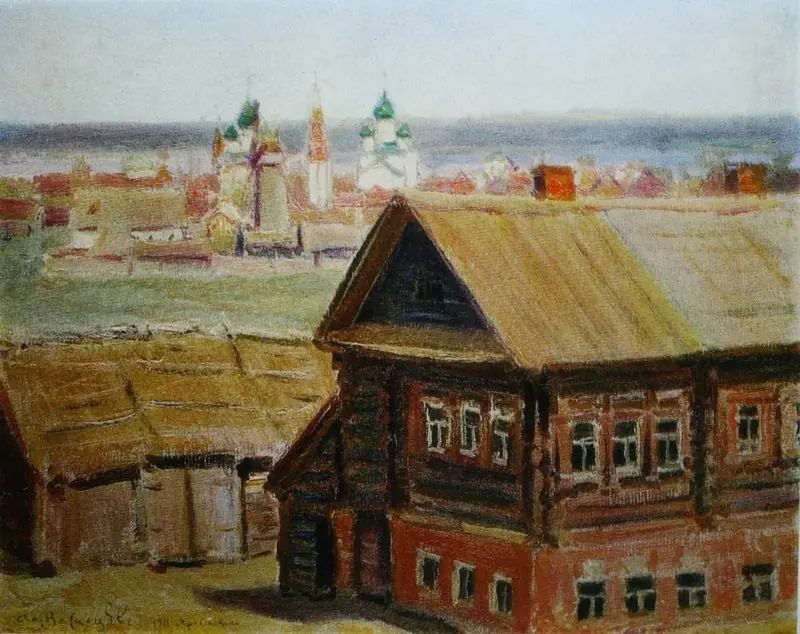
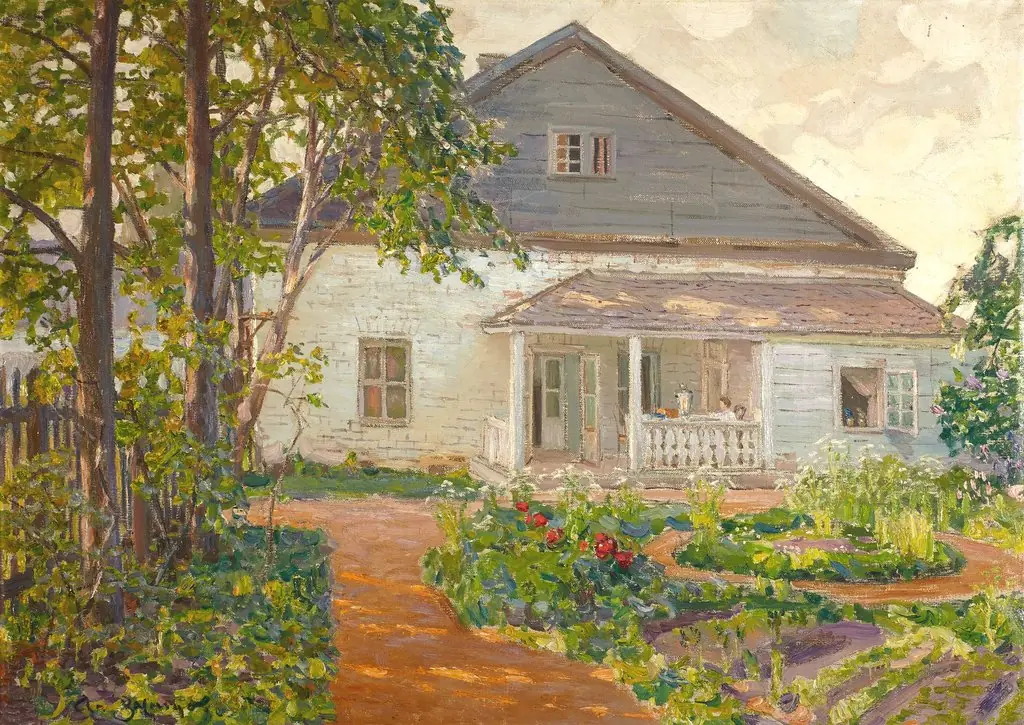
This work depicts a solitary rural cabin in a muted, weathered state, rendered with thick, tactile brushwork that emphasizes its physical decay.
This work depicts a solitary rural cabin in a muted, weathered state, rendered with thick, tactile brushwork that emphasizes its physical decay. The heavy application of paint, particularly on the wooden surfaces, creates a sense of age and exposure to the elements. A narrow dirt path leads to the door, while a distant church with a blue dome anchors the horizon, suggesting a quiet, isolated community.
Subject & Meaning
The cabin, worn and isolated, evokes themes of endurance and quiet solitude. Its deterioration contrasts with the enduring presence of the church in the background, hinting at the interplay between domestic life and spiritual continuity. The absence of human figures amplifies a sense of stillness, inviting contemplation of time’s passage and the resilience of simple structures.
Technique & Style
The artist employs impasto to build texture, layering paint in thick, uneven strokes that mimic the roughness of aged wood. Scraped and dragged applications enhance the sense of wear, especially on the cabin’s walls and roof. The green-tinged window and muted sky are rendered with thinner washes, creating a subtle tonal contrast that draws focus to the structure’s physicality.
History & Provenance
The painting’s origins are undocumented in public records, and no known exhibition or collector history is available. It appears to be a standalone work, likely created in a regional context where such vernacular architecture was common. Its lack of signature or date suggests it was not intended for formal display, but rather as a personal observation.
Context
The scene reflects rural Nordic or Baltic architectural traditions, where wooden cottages and small churches were central to village life. The church’s blue dome and white cross align with Orthodox or Lutheran design elements common in northern Europe. The painting’s focus on decay rather than idealization suggests an interest in everyday realism over romanticized pastoralism.
Legacy
Though not widely reproduced or studied, the work contributes to a broader tradition of regionalist painting that honors the quiet dignity of ordinary structures. Its emphasis on material texture and atmospheric mood aligns with early 20th-century movements that valued tactile honesty over polished finish, influencing later artists interested in the poetry of decay.
Artist & collection
Artist
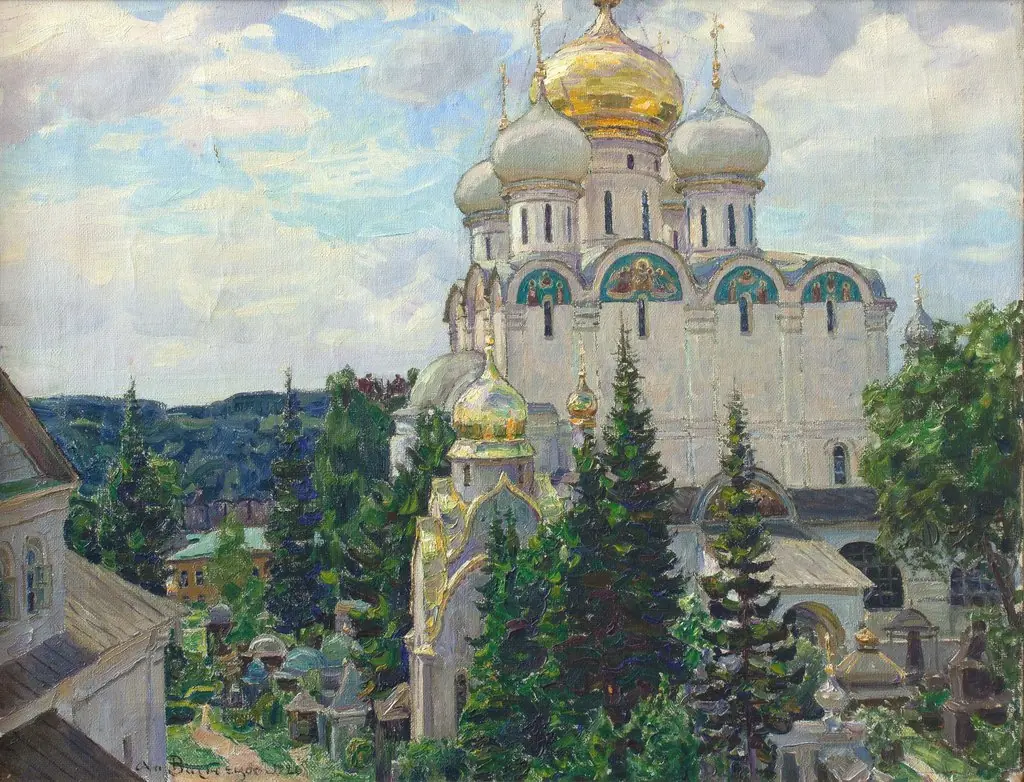
Sergei Lednev-Schukin’s photos frame quiet corners of churches and graveyards in soft light.