Artwork
Kirkko
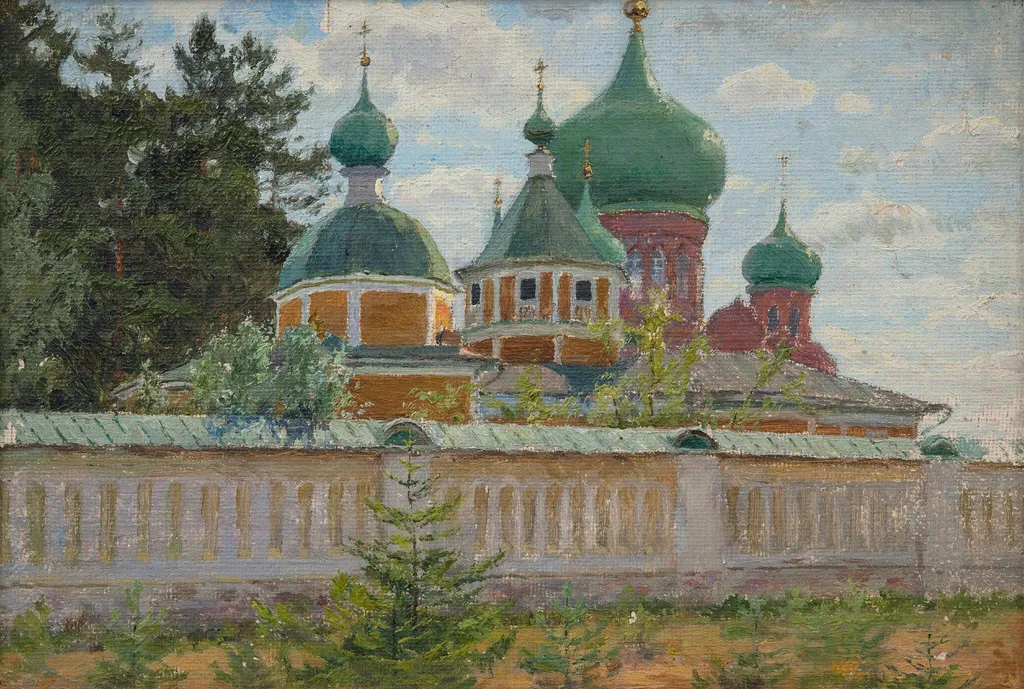
Kirkko is a photography by Sergei Lednev-Schukin. It is held in the collection of the Järvenpää Art Museum.
About this work
Overview
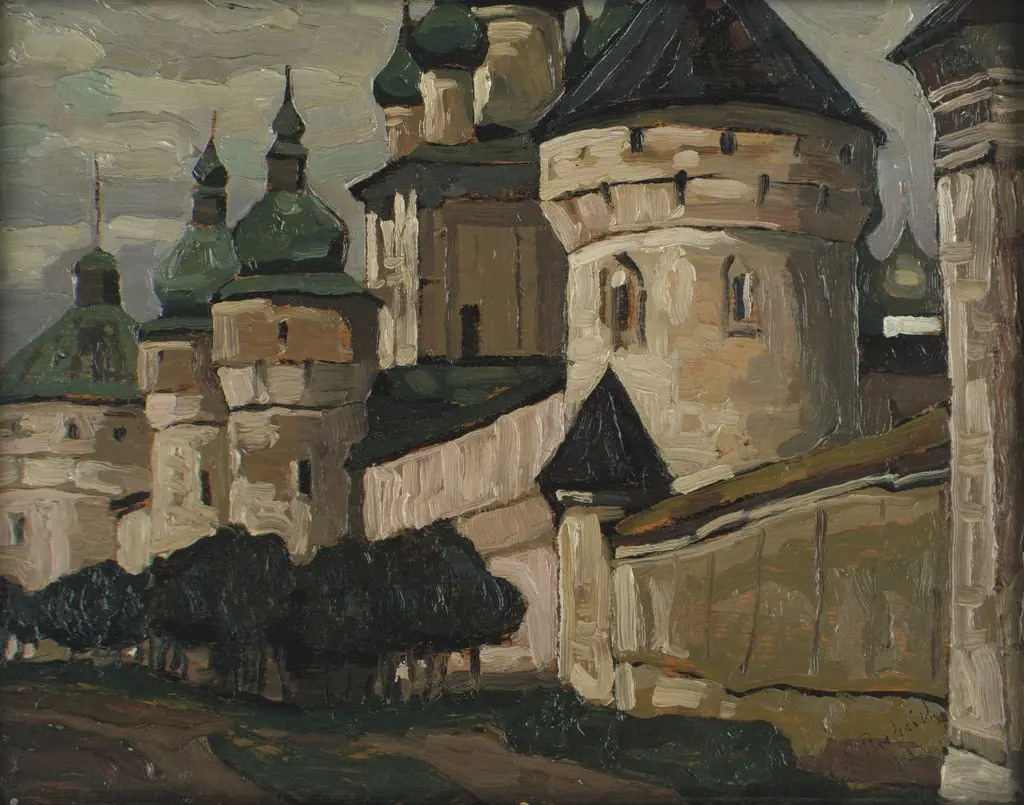
The palette includes muted earth tones contrasted with vivid green domes, suggesting a place of spiritual retreat rather than public ceremony.
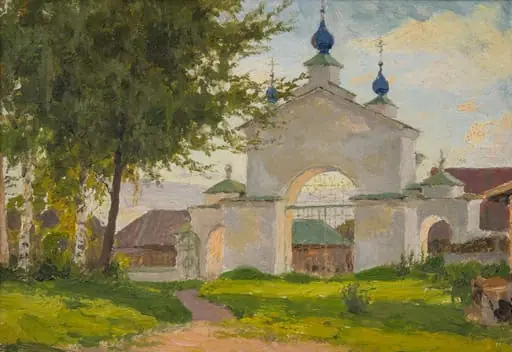
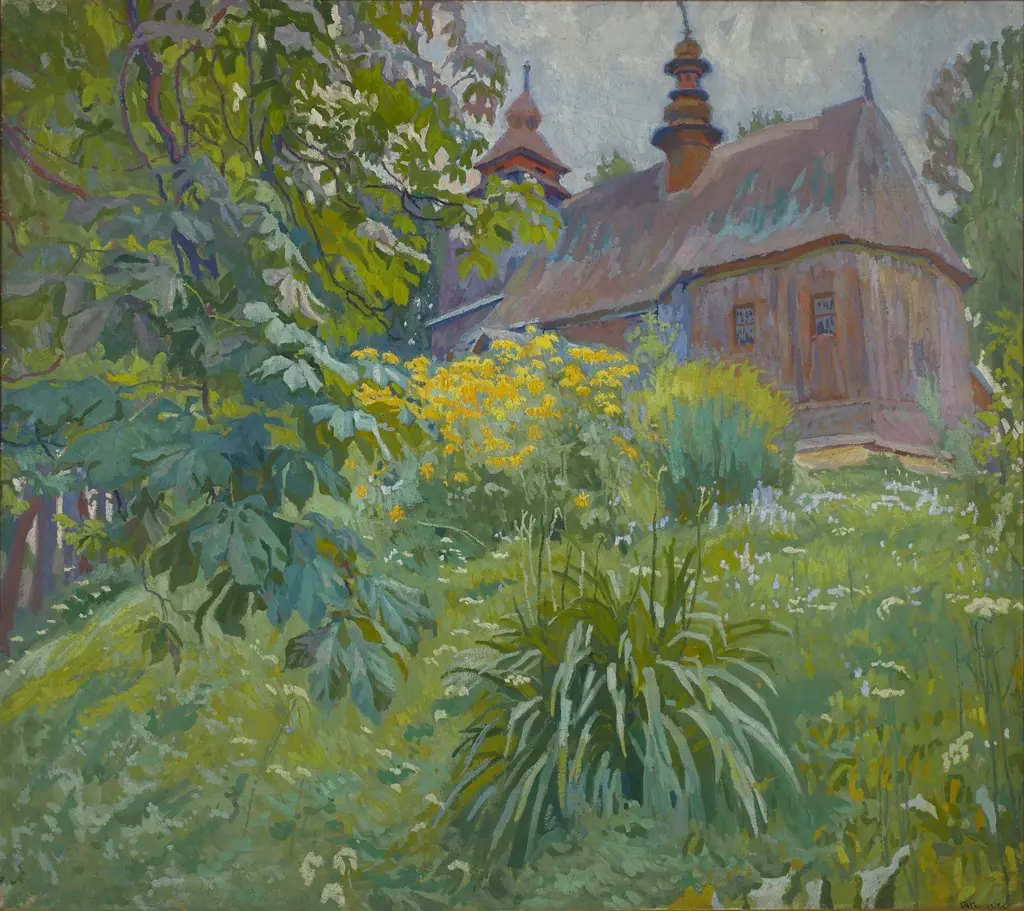
This image depicts a modest religious structure with distinctive onion-shaped domes and gold crosses, characteristic of Eastern European ecclesiastical architecture. The building is set within a secluded landscape, framed by dense foliage and enclosed by a low stone wall. A narrow water feature runs in front, enhancing the sense of quiet isolation. The palette includes muted earth tones contrasted with vivid green domes, suggesting a place of spiritual retreat rather than public ceremony.
Subject & Meaning
The structure is likely a small chapel or monastery, designed for contemplative worship. Its compact form and secluded setting reflect monastic ideals of withdrawal from the world. The green domes and gold crosses are traditional symbols in Orthodox Christian architecture, signaling devotion and divine presence. The surrounding trees and moat-like water suggest protection and separation, reinforcing the building’s role as a sanctuary.
Technique & Style
The rendering emphasizes flat planes of color and simplified forms, avoiding detailed realism in favor of symbolic clarity. The domes are rendered with uniform green tones, while the walls show subtle shifts between white, red, and brown to suggest material variation. The composition is tightly framed by vegetation, directing focus inward toward the building. Light appears even and diffuse, minimizing shadows to sustain a serene, timeless mood.
History & Provenance
The work’s origin is not documented, but its architectural features align with rural religious structures in regions such as Russia, Ukraine, or Romania, where such domed chapels were common in the 18th and 19th centuries. Its depiction suggests it may be based on an actual site, possibly one associated with a small monastic community. The image was likely created as a record or study rather than a commissioned portrait.
Context
In Eastern European religious traditions, small domed buildings often served as parish chapels or monastic cells, especially in remote areas. Their design, rooted in Byzantine influences, prioritized symbolic form over grandeur. The presence of a moat-like feature may reflect local defensive customs or symbolic references to spiritual purification. Such structures were typically maintained by local communities rather than centralized religious authorities.
Legacy
This image preserves a visual record of a vernacular religious architecture that has largely disappeared or been altered in modern times. It contributes to the documentation of regional ecclesiastical forms that differ from urban cathedrals. As such, it holds value for architectural historians studying the spread and adaptation of Orthodox traditions in rural settings, offering insight into everyday spiritual life beyond major centers of worship.
Artist & collection
Artist
Sergei Lednev-Schukin’s photos frame quiet corners of churches and graveyards in soft light.