Artwork
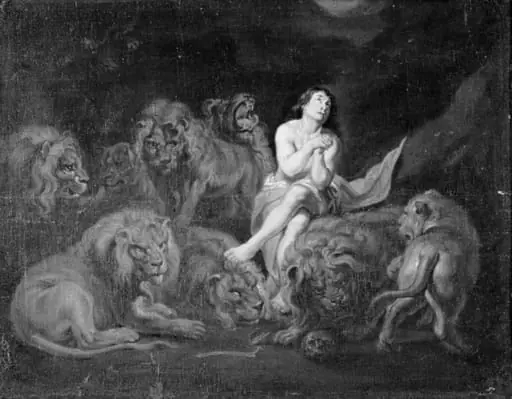
Daniel in the Lions' Den
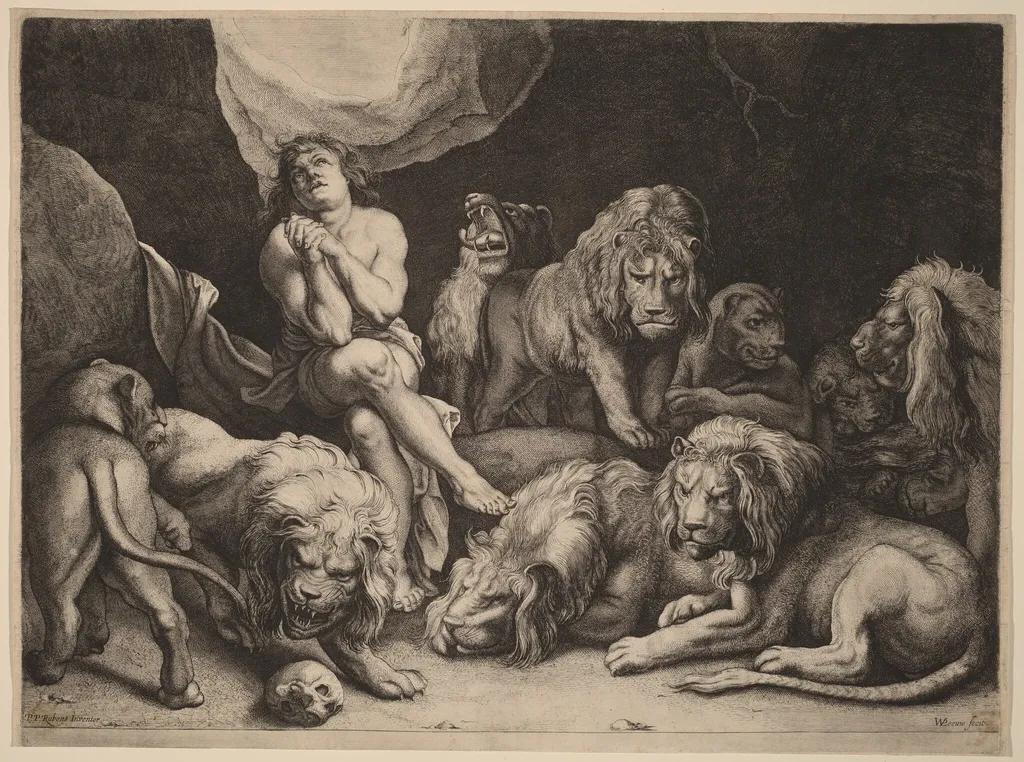
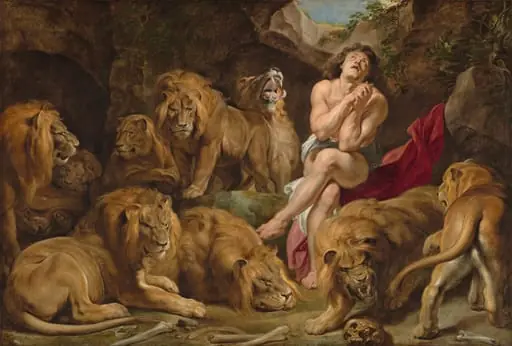
Daniel in the Lions' Den is an ink print by the Baroque artist Willem van der Leeuw. It dates from 1645 and is held in the collection of the National Gallery of Art.
About this work
Overview
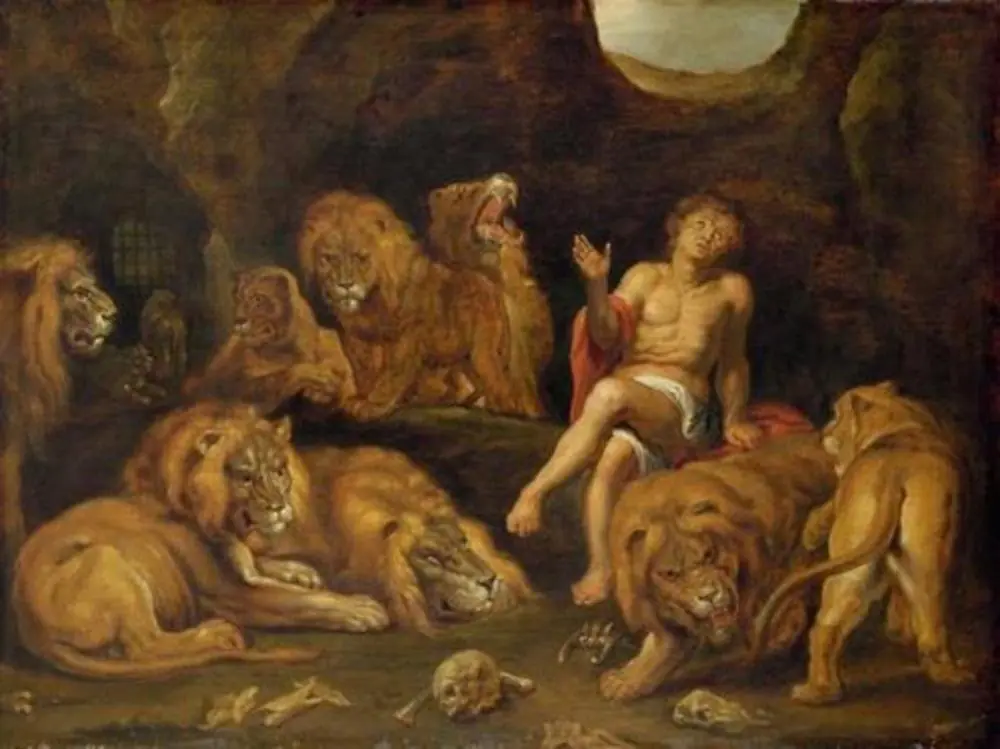
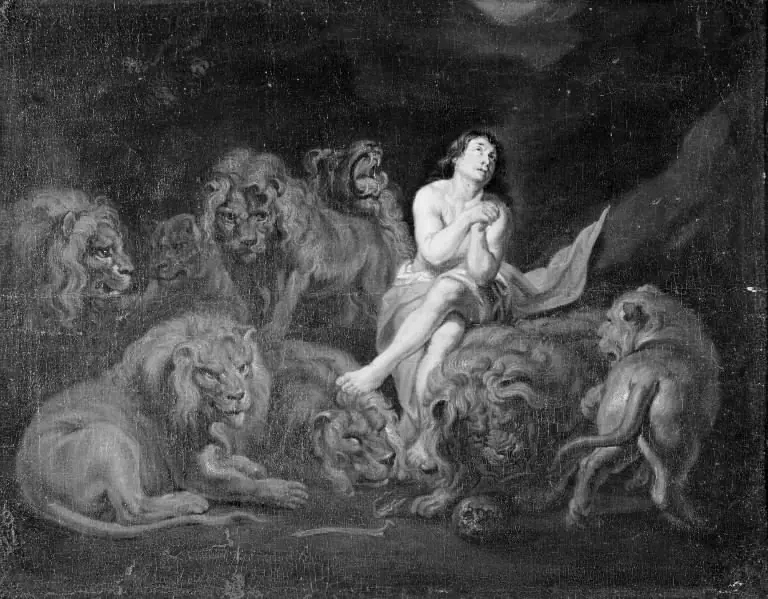
Created in 1645 by Willem van der Leeuw, this engraving depicts the biblical figure Daniel seated calmly within a cavernous space, surrounded by lions. Rendered in ink on laid paper, the work belongs to the printmaking tradition of the Dutch Golden Age. The composition emphasizes stillness amid tension, using fine linear detail to suggest texture and spatial depth without color or shading.
Subject & Meaning
The scene illustrates Daniel’s survival in the lions’ den, as recounted in the Book of Daniel. His composed posture and unalarmed expression convey divine protection and inner faith. The lions, though numerous and close, appear docile, their bodies relaxed rather than predatory. This visual harmony underscores the narrative’s theme: trust in divine will neutralizes natural danger.
Technique & Style
The dark sky above contrasts with the illuminated figures, enhancing the scene’s dramatic stillness through tonal balance rather than chiaroscuro.
Van der Leeuw employed fine, controlled engraving lines to model form and texture. The lions’ fur is rendered with dense, parallel strokes that suggest volume and movement, while the rocky cave and Daniel’s bare torso are defined by lighter, more varied marks. The dark sky above contrasts with the illuminated figures, enhancing the scene’s dramatic stillness through tonal balance rather than chiaroscuro.
History & Provenance
The print was produced during the height of Dutch print culture, when biblical subjects were commonly reproduced for private devotion and scholarly circulation. While specific early ownership records are sparse, its technical precision aligns with the work of Amsterdam-based engravers active in the mid-seventeenth century. It likely circulated among collectors interested in religious imagery and graphic art.
Context
In 1640s Holland, biblical narratives were popular subjects in print, reflecting both religious devotion and intellectual engagement with scripture. Engravings like this one served as accessible visual theology, allowing viewers to contemplate sacred stories in domestic settings. Van der Leeuw’s focus on psychological calm, rather than violence, reflects a broader trend toward introspective interpretations of biblical events.
Legacy
Though not widely reproduced in later centuries, this engraving exemplifies the quiet power of line-based storytelling in Dutch printmaking. Its restrained emotional tone and technical discipline influenced contemporaries who sought to convey spiritual themes through subtlety rather than spectacle. Today, it remains a reference for the expressive potential of engraving in narrative art.
Own this work as a print
Artist & collection