Artwork
Boar Hunt
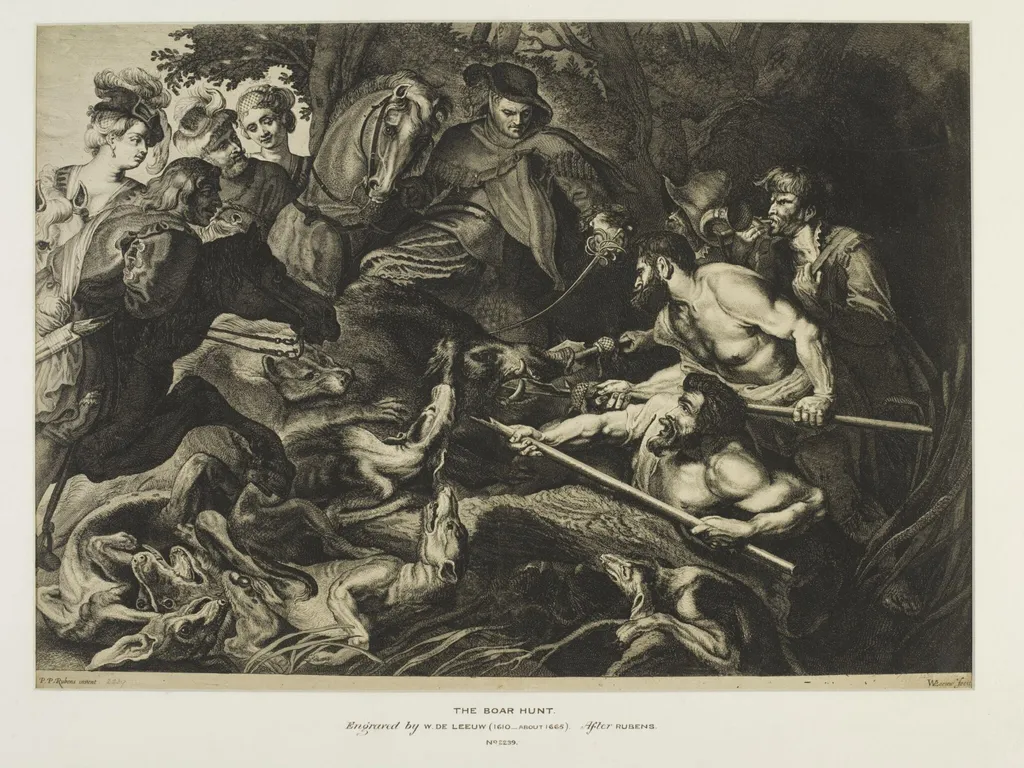
Boar Hunt is a print by Willem van der Leeuw. It dates from 1650 and is held in the collection of the Victoria and Albert Museum.
About this work
Overview
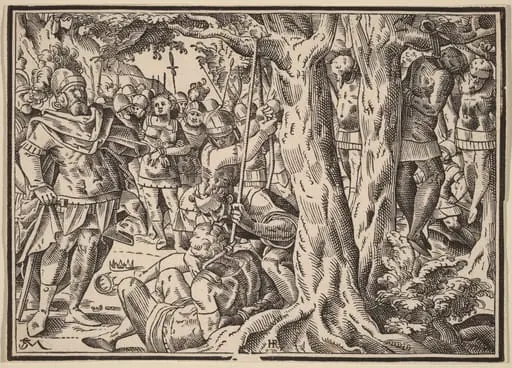
Willem van der Leeuw’s print *Boar Hunt* reproduces a lively hunting tableau originally designed by Peter Paul Rubens. Executed on paper, the image captures a moment of intense action as a group of riders, onlookers and their horses converge on a fallen boar, illustrating the dramatic narrative favored in early‑modern hunting genre works.
Subject & Meaning
The composition centers on a boar sprawled on its side, its twisted form the focal point of the surrounding figures. Cavaliers and attendants, some in loose garments and one shirtless with a spear, press forward while rearing horses add kinetic energy. The scene conveys the peril and prestige associated with aristocratic sport, emphasizing human mastery over a ferocious animal.
Technique & Style
Van der Leeuw employs fine line work and nuanced shading to render textures of flesh, fabric and fur. A pronounced chiaroscuro model gives depth to the figures and creates a three‑dimensional sense of space, while the intricate detailing of the horses and riders reflects a realistic approach typical of print adaptations of Rubens’s paintings.
History & Provenance
The print is a direct copy after Rubens, produced in the 17th‑century Dutch market where such reproductions were popular among collectors who could not acquire the original oil. It bears the artist’s signature and was likely circulated among patrons interested in the grand, narrative scenes that Rubens popularized.
Context
Hunting scenes were a common motif in Baroque art, symbolizing power, control and the aristocratic lifestyle. By translating Rubens’s composition into a print, van der Leeuw made the dramatic subject accessible to a broader audience, reflecting the period’s growing demand for affordable, yet elaborate, visual culture.
Legacy
While not as widely known as Rubens’s original, the print illustrates the diffusion of Baroque aesthetics through printmaking. It serves as a testament to the collaborative network of artists and engravers who disseminated iconic compositions across Europe, influencing later depictions of sport and spectacle.
Own this work as a print
Artist & collection


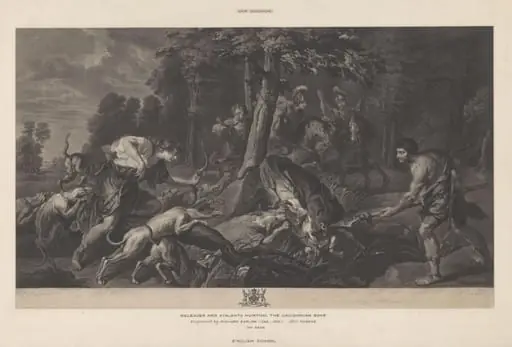 Meleager and Atalanta
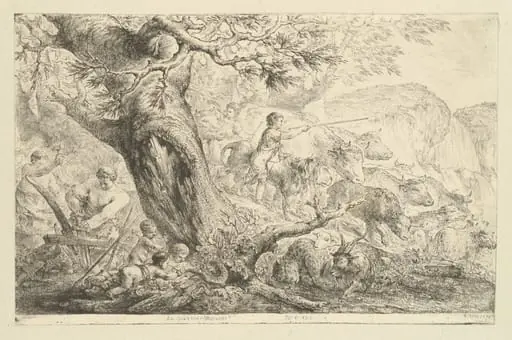 Das glückliche Weltalter (The Happy New Age)
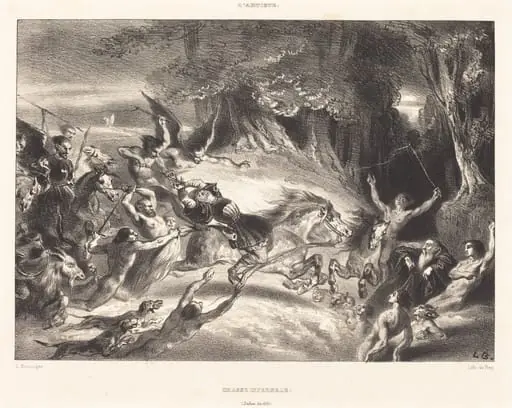 Chasse Infernale
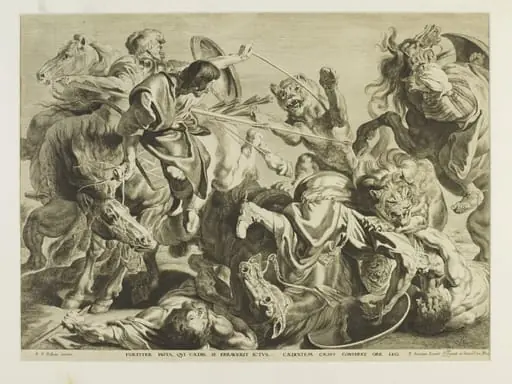 The Hunt of the Lion and Lioness
 Peasants Fighting over a Game of Cards
 The Rape of Hippodamia
 Christ Led Away After His Arrest
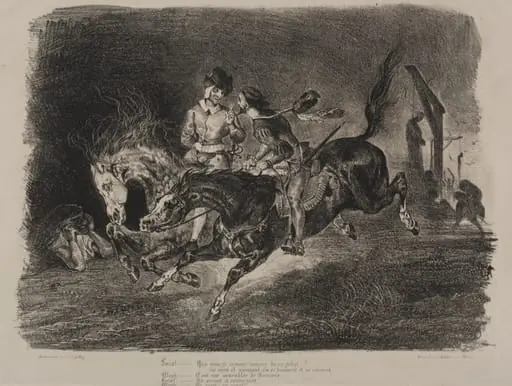 Illustrations for Faust: Faust and Méphistophélés horse riding on the Sabbath
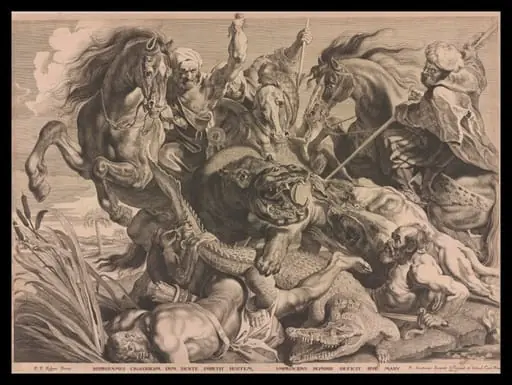 The Hunting of the Crocodile and Hippopotamus
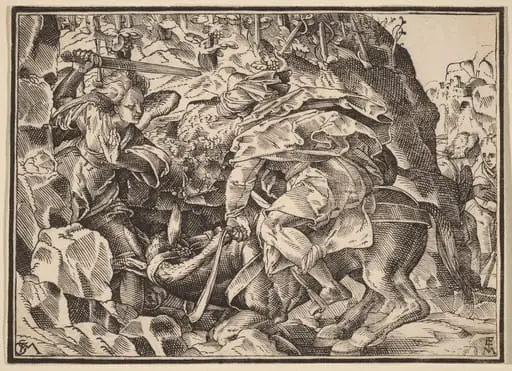 Christ Tells His Disciples of the Last Judgment
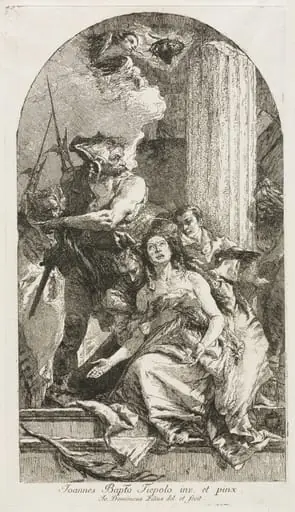 Martyrdom of St. Agatha
 Christ Tells His Disciples of the Last Judgment