Artwork
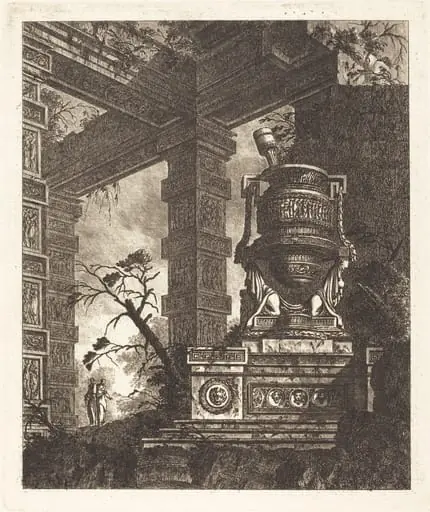
Vase Supported by a Base with Three Grotesque Faces
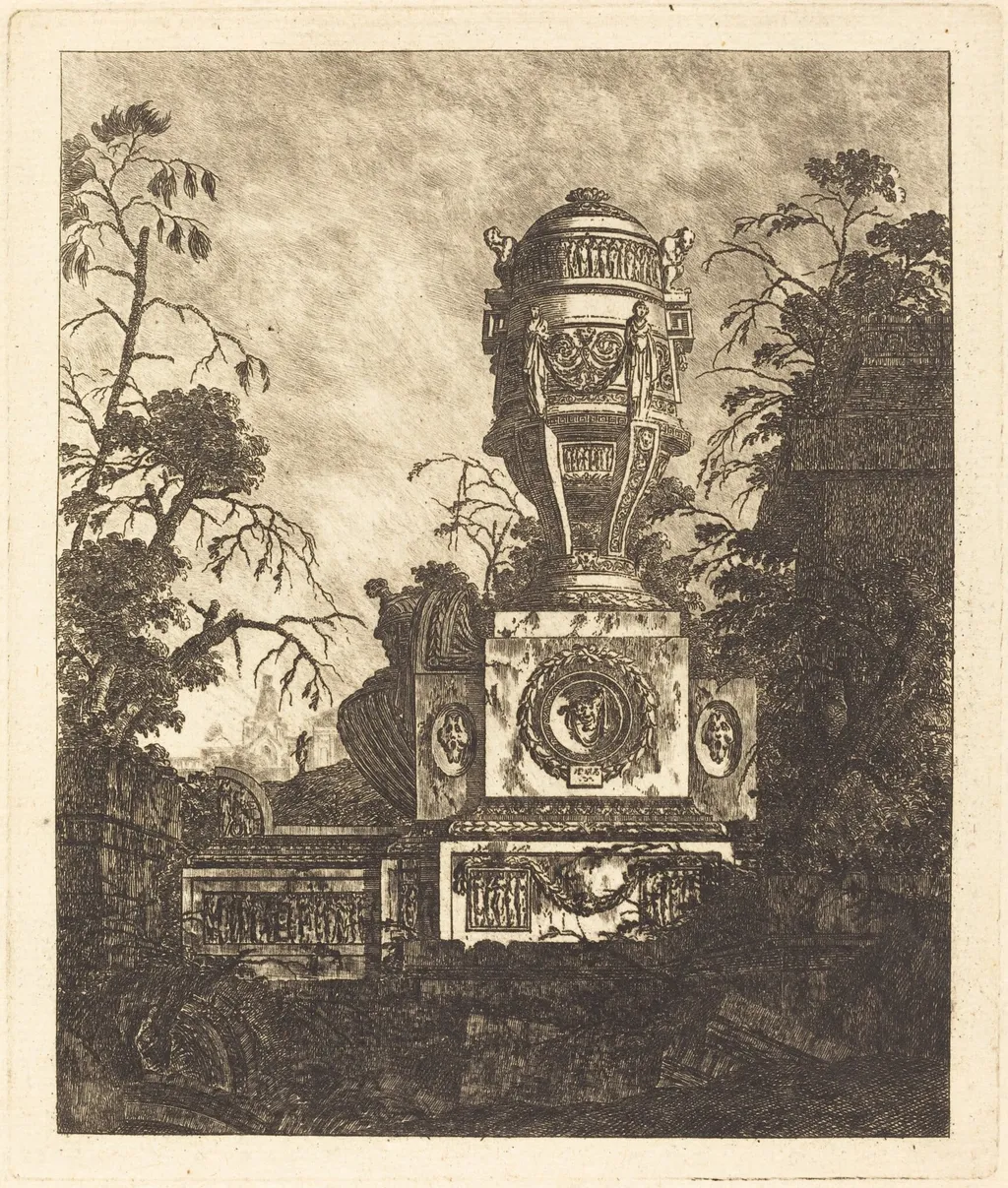
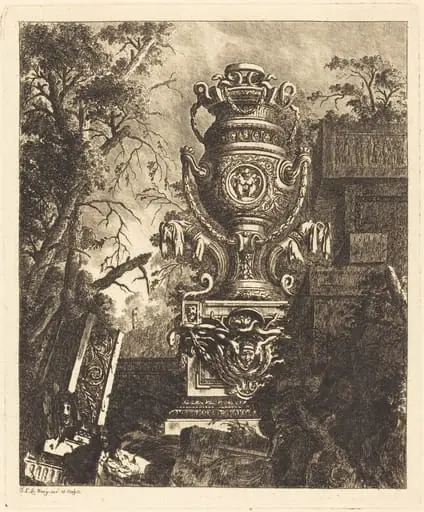
Vase Supported by a Base with Three Grotesque Faces is an ink print by the Romanticist artist Jean-Laurent Legeay. It dates from 1768 and is held in the collection of the National Gallery of Art.
About this work
Overview
Jean‑Laurent Legeay’s 1768 etching, titled *Vase Supported by a Base with Three Grotesque Faces*, presents a tall, ornamented vase perched on a pedestal within a garden setting. The composition includes surrounding foliage, distant shrubbery, and a modest building in the background, framing the central object and its unusual supporting base.
Subject & Meaning
The vase, capped with a domed lid and intricate carvings, rests on a base that bears three grotesque masks—figural hybrids that blend human and animal traits in a whimsical, decorative manner. Such grotesques were popular in 18th‑century ornamental design, often employed to add a playful, exotic touch to garden architecture.
Technique & Style
Executed as an etching on laid paper, Legeay achieved a sense of volume through careful hatching and cross‑hatching, rendering the vase’s surface and the surrounding vegetation with subtle tonal variation. The line work emphasizes texture, while the contrast between the smooth vase and the rugged grotesque faces underscores the decorative intent of the piece.
History & Provenance
Created in 1768, the print is attributed to French printmaker Jean‑Laurent Legeay, an artist known for his architectural and ornamental subjects. While specific ownership records are limited, the work appears in several 19th‑century catalogues of French etchings, indicating its circulation among collectors of decorative prints.
Artist & collection