Artwork
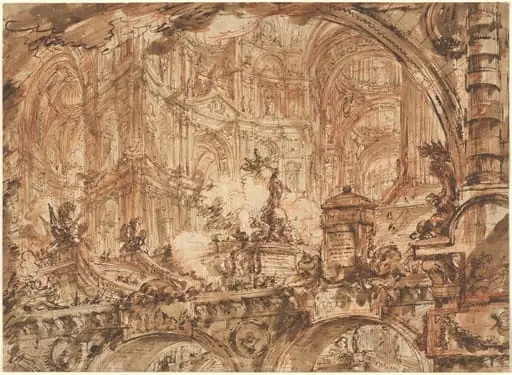
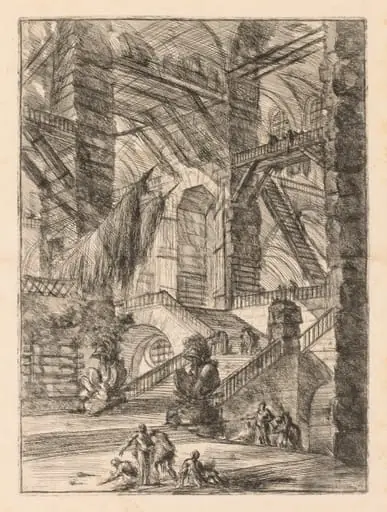
The Staircase with Trophies
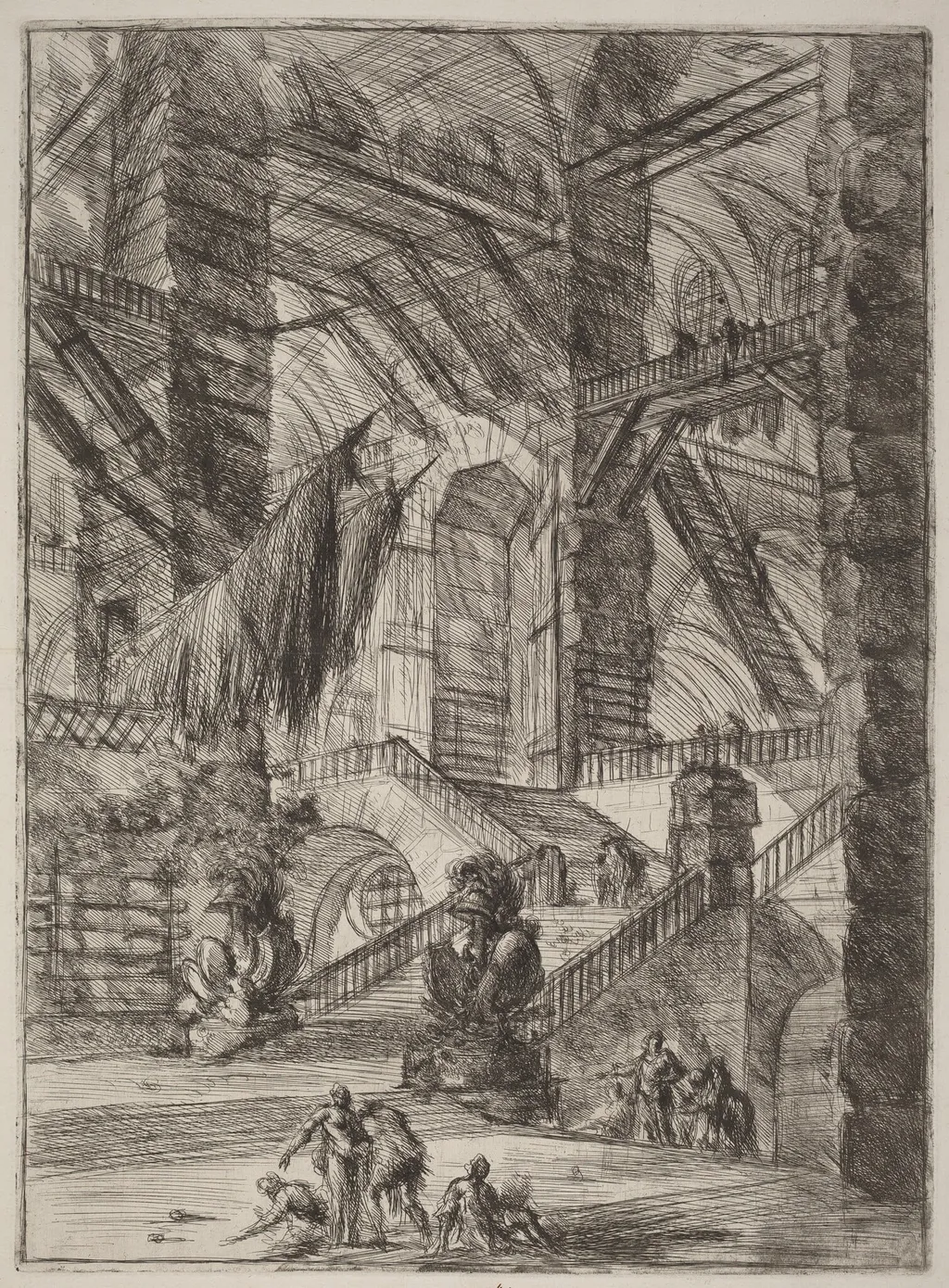
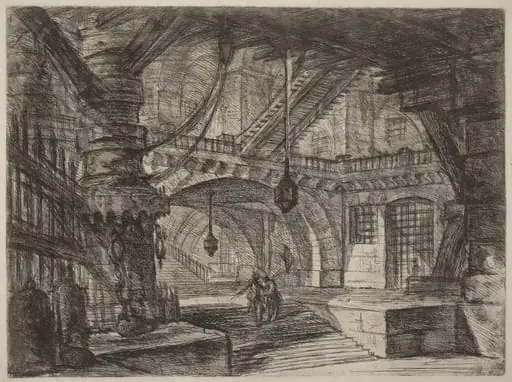
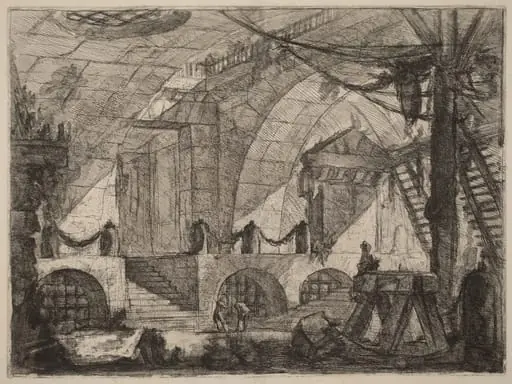
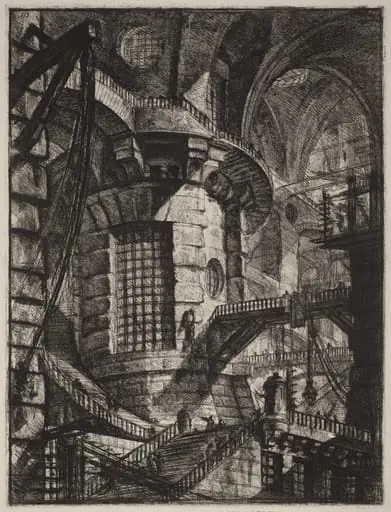
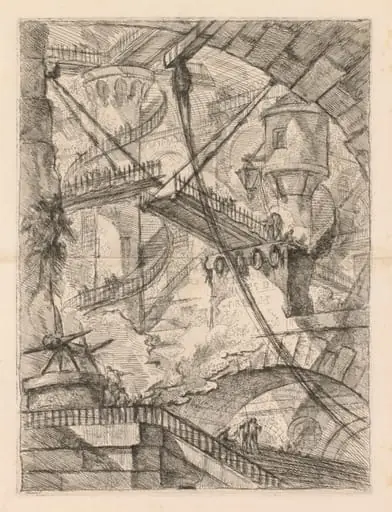
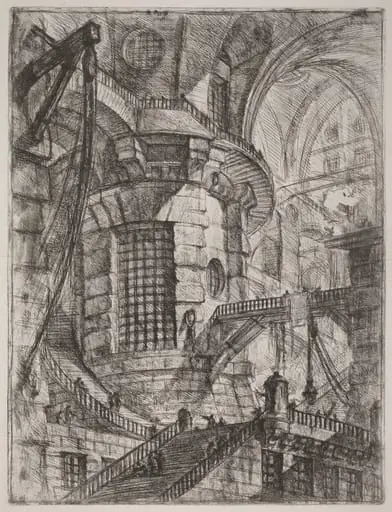
The Staircase with Trophies is an ink print by the Romanticist artist Giovanni Battista Piranesi. It dates from 1754 and is held in the collection of the National Gallery of Art.
About this work
Overview
The print belongs to a series exploring monumental, often unreal spaces, reflecting Piranesi’s interest in the psychological weight of architecture.
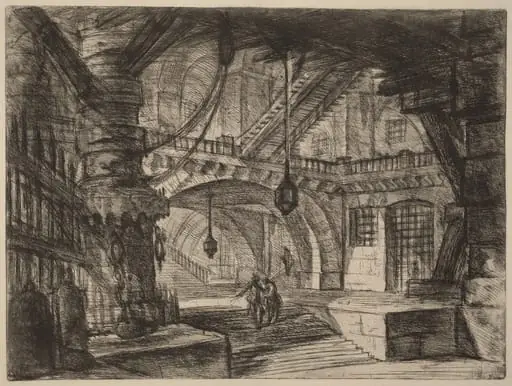
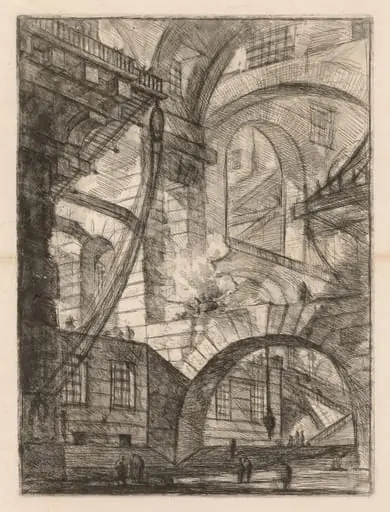
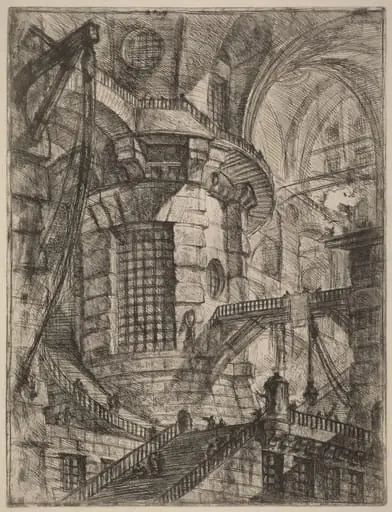
Created in 1754, *The Staircase with Trophies* is an etching and engraving by Giovanni Battista Piranesi, an Italian artist renowned for his architectural prints. Unlike straightforward documentation, this work merges observed Roman ruins with invented structures, presenting a labyrinthine stairwell that defies practical construction. The print belongs to a series exploring monumental, often unreal spaces, reflecting Piranesi’s interest in the psychological weight of architecture.
Subject & Meaning
The composition depicts a towering, decaying staircase crowded with fragmented columns, discarded armor, skulls, and wheels—objects evoking lost civilizations and martial glory. Figures scale the steps in disarray, dwarfed by the oppressive architecture. The scene suggests the passage of time and the collapse of imperial order, transforming trophies into relics of forgotten power rather than symbols of triumph.
Technique & Style
Piranesi employed etching and engraving to build dense, layered textures through fine cross-hatching and deep scratching. The heavy shadows and intricate line work create a sense of claustrophobic depth, with light barely piercing the cluttered space. His method prioritized atmospheric intensity over clarity, using the print medium to amplify the monumentality and decay of the imagined structure.
History & Provenance
The print was produced during Piranesi’s early years in Rome, where he studied ancient ruins and began publishing architectural views. *The Staircase with Trophies* was part of a group of prints later collected as *Carceri d'Invenzione*—imaginary prisons that gained recognition for their surreal grandeur. It circulated among European collectors and scholars drawn to its blend of archaeology and fantasy.
Context
In mid-18th-century Europe, fascination with antiquity was widespread, but Piranesi diverged from mere replication. While others sought to reconstruct Roman buildings accurately, he manipulated scale and form to evoke emotional and philosophical responses. His work responded to Enlightenment debates on civilization’s rise and fall, using architecture as a metaphor for memory and entropy.
Legacy
Piranesi’s *Staircase with Trophies* influenced later Romantic and Gothic artists who explored psychological space and architectural decay. Its impact extended into 19th-century literature and visual art, where its oppressive, labyrinthine forms became a visual language for existential disorientation. The print remains a touchstone for discussions on the boundaries between historical record and imaginative reconstruction.
Artist & collection

Artist
Giovanni Battista (or Giambattista) Piranesi (Italian pronunciation: ; also known as simply Piranesi; 4 October 1720 – 9 November 1778) was an Italian classical archaeologist, architect, and artist, famous for his…