Artwork
Landscape with Ruins
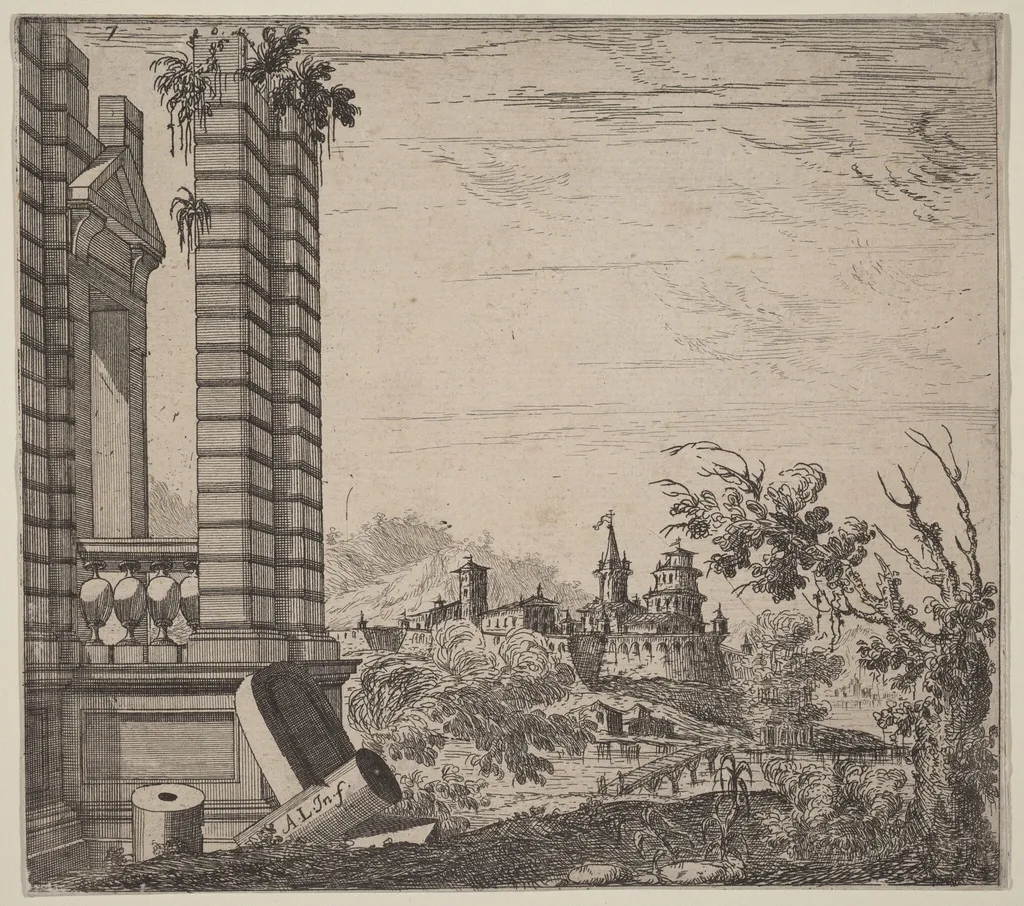
Landscape with Ruins is an ink print by the Baroque artist Antonio Francesco Lucini. It dates from 1601 and is held in the collection of the National Gallery of Art.
About this work
Overview
It presents a contemplative view of decayed architecture set within a natural environment, emphasizing atmospheric depth and tactile surface variation.
Landscape with Ruins is an early 17th-century print by Antonio Francesco Lucini, executed in etching and engraving on laid paper. It presents a contemplative view of decayed architecture set within a natural environment, emphasizing atmospheric depth and tactile surface variation. The work reflects the artist’s engagement with topographical imagery and the aesthetic of ruin, common in Northern Italian printmaking of the period.
Subject & Meaning
The composition centers on a towering, overgrown structure in ruins, partially reclaimed by vegetation, suggesting the passage of time and the fragility of human endeavor. Behind it, a distant hilltop settlement implies quiet continuity amid decay. The stormy sky, rendered with agitated lines, adds emotional weight, evoking transience without overt narrative, inviting quiet reflection rather than moralizing.
Technique & Style
Lucini employed etching and engraving to achieve fine linear detail in the ruins’ stonework and the textured foliage. Shading is built through cross-hatching and controlled line density, while the sky’s turbulent clouds emerge from fluid, wavy strokes. The paper’s laid texture enhances the print’s tactile quality, reinforcing the sense of age and material presence inherent in the subject.
History & Provenance
Created around 1601, the print belongs to Lucini’s early output, likely made in northern Italy where he was active. Few impressions survive, and its provenance traces through private collections and institutional print rooms, primarily in Europe. Its rarity reflects the limited circulation of such topographical prints before the rise of commercial print markets in the 18th century.
Context
In the early 1600s, Italian artists increasingly turned to landscape as a subject independent of religious or mythological narrative. Lucini’s work aligns with a regional trend of documenting ruins and rural scenes, influenced by both classical antiquity and the growing interest in naturalism. This print contributes to a visual culture that valued observation over idealization.
Legacy
Though not widely reproduced or celebrated in his time, Lucini’s Landscape with Ruins stands as an early example of landscape printmaking that prioritizes mood and texture over grandeur. It influenced later generations of topographical artists who sought to capture the quiet poetry of decay, contributing to the evolution of the European print tradition.
Artist & collection


 Fantastic River Landscape with Ruins and a Castle
 Ruins on the Palatine Hill
 Fantastic Townscape with Ruins
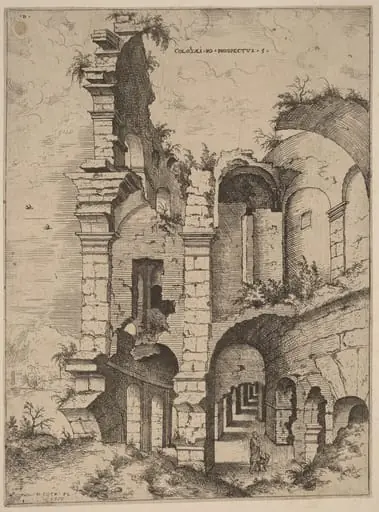 Fifth View of the Colosseum
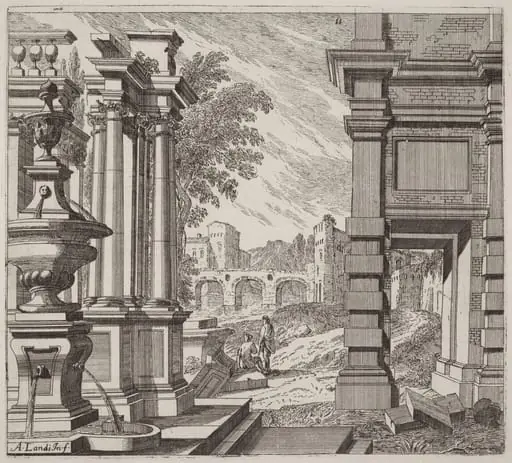 Architectural Fantasy with a Fountain, Classical Ruins, and a Bridge
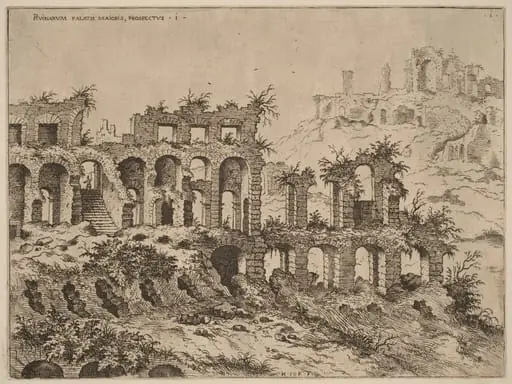 View of the Colosseum with the Palatine in the Background
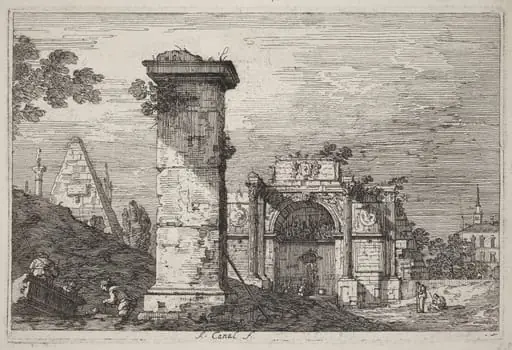 Landscape with Ruined Monuments
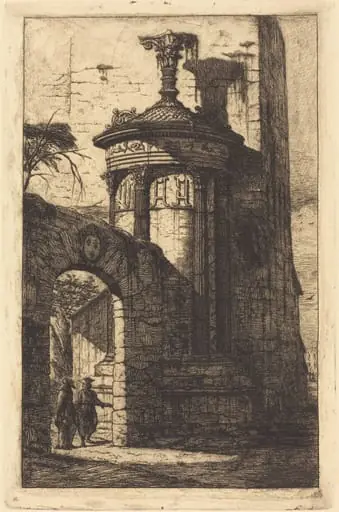 Entrée du Couvent des Capucins français à Athenes (Entrance to the French Capuchin Convent at Athens)
![Landscape with Tower and Two Ruined Pillars [left], by Canaletto](https://artifactworldgallery.com/img/canaletto--landscape-with-tower-and-two-ruined-pillars-left--60d58ba162fec5aa-w320.webp) Landscape with Tower and Two Ruined Pillars [left]
Landscape with Tower and Two Ruined Pillars [left]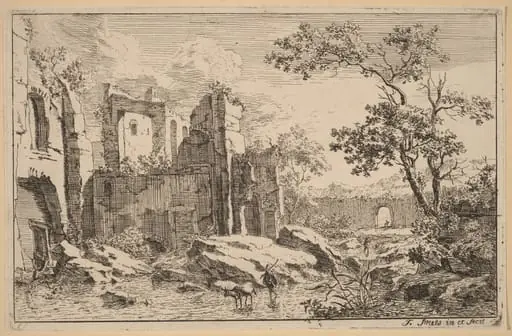 Man and Ox in a River
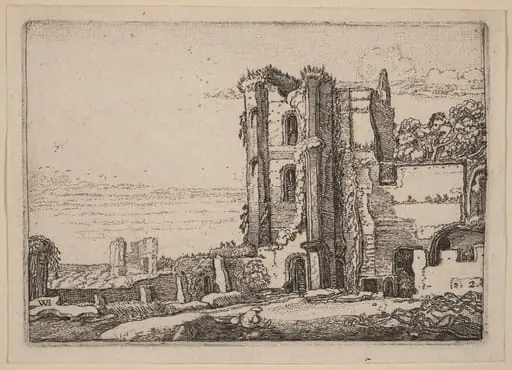 Ruined Tower Right of Center
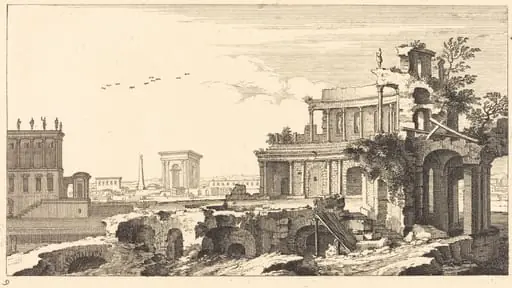 Landscape with Classical Ruins