Artwork
At the Home of the Woodcutters (Chez les bocherons)
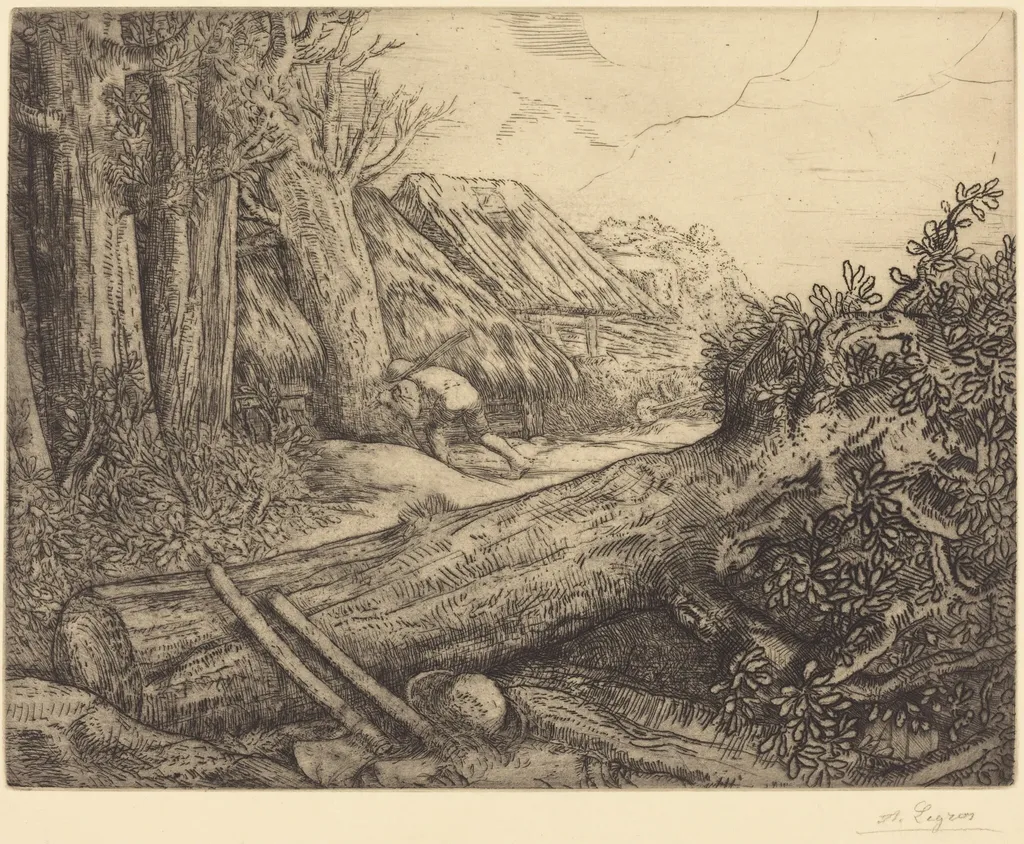
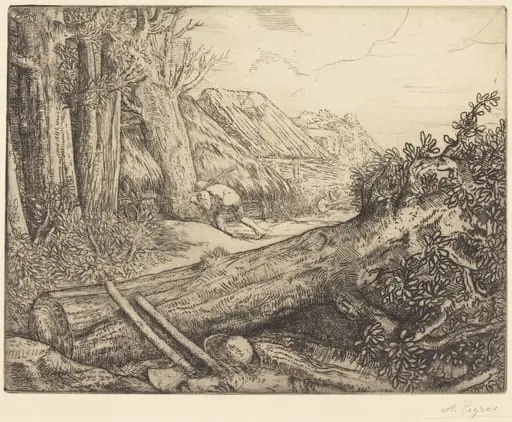
At the Home of the Woodcutters (Chez les bocherons) is an ink print by the Romanticist artist Alphonse Legros. It dates from 1874 and is held in the collection of the National Gallery of Art.
About this work
Overview
Created in 1874 by Alphonse Legros, *At the Home of the Woodcutters* is an etching and drypoint print made during his time in Britain.
Created in 1874 by Alphonse Legros, *At the Home of the Woodcutters* is an etching and drypoint print made during his time in Britain. Legros, originally from France, moved to London in 1863 and became a central figure in the revival of printmaking there. This work exemplifies his commitment to capturing everyday rural life through intimate, hand-drawn techniques, emphasizing texture and atmosphere over idealized form.
Subject & Meaning
The scene portrays two figures seated on a weathered log beside a quiet forest stream, suggesting a moment of rest after labor. The presence of a family unit in a secluded woodland setting evokes the quiet dignity of rural existence. There is no narrative drama; instead, the focus lies in the stillness of the moment, the shared space, and the subtle interplay between human presence and the natural environment.
Technique & Style
Legros employed etching and drypoint to build dense, tactile surfaces. The lines are deliberately uneven and handwrought, mimicking the roughness of bark, leaf litter, and unworked wood. Drypoint’s burr creates soft, velvety shadows, while etched lines define structural details. The light falls from the right, modeling forms with subtle gradations rather than sharp contrasts, reinforcing the scene’s quiet realism.
History & Provenance
Made during Legros’s early years in Britain, the print reflects his engagement with the British print revival movement. He taught at the Slade School and influenced a generation of artists through his emphasis on direct, observational techniques. While specific early ownership records are sparse, the work aligns with his broader output of rural scenes, circulated among collectors interested in the renewed appreciation for original printmaking.
Context
In the 1870s, British art circles were reevaluating printmaking as a serious artistic medium, moving away from reproductive engravings. Legros, trained in France but active in London, bridged continental realism with British sensibilities. His focus on laborers and natural settings resonated with broader European trends toward social realism, yet his approach remained understated, avoiding sentimentality.
Legacy
Legros’s prints, including this one, helped reestablish etching as a vehicle for personal expression rather than mere reproduction. His emphasis on texture, spontaneity, and quiet observation influenced later British printmakers and contributed to the acceptance of the artist’s hand in printmaking. The work remains a quiet testament to his role in reshaping the medium’s artistic credibility.
Artist & collection

Artist
Alphonse Legros (French pronunciation: ; 8 May 1837 – 8 December 1911) was a French, later British, painter, etcher, sculptor, and medallist.

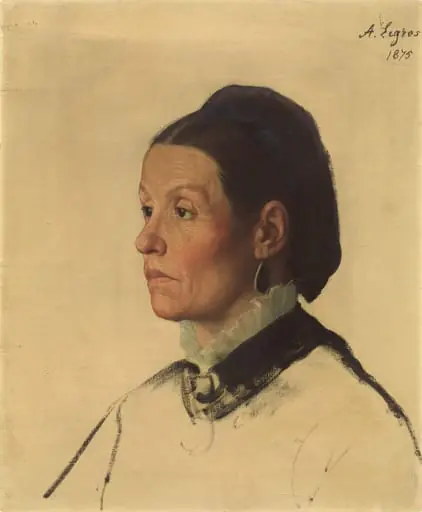
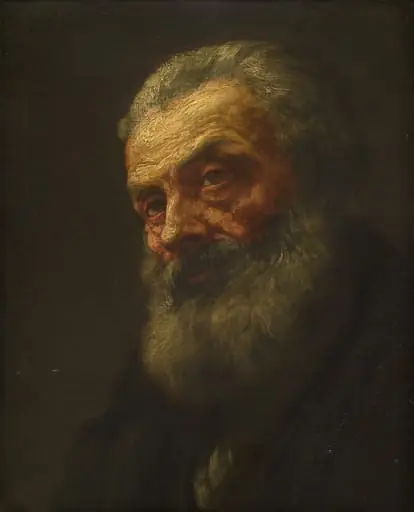
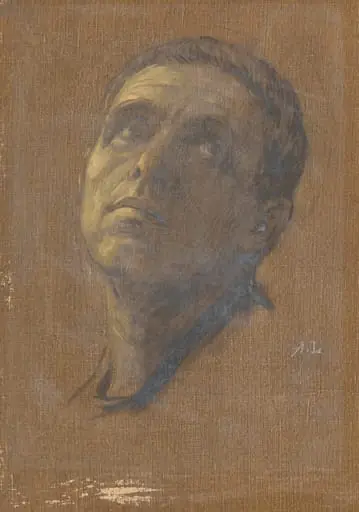
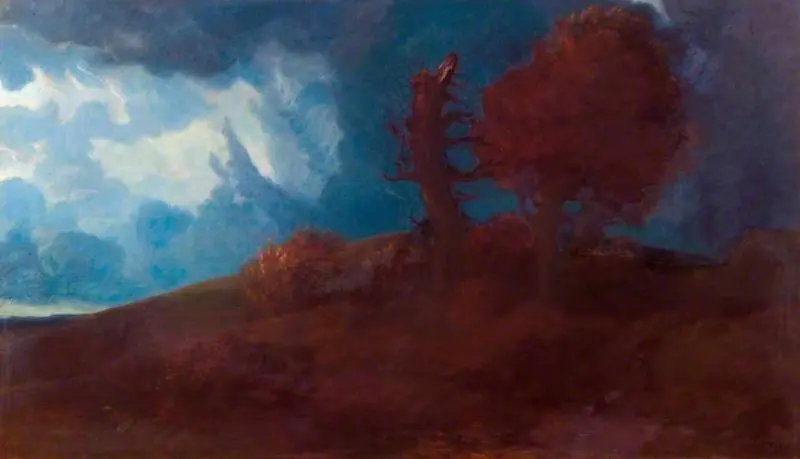
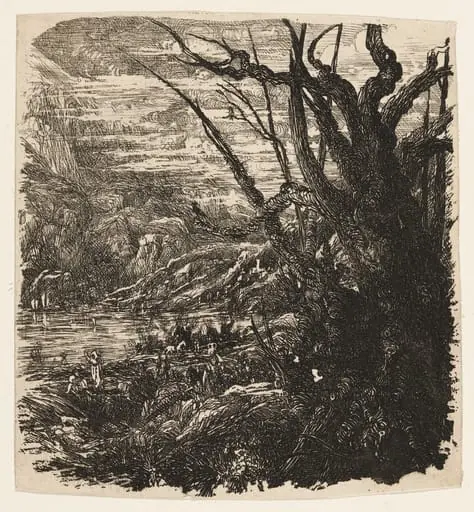 Untitled
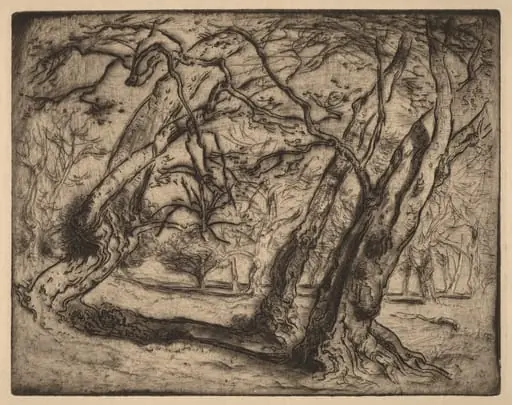 Untitled (Wooded Landscape)
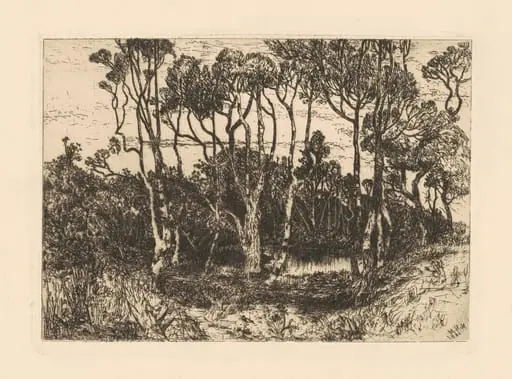 Solitude
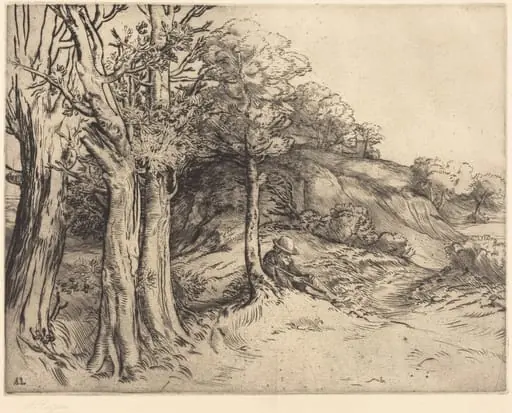 Solitude (Solitude (Paysage))
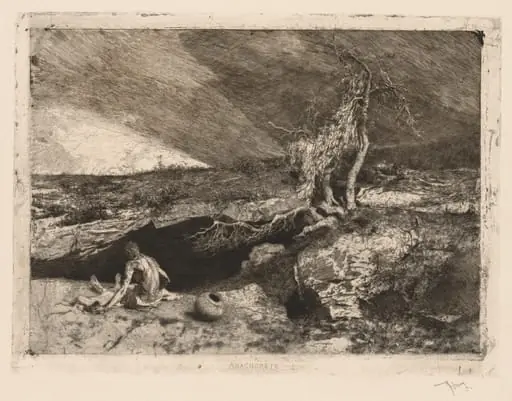 The Anchorite
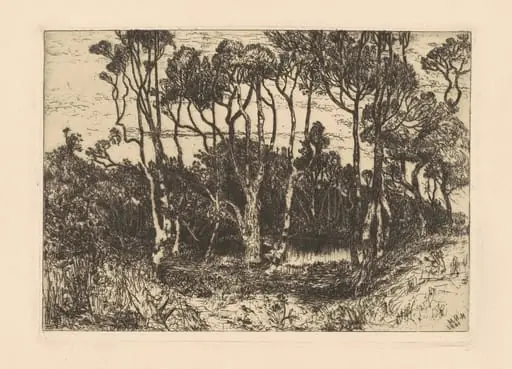 Solitude
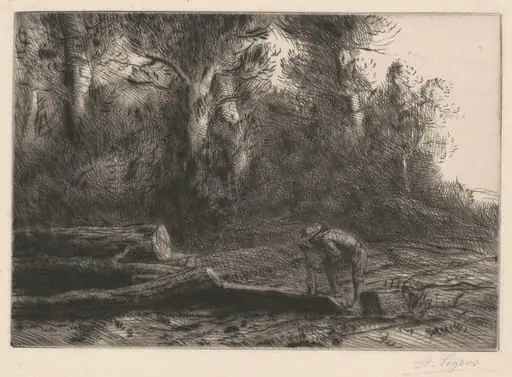 Man Squaring Logs (Homme qui fend des bûches)
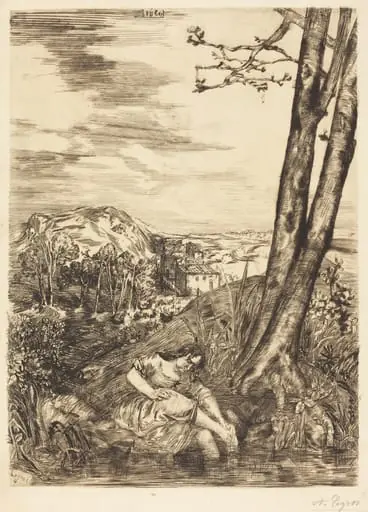 Peasant Washing Her Feet (Paysanne se lavant les pieds)
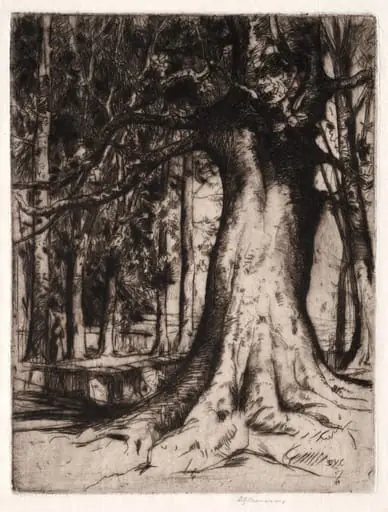 The Sycamore
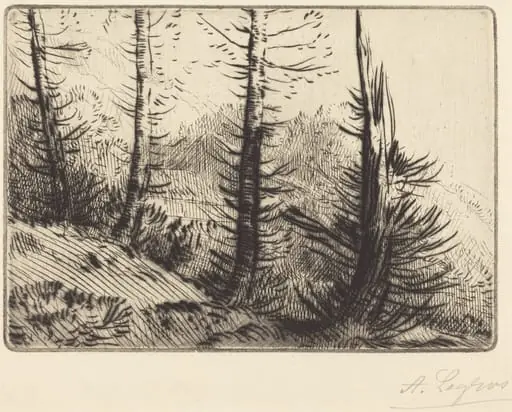 In the Pyrenees (Dans les Pyrenees)
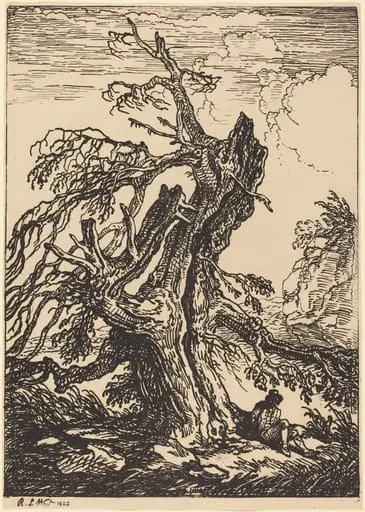 Study of a Tree
 At the Home of the Woodcutters (Chez les bucherons)