Artwork
Peasant Washing Her Feet (Paysanne se lavant les pieds)
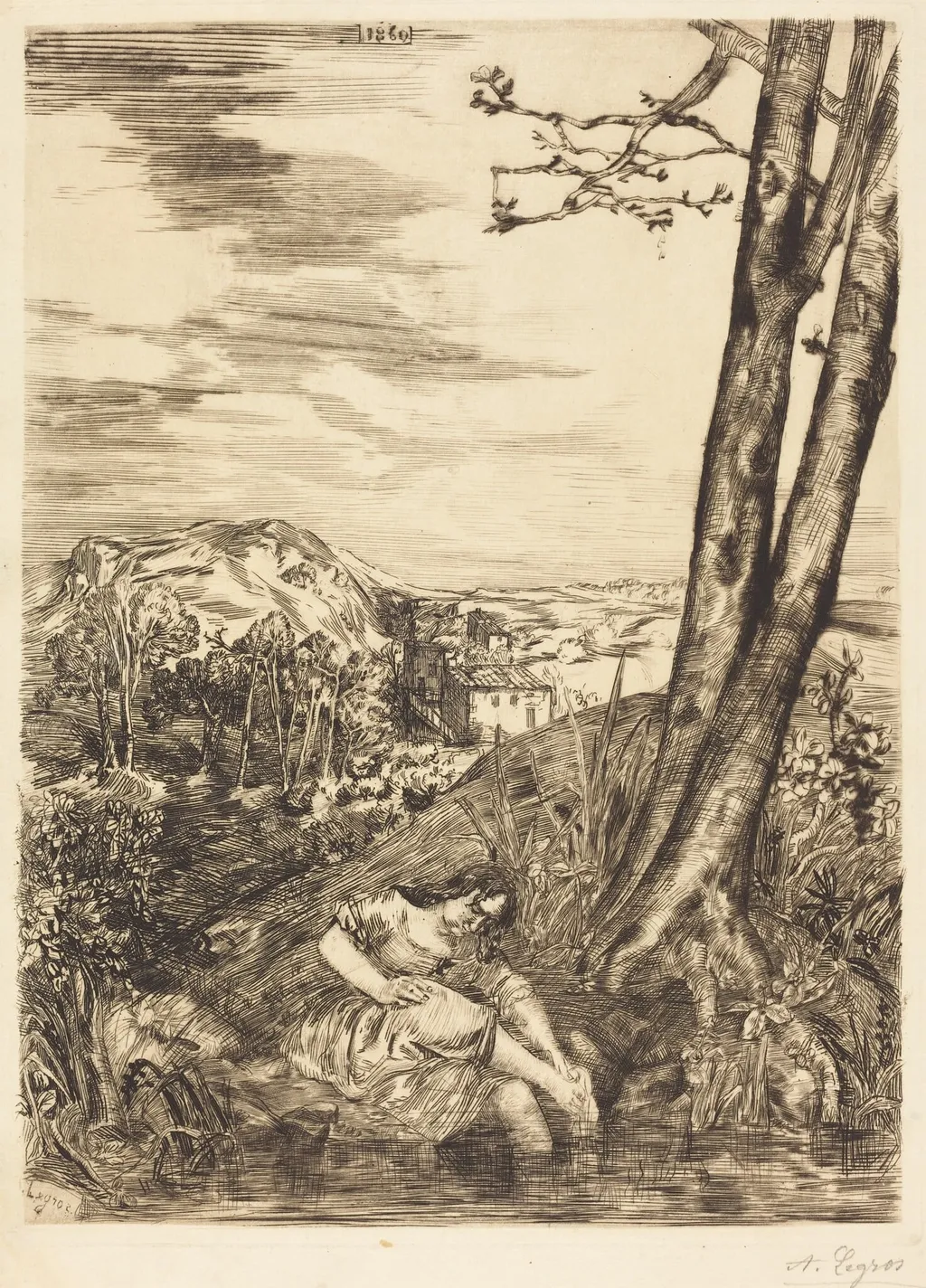
Peasant Washing Her Feet (Paysanne se lavant les pieds) is an ink print by the Impressionist artist Alphonse Legros. It dates from 1860 and is held in the collection of the National Gallery of Art.
About this work
Overview
Created in 1860, *Peasant Washing Her Feet* is an etching and drypoint by Alphonse Legros, a French artist who later relocated to Britain.
Created in 1860, *Peasant Washing Her Feet* is an etching and drypoint by Alphonse Legros, a French artist who later relocated to Britain. The work belongs to a formative phase in his career, preceding his move to London in 1863. It exemplifies his early commitment to printmaking and his focus on unidealized rural life, themes that would continue to define his artistic output in both France and England.
Subject & Meaning
The image portrays a peasant woman in a moment of quiet domestic routine, seated on the earth as she cleans her feet in a shallow pool. Her simple clothing and unadorned setting emphasize humility and labor. Legros avoids romanticization, instead presenting the figure with dignity through stillness and attention to ordinary detail, reflecting his broader interest in the dignity of working-class life.
Technique & Style
Legros employed etching and drypoint to achieve fine, nuanced lines and soft tonal gradations. The delicate rendering of foliage, water, and distant architecture creates a sense of atmospheric depth. The contrast between the woman’s solid form and the airy background enhances the intimacy of the scene, while the tactile quality of the lines conveys texture without overt drama or embellishment.
History & Provenance
Executed in France before Legros’s permanent move to London, the print predates his influential role in the British etching revival. It was made during a period of personal and professional transition, as he shifted from French academic circles toward a more independent artistic identity. The work later became part of broader collections that recognized his contributions to printmaking in Britain.
Context
In the 1860s, European artists increasingly turned to rural subjects as industrialization reshaped society. Legros’s focus on peasant life aligned with broader Realist tendencies, though his approach remained subdued and observational rather than polemical. His choice of etching as a medium reflected a growing interest in print as a vehicle for personal expression, distinct from grand historical painting.
Legacy
Though less known today than his British contemporaries, Legros’s early prints like this one helped establish etching as a serious artistic medium in England. His later teaching at the Slade School and advocacy for direct engraving influenced generations of printmakers. This work stands as an early indicator of his enduring commitment to quiet, truthful representation in print.
Artist & collection

Artist
Alphonse Legros (French pronunciation: ; 8 May 1837 – 8 December 1911) was a French, later British, painter, etcher, sculptor, and medallist.

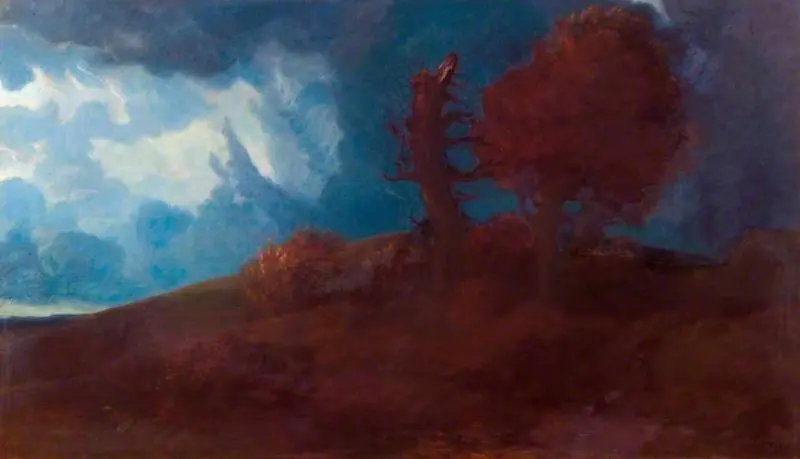
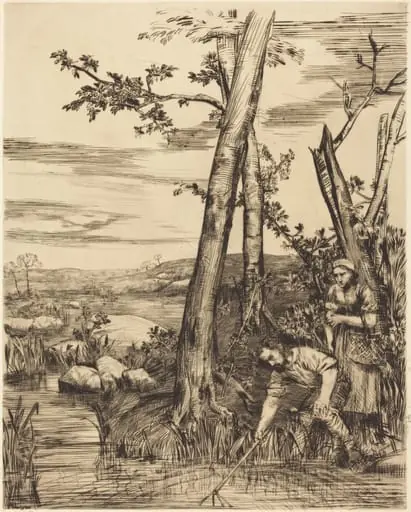 Fishing for Crayfish (Les pecheurs d'ecrevisses)
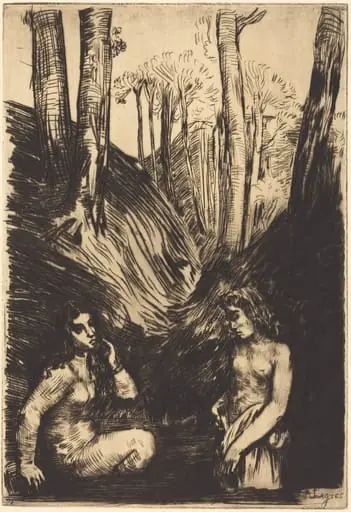 Bathers (Les baigneuses)
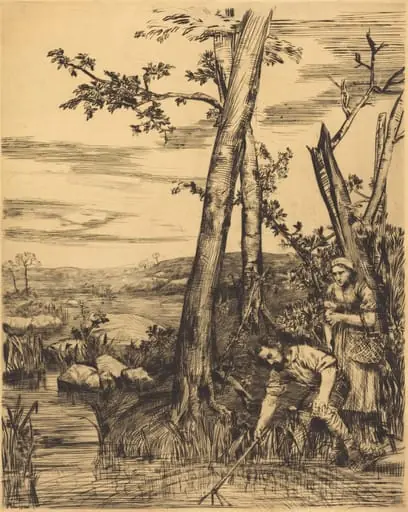 Fishing for Crayfish (Les pecheurs d'ecrevisses)
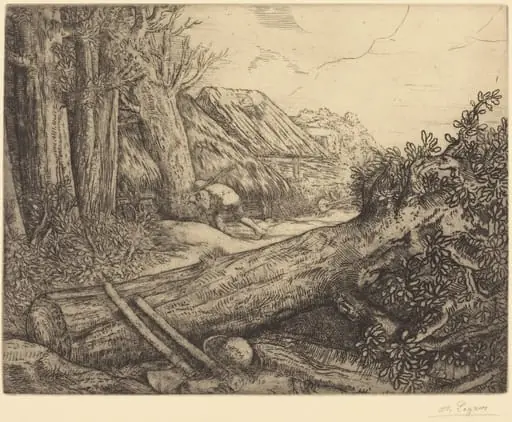 At the Home of the Woodcutters (Chez les bocherons)
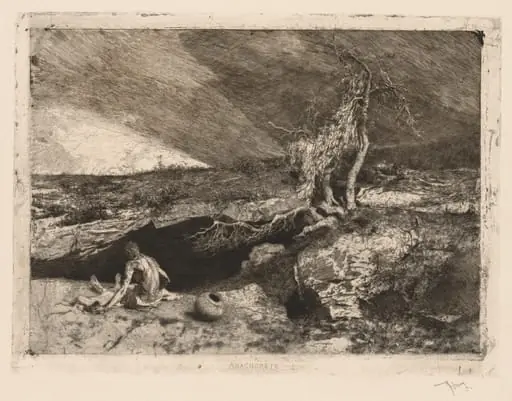 The Anchorite
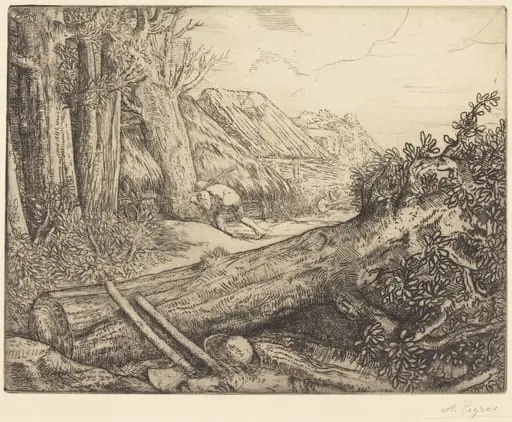 At the Home of the Woodcutters (Chez les bucherons)
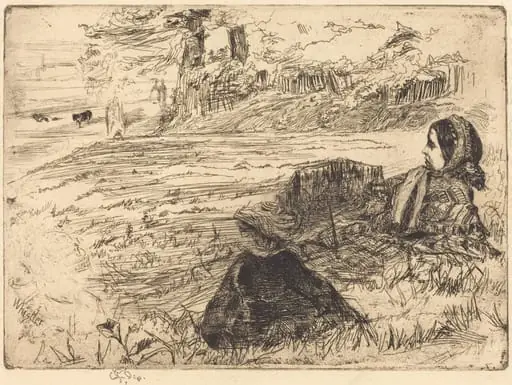 Nursemaid and Child
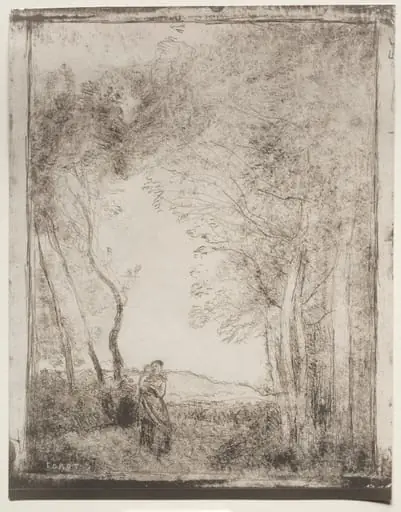 A Young Mother at the Entrance of a Wood
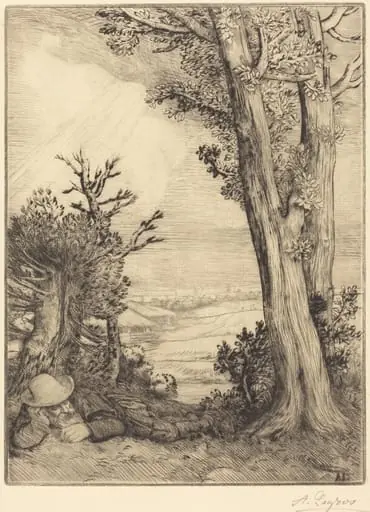 Siesta in the Country (Sieste dans la campagne)
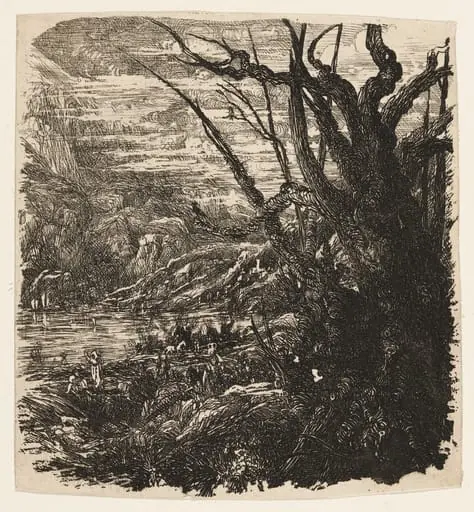 Untitled
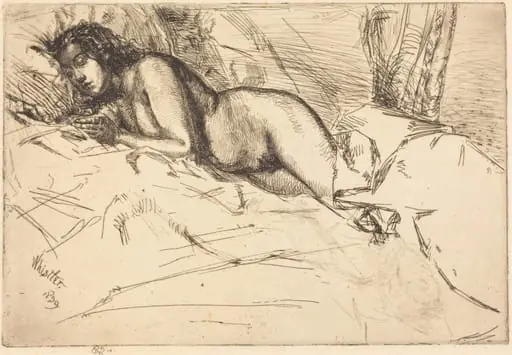 Venus
Venus La Mort et le Bûcheron (5th Plate)