Artwork
Black Cat (Le chat noir)
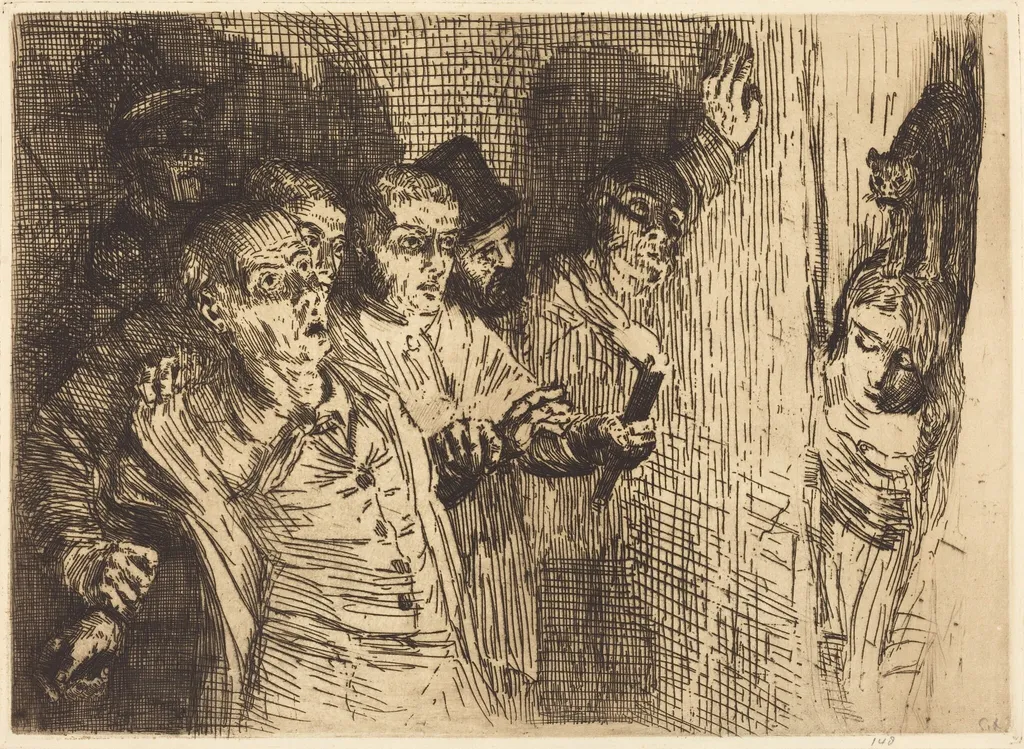
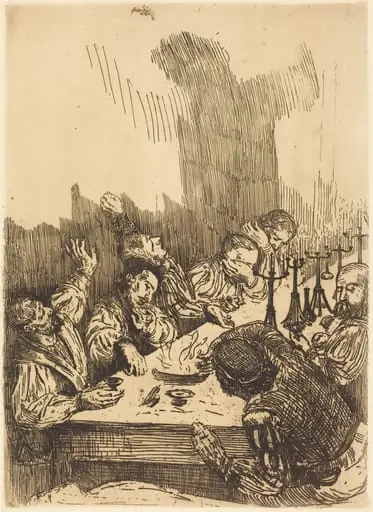
Black Cat (Le chat noir) is an ink print by the Impressionist artist Alphonse Legros. It dates from 1861 and is held in the collection of the National Gallery of Art.
About this work
Overview
This work exemplifies his early engagement with etching, a medium he helped revitalize in Britain through technical precision and atmospheric depth.
Alphonse Legros produced *Black Cat (Le chat noir)* circa 1861 as an etching on laid paper. Though French by birth, Legros would later influence British printmaking after relocating to London in 1863. This work exemplifies his early engagement with etching, a medium he helped revitalize in Britain through technical precision and atmospheric depth. The image captures a moment of quiet tension, centered on a feline figure in a domestic interior.
Subject & Meaning
The print shows a black cat standing upright on its hind legs, facing a group of men in 19th-century attire. Their varied reactions—some startled, others intrigued—suggest an uncanny or supernatural encounter. The cat, neither predatory nor passive, becomes an ambiguous focal point, evoking folklore associations with mystery or ill omen. The scene resists clear narrative, inviting contemplation rather than explanation.
Technique & Style
Legros employed fine, controlled etching lines to render texture and shadow, emphasizing the cat’s fur and the men’s clothing with delicate gradations. The dim interior is suggested through sparse, atmospheric ink tones rather than detailed architecture. The composition directs attention to the cat’s upright form, contrasting its stillness with the restless postures of the figures around it, enhancing the sense of unease.
History & Provenance
Created before Legros’s move to England, the etching reflects his early French training and interest in genre scenes. It entered British collections after his 1863 relocation, where his printmaking gained recognition among artists and collectors. The work remains part of institutional holdings, valued for its role in the 19th-century revival of etching as a serious artistic medium beyond reproductive use.
Context
In the early 1860s, etching was experiencing a resurgence across Europe, moving away from mere reproduction toward personal expression. Legros’s work aligned with this shift, drawing from Northern Renaissance engravings and contemporary realism. The inclusion of a supernatural motif in a domestic setting reflects lingering folk beliefs and Gothic undertones in mid-century visual culture, distinct from emerging Impressionist priorities.
Legacy
Legros’s *Black Cat* contributed to the reestablishment of etching as a vehicle for psychological and narrative depth in British art. Though not widely reproduced, the print influenced a generation of printmakers who sought emotional resonance through line and tone. Its quiet ambiguity and technical restraint remain notable in the history of 19th-century graphic art.
Own this work as a print
Artist & collection

Artist
Alphonse Legros (French pronunciation: ; 8 May 1837 – 8 December 1911) was a French, later British, painter, etcher, sculptor, and medallist.

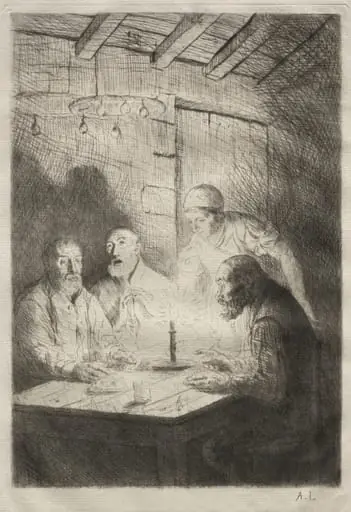 Le Souper chez misère
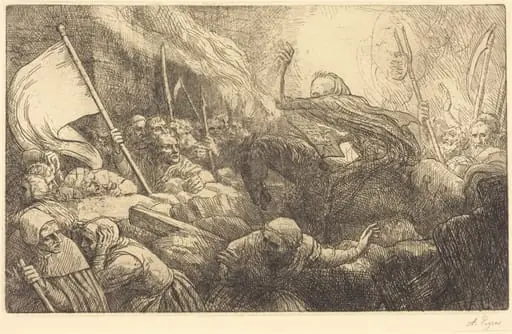 The Triumph of Death: Proclamation (Le triomphe de la mort: La proclamation)
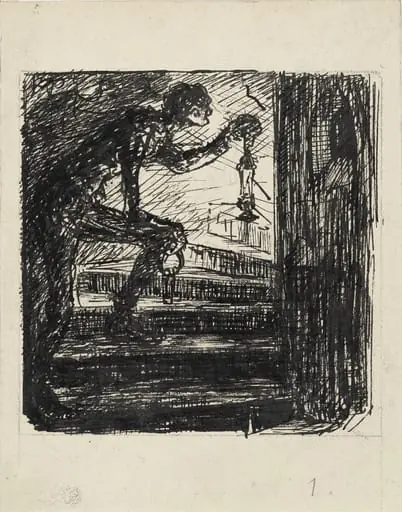 Untitled
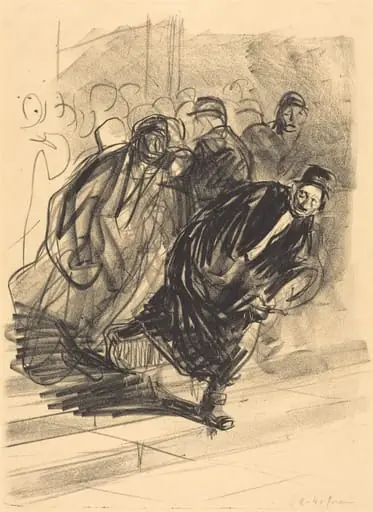 L'avocat pourchassé (The Lawyer Pursued)
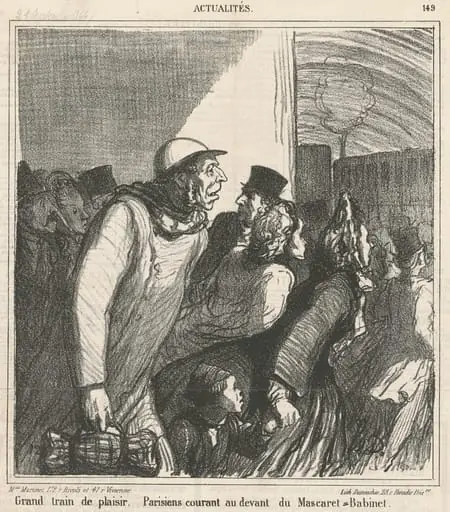 Grand train de plaisir
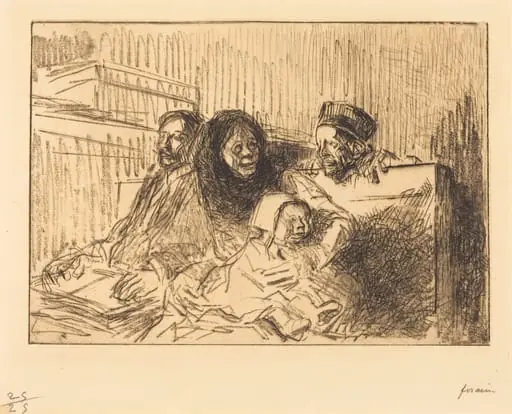 Témoins à l'audience (2e planche) (Evidence at the Hearing) (second plate)
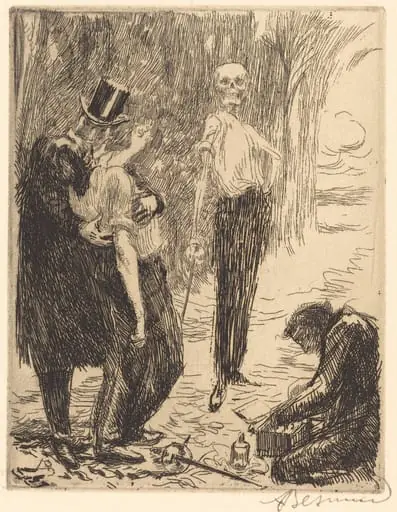 The Duel (Le duel)
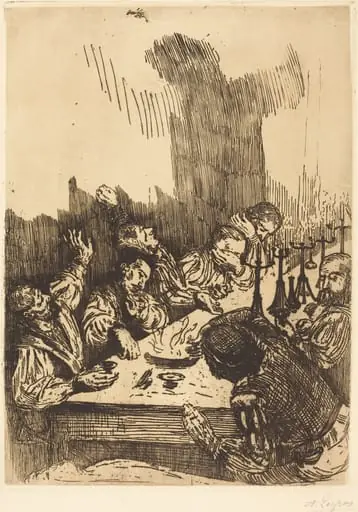 Shadow (Ombre)
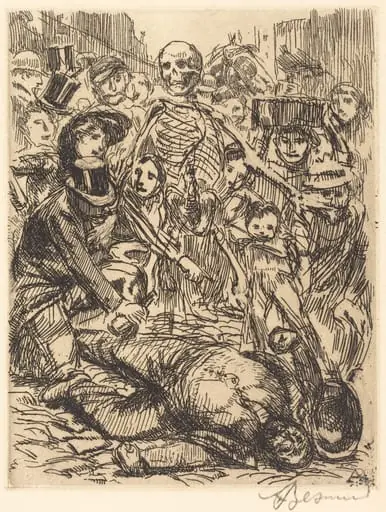 The Accident (L'accident)
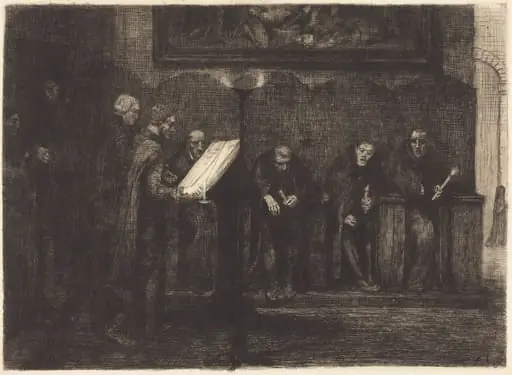 Spanish Singers (Les chantres espagnols)
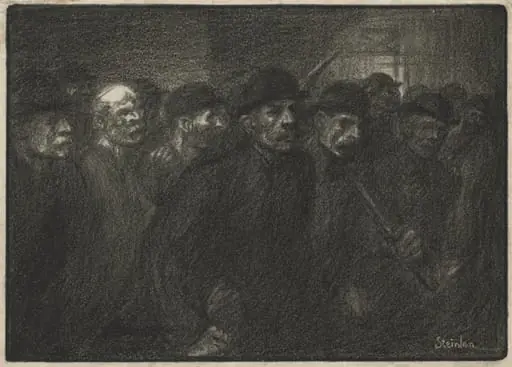 Ouvriers Sortant de L'Usine
 Shadow (Ombre)