Artwork
Blind Beggar (Le mendiant aveugle)
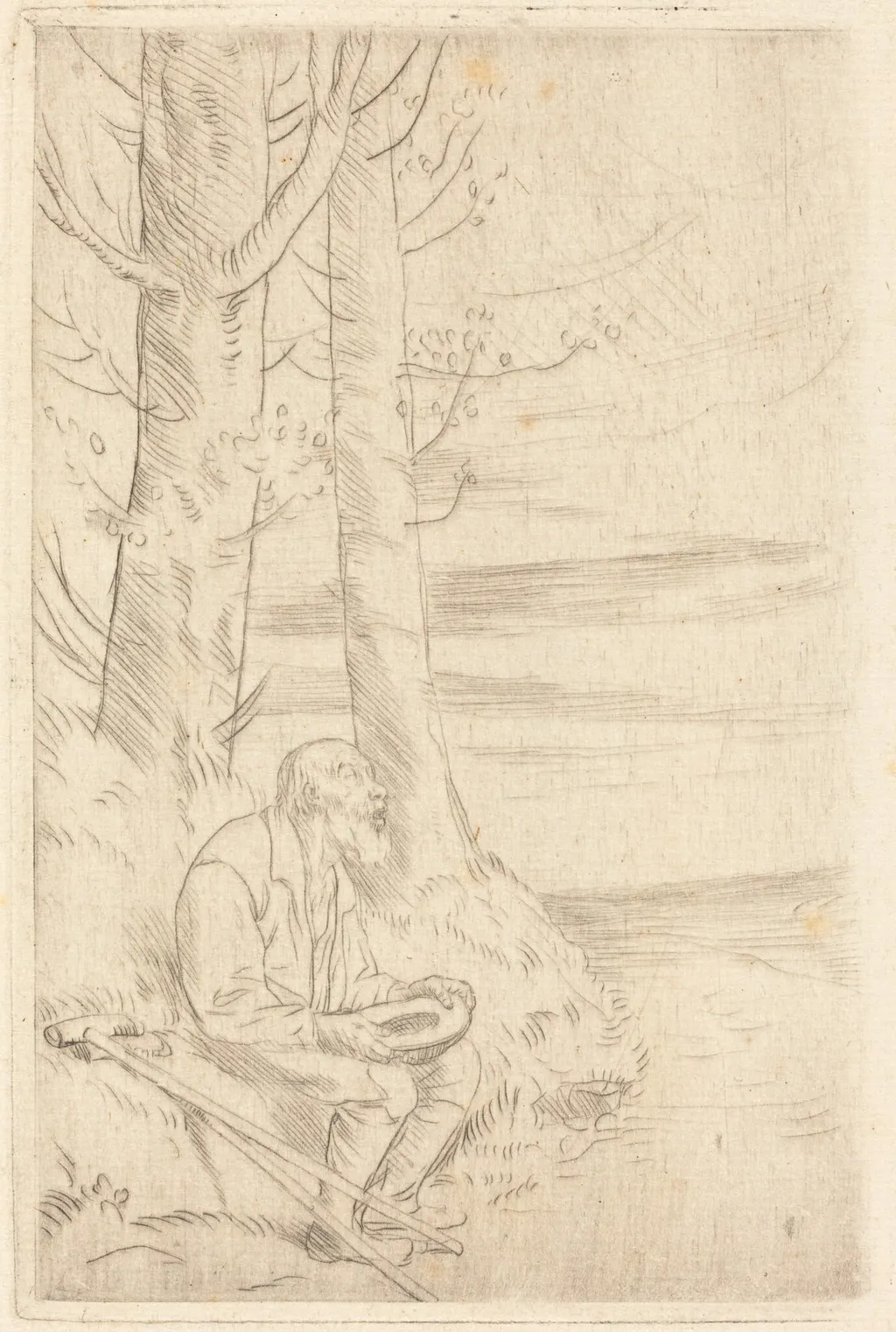
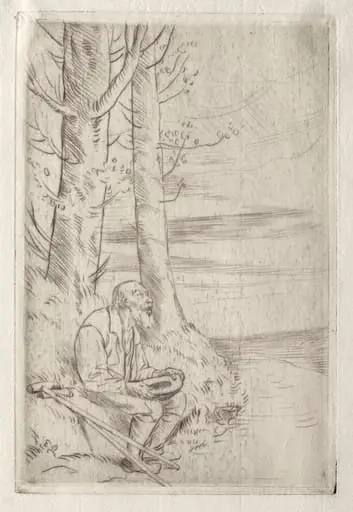
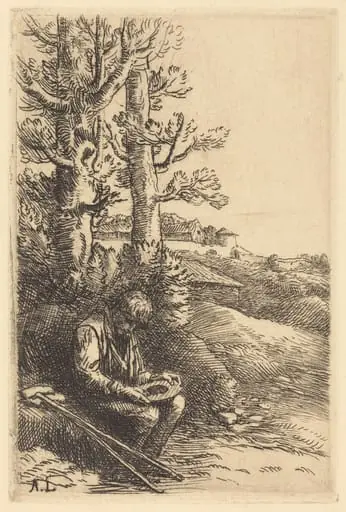
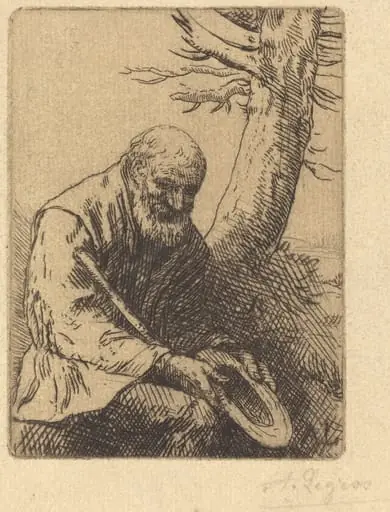
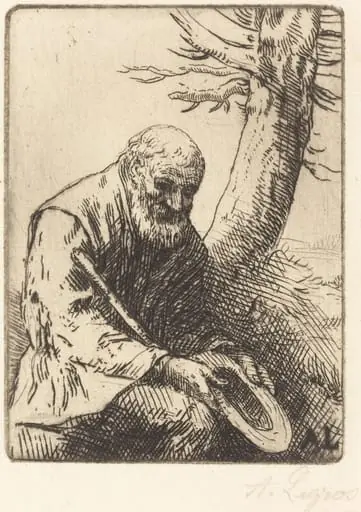
Blind Beggar (Le mendiant aveugle) is an ink print by the Romanticist artist Alphonse Legros. It dates from 1874 and is held in the collection of the National Gallery of Art.
About this work
Overview
Blind Beggar (Le mendiant aveugle), a drypoint print created by Alphonse Legros in 1874, showcases the artist's skill in etching, a medium he helped revive in Britain through his teaching and practice.
Subject & Meaning
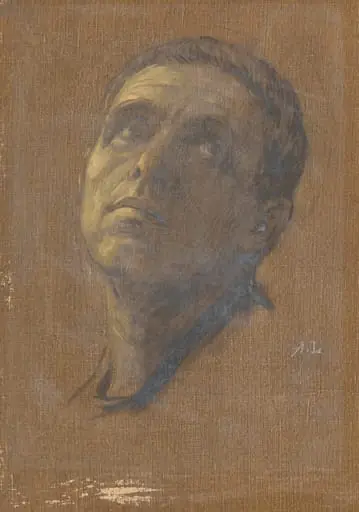
The print portrays a serene, sightless beggar seated in a wooded setting, his face uplifted with eyes closed, suggesting a moment of introspection, prayer, or song, evoking a sense of peaceful contemplation.
Technique & Style
Executed in drypoint, the work features precise lines and a soft, delicate quality. The strategic use of chiaroscuro adds depth, guiding the viewer's focus towards the beggar's face and hands, enhancing the emotional impact.
History & Provenance
Created in 1874 by Alphonse Legros, a French artist naturalized British, after his 1863 move to London. His multifaceted career spanned painting, etching, sculpture, and medallic art, with significant influence on the revival of etching in Britain.
Artist & collection

Artist
Alphonse Legros (French pronunciation: ; 8 May 1837 – 8 December 1911) was a French, later British, painter, etcher, sculptor, and medallist.